
Parrot, Skydio, Skycutter, Teal Drones and Vantage Robotics will move into manufacturing-readiness assessments as the Army looks to refresh short-range reconnaissance UAS through its new marketplace acquisition approach.
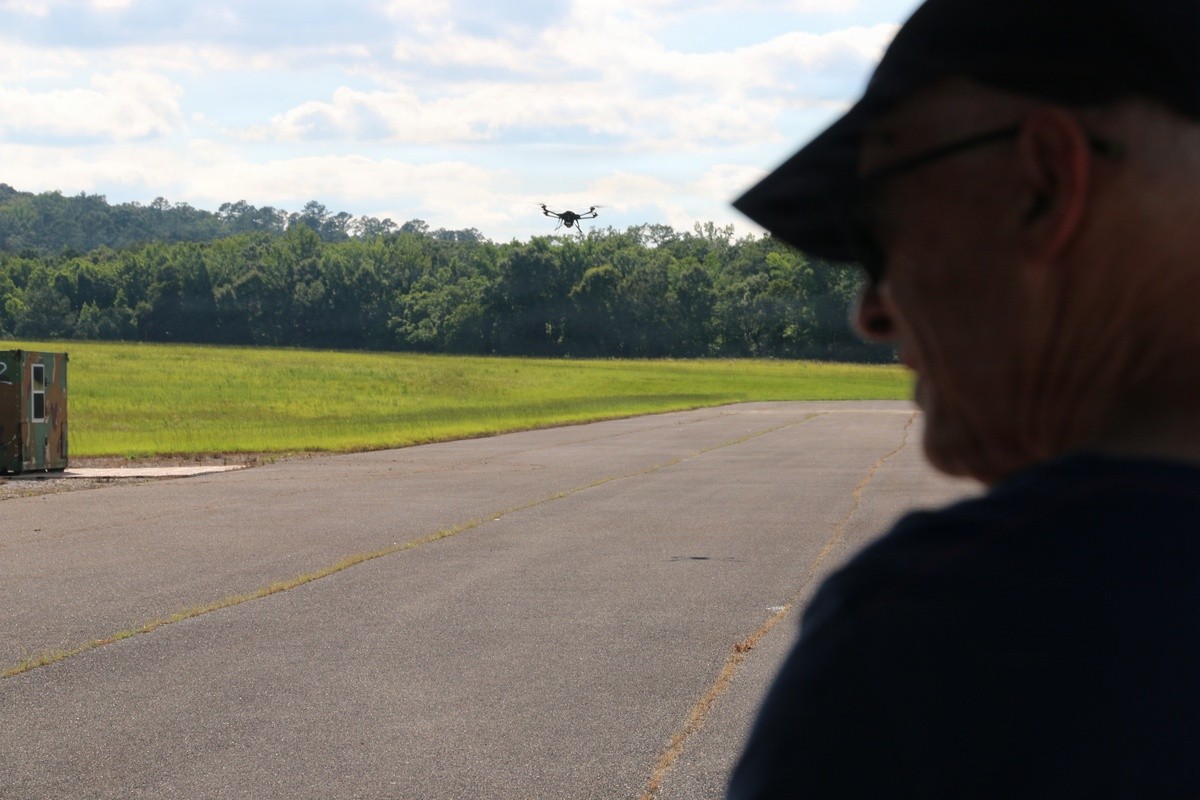
The U.S. Army has selected systems from five drone manufacturers for further assessment following a fly-off aimed at identifying the next generation of platoon-level Short Range Reconnaissance (SRR) systems.
Parrot Drones, Skydio, Skycutter, Teal Drones and Vantage Robotics were selected to advance to manufacturing-readiness assessments after flight demonstrations held in late June at Clarke Range near Anniston, Alabama, the Army announced Aug. 10. More than a dozen systems had initially met the Army’s selection criteria and were invited to participate in the demonstrations.
The effort is being conducted by Capability Program Executive Aviation’s Project Manager for Uncrewed Aircraft Systems and its small UAS product office. The Army is seeking platoon-level systems capable of providing persistent reconnaissance, surveillance and target-acquisition capability as it expands UAS deployment across tactical echelons.
The competition also provides an early look at how the Army is using its UAS Marketplace acquisition strategy to more rapidly evaluate commercially available technology. PM UAS issued a Call for Solutions earlier this spring seeking current small-UAS offerings, then moved qualifying vendors into the June flight demonstrations rather than beginning with a traditional single-system development program.
“To ensure our formations have the best advantage on a constantly evolving battlefield, the Army and its industry partners must advance SUAS capability faster than ever before,” Lt. Col. Mike Carroll, product manager for SUAS, said in the Army announcement. He pointed to the combination of the marketplace contracting strategy, rapid industry response and direct soldier feedback as elements intended to accelerate fielding.
The Army said the fly-off used a multi-vendor approach intended to maintain competition as systems move through evaluation. Data collected during the demonstrations will inform assessments of both operational capability and vendors’ ability to manufacture systems at the quantities required by the service.
The SRR effort is part of the Army’s broader Transformation in Contact initiative, under which operational units have been experimenting with new UAS, counter-UAS, electronic warfare and other technologies while simultaneously developing the personnel structures and tactics needed to employ them. The service increasingly views small drones as an organic capability extending down to lower tactical formations rather than as specialized aviation assets.
The selection is not yet a winner-take-all procurement. By advancing five suppliers into manufacturing-readiness assessments, the Army is preserving multiple potential sources while evaluating whether systems that performed successfully in the fly-off can also be produced and supported at scale.
That approach reflects a larger shift in Army small-UAS acquisition toward shorter technology-refresh cycles and greater reliance on commercially developed systems—a particularly important consideration in a category where battlefield requirements and available technology can change substantially faster than conventional acquisition timelines.