
Red Cat is assembling an interconnected portfolio of autonomous systems across air, land, sea and beyond—and betting the battlefield of the future rewards integration over isolation.
At Eurosatory 2026, the pace of change across the defense robotics market was impossible to miss. Small unmanned aircraft, once treated largely as standalone tactical tools, are increasingly being pulled into larger operational architectures that connect sensors, effectors, autonomy software, maritime platforms, ground vehicles, battlefield networks and resilient support systems.
Red Cat’s own transformation reflects that shift. The Utah-based company, once best known for its connection to drone racing and first-person-view systems, is now positioning itself around a broader portfolio of interconnected autonomous systems for defense and security users.
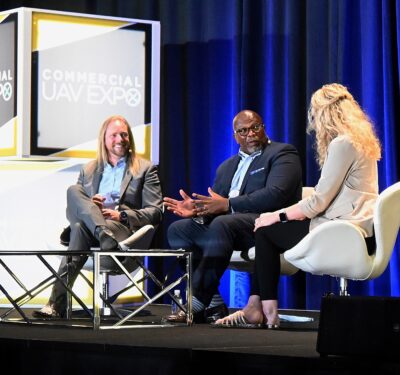
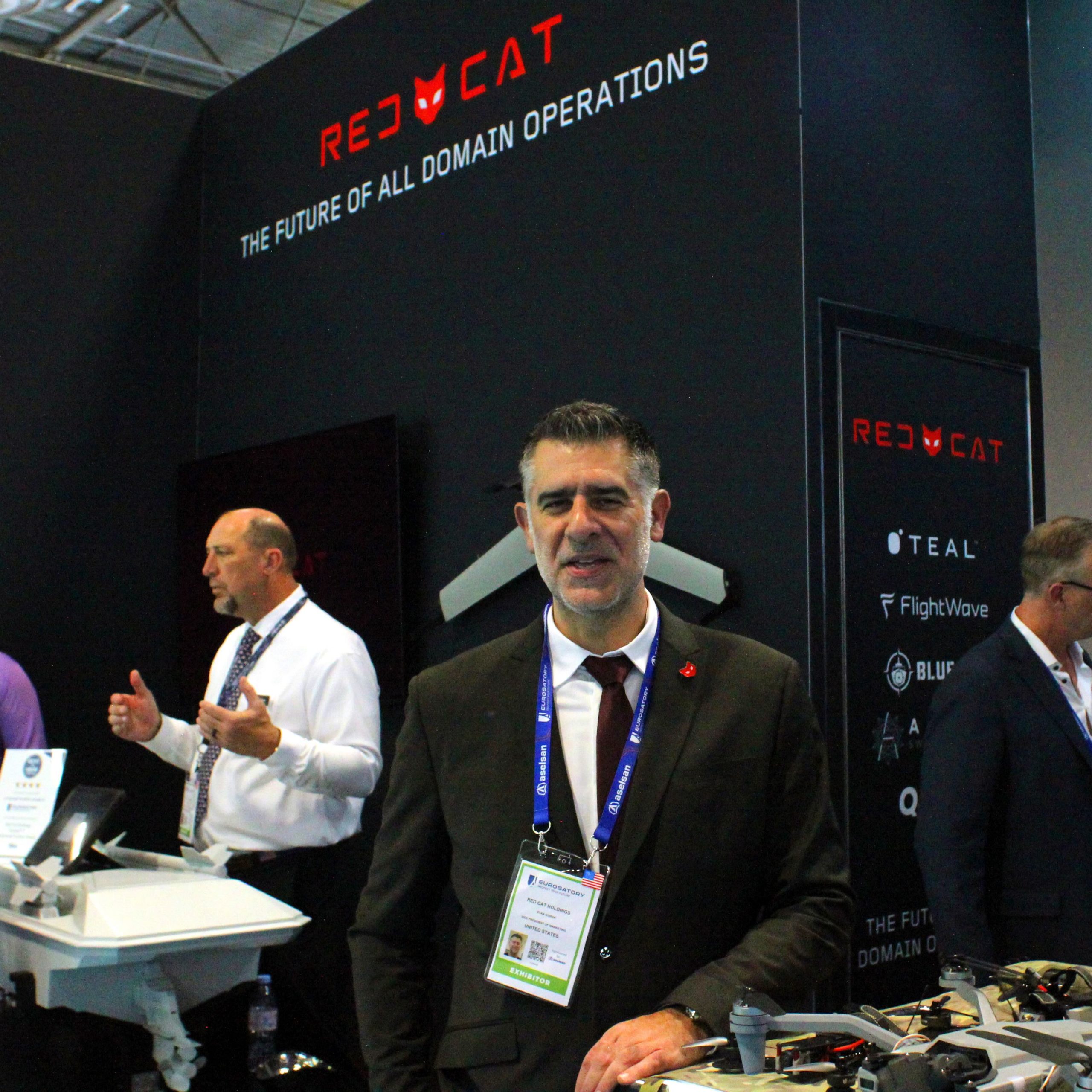
“So far, the show has been very, very successful for us,” said Stan Nowak, Red Cat’s vice president of marketing, speaking with Inside Unmanned Systems at Eurosatory in Paris. “All of our different business area teams have been in meetings and talking to new people the whole time.”
For military customers, Nowak said, the conversation is no longer only about buying a better drone. Increasingly, the requirement is for systems that can operate across domains, share data, adapt quickly and fit into a larger battlefield architecture.
Credit: Peter Gutierrez / Inside Unmanned Systems
From Drone Racing to Defense Robotics
Red Cat was founded in 2016 by CEO Jeff Thompson, whose entry into unmanned systems came through the drone racing community. Early company assets included Fat Shark and Rotor Riot, brands closely associated with first-person-view racing and commercial drone components.
“Jeff came from the telecom industry before that,” Nowak said. “But it was drone racing that ultimately fueled his passion for robotics and autonomous systems.”
The company later made a deliberate pivot toward defense and security. According to Nowak, that shift accelerated after he joined Red Cat approximately four years ago.
“I was brought in to reposition the company toward defense and security,” he said.
That transition included divesting Fat Shark and Rotor Riot to Unusual Machines while maintaining a strategic relationship with that company. At the same time, Red Cat began assembling the pieces of what has become its current defense portfolio.
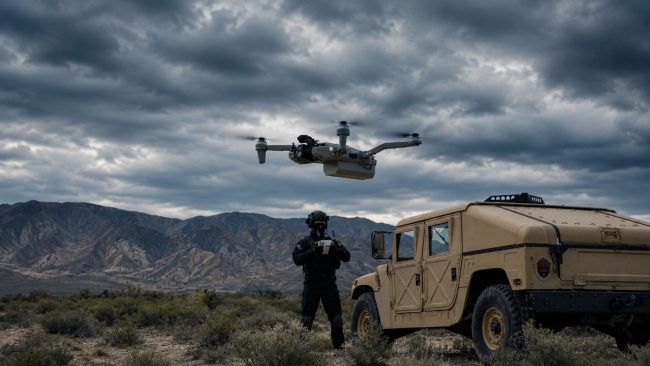
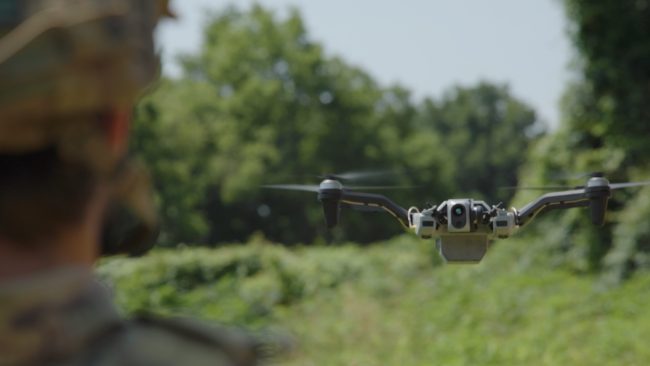
A key step was the acquisition of Teal Drones, a company originally focused on small commercial quadrotors before shifting toward military applications. That move led Red Cat from Golden Eagle to Teal 2 and eventually to Black Widow, now positioned as the company’s flagship reconnaissance system.
Black Widow’s selection for the U.S. Army’s Short Range Reconnaissance (SRR) Program of Record marked a turning point for the company.
“That’s what put us on the map,” Nowak said. “Black Widow won the SRR program, and there we were, a new kind of thing, a small, agile company coming in out of nowhere and winning a pretty major program.”
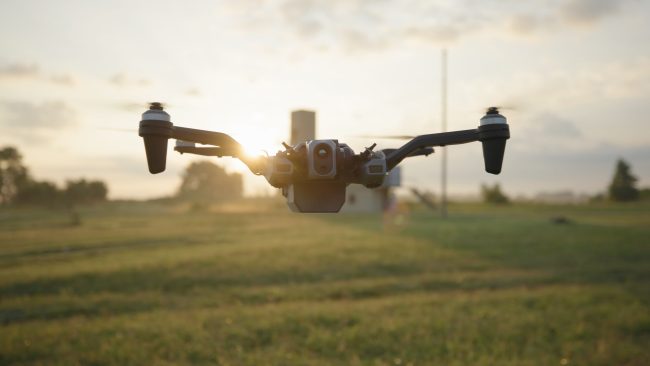
Since then, Red Cat has continued to expand its portfolio. The acquisition of FlightWave Aerospace added the Edge 130, a hybrid vertical takeoff and landing tricopter designed to fill a niche between traditional small UAS categories by combining relatively low weight with extended range and endurance.
Learning From the Battlefield
If one theme dominates Nowak’s view of the current unmanned systems market, it is the influence of Ukraine. For Red Cat, battlefield relevance depends on staying close to the operational lessons emerging from active conflict, especially in contested and GPS-denied environments.
“We send program managers, we send engineers, and we send our business development folks to the front lines to work with Ukrainian warfighters on optimizing our systems,” he said.
Nowak described Ukraine as one of the most demanding real-world environments available for unmanned systems development.
“It’s a cat-and-mouse game, where adaptation must occur constantly,” he said. “You tweak your system on this side, your adversary is tweaking their system on that side. That’s happening almost on a daily basis, and if you’re not getting that intelligence, your technology is immediately stale in the marketplace.”
The company places personnel close enough to gain operational insight while maintaining safe distances from active combat, he said. The information gathered from operators feeds directly into product development.
“Our people get that intelligence that we can then pull back into our product development,” Nowak said.
That feedback loop is becoming more common across the defense technology sector. Companies are under pressure to move faster, test in more realistic environments and shorten the cycle between user feedback and product iteration.
“A lot of the companies we have relationships with are doing the same thing,” Nowak said. “It’s becoming the norm.”
The experience has shaped Red Cat’s internal philosophy.
“We say ‘iterate or die,’” Nowak said. “If you’re not continuously iterating, you’re falling behind. The idea has to be to maintain an overmatch over your opponent.”
Nowak believes the lessons of Ukraine will continue to shape unmanned systems development long after the war ends.
“What’s fascinating is that it has changed battlefield tactics forever,” he said. “There’s so much aggressive innovation happening there.”
Building Toward an All-Domain Company
Drones remain central to Red Cat’s business, but the company increasingly views its future in broader terms. Red Cat has adopted the language of all-domain operations, a phrase that reflects both its current expansion and its longer-term strategic direction.
“That’s a very strategic decision that we made,” Nowak said. “When you start to look at what makes up all-domain, you’re talking about land, sea, air, space and cyber.”
For a company of Red Cat’s size, the claim requires careful definition. Red Cat is not a traditional prime contractor with decades of programs spanning every military domain. Its strategy is different: build, acquire or partner into the pieces of a smaller, faster-moving robotics ecosystem that can connect unmanned aircraft, maritime platforms, swarming software, payloads, targeting, charging and battlefield management systems.
The company has already integrated small-drone technologies into ground robotic systems and armored vehicle concepts. One example involves vehicles launching reconnaissance drones without stopping movement.
“Imagine a convoy of armored vehicles moving through an area,” Nowak said. “They don’t want to stop. They’ll launch a drone from their own vehicle, do a route recon mission, continue moving, and if they see threats, they’re able to launch precision effects.”
Another step was the acquisition of Apium Swarm Robotics. For Nowak, the significance is the move beyond the traditional one-operator, one-aircraft model.
“Swarming is a big buzzword,” he said. “For us, that means one-to-many, not just one-to-one.”
The larger objective is what Nowak calls an interconnected battlefield.
“Why do we do all this? It’s about an interconnected battlefield,” he said.
He also uses the phrase “Internet of Battlefield Things” to describe the concept. The goal is not simply to field more unmanned systems, but to weave those systems into existing command-and-control and battlefield management environments.
“You have to seamlessly weave our technology into current battlefield management systems, everything integrated together,” Nowak said.
Maritime Operations and the Next Operating Environment
Perhaps the most visible sign of Red Cat’s broader ambitions is its move into maritime autonomy.
“If you had asked me two years ago if we would be working in maritime systems, I would have said, ‘You’re crazy,’” Nowak said.
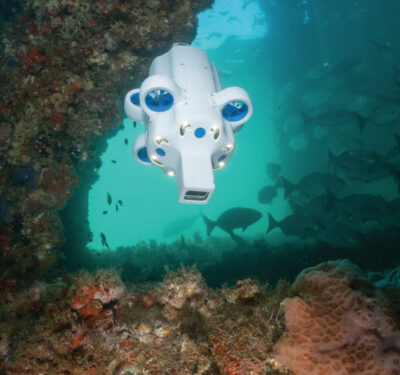
The company established Blue Ops roughly a year ago and moved quickly by working with established shipbuilding partners rather than designing a vessel from scratch. Red Cat’s focus, Nowak said, is on building an autonomous maritime platform that can support multiple mission systems.
“We wanted to start with the best boat,” he said. “Then layer on top of that the modularity, technology and integration.”
The resulting Variant family is expected to include five-, seven- and eleven-meter unmanned surface vessels. The largest version is envisioned as a launch-and-support platform for small unmanned aircraft.
“The 11-meter version will be able to deploy dozens of drones,” Nowak said, describing it as a kind of “mini-aircraft carrier.”
The maritime expansion is tied directly to how Red Cat views future operating environments. Nowak pointed to littoral regions, island chains and distributed maritime operations as examples of where small drones and unmanned surface vessels could become mutually reinforcing.
“The next great conflict is most likely going to be in a littoral environment,” he said. “Island chains, thousands of miles of distance. You want to be able to get your small-drone technology as close as possible.”
That thinking drives interest in cross-domain operations where unmanned surface vessels serve not only as maritime assets, but also as forward launch, recovery, sensing or support nodes for aerial systems.
Sensor-to-Shooter at Tactical Scale
Red Cat is also emphasizing sensor-to-shooter integration at the tactical level. The logic is straightforward: frontline operators need to detect, classify and respond to threats quickly, without waiting for distant assets to be tasked.
Historically, Nowak said, operators often identified a threat and then had to wait for supporting assets to arrive.
“Hours means lives,” he said. “Hours means the moment will have passed by.”
Advances in autonomy, miniaturization and cost reduction are moving capabilities that once required far more expensive dedicated systems into a lower-cost tactical category, Nowak said.
The concept combines reconnaissance platforms such as Black Widow and Hellcat with low-cost precision-effect drones that can be carried and employed by the same unit.
“You don’t have to call in those assets,” Nowak said. “You can make the critical decisions yourself, on the spot.”
Artificial intelligence is also becoming part of that decision chain. Nowak said AI-enabled sensing is not only about identifying targets, but also about helping operators avoid mistakes.
“Sometimes it’s better to know what not to hit than what to hit,” he said. “How do we classify this target right now? That added layer of AI injected into the sensor makes all the difference.”
The broader objective is to shorten the timeline between detection and action while giving operators more confidence in what they are seeing.
Power, Persistence and Forward Operations
Red Cat’s ambitions extend beyond air, land and sea platforms. The acquisition of Quaze Technologies added wireless charging technology designed to support persistent autonomous operations.
For small unmanned systems, power is not a secondary issue. It is a core operational constraint, particularly for forward-deployed units that may need to operate over long periods without reliable access to conventional infrastructure.
“Your equipment isn’t of any use if you can’t charge it on the battlefield,” Nowak said.
The technology is intended to allow drones to land on remotely placed charging pads, replenish energy and continue missions with reduced human intervention. Over time, similar concepts could support a wider network of autonomous assets operating from distributed locations.
That kind of support infrastructure is essential if unmanned systems are to move beyond episodic deployments and become persistent components of the battlefield.
The Integration Challenge
For Red Cat, the next phase is defined less by any single drone, vessel or payload than by the challenge of integration. The company is assembling a portfolio that includes small UAS, maritime platforms, swarm autonomy, tactical sensing, precision-effect concepts, charging systems and partnerships across the defense robotics ecosystem.
The strategic question is whether those pieces can become more than a portfolio. Red Cat’s opportunity is to connect them into an architecture that is interoperable, resilient, secure and relevant to the way military users actually operate.
Nowak sees the market as still early in that transition.
“We’re still in the Model T phase of robotics,” he said. “There are use cases coming out every single week that we never thought of.”
That perspective captures Red Cat’s trajectory. What began as a company tied to drone racing now sees itself as part of a much larger transformation in defense autonomy. The market is moving from standalone unmanned platforms toward connected systems that can sense, decide, move, recharge, collaborate and adapt across domains.
In that environment, success may depend less on building a single better drone than on connecting autonomous assets into a continuously evolving operational network—one that can adapt as quickly as the battlefield itself.