
Australia, the United Kingdom, and the United States announced the first named signature project under AUKUS Pillar II at the Shangri-La Dialogue on May 30 — a trilateral program to develop shared payloads and enabling systems for each country’s uncrewed undersea vehicles, with initial delivery targeted for 2027.
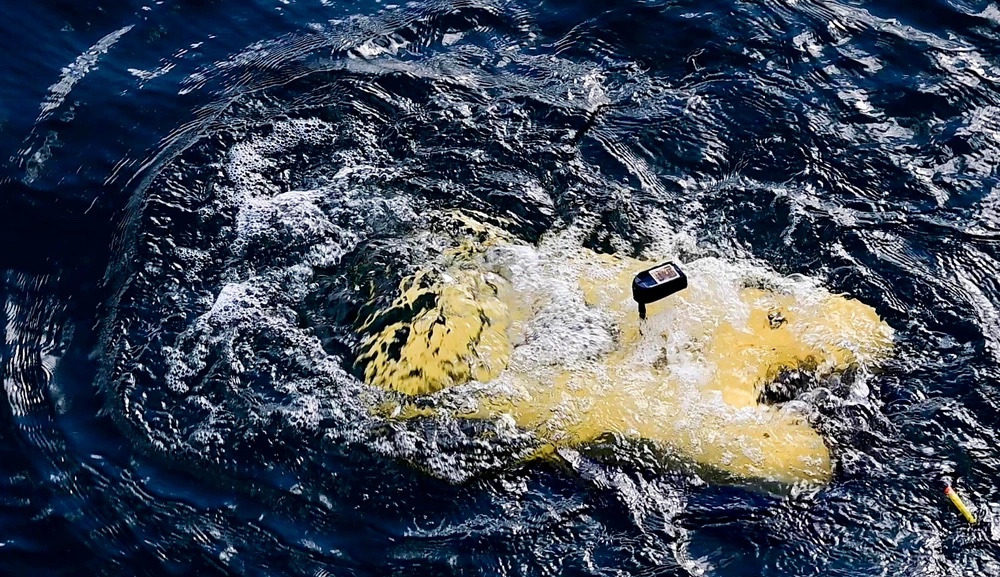
The project isn’t about new uncrewed underwater craft: each AUKUS partner is already working on its own. Rather, it focuses on developing shared technology that will enable such vessels to navigate, detect and attack — progressing from testing autonomous submarines such as the Anduril Ghost Shark and C2 Robotics Speartooth to ensuring they can work together to protect critical underwater infrastructure and counter undersea warfare threats.
The project will enable AUKUS partners to work together across surveillance, reconnaissance and strike capabilities, logistics operations, anti-submarine and anti-surface warfare, mine countermeasures, electronic warfare, and contested littoral manoeuvre. Interoperability will be advanced through shared standards, trilateral operational concepts, and common control systems.
Delivery will follow a phased approach: first, each nation will develop national payloads that will be interchangeable and integrated across the partnership, with each nation focusing on a different type of operational effect. Trilateral joint development and production of next-generation payloads follows in a second phase.
The strategic framing at Shangri-La centered on undersea infrastructure as a primary vulnerability. Australian Deputy Prime Minister and Defence Minister Richard Marles highlighted that Australia had to defend fifteen submarine cables through which almost all of Australia’s internet traffic flowed, with some smaller Pacific nations relying on just one. British Defence Secretary John Healey acknowledged that for too long on AUKUS, partners had talked too much and delivered too little.
The Australian Strategic Capabilities Accelerator tested necessary technologies for UUV networked operations in its Maritime Big Play exercise earlier this year, and the announcement likely means testing will accelerate to ensure UUVs can connect with networks ashore for human oversight and control. Payload requirements include passive and active sonars, communications sensors, and — under human control consistent with international humanitarian law — weapons including mines and torpedoes. The connectivity challenge is significant: high-bandwidth radio communications are not possible underwater, making resilient command links a central enabling problem for UUV swarm operations.
The announcement lands alongside operational deployments already underway. The Royal Navy’s RFA Lyme Bay departed Gibraltar last week carrying RNMB Ariadne, a 12-meter autonomous minehunting vessel, for a potential Strait of Hormuz mission — the first operational integration of an uncrewed surface vessel into a Bay-class mothership’s floodable dock. The AUKUS signature project represents the allied policy architecture being built above those deployments.