
Activated in February, the Army’s new Capability Program Executive for Mission Autonomy is assembling an acquisition organization unlike any that preceded it—integration first, platforms second, and built on the premise that the unit should never again bear the burden of integrating its own robotic systems. Brig. Gen. Anthony Gibbs briefed the model at XPONENTIAL in Detroit.
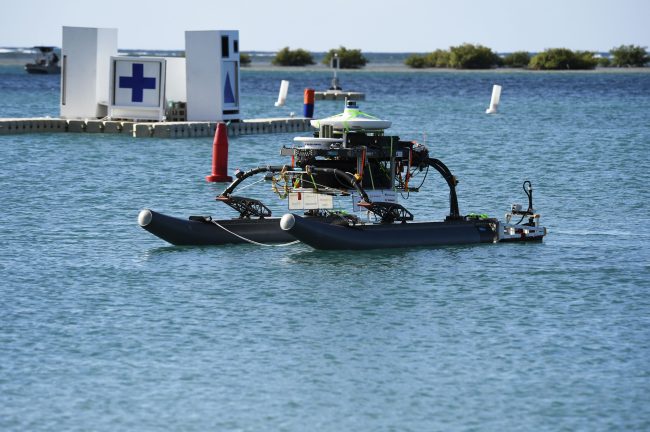
Brig. Gen. Anthony Gibbs opened his presentation at XPONENTIAL in Detroit with an admission that is unusual for a government program manager introducing a new organization: “We are still in the phase of introducing it, standing it up. We are actively building it, but we’re not waiting to get it built before we move forward.”
The organization is Capability Program Executive (CPE) Mission Autonomy—the Army’s Capability Program Executive for Mission Autonomy, activated at Fort Belvoir on February 27. It is the Army’s answer to a problem that has accumulated for years across multiple program executive offices, multiple programs of record, and multiple efforts at robotics integration that have not, in the aggregate, produced what the battlefield now demands: autonomous systems that operate as formations, under common control, without soldiers bearing the integration burden themselves.
Three solicitations were already in source selection when Gibbs took the stage in Detroit. The organization is building its acquisition model as it executes it.
Why Now, and Why This
The CPE did not emerge from a clean-sheet design exercise. It emerged from a recognition that the Army’s existing approach to unmanned and autonomous systems acquisition was structurally inadequate for the problem.
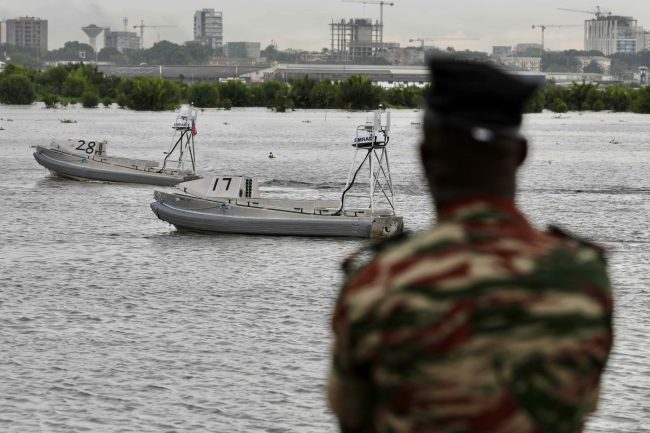
Gibbs traced the diagnosis to a set of converging pressures. The Army’s Robotic Combat Vehicle major program—the service’s primary manned-unmanned ground effort—was wound down after concerns about cost and, critically, survivability. The proliferation of first-person-view drones carrying lethal warheads on the modern battlefield had fundamentally changed the calculus on what an expensive, exquisite ground platform could survive. The Army pivoted toward what Gibbs called “trivial mass”—attritable, expendable systems that accept a higher risk of loss in exchange for scale and cost.
At the same time, the Army looked at how it was organizing autonomous systems acquisition and found a structural problem. Ground systems had two program executive offices managing them. Air systems had two PEOs managing them. Command and control systems had multiple PEOs in that space. “Really operating in silos,” in Gibbs’s framing. And the consequence was an integration gap that fell to the unit: formations of unmanned systems operating one-to-one, not networked, not under common control, not delivering the multiplicative effect that the technology is capable of producing. “Our system is not designed that way,” Gibbs said. “The requirements were written describing very specific things. Very specific platforms. What’s missing in all of that is the integration rules.”
CPE Mission Autonomy is organized to close that gap. It is nested within the Army’s Portfolio Acquisition Executive structure for Protection and Integration—a cross-cutting position by design, because robotic and autonomous system capabilities touch every warfighting function. Gibbs was explicit: “We support all PAEs.”
Integration First, Acquisition in Reverse
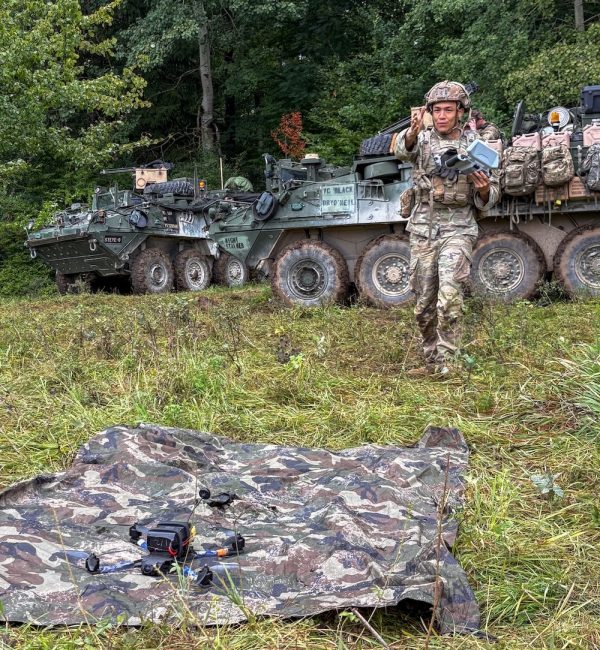
The CPE’s organizing principle is stated plainly in its first principle: deliver full packages of capability, end to end, “so that the integration burden is not on the unit itself.” Platforms and payloads remain in the portfolio, but they are subordinate to the integration objective. The organization is structured around that priority, not around the platforms.
The acquisition philosophy that follows from this is what Gibbs calls “acquisition in reverse.” The traditional defense acquisition model begins with a defined operational requirement, derives a detailed performance specification, and generates hundreds of discrete requirements that a vendor must meet. The CPE inverts that sequence. It describes an operational problem, solicits full capability packages from industry to solve it, and develops the formal requirements document in parallel—working with the operational user community simultaneously rather than sequentially—so that when a solution converges, the requirements infrastructure to sustain and field it is already in place.
The engineering breach solicitation illustrates the model. Rather than specifying that a vehicle must surmount a 15-inch step at a defined speed, the CPE described the tactical problem a breach team faces and asked industry to propose a full system-of-systems package to solve it. Vendors responded with integrated solutions. The CPE’s mission teams worked with units to define what success looked like. The two streams converge rather than proceeding serially.
Gibbs was direct about the implications for how industry should engage: “We are actively questioning everything that we have learned and we have practiced in acquisition for the past several decades.” The ask to industry is correspondingly different. “Understand the full reality of the warfighter’s problem,” he said. How does your system get to the fight? How does it do mission planning? How does it power itself? How many people does it take to operate? The CPE is trying to relieve units of exactly those burdens, which means vendors must understand and address them, not defer them to the government.
How the Organization Is Built
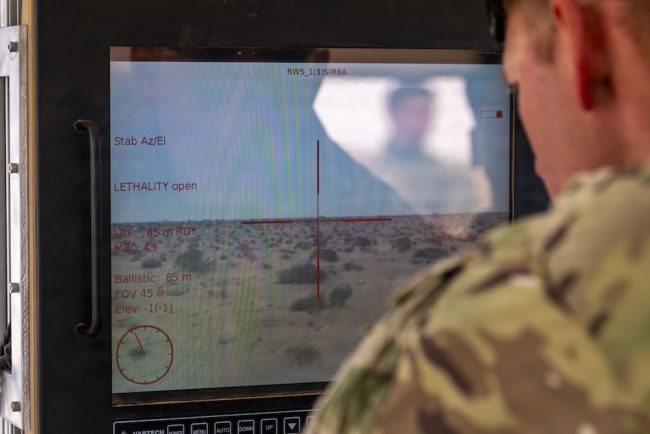
CPE Mission Autonomy assembled itself from existing pieces rather than starting clean. Program Executive Office Ground Combat Systems in Warren, Michigan, contributed platforms and payloads expertise. PEO Combat Support and Combat Service Support, also in Warren, contributed sustainment robotics. Picatinny Arsenal in New Jersey contributed the Robotic Warfare Systems team—the organization formerly known as the CROWS team, which has integrated robotic weapon systems onto nearly every ground and maritime vehicle type in the joint force. Aberdeen Proving Ground in Maryland rounds out the footprint. Headquarters is at Fort Belvoir, Virginia.
The organizational structure runs on three functional lines. CTO Mike Rose leads strategic technology planning and external alignment—the function Gibbs describes as identifying which of the “field of wildflowers” of Army robotics experiments are most promising, quantifying the gap to scale, and building acquisition strategies to bridge it. Col. Ken Bernier leads PM Autonomous Robotic Capabilities, the buy-items office responsible for platforms and payloads. Rob Monto leads PM Robotic Control and Integration, the office responsible for integration and deployment—the software, the architecture, the system-of-systems delivery.
The centerpiece of the structure, and the newest element, is PM Formation Based Mission Autonomy, led by LTC(P) John Williams. Under Williams are three mission PM teams, each aligned with a specific division partner and a specific operational problem set: PM Mission Autonomy All Arms Maneuver, aligned with 1st Cavalry Division, focused on reconnaissance, screening, breaching, and tactical obstacle emplacement; PM Mission Autonomy Fires, C2 and Counter-C2, aligned with 4th Infantry Division, focused on target identification, automated call-for-fire, hunter-killer operations, range extension, and electronic warfare; and PM Mission Autonomy Agile Sustainment and Protection, aligned with 25th Infantry Division, focused on resupply, CASEVAC, surveillance, fixed site protection, and counter-UAS.
Those division alignments are not incidental. They are the mechanism by which the CPE maintains continuous contact with operational formations, iterates on fielded systems in the dirt, collects data, trains algorithms, and pushes updates back to units potentially in the fight—the continuous integration and continuous deployment pipeline for autonomy that appears on the cross-cutting technologies slide as “CI/CD Pipeline for S/W updates at tactical edge.”
Three Priorities, One Progression
The three active solicitations map to the three mission PM teams, and Bernier’s description of the sustainment problem illustrates how the CPE thinks about capability development as a progression rather than a set of discrete programs.
The sustainment autonomy stack begins at the Palletized Load System—the Army’s heavy logistics truck. The Autonomous Transport Vehicle System, already in development, addresses autonomous resupply at the PLS level: getting the pallet to the right place. That is the first building block. The second problem is distribution. Once the PLS delivers the pallet, how does supply at the pallet level get pushed forward autonomously? That is a separate solicitation, a separate system, a separate set of autonomy requirements. The third is the last tactical mile. Once the pallet is distributed, how do individual components—ammunition, spare parts, medical supplies—get pushed to troops at the forward line? Each layer of the stack has its own technical challenge and its own acquisition action, but Bernier’s point is that all three were developed in synchronization. “On day one, we spoke the same language,” he said. “We started finding commonalities, and we started driving a solution that made sense.” That is the formation-based approach applied to sustainment autonomy.
The Center of Gravity: Unified C2
The cross-cutting technologies slide at the center of the CPE’s architecture briefing is the most important thing Gibbs showed in Detroit, and it is the element most likely to be misread by vendors thinking about this office as a platform buyer.
At the center of the CPE’s hexagonal architecture diagram is not a platform. It is a list of cross-cutting technologies: Modular Open Systems Approach (MOSA) Architecture and RAS Standards, a Robotic Smart Routing Network integrated with Next Generation Command and Control (NGC2), Common Software and Hardware Infrastructure, Integrated Cross-Platform Common Control, Platform Reuse and Reconfiguration, Modular Mission Payloads, Mission Autonomy Planning Capabilities, Machine Teaming, and the CI/CD pipeline. Those are the enabling technologies that make formation-based autonomy possible. The platforms and payloads around the edges—ground, fires, air, protection, sustainment, C2—are expressions of what that center makes possible, not the center itself.
Gibbs put it plainly: The Unified C2 Architecture for Collaborative Autonomy is the whole product. The org chart shows it as one of two foundational elements the CPE delivers, alongside platforms and payloads with autonomy. Mission autonomy, in his framing, is the capability that allows a unit to task a formation of unmanned systems “much like they do a manned formation”—translating the commander’s intent into mission plans and execution, dynamically recasting as the enemy situation changes. That is not a platform capability. It is a software and architecture capability. And it requires, as Gibbs told the industry audience directly, that vendors build to open APIs and avoid proprietary interfaces—a position he stated plainly at XPONENTIAL and has repeated at multiple industry forums this year.
Rose framed the CTO’s job as identifying which experiments across the Army’s “field of wildflowers”—the disparate investments from DIU, DARPA, ARL, DevCom, program offices—are producing operationally relevant capabilities, and then quantifying the gap to scale. The technology development question has largely been answered, in his view. The standing question is how to move from demonstrated capability to fielded formation capability, and what acquisition structures can close that gap at the speed the operational environment demands.
Is This Another Reset?
The final question from the audience at Detroit was the most pointed. An attendee who identified himself as having spent several years working on robotics for the Army and having “gone around the circle of collaborating with the Army in experimentation in robotics a number of times,” asked directly: “Is this just another reset?”
It is the right question. The Army’s history with robotic systems includes the Future Combat Systems program, the Squad Multipurpose Equipment Transport, the Common Robotic System, the Robotic Combat Vehicle. Each generated significant investment, experimentation and organizational energy before stalling on cost, survivability, requirements growth, or some combination. The critique embedded in the question is structural: Does standing up a new organization solve the underlying acquisition problem, or does it create another layer of bureaucracy through which promising technologies must navigate before reaching soldiers?
Gibbs’s answer pointed to what is genuinely different this time: the technology environment, the acquisition philosophy, and the operational urgency. The VC investment numbers he cited—$49 billion in defense and dual-use technology in 2025, double the 2023 figure, already on track to be exceeded in 2026—describe an industrial base that is funding autonomous systems development at a pace and scale that the Army did not have in earlier robotics cycles. The problem is no longer whether capable technology exists. The CPE’s formation-based, integration-first, acquisition-in-reverse model is designed for an environment where capable technology exists in quantity and the constraint is fielding, not invention. Whether that model holds under the bureaucratic pressures that have flattened previous efforts is the question the organization will spend the next several years answering.