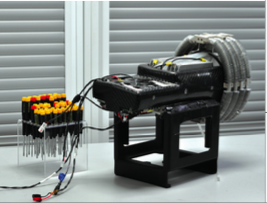

Third-generation directed energy platform emphasizes modularity, AI-enabled targeting and low-cost counter-drone engagement.
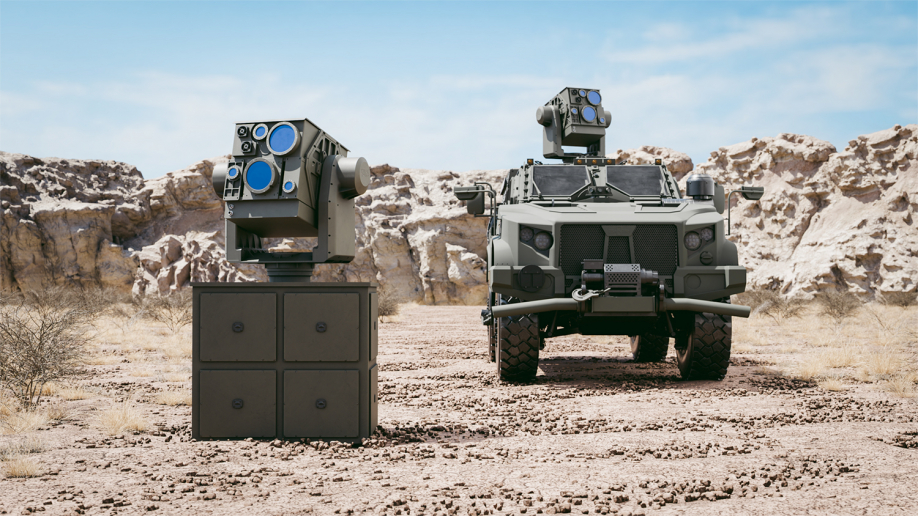
AeroVironment (AV) has introduced LOCUST X3, a third-generation modular directed energy weapon system, as U.S. defense agencies continue to scale counter-UAS procurement through Joint Interagency Task Force 401 (JIATF-401) and related programs.
The system, unveiled March 24, is designed to counter small- and medium-sized unmanned aerial systems using a high-energy laser with automated targeting and engagement capabilities.
The announcement comes alongside new contract activity from JIATF-401, which is expanding acquisition of both kinetic and non-kinetic counter-drone systems as part of its “Domestic Shield” architecture for homeland and base defense.
Directed energy enters scaled procurement conversation
LOCUST X3 represents AV’s latest iteration of a laser-based counter-UAS platform, delivering engagements at the speed of light with a scalable output in the roughly 20–30 kW class.
The system is explicitly positioned around cost-imposition: engagements are measured in dollars rather than thousands or millions, addressing the widely cited mismatch between low-cost drones and expensive interceptors.
This economic framing has moved from conceptual advantage to operational requirement, particularly as drone saturation tactics—observed in Ukraine and other theaters—drive demand for persistent, high-volume defensive systems.
Modular architecture and AI-enabled engagement
LOCUST X3 integrates automated detection, tracking and engagement through AV’s software stack, enabling a more autonomous kill chain relative to earlier directed energy demonstrators.
The platform is designed with a modular, open architecture approach, supporting integration across vehicle-mounted, fixed-site and potentially maritime configurations. This aligns with broader Department of Defense efforts to standardize counter-UAS systems around interoperable sensors, effectors and command-and-control layers.
JIATF-401 expands layered C-UAS procurement
In parallel, JIATF-401 has continued to execute contracts aimed at building a layered counter-UAS defense architecture across U.S. Northern Command and other domestic mission areas.
Recent awards include procurement of rifle-mounted fire-control systems and multi-sensor detection platforms, integrated through networked command-and-control frameworks to support distributed sensing and engagement.
While relatively modest in dollar value, these contracts reinforce a broader shift toward integrated architectures that combine kinetic interceptors, electronic warfare and directed energy systems.
From prototypes to operational layering
The convergence of LOCUST X3’s introduction with ongoing JIATF-401 procurement activity reflects a broader transition in counter-UAS: from isolated system demonstrations to operationally layered defenses.
Directed energy systems such as LOCUST X3 are increasingly positioned as a complementary layer within that architecture—particularly suited for countering low-cost, high-volume threats where traditional interceptor economics are unsustainable.
At the same time, JIATF-401’s continued investment in distributed sensors, fire-control systems and networked command-and-control underscores that no single effector—laser or otherwise—is expected to operate independently.
Scaling toward sustained operations
Taken together, the LOCUST X3 announcement and JIATF-401 contract activity point to a maturing counter-UAS ecosystem defined by three converging priorities: cost-per-engagement, system interoperability and production scalability.
Rather than focusing on standalone performance metrics, current programs emphasize how systems integrate into broader operational networks—linking detection, decision and defeat across multiple domains.
In that context, LOCUST X3 enters not as a replacement for existing counter-UAS approaches, but as part of an increasingly software-defined, layered defense architecture designed for sustained, high-tempo operations.