
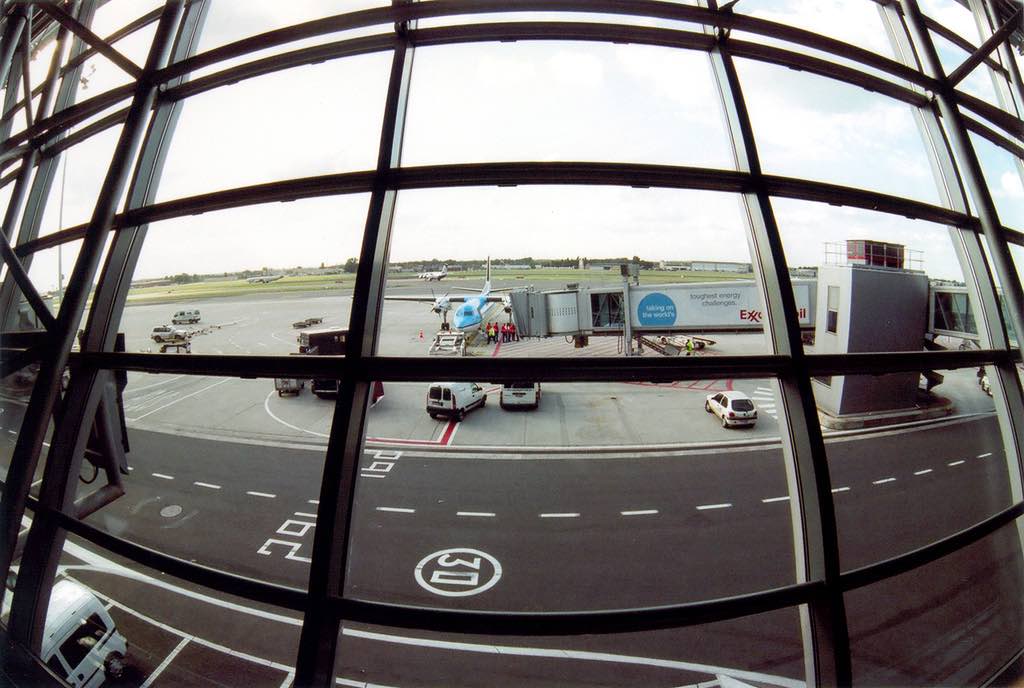
Unauthorized drone activity prompted a major disruption at Brussels Airport on 4 November. Flights were temporarily suspended after multiple drones were detected near the airfield, forcing air traffic controllers to ground outgoing planes and reroute incoming planes and for several hours.
The economic impact for airlines, passengers, and cargo operations, was significant. The event and others like it underscore the need for enhanced counter drone (C-UAS) capabilities in Europe.
Drones were spotted over the Kleine-Brogel Air Base, which operates F-16 Fighting Falcon fighter jets, near the country’s border with the Netherlands on the evening of Saturday, 1 November 2025, and again during the night of 1-2 November.
According to Defense Minister Theo Francken, the drones seen on Saturday evening were not commercial models but larger, more sophisticated ones. On the social network X, he wrote these were not accidental overflights: “This was not a simple overflight, but a clear mission targeting Kleine-Brogel.” He also pointed to espionage as a potential motive for the activity. “We are further increasing our vigilance in order to apprehend the pilots,” he added.
An unspecified ‘drone jammer’, said to disrupt radio signals used by drones, was activated on Saturday but reportedly proved ineffective.
Drones were again observed over the base in the early evening of Sunday, 2 November. Around 7 p.m., police and defense forces detected four drones, according to Peer Mayor Steven Matheï. Police have been investigating, and a federal police helicopter has been deployed repeatedly in attempts to pursue the unidentified aircraft. Those reported on the evening of 2 November were seen to disappear in a northerly direction, towards the Netherlands.
Authorities later confirmed no aircraft were endangered, but the incident raised serious safety concerns and highlighted the broader challenge of preventing unauthorized drones from entering sensitive airspace.
Beyond Belgium, these incidents expose a persistent EU-wide gap between rising drone risk and uneven counter-UAS authorities, standards, and deployments. Airports, bases, and critical infrastructure remain vulnerable as member states face differing rules on RF detection, jamming, and kinetic intercept—complicating cross-border response when drones transit national airspace seams.
Recent battlefront lessons and repeated airport disruptions argue for a harmonized EU framework that aligns U-space/Remote ID with accredited C-UAS sensors and effectors; clarifies legal use of electronic countermeasures for law enforcement and the military in peacetime; accelerates joint procurement and common CONOPS via the European Defence Agency; and expands real-time data sharing among ANSPs, police, and defense. Without that alignment, plus investment in layered systems (radar, EO/IR, RF, acoustic, protocol exploit) and training, Europe will continue to absorb safety, security, and economic costs from hostile or reckless drones.