
Founded on first-principles design and powered by hydrogen fuel cells, Unmanned Aerospace is bringing a bold new platform to the ISR domain. Founder Gad Shaanan shares how the GH-4’s rotorcraft lineage and unconventional engineering enable it to meet emerging defense demands in maritime, expeditionary and contested environments.
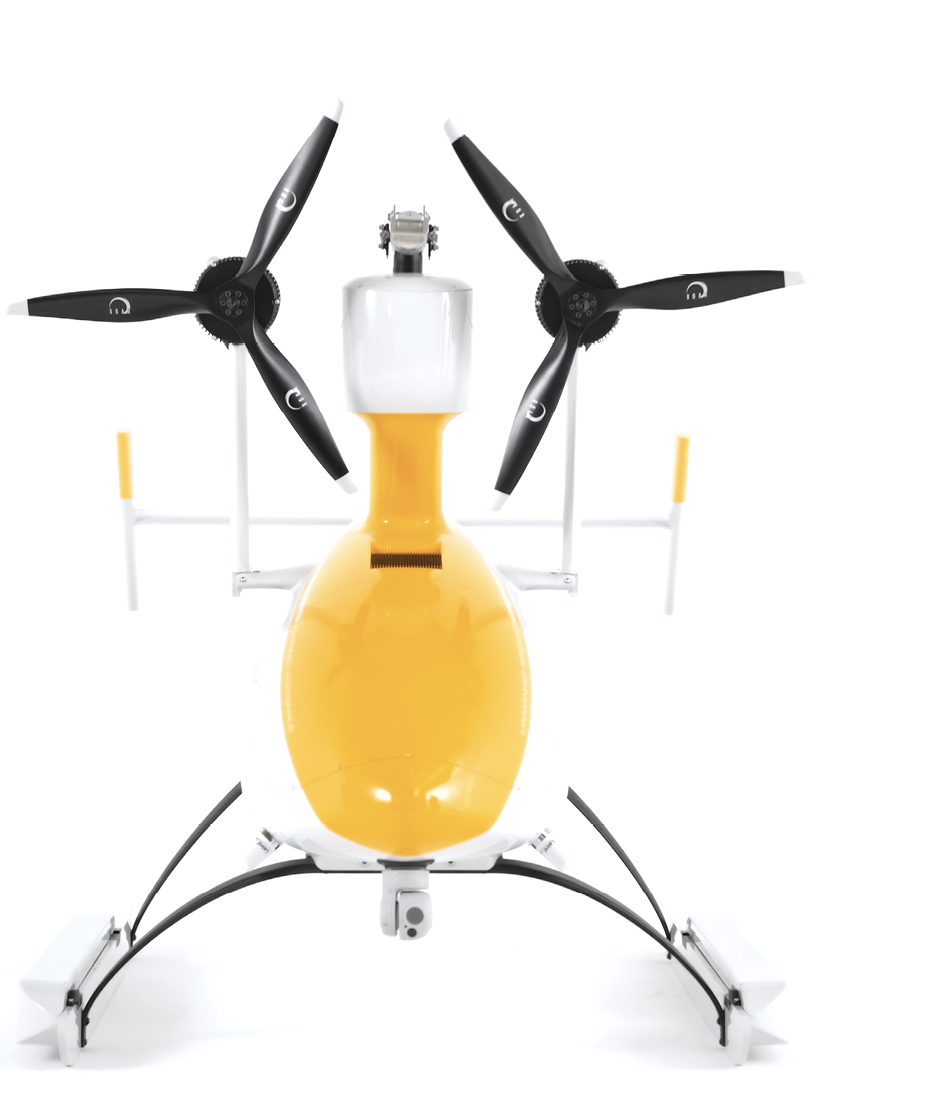
When veteran industrial designer Gad Shaanan turned his attention to the unmanned aircraft sector in 2019, he saw limitations similar to those he’d witnessed across multiple industries: incrementalism, legacy constraints, and reluctance to think beyond current norms. After studying emerging requirements in defense and industrial aviation, he founded Unmanned Aerospace (UA) with a clean-sheet approach—one that rejected short-range, battery-constrained multicopters and complex helicopter mechanisms.
Instead, Shaanan set out to develop a scalable, gyrocopter-derived aircraft that could combine the endurance of fixed-wing platforms with the vertical lift capabilities of helicopters, powered by ultra-efficient hydrogen fuel cells. After prototyping the GH-4 and seeking feedback from industry, Shaanan partnered with ex-Insitu chief engineer Jeff Knapp who believed in the vision and joined as CTO and investor.
Now, with the GH-4 flight tested and partnerships with the U.S. Navy underway, Unmanned Aerospace is positioned to advance ISR flexibility across land and sea. In this exclusive Q&A, Shaanan outlines the GH-4’s capabilities, autonomy roadmap, and multi-intelligence potential.
IUS: Can you elaborate on how the GH-4’s design enhances its effectiveness in ISR missions, particularly in maritime environments?
SHAANAN: With 140 nautical mile range and 30 minutes of hover, the GH-4 has the ability to hover a target that needs close scrutiny. In addition, because it is in gyro mode in forward flight, it is hard to detect because of its very low noise footprint at low altitudes. With the integrated GPS and GPS-denied technology, it can fly over open ocean with target acquisition certainty.
IUS: The GH-4 is described as a scalable rotorcraft. How could this scalability translate to operational flexibility in various ISR scenarios?
SHAANAN: The GH-4 has a 15-pound payload. The GH-5 will have 110 pounds and the GH-6, 350 pounds. Each of the aircraft will have a longer range, covering a lot more ground. The operator has the option to arm the aircraft with more sophisticated, heavier and multiple ISR technologies, or keep the weight down and gain even more distance and hover time.
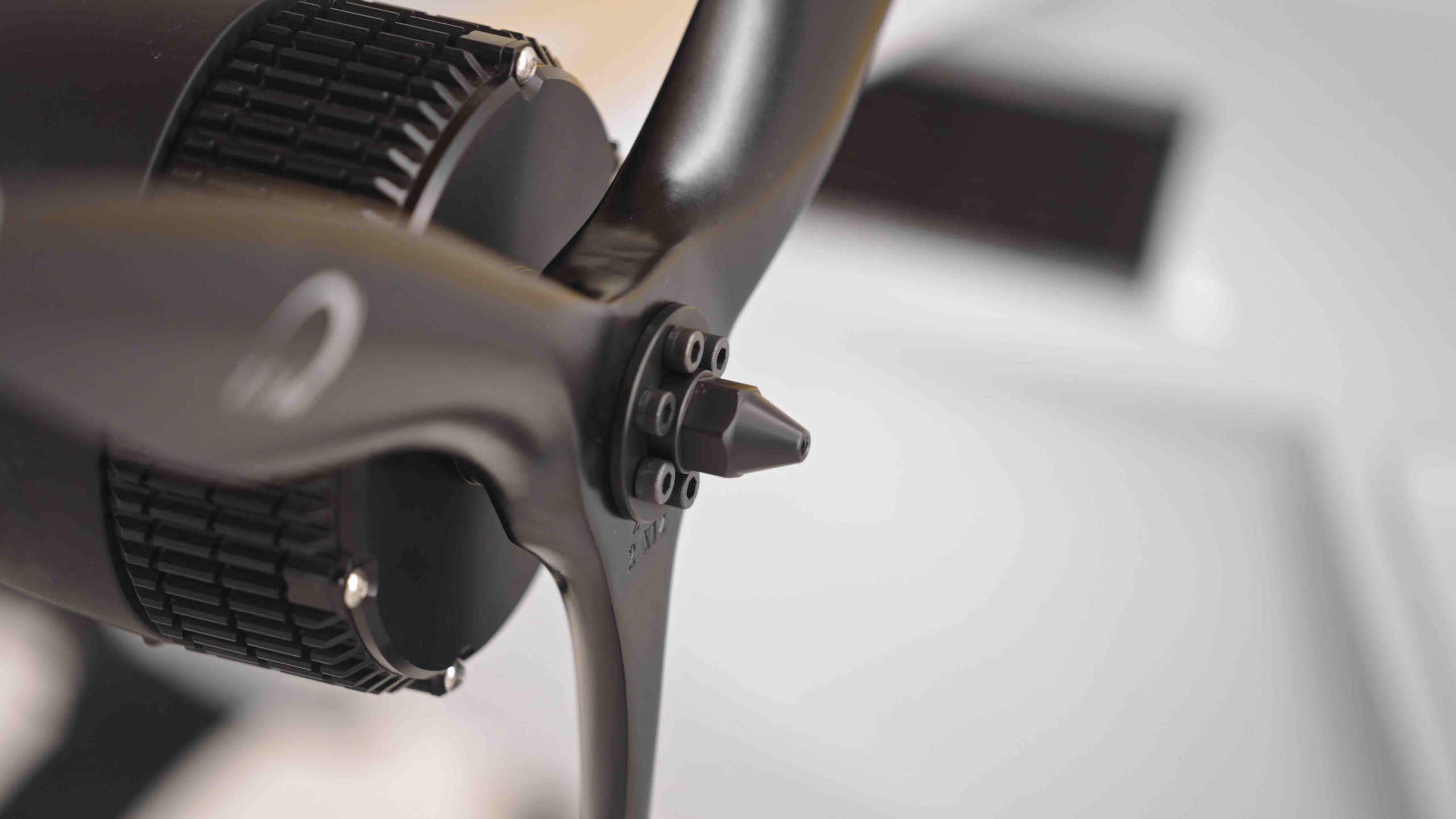
IUS: With options for all-electric hydrogen fuel cells and JP-5 engines, how do these power systems impact the GH-4’s endurance and suitability for extended ISR operations?
SHAANAN: The flight endurance in both cases are the same. The interesting part is the GH-4 only requires 740 grams of H is compared to 12 liters of JP-5 to accomplish the same four-hour mission.
IUS: Can you provide insights into your collaboration with the U.S. Navy and OECIF? How is the GH-4 expected to be integrated into naval ISR strategies?
SHAANAN: The U.S. Navy is looking to integrate the GH-4 in two ways: ISR and logistics. One of the bigger issues the Navy is experiencing is being able to land on a moving ship in open ocean. When they use a “lift plus cruise” aircraft (fixed with four propellers for VTOL) and they come to land on a ship, they do not have enough time to land properly with a moving and rocking ship, so the aircraft lands in the ocean. Most of these lift plus cruise solutions only have a six-minute VTOL/hover time. A multicopter does not have that issue but has a limited flight range. Last, we can transition from ISR to logistics in less than two hours, providing mission flexibility.
IUS: What types of sensors are compatible with the GH-4, and how does the platform support multi-intelligence (multi-INT) capabilities?
SHAANAN: From an ISR perspective, we use the Trillium HD-25 as permanent “eyes” and the HD-80 for ISR. We also integrated detect and avoid, as well as friend or foe. The GH-4 has additional technologies that we cannot discuss at this point.
IUS: How autonomous is the GH-4 during missions, and what control systems are in place to ensure mission success in contested or GPS-denied environments?
SHAANAN: Because of the unique capability of the GH-4, presently we are focused on flight testing the aircraft with a pilot assist. One such example is that when we come to a landing, the GH-4 does not necessarily need to transition from gyrocopter mode to helicopter mode; gyrocopters are capable of hovering with very little headwind, so we are teaching the autopilot with some additional software to make the decision. This is just one example of its unique features. Once all is integrated, we will offer a fully autonomous solution. And yes, we integrated GPS-denied technology, being able to land on moving ships and more.
IUS: The GH-4 emphasizes reduced complexity and maintenance. How does this benefit operations, especially in remote or austere locations?
SHAANAN: Thanks to our Automatic Pitch System (APS), we have 10% of the complexity of a helicopter, which translates to 10% of the mechanical maintenance compared to a helicopter, while being able to do everything a helicopter can do. In addition, several of the sub-assemblies are field-replaceable. Example: The rotor head and other associated components can be replaced with eight screws. The fuel cells and most of the electronics are mounted on a frame that can also be removed and replaced with eight screws.
IUS: In ISR missions, data security is paramount. What measures are implemented to ensure the integrity and confidentiality of the data collected by the GH-4?
SHAANAN: All our communications are AES-256 encrypted.
IUS: Looking ahead, what advancements or enhancements are planned for the GH-4 to meet evolving defense requirements?
SHAANAN: The GH-5 and GH-6 are on the drawing board for additional range and payload. At the same time, as we get feedback from the warfighters, we will continue to improve this very new and unique aircraft.
LOOKING AHEAD
As ISR needs evolve to demand greater endurance, lower signatures, and flexible basing options, Unmanned Aerospace’s GH-4 offers a compelling vision of what a modular, hydrogen-powered UAS can deliver. With expansion plans already underway, and ISR applications extending from ship decks to denied airspace, the GH-4 and its successors may soon become indispensable to distributed maritime operations and expeditionary ISR.