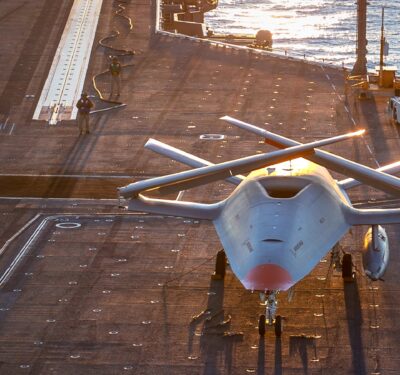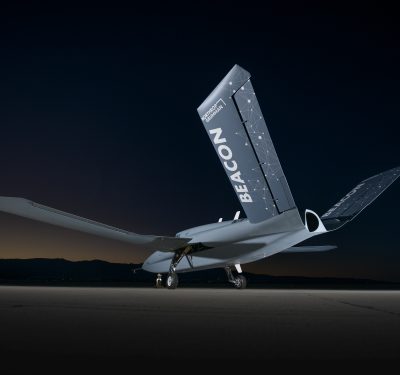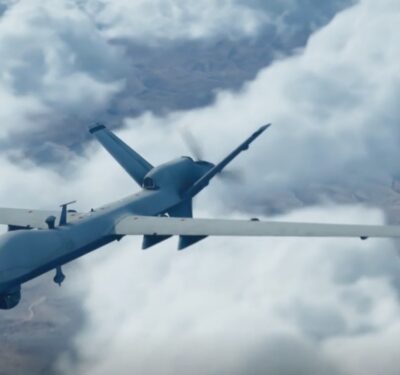

Uncrewed vehicles, robotics and autonomous systems are reshaping the future of commercial industries, warfighting and manufacturing. As deployment accelerates, secure and resilient supply chains for these technologies have become a strategic imperative for national security and global competitiveness.
PARTNERSHIP FOR ROBOTICS COMPETITIVENESS
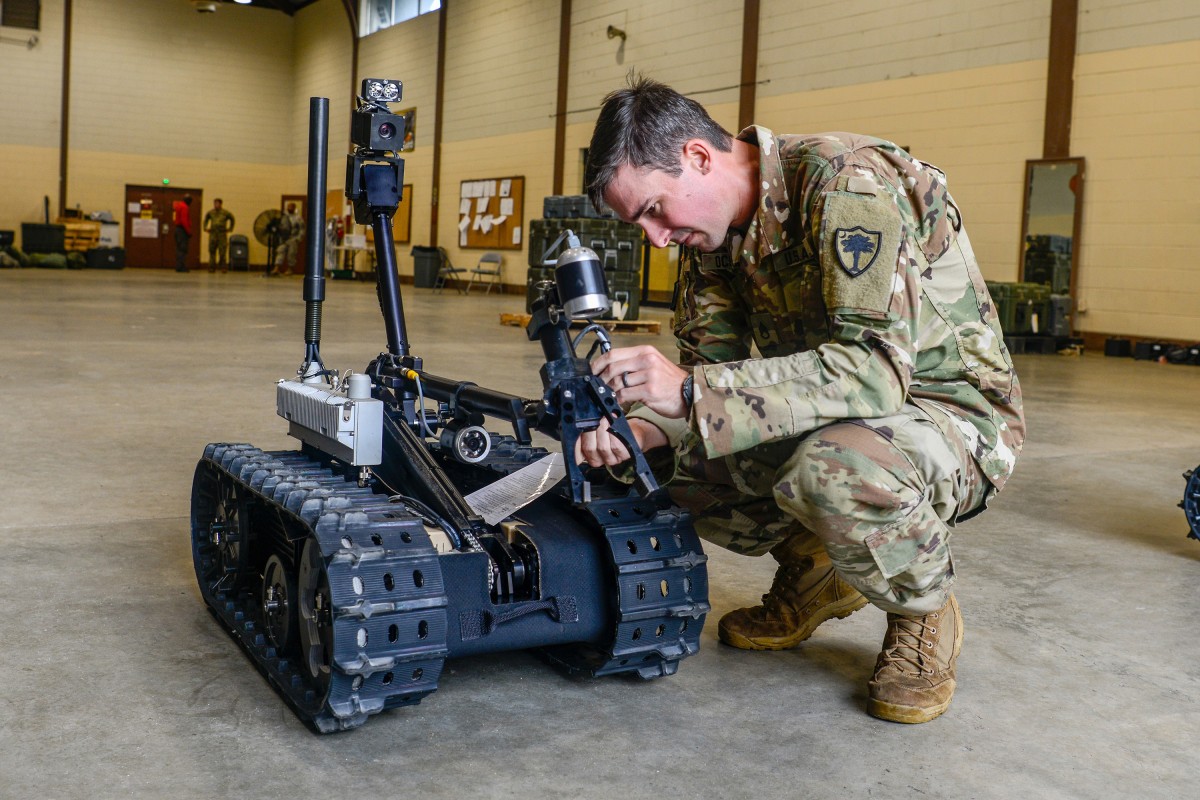
The recently launched Partnership for Robotics Competitiveness (PfRC) is focused on securing U.S. and allied leadership in robotics by strengthening trusted supply chains, safeguarding innovation, and ensuring that critical technologies align with national economic and security priorities. Bringing together innovators, manufacturers, end users, and policymakers, PfRC is calling for a comprehensive National Robotics Strategy to coordinate research and innovation, scale domestic production, develop the workforce of the future, establish technology standards, and deepen collaboration with allies, ensuring the United States can compete effectively on a level playing field and help shape the global rules governing these future-defining technologies.
CONGRESS BEGINS TO RESPOND
Congress has already started to act: Rep. Jay Obernolte (R-CA) and Rep. Jennifer McClellan (D-VA) recently introduced the National Commission on Robotics Act, bipartisan legislation that would establish an independent commission to develop recommendations for a national robotics strategy, strengthening U.S. leadership, advancing workforce readiness, and reinforcing industrial resilience in this strategically important sector. AUVSI strongly endorsed this legislation.
The People’s Republic of China’s (PRC) rapid progress in robotics underscores the urgency of this challenge. The Chinese Communist Party (CCP) is implementing a deliberate, state-backed strategy, mobilizing the entire country, from top political leadership to local governments, to dominate the industries that will define the future through successive five-year plans. This momentum is reflected nationwide: In 2024, the PRC installed approximately 295,000 industrial robots, more than all other countries combined. China’s robotics market has grown into a roughly $47 billion industry. Extensive government subsidies, local procurement incentives, and vertically integrated supply chains allow PRC manufacturers to produce key systems and components at significantly lower cost than global competitors, biasing the global market.
CLOSING THE TECHNOLOGY GAP
Chinese robotics companies are also closing the technology gap, filing roughly two-thirds of the world’s effective robotics patents and advancing key technologies across the autonomy stack. Meanwhile, automated manufacturing has enabled PRC firms to cut prices, scale production, and capture much of the global market up and down the robotics tech stack. As a result, manufacturers worldwide, including in the U.S., face mounting competitive pressures from anticompetitive practices and the risk of increasing dependence on Chinese robotics and technology ecosystems.
These developments illustrate why the U.S. must act decisively. Without significant investment in both the advancement of key technologies to secure U.S. technological leadership in advanced robotics as well as in the industrial base to produce them at scale, the United States and our allies risk falling behind both technologically and economically. Dependence on PRC-sourced robots or components introduces cybersecurity vulnerabilities, exposes critical supply chains to disruption, and could cede leadership in industrial automation to China. If the CCP can set the rules for robotics and autonomous systems, the U.S. and our allies may be forced to comply with standards that don’t align with our values system rather than shaping the standards.
Emerging U.S. government action on this, such as the Department of Commerce’s 232 investigation on robotics and industrial machinery and the introduction of the National Commission on Robotics Act, are steps in the right direction. These policies highlight the importance of sourcing from trusted suppliers and protecting supply-chain integrity, safeguarding national security and economic competitiveness, and ensuring technological leadership.
THE CASE FOR A NATIONAL ROBOTICS STRATEGY
As a crucial first step, the United States needs a plan to catch up. A comprehensive National Robotics Strategy is urgently needed. Such a strategy must take steps to counteract anticompetitive practices by PRC firms, accelerate domestic production, coordinate with our allies, and provide a roadmap for adoption at scale. By investing in domestic capabilities, incentivizing trusted suppliers, and working closely with allies, the United States can compete with China’s scale, speed and strategic coordination, and ensure global standards reflect U.S. and allied values, not those of the CCP.
SECURING ALLIED SUPPLY CHAINS
At the core of any national strategy, securing domestic and allied supply chains is a strategic imperative. By embedding supply chain integrity and security into every uncrewed system, and by making decisive investments in U.S. and allied capabilities, the United States can protect national security, preserve economic competitiveness, and define the technologies that will shape the future. The clock is ticking: Without bold action, these technologies, and the standards that govern them, may increasingly be set by our strategic adversaries.
Michael Robbins is president and CEO at the Association for Uncrewed Vehicle Systems International(AUVSI).