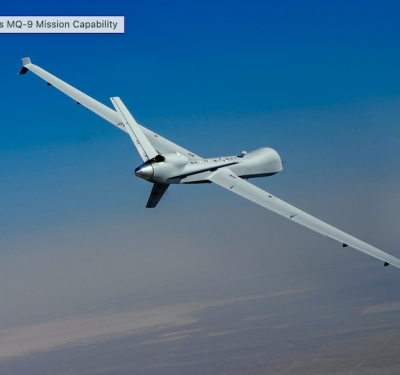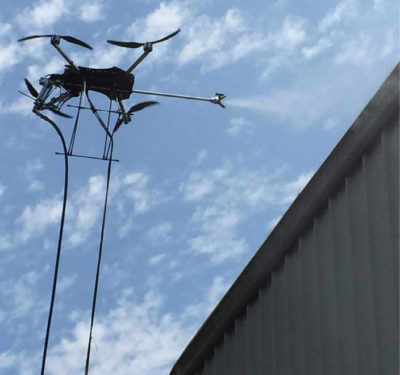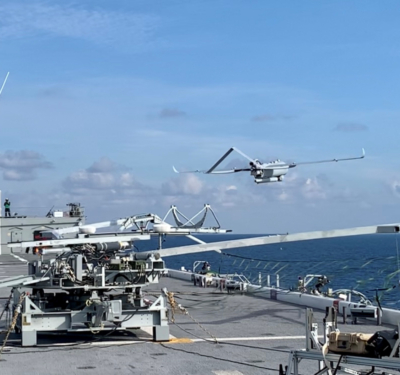

There’s been a shift in Washington. Congress just held two hearings focused on robotics and autonomous systems in just over a month—a welcome level of attention for a sector that, until recently, received only intermittent focus on Capitol Hill.
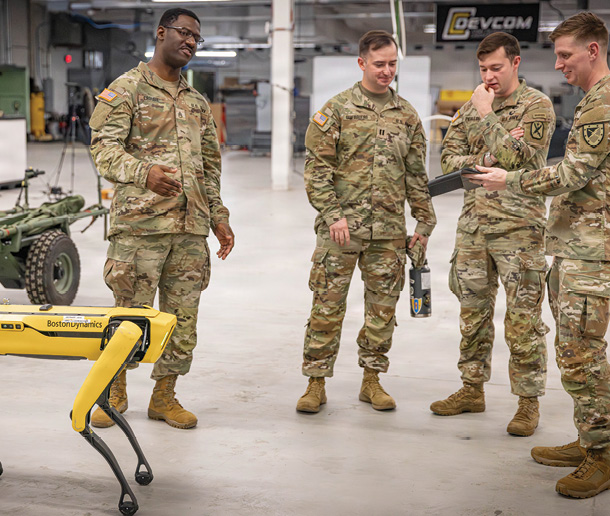
That change signals a broader recognition taking hold among lawmakers: Robotics and autonomous systems are no longer an emerging technology category. It is a strategic capability, and the United States cannot afford to fall behind in bringing it to scale.
There is also a growing awareness of a harder lesson. In the case of drones, U.S. policy did not keep pace with a rapidly evolving global market where state-backed competitors, particularly from the People’s Republic of China, moved aggressively to scale, capture market share, and control supply chains. The result is a strategic competitor dominating a critical technology sector with clear national security and economic implications.
Lawmakers are increasingly aware that robotics and autonomous systems cannot follow the same path—the United States cannot cede leadership in another critical technology sector.
That realization is beginning to translate into action. Congress has started to engage more directly, with proposals like the American Security Robotics Act aimed at strengthening domestic capability and reducing reliance on adversary-controlled systems. These are early steps, but they reflect a shift from passive interest to active policymaking.
THE CHALLENGE AHEAD
At the same time, the window to get this right is starting to close.
Autonomous systems are already delivering value across industries—from infrastructure and energy to logistics, agriculture and defense. The question is no longer whether the technology works or its many benefits, but whether the policy environment will allow it to scale. Many operations still rely on waivers and pilot programs that enable testing, but not routine, repeatable deployment. Airspace integration, data governance, supply chain security, and operational trust are central challenges as adoption expands.
These issues sit at the intersection of policy, technology and operations—and they require coordination across all three. The United States needs a coherent national strategy for robotics and autonomous systems that aligns innovation, regulatory development, industrial capacity, and security priorities. Without it, progress will remain fragmented across agencies, sectors, and jurisdictions.
TOWARD ALIGNED POLICY
XPONENTIAL 2026, the world’s largest event for uncrewed systems and robotics, will convene in Detroit May 11–14—arriving at a pivotal moment for the industry.
As momentum builds in Washington, the need to translate recognition into action is becoming more urgent. XPONENTIAL brings together the policymakers, regulators, operators, engineers, and innovators who are collectively shaping how autonomous systems are deployed. It is one of the few environments where these perspectives converge in real time—where technical capability, operational experience, and policy priorities can align.
Moments like this are rare. What happens next will depend on whether the United States can convert parallel progress in technology and policymaking into a coordinated approach to deployment. With aligned frameworks and a clear national strategy, the United States can accelerate adoption, strengthen domestic and allied capability, and sustain leadership in a rapidly evolving global landscape. Without it, scaling will remain uneven and defined more by constraints than capability.
The timeline is tightening. Decisions being made now around governance, integration, and investment will determine whether the United States maintains its leadership or falls behind more coordinated competitors.
At XPONENTIAL, conversations around this inflection point will converge—not in theory, but in practice—bringing together the stakeholders who will determine how robotics and autonomous systems are deployed in the real world.
The opportunity is not simply to showcase what cutting edge robotics and autonomous systems can do. It is to ensure that policy, regulation, and adoption finally align to support what comes next.
Michael Robbins is president and CEO at the Association for Uncrewed Vehicle Systems International (AUVSI), the world’s largest trade association for uncrewed systems, autonomy and robotics, in both the commercial and defense sectors. He joined AUVSI in 2020 and previously served as chief advocacy officer and an executive vice president.