
The U.S. Air Force’s autonomy future may rest less on next-generation platforms than on the 400 C-130Js and 300 KC-135s already flying. Merlin Labs is betting on the bread-and-butter fleet.
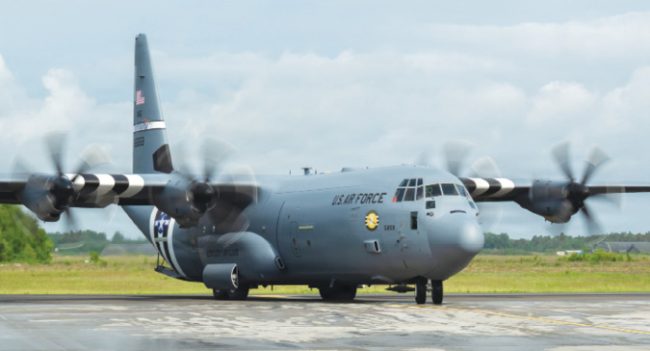
When most of the defense community talks about autonomy in aviation, the conversation gravitates to small tactical UAS or headline-generating programs at the exquisite end of the spectrum. Merlin Labs founder and CEO Matt George is making a different argument: that the leverage point is the large, workhorse fleet that constitutes the actual day-to-day force structure of the U.S. Air Force—and that getting autonomy into those airframes will do more to change how the service fights than any single advanced program.

Founder and CEO,
Merlin Labs
“Autonomy is going to be the future of air power,” George told Inside Unmanned Systems at SOF Week. “But the vast majority of what the U.S. Air Force does doesn’t fall into those missions”—meaning small drones at one end or exquisite high-end programs at the other. “What we’re really proud to do at Merlin is to deliver autonomy into that bread and butter of the Air Force.”
The flagship effort is the C-130J. The aircraft is by most measures the most common full-size military transport in the world; the U.S. Air Force alone operates more than 400. Merlin has also announced a parallel program on the KC-135, of which roughly 300 remain in the active fleet. Together, those two airframes represent the bulk of total force numbers in the fixed-wing transport and tanker categories—which is precisely why Merlin chose them.
The C-130J program traces to 2019, when Merlin conducted precursor work on a Twin Otter twin-engine turboprop to develop the foundational autonomy architecture. In a February 2026 shareholder letter, George described Merlin as the sole prime contractor for SOCOM’s program to bring autonomy to the C-130J—a production-focused program with defined milestones and a path to fleet-wide deployment. The company completed a Preliminary Design Review and is working with the Air Force and AFSOC toward fielding, with subsequent program milestones described as watch-this-space beyond the PDR announcement.
The mission case is explicitly about the role of the pilot rather than the elimination of it. In a contested environment where a pilot may need to command swarms of aircraft and make rapid decisions about their employment, Merlin’s autonomy stack is designed to handle the mechanics of flying—aircraft control, procedural execution, airspace management—so the pilot can function as a mission commander. “That’s what we’re doing for SOCOM and AFSOC,” George said.
He described the strategic logic as analogous to the difference between a Toyota Camry and an exotic vehicle—calling it the F-150 model. The value is in getting what he called sets and reps with autonomy across a large fleet before extending the capability to more exquisite or next-generation aircraft. Systems proven on 400 C-130Js generate a data and operational foundation that transfers to more advanced programs in ways that a handful of experimental platforms cannot.
Merlin’s trajectory has followed that logic through its contracting history as well. The company moved from Small Business Innovation Research contracts through Other Transaction Authority agreements to a nine-figure production contract—with AFSOC as the originating customer before expanding relationships with Air Mobility Command and Air Combat Command.
On pace and investment, George positioned Merlin alongside what he called neo-primes—a cohort of companies collectively investing hundreds of millions of dollars in Air Force autonomy capabilities. “We can’t move at the speed of the defense primes,” he said. “We’ve got to go move at the speed of our adversaries.” He argued that the Pentagon working with companies like Merlin, rather than relying solely on traditional prime contractors, is essential to fielding capability at a relevant tempo.
The bet is that scale and repitition across the existing fleet will prove out faster than exquisite systems ever could.