
The U.S. Army is overhauling its operational doctrine across all echelons to incorporate lessons from the accelerating battlefield use of uncrewed aircraft systems, abandoning the traditional years-long doctrinal update cycle in favor of an iterative, experience-driven process.
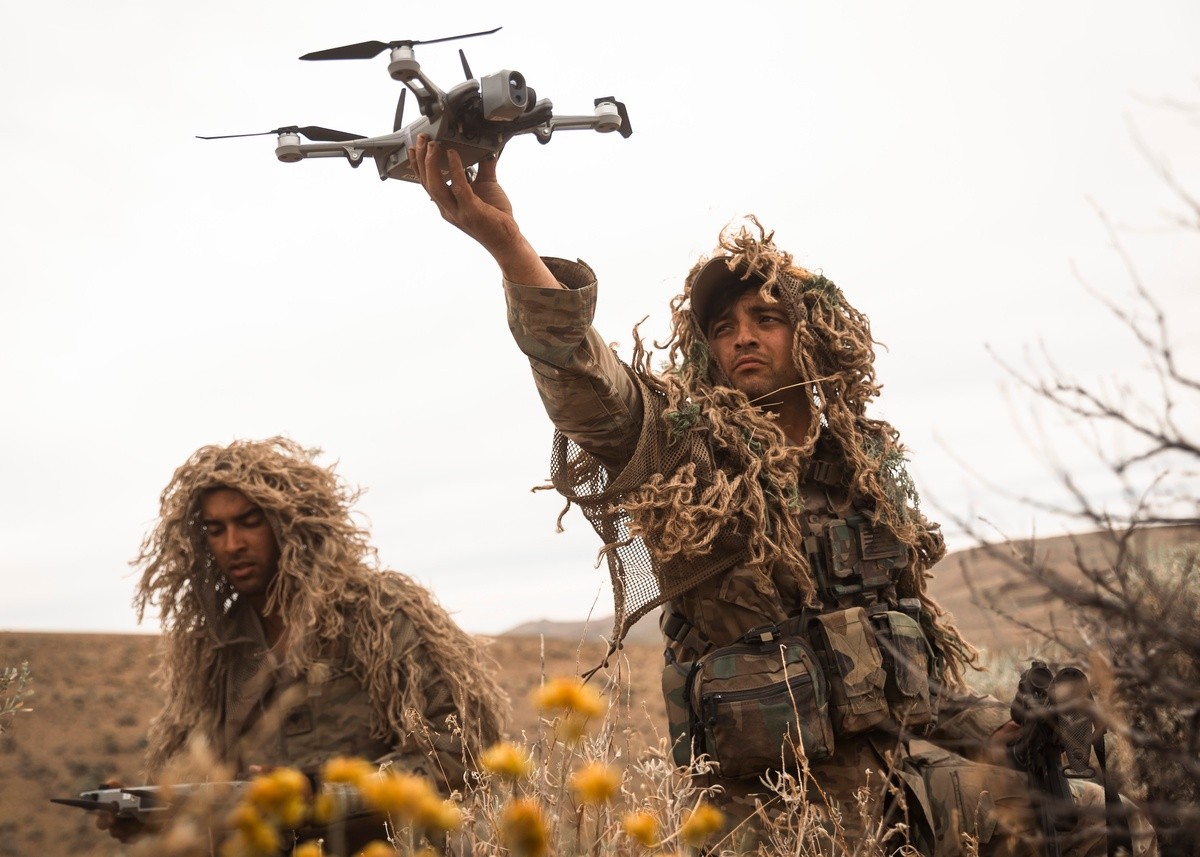
The effort is framed explicitly around the Army’s “drone dominance” objective, which Richard Creed, director of the Combined Arms Doctrine Directorate (CADD) at Fort Leavenworth, described as a Department priority. “Most efforts this past year focused on fielding systems and learning to use them,” Creed said. “As operational forces gain expertise, we can better determine what the doctrine should say.”
The approach inverts the conventional sequence: rather than codifying doctrine before fielding, the Army fields capabilities to soldiers, harvests real-world TTPs, and pushes updates back into the doctrinal library. The service’s capstone operations manual, Field Manual 3-0, was revised in March 2025 to reflect the persistent-drone threat environment, adding operational imperatives that include “protect against constant observation” and “make contact with sensors, unmanned systems, or the smallest element possible.” The update also incorporated vignettes drawn from the Russo-Ukrainian War.
The revision process runs through a two-tier structure. CADD handles broad conceptual doctrine, while the Army Centers of Excellence address domain-specific detail. Robert Ault, CADD deputy director, noted that newly published Army Training Publications now feed back upward, prompting reexamination of higher-level field manual concepts — a dynamic that keeps the doctrinal architecture in continuous motion rather than on fixed publication cycles.
On the offensive side, the Maneuver Center of Excellence is finalizing ATP 3-90.51, Tactical Employment of Small Unmanned Aircraft Systems. On the defensive side, the Fires Center of Excellence is revising ATP 3-01.81, Counter-Small Unmanned Aircraft System Techniques. Both are described as responsive to the pace of change on current battlefields. The revision process also extends to foundational intelligence doctrine: FM 2-0, Intelligence, is being updated to expand coverage of adversary UAS capabilities and individual soldier tasks related to the drone threat.