
For defense medics and first responders, the only acceptable launch window is now.
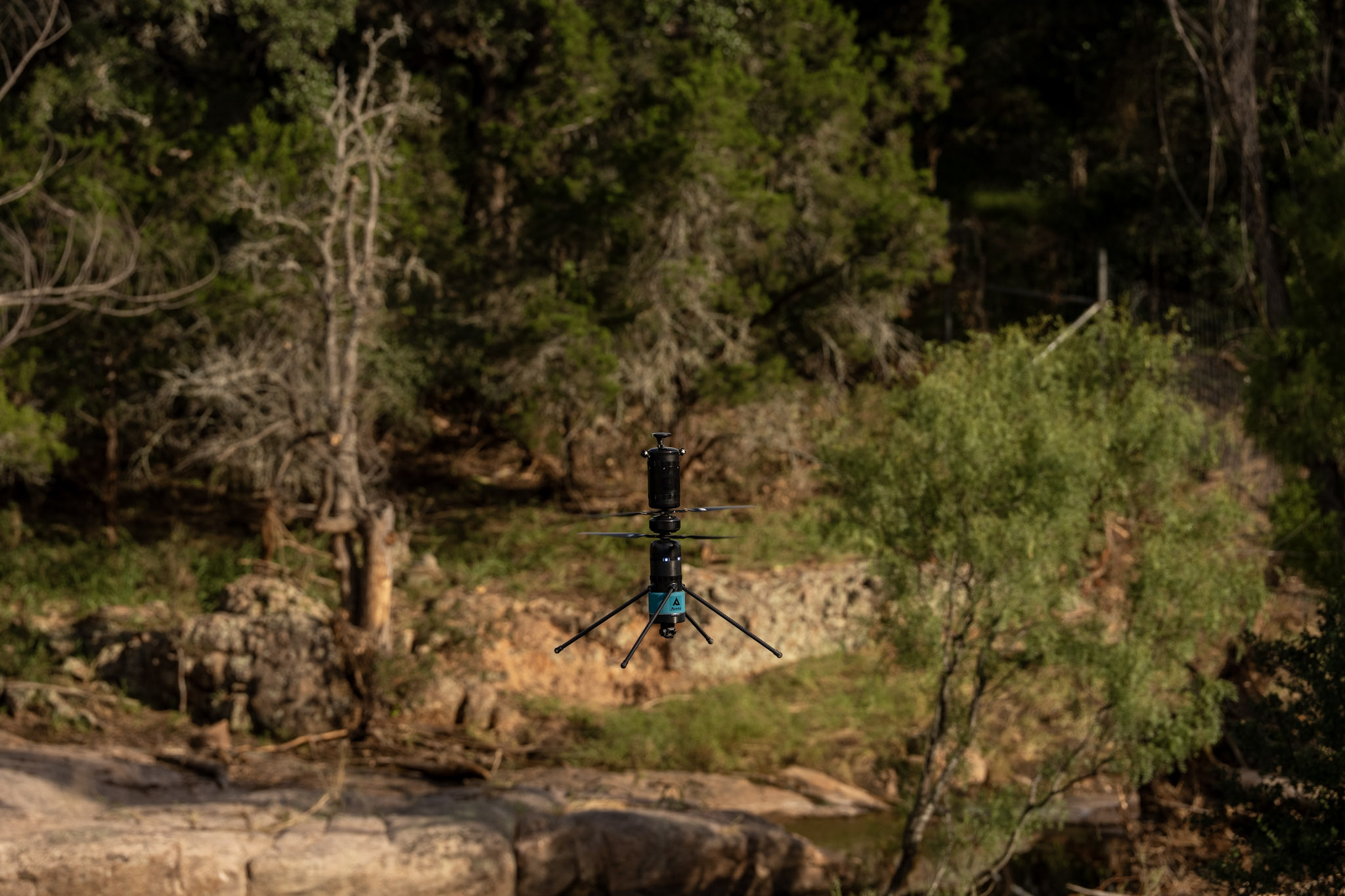
This case study traces how Ascent AeroSystems’ rugged, modular, coaxial SPIRIT UAS enabled Arete’s Automated Image-based Monitoring System (AIMS) payload to perform remote triage, from geolocating casualties to reading vitals, when wind, rain, and uncertainty rule the day.
The problem set: reliability first, then everything else
Defense units and public safety teams rarely operate in gentle breezes and blue skies. They work in dust, rain, sleet, and gusts that ground conventional small UAS. “Operators are relying on very exquisite sensors, but those are often attached to an airframe design that wasn’t purpose-built for austere environments,” said Paul Fermo, President, Ascent AeroSystems. “Quadcopters evolved from hobby platforms. And while great for some things, some missions move faster and require more than the airframes allow.”
Arete’s mission need was equally unforgiving: give medics the ability to find people fast and know who needs help first, without exposing themselves to unnecessary risk. “AIMS began under Army medical research to deliver remote triage from a UAS,” said Peter Hoskins, Program and Product Manager for AIMS at Arete. “We combine automated detection and geolocation of a person with camera-based measurements of heart and respiration, so a medic can prioritize while staying out of harm’s way.”
The combination only matters if it can get airborne when it counts. That is where Ascent’s coaxial architecture—and the design philosophy behind it—became the decisive factor.
Why coaxial—and why it changed the integration math
Ascent didn’t invent coaxial rotors; aerospace did. What’s novel is scaling the known physics advantages into a compact, fieldable small UAS and building the entire vehicle ecosystem around those advantages.
Single thrust column, high stability. With two counter-rotating rotors stacked on a central mast, SPIRIT concentrates thrust in one column rather than four or eight scattered discs. “You get better thrust and yaw authority in strong, turbulent wind,” Fermo explained. On-station stability directly benefits Arete’s computer vision and iPPG (imaging photoplethysmography) algorithms.
Lift efficiency and endurance. For a given payload, coaxial lift efficiency translates into either more margin to carry heavier edge-processing payloads or more time on station at the same weight—both mission wins for AIMS.
Cylindrical packaging and weather sealing. The coaxial stack allows a slim, cylindrical fuselage. Critical electronics sit inside, protected with O-rings and gaskets. “You can fly in rain, snow, sleet, even blowing sand,” Fermo said. That design choice boosts dispatch reliability—the probability that a sortie actually launches—across the worst days.
Modularity without fragility. Because the airframe’s strength is concentrated in the center column, the system breaks down into secure, swappable modules without exposing fragile wiring, motors, or ESCs to the elements. Modularity equals mission versatility—without compromising ruggedness.
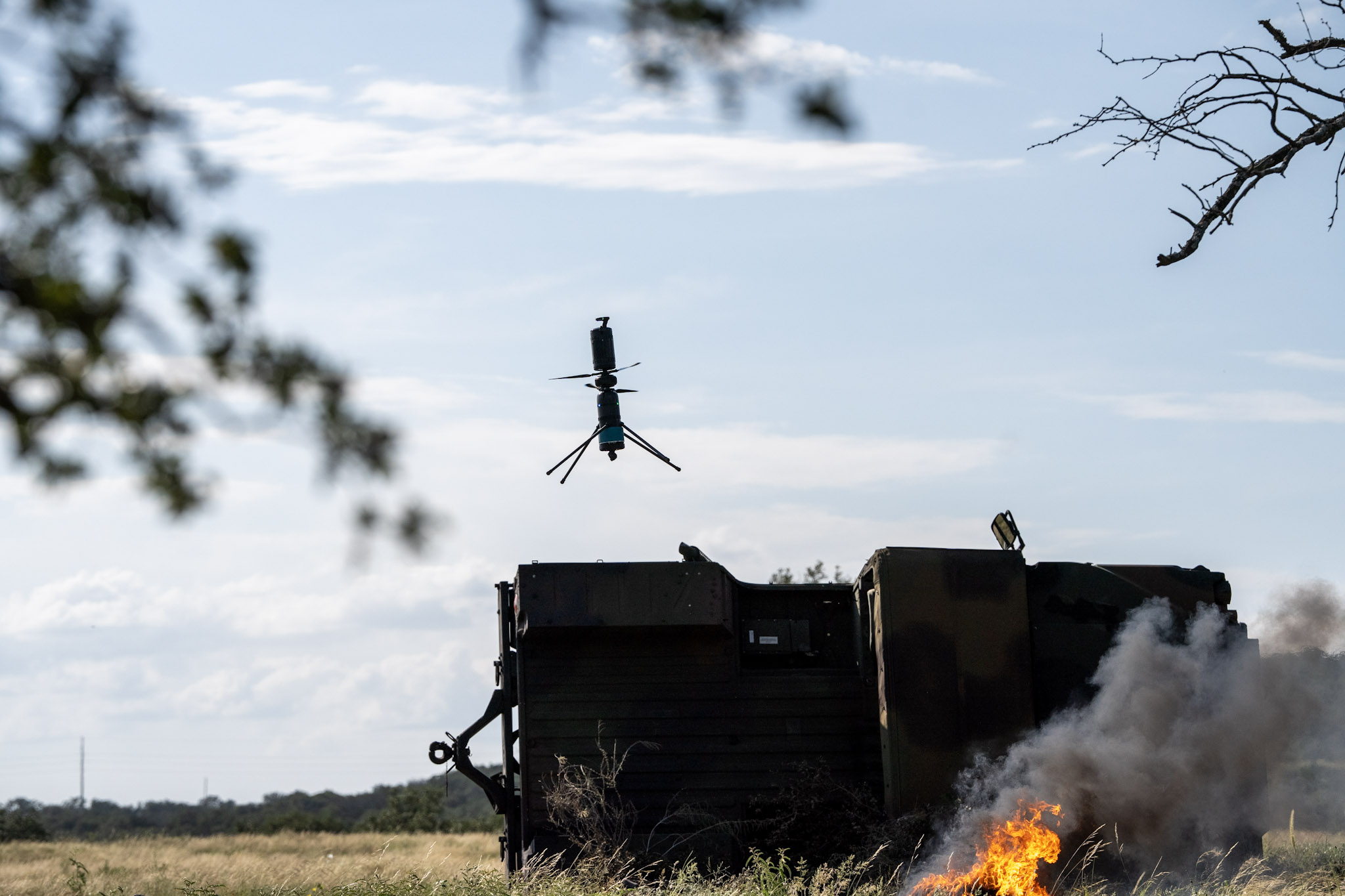
Arete put those claims to the test. “We’ve flown in environments where 40–50 mph gusts grounded other systems,” Hoskins said. “SPIRIT inspired confidence. Hover stability helped our algorithms, and the aircraft simply stayed in the air.”
Open architecture at the edge
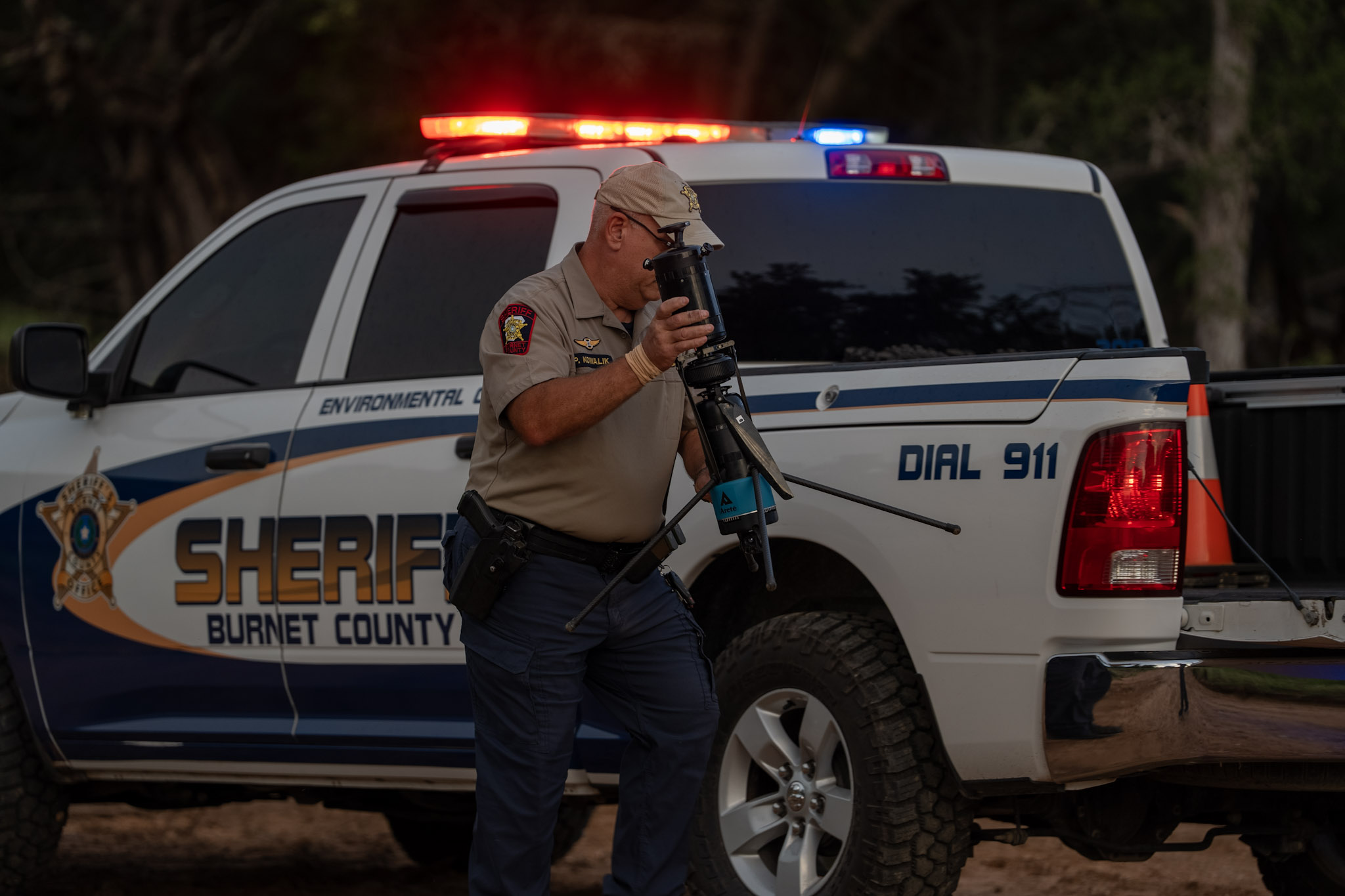
“Don’t build a drone—focus on your core competency,” is how Ascent pitches innovators. The phrase reflects a deliberate contract with integrators. SPIRIT is designed around the principle of modular open systems architecture (MOSA), shipping with a payload development kit (PDK) and standardized power, data, and mechanical interfaces. The point is to let innovators mount, power, compute, and communicate from the edge without ever having to reverse-engineer the aircraft or wait on the OEM’s permission. In an industry where many airframes remain closed ecosystems, SPIRIT’s openness is a significant differentiator.
For Arete, that openness proved decisive. “We required onboard edge processing and real-time data flow into existing situational awareness tools,” said Hoskins. The AIMS pipeline does heavy lifting in real time: it detects and identifies human figures, extracts heart and respiration signals from camera imagery, and automatically publishes a geolocated pin, a thumbnail image, and confidence-scored vitals into the Android Team Awareness Kit (ATAK) via an ATAC plugin. That meant the payload needed not only space and power but also direct network access to radios and the aircraft’s data bus. SPIRIT’s open architecture allowed Arete to plug into those resources quickly, without re-architecting their payload or fighting against proprietary firmware barriers.
This philosophy reflects a larger shift in defense procurement and technology adoption. In practice, a closed airframe locks operators into whatever payloads the OEM decides to support. An open platform, by contrast, acknowledges that the fastest-moving parts of the ecosystem are edge compute, AI, and sensors—and gives them room to evolve. By making SPIRIT a payload-agnostic workhorse, Ascent ensures that a medic, an ISR operator, or a comms specialist can all benefit from the same baseline system.
Equally important, the partnership worked at a cultural level. “We work best with partners who want to innovate in their lane,” said Paul Fermo. “Our engineers understand integrator needs; Arete’s engineers brought a genuinely novel capability. The exchange of ideas was straightforward—and fast.” That mutual understanding accelerated the integration timeline. What could have been a multi-month struggle to reconcile two closed systems became a rapid, almost plug-and-play experience.
The result is more than technical convenience; it is strategic. Open architecture means capabilities like AIMS can get from lab to lane in timeframes that matter, without waiting for the next procurement cycle or a new airframe program.
What the combined system delivers today
Geo-located human detections. As the SPIRIT/AIMS package flies a search pattern, AIMS drops a pin on the map whenever it detects a person, instantly shared to teammates on the same TAK network.
At-a-glance triage cues. Along with the pin, AIMS streams a thumbnail snapshot and confidence-scored heart and respiration indications. It’s not prescribing a diagnosis; it’s prioritizing attention and reducing uncertainty when seconds matter.
Operator confidence and handover. Arete reports training new pilots in days and handing them the system to run independently for two-week exercises—a sign that SPIRIT’s controls and AIMS’s UI are pragmatic under stress.
All-weather dispatch. Arete’s pilots have flown in winds that sidelined other small UAS on the same range. Medics told the team that seeing the scene en route, planning ingress/egress, and mentally preparing for likely wounds let them “claw back time in the golden hour,” as Jay Rouse, Arete’s corporate Business Development director and a retired soldier, put it.
“The prerequisite to every mission is launching in degraded conditions. The coaxial SPIRIT closes that reliability gap so edge AI like AIMS can actually be used when it’s needed most,” Fermo emphasized.
Training, logistics, and the “one-airframe” dividend
A Swiss-Army-knife airframe isn’t just about offering a catalog of payloads; it reshapes the way an organization thinks about training, sustainment, and force packaging. In defense and public safety contexts, every new aircraft type traditionally demands its own pipeline of manuals, checklists, training syllabi, and sustainment infrastructure.
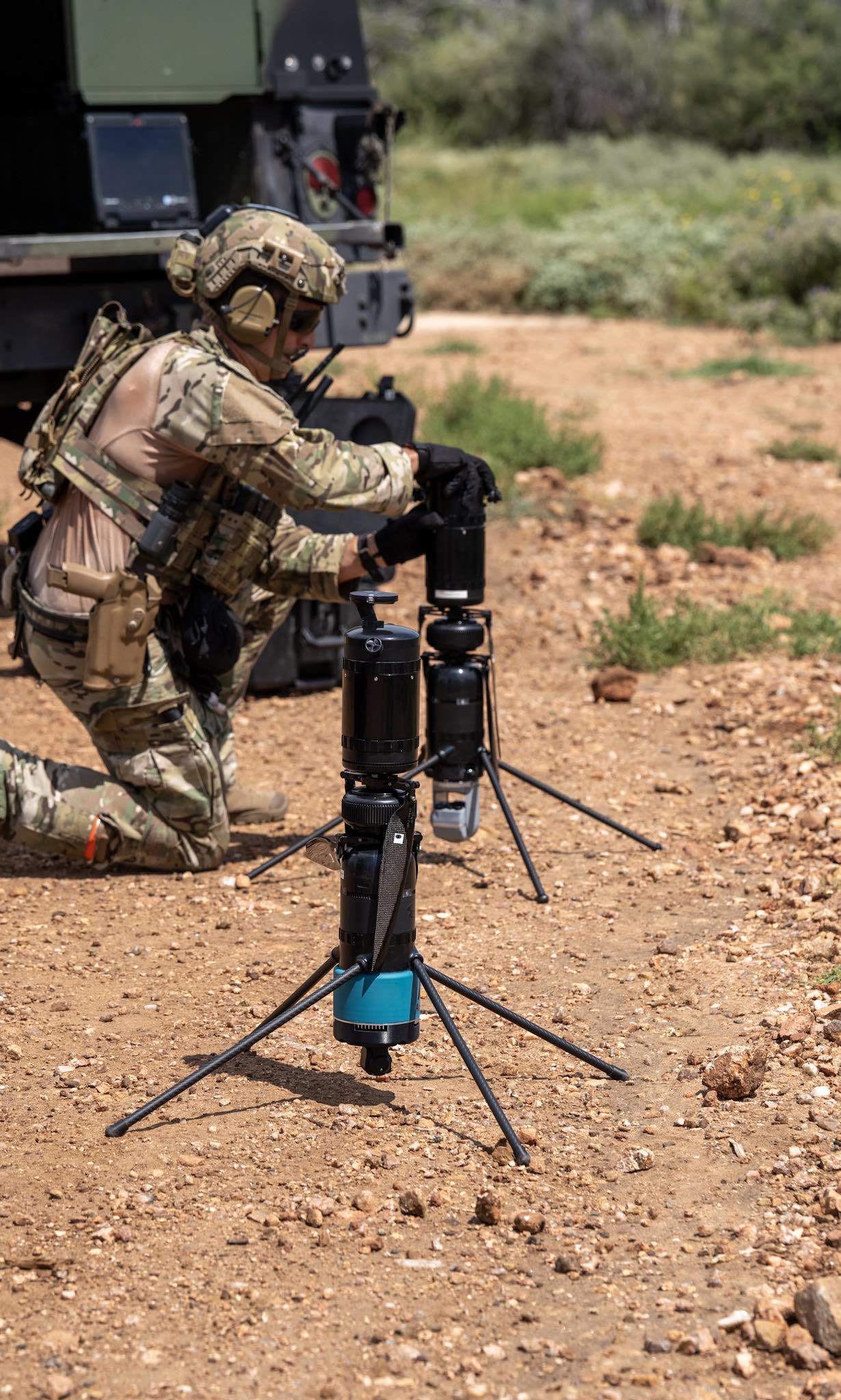
That approach quickly multiplies complexity. By consolidating around a single coaxial core airframe, Ascent removes much of that burden. Operators qualify once, maintain a single set of procedures, and remain cross-taskable across ISR, communications relay, or triage missions. Adding a new payload no longer requires retraining on a fresh aircraft, it simply means a short kit-specific familiarization, layered on top of a familiar baseline.
That compact modularity opens another avenue: how SPIRIT integrates into larger systems. The same cylindrical fuselage that makes it rugged and portable also makes it deployable in novel ways, launched from unmanned ground vehicles, surface craft, or even from manned helicopters. Ascent’s relationship with Robinson Helicopter Company points toward scenarios where manned–unmanned teaming becomes routine: a helicopter carrying several SPIRITs, each configured for a different mission, deploys them over a disaster area or contested battlespace to fan out and extend reach. In expeditionary terms, this is “modularity of modularity”, a single platform multiplied by deployment density, then multiplied again by payload diversity.
The back end is just as significant. One ground control environment reduces operator workload and ensures that mission data continues to flow into existing networks like the Android Team Awareness Kit. Cyber accreditation and regulatory approvals are also streamlined, since the hardened airframe baseline is vetted once and payloads are treated as applications riding on that trusted stack. For operators in the field, that translates into confidence: the drone will behave consistently no matter what’s attached beneath it. For program managers, it means faster fielding cycles, simpler sustainment, and a clearer path to scaling.
The dividend is measured in readiness. Crews learn faster, sustainers carry less, commanders deploy more flexibly, and the system integrates more easily into combined arms and joint operations. As Paul Fermo noted, “Multiple specialized drones mean multiple training pipelines and software stacks. That doesn’t scale. A single, backpackable core airframe with plug-and-play kits simplifies everything—from operators to sustainment.”
Build the right airframe, unleash the right payload
Ascent’s SPIRIT didn’t make AIMS possible in theory; it made it usable in reality, in wind, rain, and the exactly wrong moments when mission teams most need it. Arete, for its part, showed what happens when edge AI is freed to live at the edge: medics gain time, context, and safer options. Defense leaders will recognize the acquisition logic—invest in a platform, grow capability—and public safety leaders will recognize the operational payoff. One airframe, many missions, launch now.
AIMS currently provides confidence-scored cues, not clinical decisions. That’s deliberate. “We’re careful about prescriptive automation,” Hoskins said. “But we are demonstrating fully autonomous navigation and detection with SPIRIT this year, and we’re prototyping automated triage categories like START tags.”
Arete’s strength is weak-signal detection in heavy clutter with low false alarm rates—applied underwater, on ground robots (AIMS on a robotic dog), and in medical vehicles for casualty evacuation monitoring. The SPIRIT/AIMS integration is a bellwether for how edge AI plus rugged airframes will generalize across domains.
Physics in Brief: Why coaxial matters
- Single thrust column → better yaw authority and hover stability in turbulence.
- Lift efficiency under a larger effective disc area → more payload or more endurance at the same payload.
- Cylindrical packaging → compact, backpackable, sealed electronics; easier modularity without exposed arms/ESCs.
- Weather sealing → O-ringed, enclosed components sustain rain, snow, sleet, and blowing sand—higher dispatch reliability.
At A Glance: Ascent SPIRIT and Arete AIMS Sensor Integration
Defense origin, dual-use trajectory. AIMS began as a Small Business Innovation Research (SBIR) effort with U.S. Army medical R&D, then matured under a follow-on program to fuse automated person detection with remote vital signs sensing from a UAS. It’s already being exercised with soldiers and medics; Arete has field feedback indicating faster casualty finds, better route planning, and reduced exposure while moving under fire.
Public safety interest. Beyond defense, the DARPA Triage Challenge (Arete partnered with University of Colorado Boulder) is exploring civil search-and-rescue operationalization, including input from Boulder County emergency rescue. Arete has also briefed FDNY and other departments. The use-case fit—wide-area disasters, floods, collapsed structures—maps cleanly to SPIRIT’s all-weather dispatch and AIMS’s rapid triage cues.
Acquisition pragmatics. Arete needed a U.S.-built, NDAA-compliant, Blue UAS platform to hand to government users; SPIRIT checked those boxes. Reusability of a single airframe across many payloads also tracks with how defense buys aircraft: invest in a platform; grow capability. “Think of the Black Hawk or F-16—decades of upgrades,” Paul Fermo, President, Ascent AeroSystems said. “The world changes quickly; payloads must, too. A modular, open system keeps pace.”
What the use case proves
- Airframe choices are mission choices. Coaxial isn’t a novelty; it is a physics-backed answer to stability, lift efficiency, and weather sealing—all of which directly increase dispatch reliability and payload effectiveness.
- Open architecture accelerates real capability. By letting the payload own the edge compute and the data path, SPIRIT let AIMS ship fast without waiting on closed, proprietary integrations.
- One platform simplifies the enterprise. Training, manuals, GCS, and spares converge while mission kits diversify—how defense already thinks about lifecycle upgrades.
- Defense to dual-use is natural here. The exact capabilities medics want in conflict map to first responders in disasters; the regulatory/ethical frameworks will mature in parallel with autonomy.