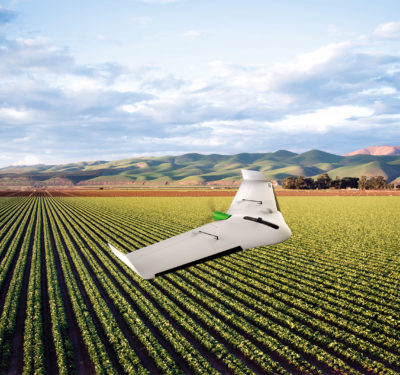

AUSA 2025 crystallized two imperatives: harden navigation with layered Assured PNT and push effects forward with modular unmanned systems that are already moving from demo to fielding.

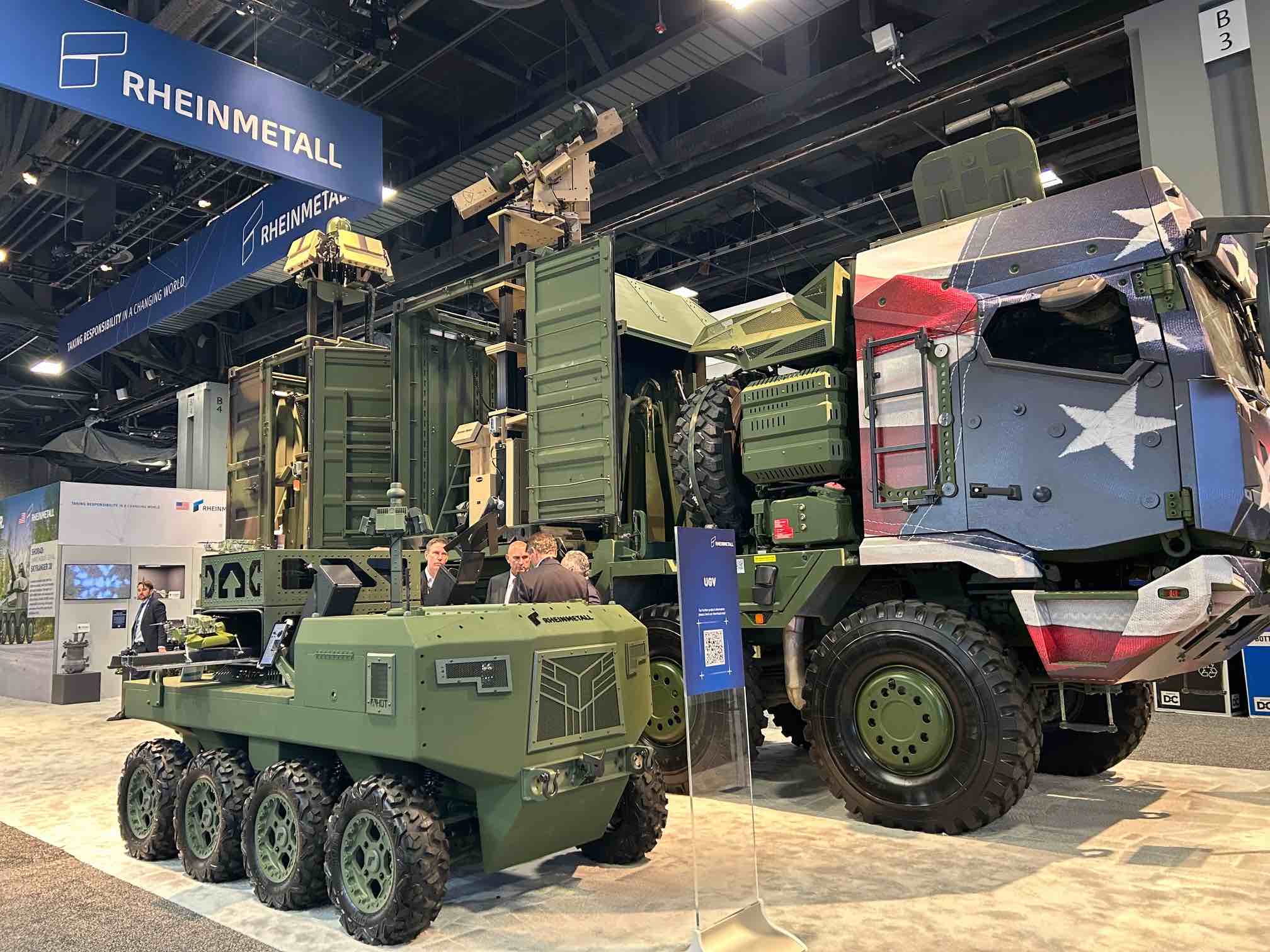
The Walter E. Washington Convention Center rises like a hangar—black trusses, high bays, the constant whirr of LEDs. On the carpeted avenues between armored hulls and radar masts, you’re never more than a few steps from a demo screen or a flight-ready airframe. One aisle opens on a BAE Systems display where a tracked vehicle sits under a suspended banner; two aisles over, a Rheinmetall truck in star-spangled camouflage looms above an eight-wheeled UGV. At L3Harris, a curved wall-screen rolls footage of an AH-1Z Viper while staff field questions at a white reception bar.
Conversations at this year’s Association of the United States Army (AUSA) meeting, and the contracts behind them, revolve around two linked imperatives. First is Assured PNT: keeping time and truth in a world of jamming, spoofing and intermittent space access. Second is the unmanned stack, from short-range reconnaissance to long-range launch-effects and the sensors that find, fix, and feed targeting data.

Assured PNT, defined
Before you talk swarms or launch-effects, you talk navigation. The point came fast from BAE Systems’ Mike Shepherd, whose group builds the military GPS receivers buried in nearly everything that moves or flies. “We’re in all the domains,” Shepherd said. “Airborne, ground mounted, dismounted—and we’re on the weapons. Almost every precision weapon across the services. With current conflicts, we’ve expended a lot of weapons that fly with our SAASM receivers today, moving to M-Code. The weapons community is leaning in pretty hard.”
BAE Systems’ production numbers are blunt: over 100,000 GPS receivers delivered to DoD in 2024, with M-Code already a significant share and rising. To accelerate fielding, he added, DoD pre-bought “800,000 of our GPS modules” to government-furnish across programs—an inventory move routed through DLA that effectively front-loads the long-pole microelectronics.
That’s the procurement story. The technical story is M-Code itself—encrypted military GPS designed to be harder to jam and spoof—and the layers built around it. Shepherd’s shorthand for Assured PNT was utilitarian: “We believe in a layered approach to pace the threat. Military GPS is the gold standard, but you add signals of opportunity—low Earth orbit (LEO) augmentation, vision-based, celestial—and harden with anti-jam and anti-spoof. Access and integrity. Can I get the signal, and can I trust it?”
BAE Systems calls one of its anti-spoof layers MST—Modernized Signal Tracking, a software capability “tested since 2018 at White Sands” that, in Shepherd’s words, “hasn’t been fooled by a spoofer” and handles multiple simultaneous spoofers. The company is bridging from its current M-Code “Inc 1” silicon to “Inc 2,” which “fired up on the first spin,” performed at the APEX event, and is moving toward security certification and prototype deliveries “across ground, weapons, and airborne.”
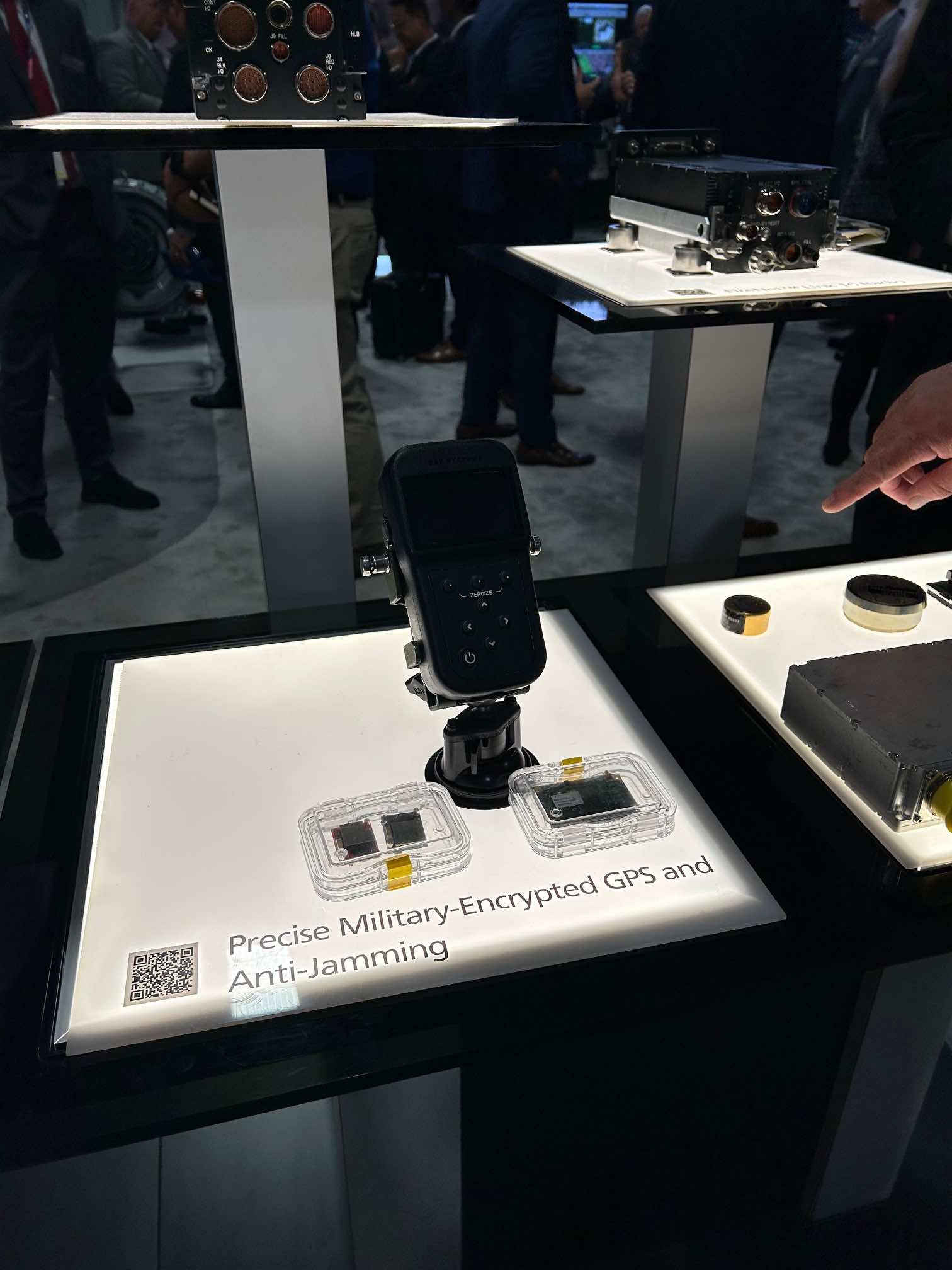
The floor tells the rest. In BAE System’s booth, underlit pedestals hold postage-stamp microGRAM-M boards for attritables and larger 3U VPX cards for CMOSS/MOSA chassis, M-Code receivers available for all domains. A placard near a handheld “NavGuide” unit—BAE Systems’ M-Code successor to Defense Advanced GPS Receiver (DAGR)—emphasizes the unglamorous thing buyers crave: backward compatibility. As Shepherd put it: drop-in, reuse the cables, reuse the vehicle “A-kit”—“pull three connectors, slide it in, hit power”—and avoid ripping floors out of Bradleys, for instance, to re-wire.
The seven-column threat
Shepherd described a seven-column threat model that runs from benign (column one: your iPhone) to “a day without space” (column seven), the latter a scenario he dismisses as apocalyptic—“ATMs don’t work; gas pumps don’t work”—and outside normal planning. The working fight sits around columns four to six: regional outages, heavy jamming, concerted spoofing. There, the recipe is military GPS hardened by antennas and software, inertials and clocks to bridge gaps, and alternate fixes (LEO, vision, celestial) to reset drift.
This is where Kearfott—long known for ring-laser gyros and high-assurance inertials—steps in with a complementary view. At their stand, program leads walked through MAVERICK (their backronym is “MEMS AI Vision-Enhanced Resilient GNSS Controller”), a fusion of low-SWaP MEMS inertial with vision-based updates sourced from an AI partner: “A standalone INS will drift,” a Kearfott engineer said. “So we’re pairing it with vision—video odometryand feature matching against a database—to deliver updates that either corroborate GNSS or flag a problem. If vision and INS agree and GNSS doesn’t, you’ve got a spoofing indicator.”
The system is pure software at heart—Kearfott’s Kearfott Navigation Fusion Engine (NaVE)—and pragmatic on inputs. “If the database is six months old and your building grew solar panels, we saw the mis-match,” the team noted. “In operations, you’d ingest a current, government-grade terrain/feature database.” On long-term clocks, they’re integrating chip-scale atomic devices now and tracking the emerging quantum work for later.
Taken together, the Assured PNT story at AUSA is not abstract. It is racks of cards, jars of GNSS ASICs, and field-replaceable antennas; it is a manufacturing line in Cedar Rapids placing “600,000 parts a day,” as Shepherd put it, and a security team pushing crypto through certification queues. It’s also a message the BAE Systems executive repeated like a cadence line: “M-Code is here. This is not an availability problem; it’s a fielding problem. Place the orders. Stop the waivers. Get it to the warfighter.”
Radar First
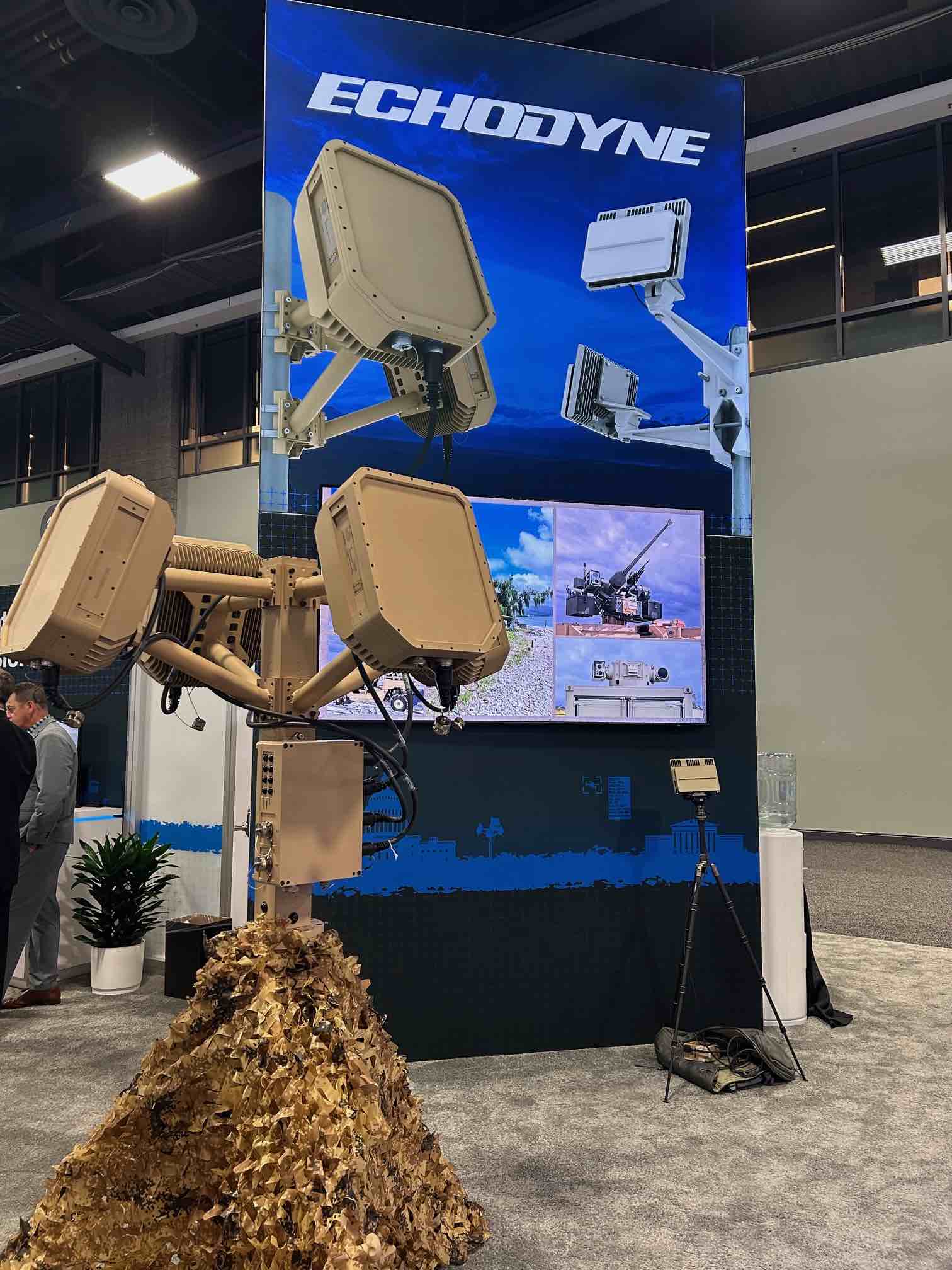
Any serious unmanned or counter-unmanned conversation at AUSA starts with sensing. Echodyne’s booth distilled that logic down to antenna physics. Three sand-colored electronic-scan radars sat on an articulated column, the large LED wall behind them looping tracking footage and a new software banner: EchoWare.
An Echodyne executive walked through their metamaterials-based ESA—not exotic materials, he stressed, but a PCB-manufactured aperture that produces narrow beams without a phase-shifter behind every element. The effect is object separability and positional accuracy disproportionate to size and cost. That matters because, as he put it: “Accuracy is where the drone space is heading. If you’re going to put a weapon on it, you have to know exactly where it is.”
The company’s new EchoWare software stitches tracks across sensors: four radars on a tripod (or a perimeter of radars around a site) behave like one logical radar with persistent track IDs. It’s the kind of middle-layer that clears noise for the C2 above and makes the EO/IR turret look smooth instead of “jerky, chasing a ghost.”
His other refrain was engagement economics. Drones are cheap. Defense can’t be ruinously expensive. The answer is to pair low-cost radars with precise cuing so remote weapons can time a burst or lay a beam where it counts. On the civil side, he noted, authorities in some countries are testing directed energy because bullets over cities are a hard sell; on the military side, remote weapon stations matched with tight tracks are proliferating. Everywhere, the base of the stack is the same: better radar, cleaner data.
Launch-effects grows up
Across the hall at L3Harris, the conversation moves from finding a drone to becoming one, and using it to project effects far from the manned platform. Sterling Jones, who runs the Agile Development Group’s “Wolf Pack” family, started by defining terms: “Launch Effects means different things to different people,” he said, “so here’s ours: extend an effect further into the battlespace—kinetic or non-kinetic EW—so the manned platform stays out of harm.”
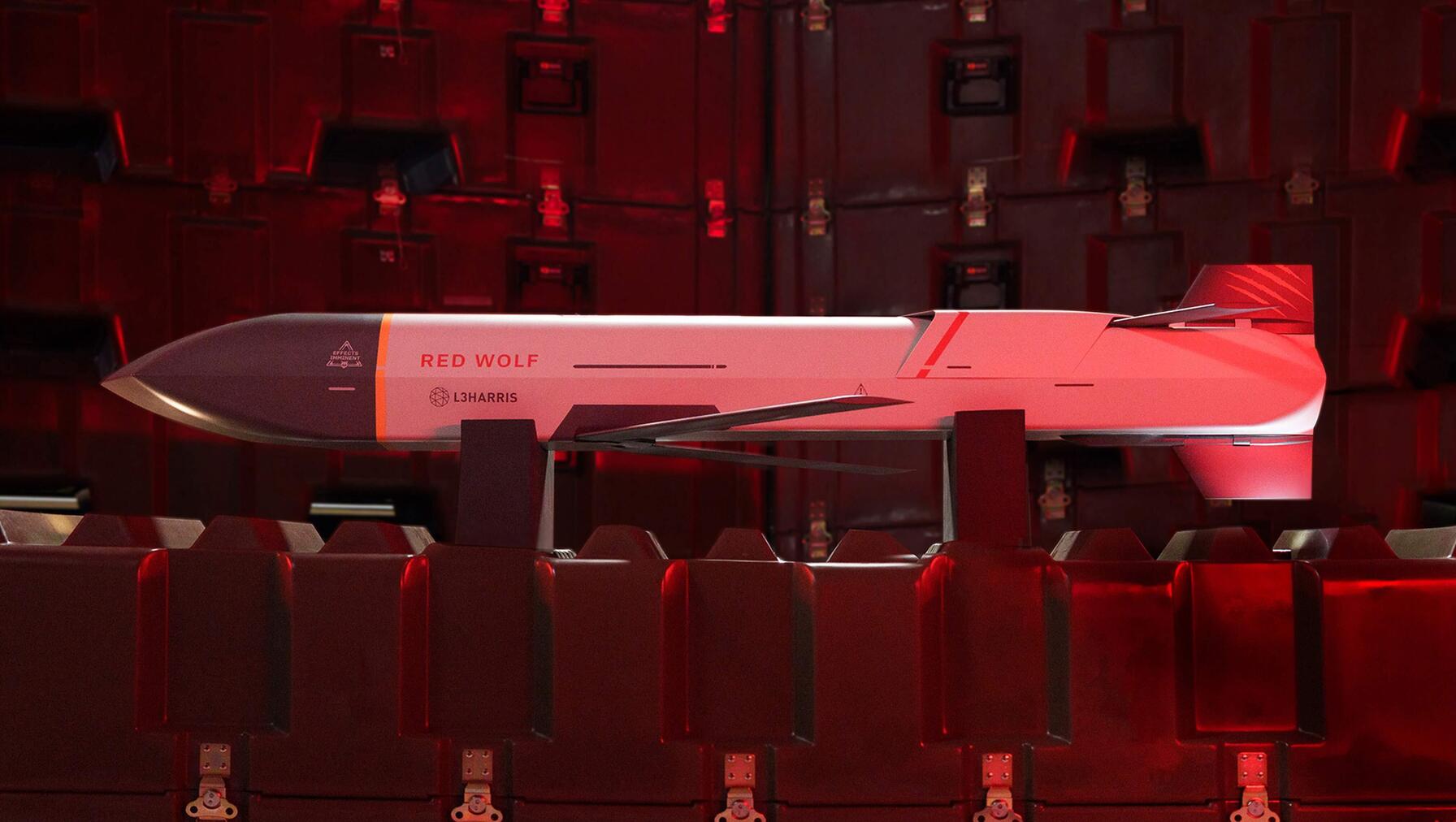
Red Wolf is the kinetic variant—beyond line-of-sight, demonstrated to about 200 nautical miles, with the company citing ~375 km as an operational planning number when launched from a manned helicopter. The associated Marine Corps experiment—AH-1Z Viper carrying Red Wolf—was the centerpiece example: long-range precision fire from a platform whose Hellfire range is otherwise single-digit kilometers.
Green Wolf is the EW/ISR side—go far, loiter about 60 minutes, sense and jam, and come home under parachute for a repack/relaunch “within 60 minutes.” Jones broke the portfolio down into three use cases: one-way kinetic; recoverable EW/ISR carrying “exquisite” payloads you want back; and low-cost decoys that impersonate high-value aircraft to burn adversary interceptors. The systems have flown about 45 times, ground-launched and air-launched, including from unmanned platforms. He stressed the comms pedigree—degraded/denied LOS links—and a readiness message tied to Army guidance: “The Secretary has directed fielding launch effects in every division by FY26. To do that, you need hardware that isn’t PowerPoint. We’re producing now.”
A few stands away, Kongsberg, Saab, SNC, and others showed their riffs on the same theme—modular payload sections, common lug patterns for carriage, and increasingly standardized interfaces so that a brigade can mix and match EW, ISR, and strike on short notice. The aesthetic is workmanlike: aluminum airframes on lighted plinths, nosecones off to show bus bars and avionics trays. The subtext is industrial: build at rate, not at demo.
AeroVironment, threaded through the stack
If BAE’s message at AUSA is “field M-Code,” AeroVironment’s (AV) is “field capability you already own.” The company sits in a unique position because its portfolio spans the Army’s enduring sUAS fleet and the loitering-munition “effect” that many units now consider organic. That gives AV a hand on both ends of the sensor-to-shooter loop.
SRR and the enduring fleet. Even as new short-range reconnaissance (SRR) winners come aboard, the Army’s long-lived sUAS triad—Raven, Puma and Wasp—still frames day-to-day tactics at the squad, platoon and company echelons. Those airframes are less about platform glamour than about proven sustainment: interchangeable air vehicles and ground control stations, a deep spares pipeline, and an operator base that already knows the checklist cold. Where the conversation has evolved is in software and radios: the push toward MOSA/CMOSS, TAK-native workflows, and hardened GPS turns yesterday’s airframe into a node that can share tracks and tasks without a bespoke UI or a one-off datalink.
LRR and the battalion-level eye. Higher up the stack, JUMP 20—born from the Arcturus acquisition—fills the “medium endurance, runway-free” niche many brigades have been asking for. The VTOL conversion lifts it out of the site-survey trap; the modular payload bay lets a unit swap EO/IR, comms relay, and EW kits without an engineering change proposal. In combined arms, that means a battalion can push a persistent eye forward and then marsupialize—launch smaller assets or a loitering effect from the same mission thread—without waiting on a distant air detachment.
Launch-effects by another name. On the effect side, Switchblade (300/600 families) has become the practical face of “launch-effects” inside units that don’t own manned aircraft. It is not a science project; it is a tube, a tablet, a target message, and a munition that closes the loop in minutes. The doctrinal change is quiet but real: scout with a sUAS hand a coordinate or a track to the munition, and finish within the same crew—no external fires net required. In practice, formations treat Switchblade as either a one-way precision strike (the Red-Wolf-like use case at much shorter ranges) or as a rapid interdiction tool when a fleeting vehicle or team appears and disappears in minutes.
Assured PNT in the loop. AV’s platforms don’t live outside the PNT conversation; they depend on it. The company has progressively incorporated military GPS receivers and anti-jam antennas where SWaP allows, and—like everyone operating at the edge—leans on inertial coast and alt-nav aides when GNSS is noisy or absent. The payoff is not an abstract spec; it’s practical: a Puma holding a grid through a jammed corridor long enough to pass a clean coordinate, a JUMP 20 flying a profile that doesn’t chase a spoofed sky, or a Switchblade mission computer that accepts a trusted target message from TAK without a human re-typing digits.
Teaming, not swapping. What AV brings to the broader ecosystem is combinability. A JUMP 20 can act as a relay and taskmaster for SRR quads in dead ground. A Puma can provide spotter-quality video to an EO/IR ball on a vehicle or to a counter-UAS radar/C2 cell that needs visual confirmation before triggering a weapon. A Switchblade team can ingest a TAK target sourced from Echodyne-class radar tracks and finish with a low collateral effect. None of these are hypothetical pairings anymore; they’re the day-to-day ways units are closing loops without calling higher.
Sustainment and rate. Like Red Cat’s emphasis on field-repairable arms and batteries, AV’s edge is logistics already solved: depot channels, training syllabi, and a vendor that has shipped tens of thousands of airframes and munitions into U.S. and allied inventories. In a year when buyers are wary of one-off demos, that matters. The Army’s appetite is for things it can keep flying—and in that sense AeroVironment’s portfolio is less a set of new gadgets than a backbone that newer entrants can plug into.
The “Internet of Battlefield Things”
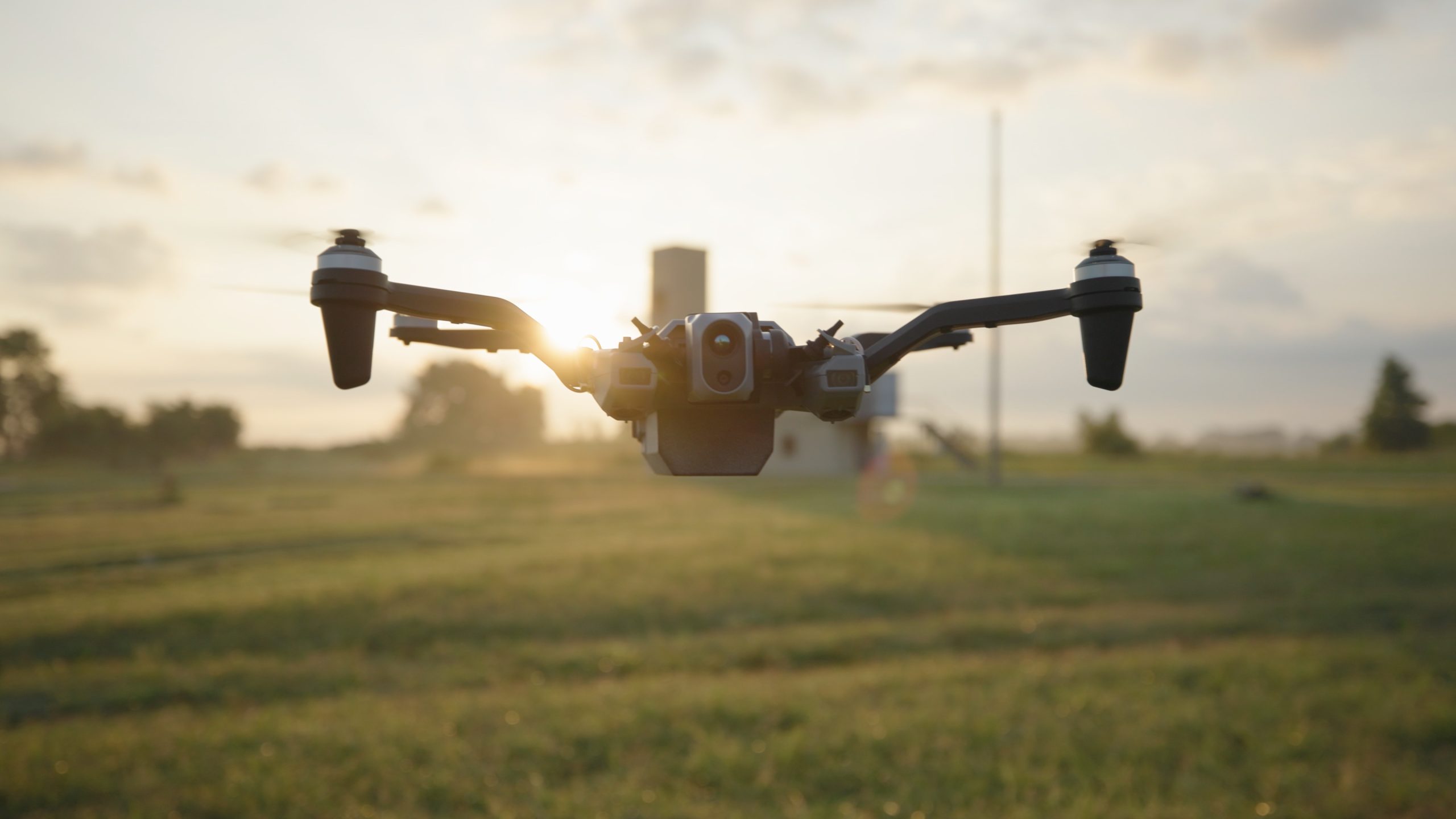
If launch-effects push range, SRR pushes ubiquity. Red Cat has become one of the defining players in that space. Their Teal 2/Black Widow lineage won SRR Tranche 2, and the company has spent the last year refitting itself for scale and for open integration across echelons.
Stan Nowak explained the approach as a deliberate pivot from commercial to defense:
“We sat down with frontline warfighters and pulled their needs and pain points into the redesign—modularity above all. In SRR Tranche 1 we learned what broke in the field. Black Widow is built to break only in cheap, replaceable parts—a motor arm, a gimbal assembly. Two screws, swap it, and you’re flying. You don’t ship it back.”
The software story mirrors the hardware. Red Cat made a strategic choice to use UAS Tool inside ATAK as its primary C2, trading proprietary control apps for the battlefield manager soldiers already carry. That choice makes their craft natively interoperable with Blue/Red force overlays, and it aligns with the company’s formation of the Red Cat Futures Initiative, an industry consortium that lets them plug best-of-breed ATR, mapping and CV into the drone like apps into a phone. “Think of it as an à la carte menu,” Nowak said. “The operator only loads what the mission needs, which reduces cognitive load and keeps the platform fresh as software evolves.”
Red Cat’s “all-domain” ambition is explicit. Alongside Teal, the company now shows FlightWave Edge 130 for longer-range ISR and a new Blue Ops maritime unit building USVs. The glue between them is swarming and allocation of mission. “With a 20-drone swarm, a quarter do ISR, a quarter do chem/bio detect, the rest prosecute targets. Now, add a swarm of boats as forward relays. It’s last-mile delivery for effects.”
Supply chain is part of the pitch. Nowak emphasized NDAA-compliant sourcing, U.S. manufacturing, and a plan for forward staging—Ukraine, Poland, INDOPACOM sites—with local battery production to avoid hazmat bottlenecks. The business model anticipates re-competitions every 24 months, something he argues actually drives innovation and keeps vendors from coasting on multi-year comfort.
Swarming, in this frame, is workload allocation, not a buzzword. The point is not just the swarm; it’s where it comes from. Red Cat kept returning to marsupial operations—sUAS and effects launched from larger motherships in the air or at sea. A long-range Group-2 aircraft or a USV acts as transport and relay, and the small devices work the last mile over a target area. That model reduces the burden on the mothership to be stealthy inside the WEZ and lets the smaller vehicles take the high-risk leg.
Units that already own AV’s Puma and Raven are the same formations receiving SRR Tranche 2 quads like Black Widow; the question across several booths was whether the systems will share controllers, parse ATAK’s UAS Tool, and live on the same hardened GPS baseline (M-Code on vehicles and weapons; robust civilian/military GNSS with integrity checks on small quads as the transition completes). At the brigade level, JUMP 20—inherited by AV via Arcturus—gives commanders a runway-free VTOL mothership with a modular bay to host ISR today and comms relay or EW tomorrow. It is the kind of marsupial parent Red Cat wants to launch from and that L3Harris intends to cue with Green Wolf. At the company/platoon edge, Switchblade provides the organic kinetic effect that can be cued by any of the above—radar tracks from Echodyne, ISR from a Black Widow, a radio from a Diamondback, or a Wolf Pack target designation—without new doctrine for the fire mission itself.
Nowak connected that architecture to supply and tempo. Red Cat emphasized NDAA-compliant sourcing and field modularity and said the company is staging production and service nodes forward (“Ukraine, Poland, Indo-Pacific”) to pre-position the hardest-to-ship consumable: batteries. He also pointed to a policy shift that is forcing vendors to pre-integrate. “The long programs of record are going away… We know we’re going to be recompeting inside two years. That drives innovation—and it helps government if we’ve already done the glue work with the adjacent systems.”
Ground autonomy
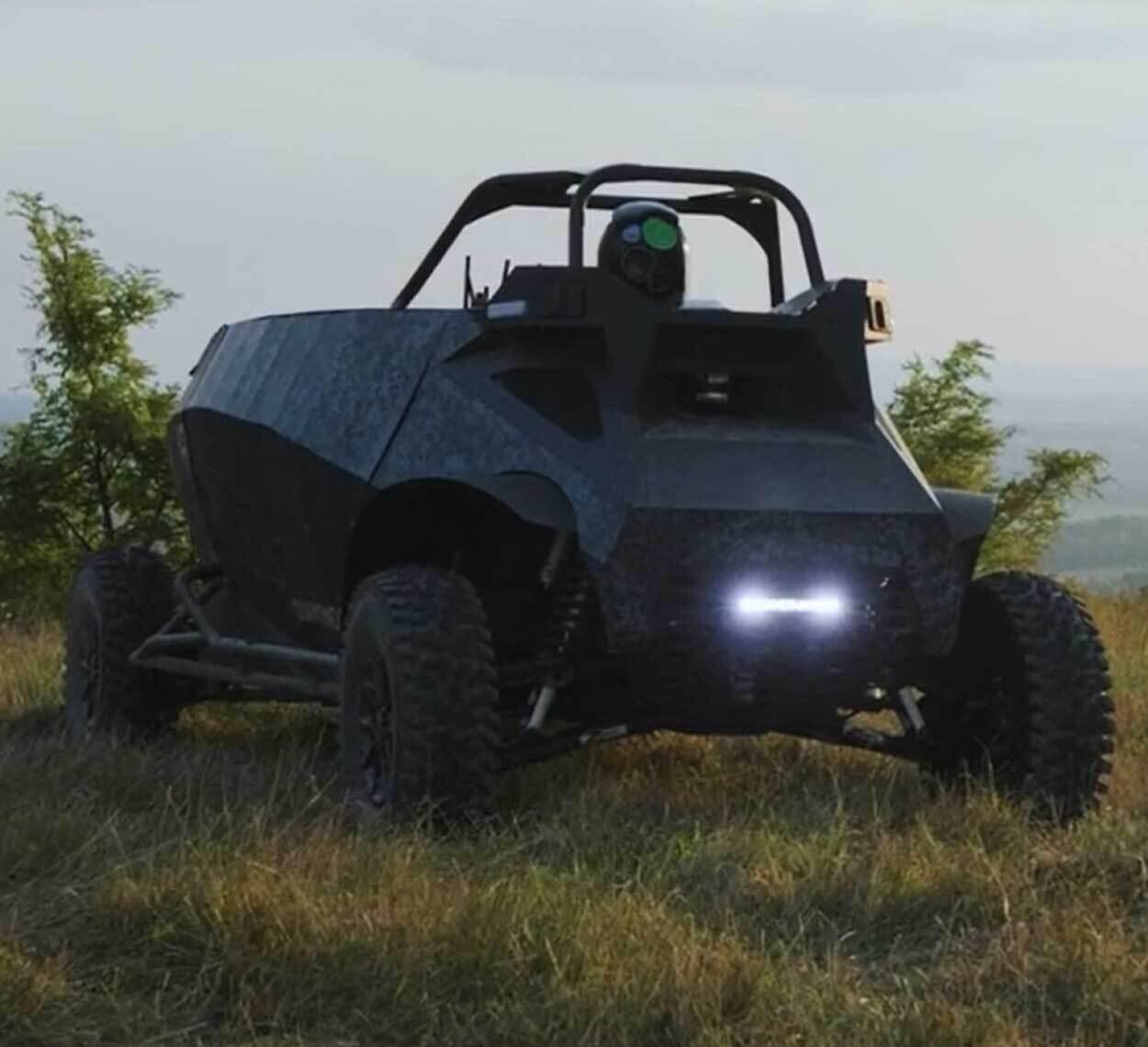
Unmanned ground vehicles often falter not on horsepower but on software integration. L3Harris’s Diamondback tries to make that the point of departure. As Toby Magsig put it: “A lot of platforms fall apart at payload integration. We built Diamondback with Carnegie Robotics for platform autonomy, and layered our Amorphous collaborative autonomy on top, so one UI runs the vehicle and the payloads.”
The version on the floor was the reconnaissance and security variant. A WESCAM MX-10HD turret supplied eyes; matrix counter-UAS radars and a rack of drone tubes sat nearby; the company’s VAMPIRE launcher (familiar from Ukraine) is a bolt-on option for kinetic C-UAS with APKWS. The same tablet that drives the UGV also launches and recovers ISR drones, wirelessly recharging them in a Patriot-branded pack for quick relaunch.
Four baseline mission packages are on offer—ISR, fires, counter-UAS and spectrum dominance (EW/network extension)—each built for field maintainability: “Competitors put their parts on the bottom,” Magsig said. “We built front-access racks. Pull a panel, slide a tray, swap the hardware. Sustainment is strategy.”
Range and tempo numbers are pragmatic—about 200 to 300 miles on a tank depending on payload, 30–50 mph to keep pace with armor—and the use cases span Defense and Homeland variations: route recon ahead of a tactical column or border security nodes every about 30 miles with UGVs roaming the dead ground and launching quadcopters to fill gaps.
Access and trust
The best single definition we heard for Assured PNT—and, by extension, the unmanned ecosystem that depends on it—was Shepherd’s: “Access and trust. Can I get the signal, and can I trust the data?”
In practice, AUSA 2025 rendered that into a layered bill of materials: M-Code receivers with MST, anti-jam antennas, inertials and clocks that coast through outages, LEO aids and vision/celestial resets, radars feeding clean tracks to EO/IR, UGVs that serve as low-risk forward observers, SRR drones that launch in minutes and fix what the mast can’t see, and launch-effects that put the effect—EW or kinetic—where you want it without asking a manned cockpit to cross the line of fire.
The warfighter outcomes are mundane in the best sense: swap a unit without pulling a floor, recover a loiterer and fly it again, fuse four radars into one track, relaunch a quad in minutes. The doctrine that emerges is modular and empirical. It assumes contested space and noisy spectrum, prizes interoperability, and treats manufacturing as capability.
In a year when budgets and continuing resolutions dominate D.C. headlines, the AUSA floor still showed confidence. Much of what matters in the unmanned and Assured PNT world is already designed, built and waiting in inventory. That doesn’t eliminate the policy questions ahead, but it does shift the center of gravity to execution. Or, as one executive said: “It’s here. Field it.”
AUSA TAKEAWAYS
- M-code is no longer a future logo on a slide. It is ASICs in inventory, receivers in crates, and a push from primes to end the waiver culture and write M-code in as a threshold, not an objective.
- Anti-spoof is not a boutique extra. It’s a baseline line item—whether it’s BAE’s MST on a weapons receiver, vision-INS fusion from Kearfott, or radar-led track-quality from Echodyne that keeps the EO/IR honest.
- Launch-effects are leaving the demo phase. The Viper/Red Wolf vignette is not about a specific helicopter; it’s about range extension and risk displacement—a pattern that portably applies across services.
- SRR is a software supply-chain story as much as an airframe story. ATAC-native control, modular spares, forward-built batteries—these are the quiet choices that determine whether a battalion can keep a fleet in the air.
- UGV success hinges on open autonomy stacks and payload UX. A route-clearer that can’t launch its own ISR quad when the mast can’t see around a ridge is an under-realized asset.