
Editor’s Note: This analysis was completed prior to the release of Gauntlet Phase I results in March 2026. Skycutter’s fiber-optic Shrike topped the leaderboard with 99.3 points, followed by Neros Archer; 11 companies were selected for prototype delivery orders totaling approximately $150 million.
The Pentagon is finally getting serious about procuring small FPV one-way attack drones nearly as cheap as those assembled in Ukraine—and hopes its billion-dollar phased Gauntlet program will identify winners making the cut in terms of production speed, price and combat effectiveness.
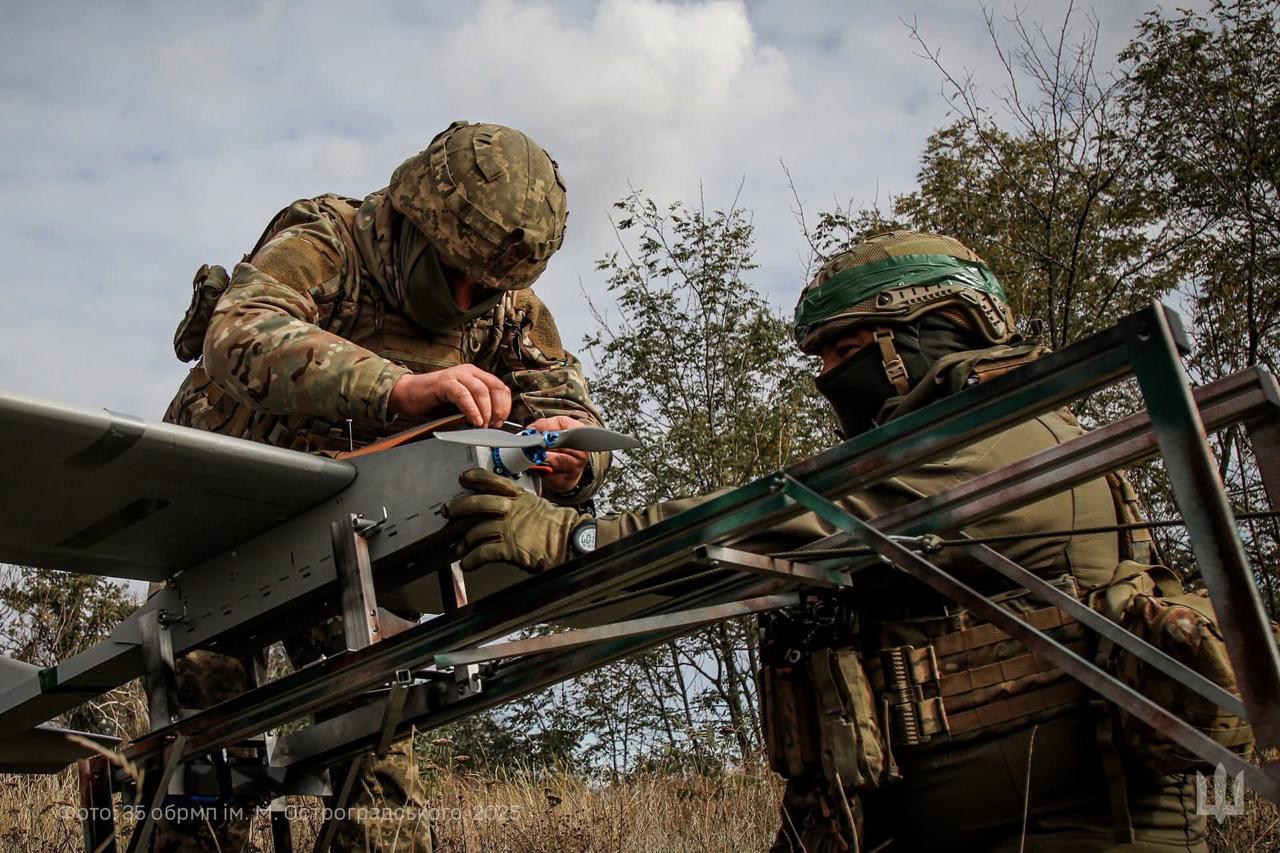
By 2024 it was clear something strange had happened in Ukraine. A knock-down-drag-out fight between large, mechanized armies mustering thousands of artillery systems and armored vehicles became dominated by small FPV one-way attack and gravity-bombing drones built in staggering volumes out of civilian parts by volunteers and small companies at a fraction the cost of traditional guided munitions.
While not all future wars will resemble that in Ukraine, it became nonetheless clear modern armies needed to integrate such cheap, mass precision fires force-wide.
But while the U.S. may build the world’s most advanced weapons, it struggles to build cheap, good-enough ones quickly and in volume. The primary small loitering munition then in U.S. military service, the Switchblade-300, cost more than 100 times the price of a typical $500 Ukrainian or Russian FPV drone.
On the heels of the experimental Replicator initiative, the Trump administration in 2025 kicked off a more forceful effort to compel mass integration of UAS from brigade to squad level through its Army Transformation and Drone Dominance Program initiatives, the latter of which reclassified small UAS less like aircraft than expendable munitions that could be more flexibly acquired, tested and iterated upon. Then with the Army’s squad/platoon-level Purpose Built Attritable System (and Neros Archers procured for USMC Attack Drone Team) the Pentagon for the first time sought low-thousand-dollar unit costs more in line with those of Ukraine-style FPVs.
While the Army self-built initial PBAS UAS in 2025, the low-cost, rapid-production industry solutions it’s looking for are to be gleaned through its Drone Dominance Program’s Gauntlet seeking 300,000 progressively cheaper munitions by 2028.
25 companies were invited to the initial Gauntlet Phase I running from mid-February to early March at Fort Benning, Georgia involving two scenarios: strike warfare carrying a 2-kilo payload conducted across 10 kilometers of open terrain, and one kilometer of urban terrain.
Based on the results of that trial, a dozen clients will be down selected and asked to deliver 30,000 UAS between them at a unit price not exceeding $5,000 per UAV conducted in two tranches at 2.5 and 4.5 months’ time. The wording suggests the Army may order more UAVs from some vendors than others, with 1,000 as a minimum.

The next three phases of the Gauntlet involve progressively more complex combat scenarios while facing increasing C-UAS countermeasures. The field will be winnowed down to 10 competitors following Phase II, seven for Phase III, and finally just five for Phase IV. At each phase, the order volume increases (60,000, then 100,000 and ultimately 150,000) and the unit cost ceiling progressively decreases to just below half the initial value at $2,300 per UAV.
The Gauntlet series looks like an attempt to reproduce the iterative, evolutionary selection process that occurs in wartime where frontline demands see capabilities rushed into combat and given the ‘sink or swim’ test. The most promising, affordable and adaptable solutions receive more funding and get scaled for mass production. The idea is also to focus on near-term off-the-shelf solutions that transition rapidly to major procurement, rather than interminable requirement-driven R&D cycles taking years while under constant risk of obsolescence and cancelation.
Simulating wartime evolutionary pressures before fighting an actual war is preferable. However, predicting both the nature of evolving adversary countermeasures and own-side operational needs is an infamously imprecise art. Ideally, the ‘escalating’ countermeasures for Gauntlet should evolve in response to capabilities demonstrated in the initial Gauntlet phases rather than simply augmenting difficulty according to a fixed schedule.
Companies in Gauntlet and NDAA Compliance
Besides the mix of more established and relatively new American UAS vendors, the competitors include Ukrainian companies (General Cherry, Ukrainian Defense Drones Tech) and Israel-founded XTEND. These have potential to bring real pressure on U.S. companies as their products benefit from ongoing iteration and combat use in warzones; moreover, the Ukrainians bring very low costs to the table.
Complicating cost minimization, however, will be a need for compliance with NDAA standards so that they do not include foreign-built components and software that might be compromised by foreign adversaries—notably China, which builds the vast majority of drone parts, often at prices one-third to one-fifth those of U.S. substitutes.
Therefore, rapidly sourcing the necessary volumes of key components like engines, batteries, rare earth magnets, cameras, gimbals, radios, processors etc. could pose real challenges for Gauntlet contenders—and the resulting designs will inevitably cost more than Russia and Ukraine’s cost-minimized $300 to $500 cost FPVs. Carbon frames, though not regulated by the NDAA, are also 20 times more expensive when sourced domestically.

Theoretically, the Pentagon’s final target price in the $2000s seeks to accommodate the reality of costlier components and U.S. labor costs, though how much slack that leaves for desirable qualitative improvements remains to be seen. After all, these mostly remotely-piloted systems must have a reasonable minimal degree of resilience against jamming, or risk suffering extreme defeat rates to electronic warfare in realistic combat conditions—a notorious vulnerability of earlier generation U.S. military sUAS.
Replicator Revisited
In 2023 the Department of Defense launched the two-year $1 billion ‘Replicator’ program seeking to stress test the U.S.’s ability to rapidly procure 1,000 low-cost unmanned systems and munitions of the sort that had grown evidently important in the war in Ukraine.
Though the services were nonplussed by Replicator requirements, the Army funneled Replicator dollars towards acquiring drone capabilities it was pursuing anyway, including company-level GhostX and C100 copters and brigade/battalion Switchblade-600s for the LASSO program; likewise the Marine Corps’ Altius-600 procurement was folded into Replicator. The Air Force procured still-anonymous Enterprise Test Vehicle low-cost cruise missiles, the Navy acquired Anduril’s Dive-LD UUV and three types of small drone boat interceptors for the DIU’s Production-Ready Inexpensive Maritime Expeditionary (PRIME SUSV). Marine Corps air defenders also acquired Anduril’s WISP EO/IR C-UAS-oriented sensor.
Concerns that Replicator buys may be of limited utility to U.S. interests in the Pacific, a theater generally demanding longer-range systems, prompted a classified OIG evaluation. Replicator arguably didn’t generate genuine ‘mass’ at low unit costs—inevitably for a $1 billion program split between four services—though it did give the DoD experience in faster off-the-shelf procurement and integration cycles.
A follow-on Replicator 2 initiative focused on C-UAS publicly announced its first purchase this January: a Bumblebee V2 and two Fortem DroneHunter F700 drone interceptor UAS. The F700s launch UAVs which can drag down Group 1 and 2s UAVs with net guns, or Group 3s with tether parachutes, while Bumblebee is a one-way attack interceptor.
Private Industry vs. the Sergeant with a 3D Printer
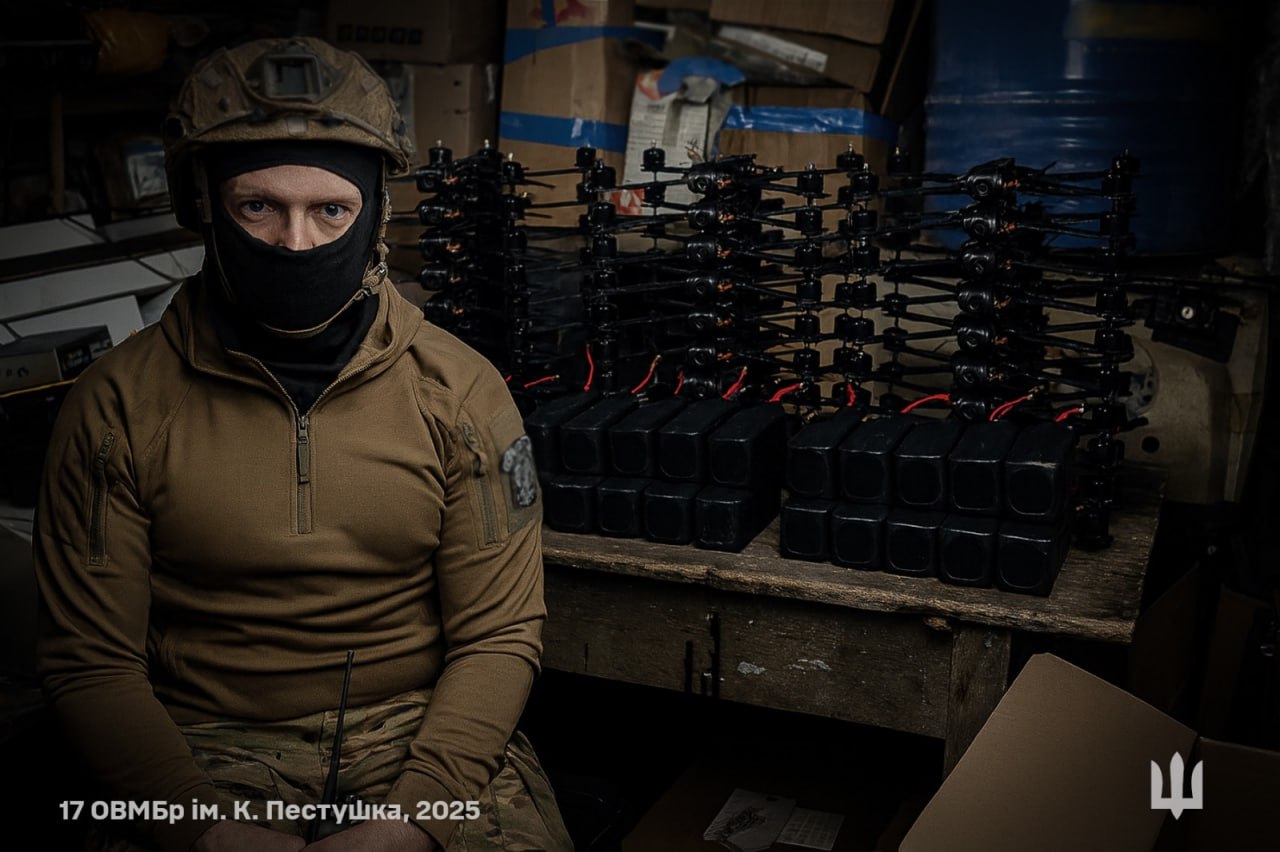
Pressure to build more affordable tactical drones may come not just from government procurers but frontline combat units as 3D printing proliferates in military units. Field-printed UAVs might seem like a niche capability—perhaps handy in a pinch, but unable to beat the economies of scale of industry mass production and injection molding machines.
However, such notions may be challenged by a new generation of printer-savvy soldiers. This January, military media highlighted the 3D-printed HANX drone devised by Marine Corps Sgt. Henry David Volpe—the first NDAA-compliant 3D-printed drone approved by NAVAIR.
A childhood 3D printing hobbyist, the technician told military media he began designing the drone after studying U.S. Army DIY drones at Fort Campbell. He said the Army original had nicer cameras and some additional capabilities, but “I knew I could make something far cheaper without sacrificing too many features.”
Volpe completed R&D for HANX over 90 days at the 2nd Marine Expeditionary Force’s Innovation Campus assisted by four fellow Marines. Over 1,000 hours and five prototype iterations his team arrived at a finalized design, and proceeded to work on training modules.
A basic HANX UAV costs just $700 and can conduct ISR, logistics and one-way attack missions, with 20 already being procured by Marine EOD specialists to carry explosives.
Whether or not HANX sees wider adoption, its promising price point suggests Military 3D-printing capabilities could set a cost/capability ‘floor’ which industry is challenged to exceed. That said, the military’s ability to self-produce UAVs will be affected by the same NDAA-approved parts supply consideration also testing private efforts. Perhaps small companies might also innovate commercially viable models for selling 3D printing designs to the military rather than producing them directly.
The Weird Wasteland of Ukraine’s Drone War
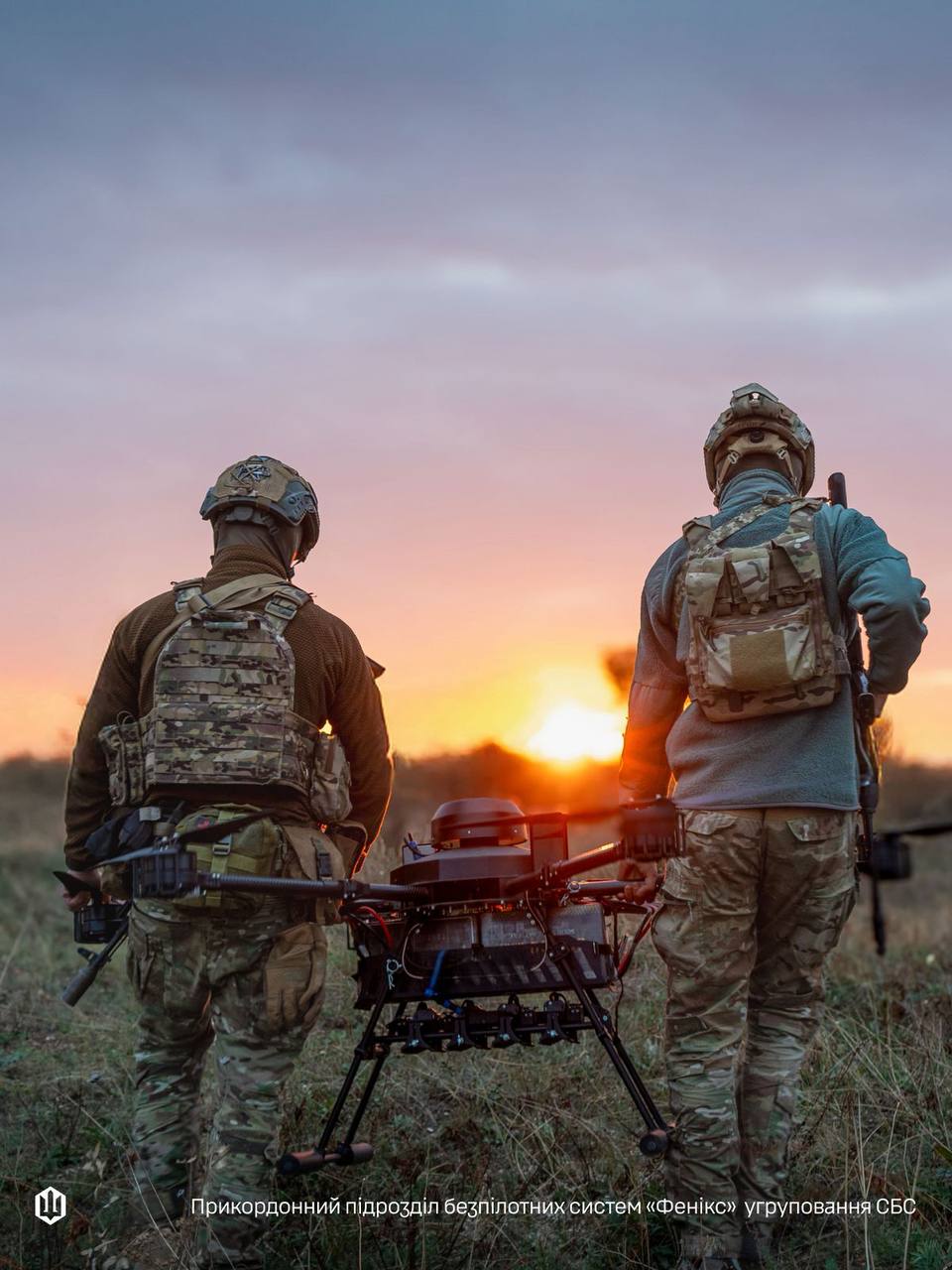
As the U.S. Army gets serious about distributing low-cost loitering munitions across maneuver combat units through programs like PBAS and Gauntlet, it’s worth revisiting how FPV kamikaze drones have completely transformed the tactical-level battlefield in Ukraine in ways unrecognizable from prior conflict—and even the first two years of Russia’s large-scale invasion.
In the war’s first two years, Russian and Ukrainian infantry fought battles over trenches in tree lines. But today Ukraine employs a more porous system of stealthy, widely-spaced outposts often manned by just 2 to 4 soldiers who are encouraged to avoid engaging enemy forces with direct fire if possible for their own survival. Quite simply, mass ISR and precision strike assets compel extremely low levels of force density in Ukraine to avoid detection and minimize losses when detected.
In the absence of true front line, widely spaced networks of outposts detect for drone operators situated in fortifications a few miles further to the rear to attack. The opposing drone walls create ‘death zones’ 20-30 kilometers deep, though not symmetrically, as Russia has developed a dangerous edge at interdiction at over 10 kilometers depth.
Vehicles are so rapidly detected and swarmed by drones in the death zone that infantry are typically 20-30 kilometers away from the Forward Line of Own Troops (FLOT) when rotating forward, and Ukraine increasingly relies on UGVs for resupply and casualty evacuation.
On rare occasions, one or two armored vehicles risk themselves may dart forward from concealed bivouacs for counterattack or direct fire missions. However, Russia’s increasingly rare attempts to penetrate the death zone with massed armored columns are rapidly detected and invariably demolished by a buzzsaw of massed FPV drones and artillery.
Instead, Russia’s primary assault tactics involve creeping forward small teams of dismounted infantry for maximal stealth; or alternately dashing across short distances mounted on mopeds, horses or golf carts hoping to outrun the Ukrainian ISR/strike kill chain. Both approaches invoke appalling casualties—allegedly averaging 1,000 per day—though some riflemen luck upon gaps in the Ukrainian defenses that follow-on echelons may exploit, and then establish outposts within the Ukrainian defense zone. These spot Ukrainian outposts and extend Russian drone strikes deeper into Ukrainian lines of communication—making frontline personnel rotations both time-consuming and dangerous.
These tactics enable Russia to slowly extend territorial control at high cost—but so slowly that local victories don’t create the conditions to exploit breakthroughs for fast-paced maneuver warfare.
The Hedgehog FPV Fiasco
Despite superior combined arms maneuver capabilities, NATO ground combat units risk being roughly handled in an encounter with the drone strike systems developed by Russia and Ukraine.
In 2026, The Wall Street Journal and Ukrainian military sources reported that in a 2025 exercise, a British brigade and Estonian units attempting a simulated mechanized assault were mauled by 10 Ukrainian drone operators from 412th Nemesis and Rarog brigades, as well as an Estonian UAS unit. The dronists located NATO columns using vertical takeoff/landing ISR drones to populate their battle management systems, while operator positions remain undetected in return. Then over 12 hours, 30 drone strikes (using dummy rounds) knocked out 17 armored vehicles, rendering two NATO battalions combat ineffective. The Ukrainian pilots also conducted safe ammunition resupply drops using UAVs in the exercise.
The NATO force’s fate seem very much in line with Russia’s consistently unsuccessful attempts at company or battalion-sized mechanized attacks in Ukraine. NATO tactical errors allegedly included deploying large unconcealed armored vehicle columns, leaving infantry undispersed, and failing to sweep in advance for mines.
Don’t forget the Vampires in the night
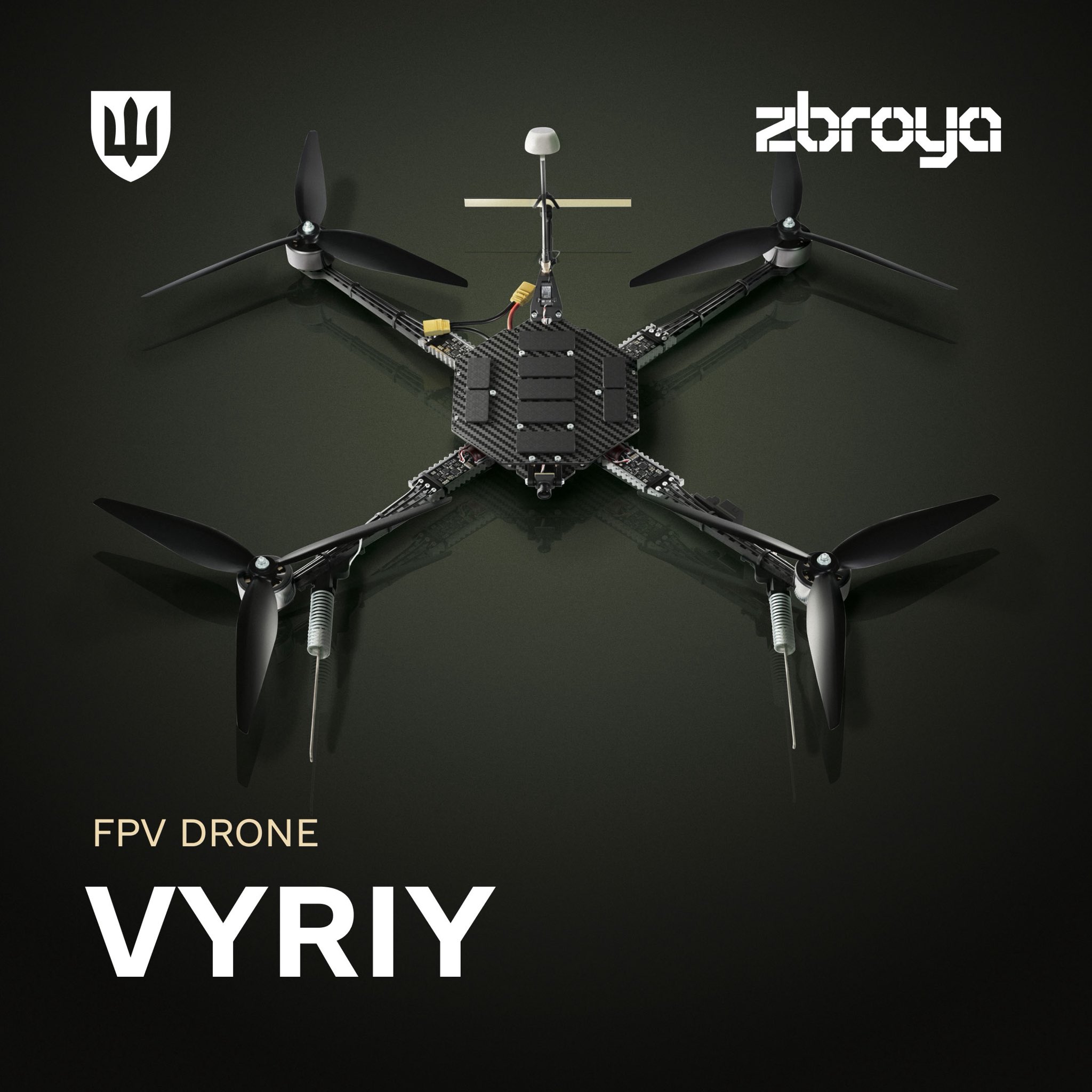
For all the focus on FPV-driven attrition, open-source analysts say heavy bomber sUASs—nicknamed ‘Baba Yagas’ or Vampires—may account for just as many casualties, possibly at even cheaper costs per shot. These include large agricultural-style quadcopters, hexacopters or octocopters used for gravity bombing at night aided by thermal cameras. These can carry multiple, heavier munitions (including mortar shells and anti-tank mines).
For example, Ukraine’s prolific Skyfall Vampire hexacopter, that cost roughly $8,500 per UAV in 2025, allegedly averages around 69 sorties before loss. That’s $123 per sortie in which 3-4 munitions may be dropped—favorable cost-per-shot even compared to the cheapest FPV. Heavy bombers can also serve as mothership carriers to extend range of small FPVs, deliver supplies, lay mines, or perform standoff surveillance.
Quantity versus Quality Revisited
The very high cost of U.S. loitering munitions compared to those used in Ukraine remains justly a point of criticism when a single exquisite U.S. munition could potentially pay for production of over 100-200 basic loitering munitions.
But even correcting against the known Western bias for exquisite systems, that doesn’t remove the salience of judging efficacy for cost—how many drones are expended on average to achieve a desired effect? Not all forms of ‘affordable mass’ are equally efficient, after all.
Quantity versus quality tradeoffs have subtle impacts even in a balanced situation in which one high quality UAV exhibits the same mission success rate as 10 low-cost UAVs.
The Dirty Secrets of FPV Warfare
The massive impact of FPV one-way attack drones in Ukraine can obscure the messy day-to-day realities of industrial-scale drone warfare.
In 2025, former Slovakian officer Jakub Jajcay published an article in War on the Rocks sharing data and observations he recorded while volunteering in a Ukrainian drone team—an experience leading him to question FPV adoption by Western militaries able to afford alternative means.
Jajcay compiled the following figures:
• 43% of FPV sorties resulted in detonation of the warhead on target, or just 20-30% if also counting missions aborted pre-launch. Deconfliction with jammers or other friendly drones, or lack of thermal drones able to perform missions under low-light or foggy conditions were frequent cancelation causes.
• 31% of sorties were defeated by enemy jamming
• 3% of sorties failed due to unforewarned own-side jamming
• A “solid” 25% of FPV drones failed while prepping for launch, typically due to undiscovered faults in radio receivers or video transmitters.
• 3% of sorties failed due to signal interference by friendly or enemy sUAS
• 10% of FPVs experienced warhead detonation failures
Most FPVs lack inertial and GNSS navigational aids (the latter often useless anyway due to jamming), and thus rely heavily on operator proficiency/terrain mastery. Such proficiency is learned on the job, as he says the standard five-week training course is insufficient—and most operators don’t even get that.
Jajcay advocates standardization of training and drone components, and highlights frequency-hopping comms and repeaters as technical means limiting control-link related attrition. While observing fiber-optic drones bypass threats from jamming and signal deconflict, the cabling makes them significantly harder to pilot and prevents executing a second attack run should the initial one be aborted.
An apostle of FPV attrition warfare may be unperturbed by Jajcay’s criticisms. After all, even expending thirty FPV drones costing $500 to $1,000 apiece to destroy a military vehicle is cost-favorable both compared to alternative guided American munitions ($50,000+) and the targeted vehicles themselves. High failure rates have not prevented FPV drones from reshaping the battlefield thanks to the redundancy offered by sheer numbers.
However, simple cost-exchange ratios overlook the man-hour opportunity costs of generating, say, 30 FPV strikes to knock out a tank, each remotely piloted by a valuable drone pilot—manhours which might have generated more successful attacks using more consistently reliable systems.
Cooperative swarming AI/autonomy may eventually redress the high manpower requirements and bandwidth conflicts of deploying many loitering munitions simultaneously—but such capabilities describe a minority of current operational systems despite promising demos.
Investing in superior hardware brings serious advantages. But just as clearly, maximally gilding every feature rapidly drives up cost (and compounding weight and power requirements) to levels incompatible with rapid, affordable mass production. Disciplined cost-benefit choices are necessary in order to optimize mission success rates with cost.
FPV Targeting Priorities
Reports suggest Ukraine expended over 5,000 FPV drones daily by early 2025, leaving sufficient ammunition depth to sometimes expend multiple guided munitions on individual foot soldiers. Yet both sides still face tough choices on how to best employ their voluminous FPV arsenals.
Starting in 2025, analysts began reporting a new Russian edge in executing strikes on the deeper side of tactical warfare 10-20 kilometers beyond the frontline—substantially damaging Ukrainian logistics and fire support assets in relative safe zones. Underlying causes include the professionalizing influence of Russia’s Rubicon drone unit and larger-scale employment of longer-range fiber-optic drones.
Ryan O’Leary, leader of a prominent volunteer unit in Ukraine’s army, argued on social media this February that this degradation in Ukrainian drone superiority reflected a better rationalized targeting strategy. Russia, he argues, “stopped treating drones as flying grenades and started treating them as a system for denying movement, logistics, and drone operations.”
In O’Leary’s view “Logistics, EW, comms, ISR, repair, transport, drone crews, artillery, mortars,” are the actual decisive generators of combat power in this war, not hapless riflemen Russia continuously dispatches on suicidal assaults. To achieve “depth control”, O’Leary writes institutional change is necessary, including measuring success in terrain control rather than casualties (the current norm in Ukraine’s gamified scoring system for funding UAV units.) “Every sector’s routes, hubs, chokepoints, drone corridors, EW lines need to be mapped, shared and coordinated.”
He advocates clearly delineated organizational responsibilities, with frontline brigade drones responsible for strikes at 0-20 kilometers depth, Unmanned Systems Force (SBS) units handling the underserved 21-80 kilometer zone, and special forces units executing longer-range operations (and not run-of-the-mill frontline strikes.) Drone operators need standardized training, ensuring shared across-force protocols for communication disciplines, frequency management and kill chain logic.
Targeting infantry might be defended as supporting Ukraine’s ‘drone wall’ anti-access strategy staving off creeping Russian advances. However, rifleman attrition may not be hitting Russia where it’s most vulnerable. Ukraine’s targeting priority dilemma emphasizes why loitering munitions capabilities should be fielded both as dedicated direct support assets for maneuver combat units and as independent strike units accorded freedom to prosecute deeper, higher. That, ultimately, is the real test for Drone Dominance and the Gauntlet: not just buying 300,000 cheap munitions, but proving they can support both close maneuver forces and deeper, system-level targeting in a Ukraine-style threat environment.