
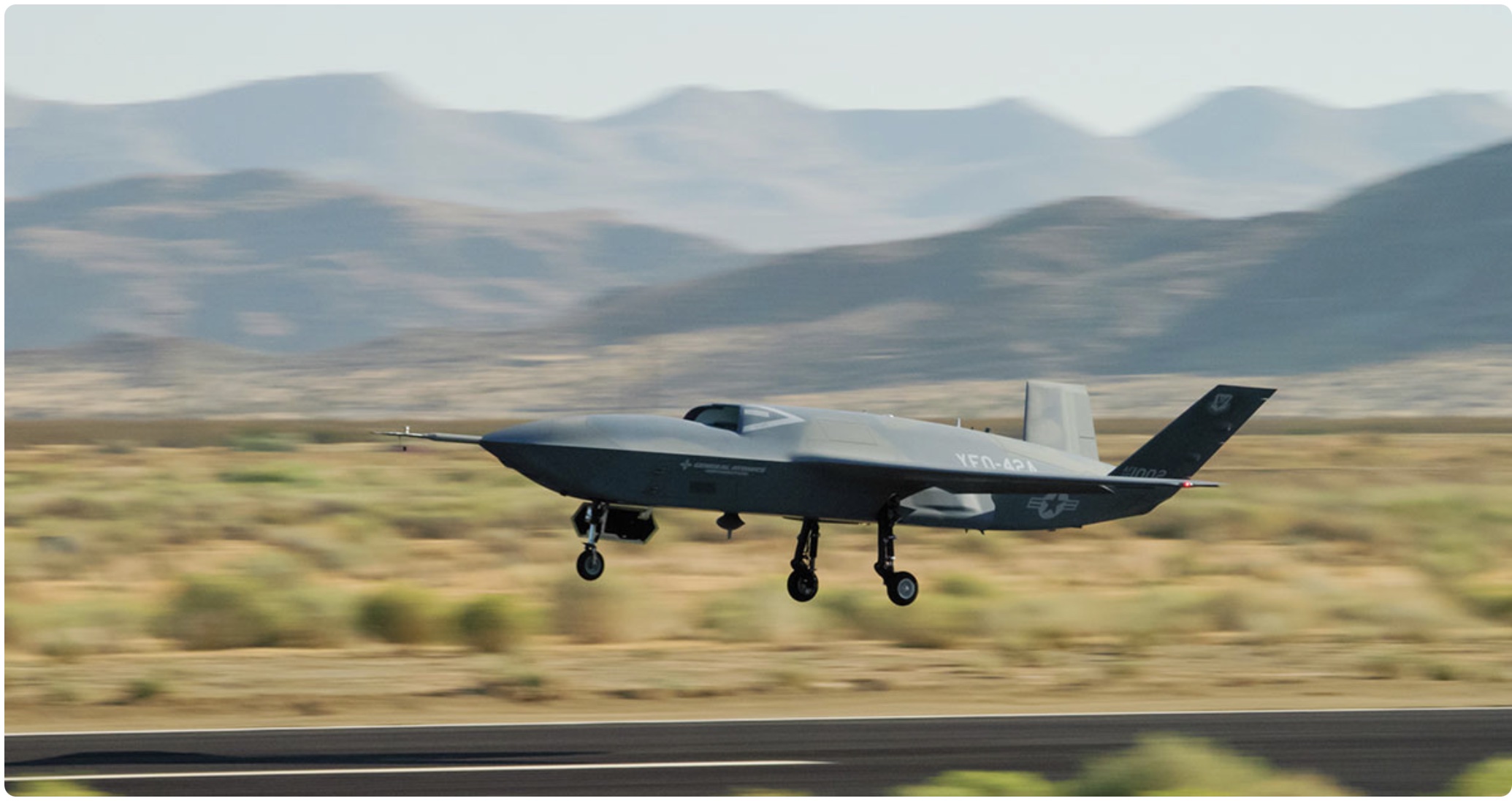
On August 27th, General Atomics Aeronautical Systems’ (GA-ASI) uncrewed YFQ-42A rose above a runway at an undisclosed California location, marking the moment Collaborative Combat Aircraft (CCA) crossed over from planning to reality.
Released videos show little beyond the CCA prototype’s takeoff silhouetted against a sunlit mountain range. But GA-ASI spokesperson C. Mark Brinkley assured that it was more than a Kitty Hawk-style bumping along the terrain: “It went up in the air. It flew for some amount of time. It went up to altitude. It was a true flight.”
The flight signified what Secretary of the Air Force Troy Meink has called “an inflection point.”
“We are engaging in a fast-paced race for military superiority against a well-resourced strategic opponent,” Meink told the Senate Defense Appropriations Committee. “We must rebuild our military and develop new capabilities so that we can continue deterring our adversaries in the future.”
To that end, the Air Force envisions acquiring up to 1,000 CCAs, uncrewed loyal wingmen designed so multiple smaller vehicles can partner with a single new 6th generation F-47 manned controlling fighter or existing 5th-generation F-35s or F-22s. As part of the Next Generation Air Dominance (NGAD) doctrine, the F-47 will integrate next-generation stealth, digital engineering, sensor fusions and long-range strike capabilities. On its part, CCAs will complete a “high-low affordable mass” that can, as Meink noted, “project power both from within and outside of adversary threat environments.” The Air Force hopes to deploy the F-47 in 2028, with its initial CCA of choice expected in 2029.
A cascade of recent activity seeks to realize these goals.
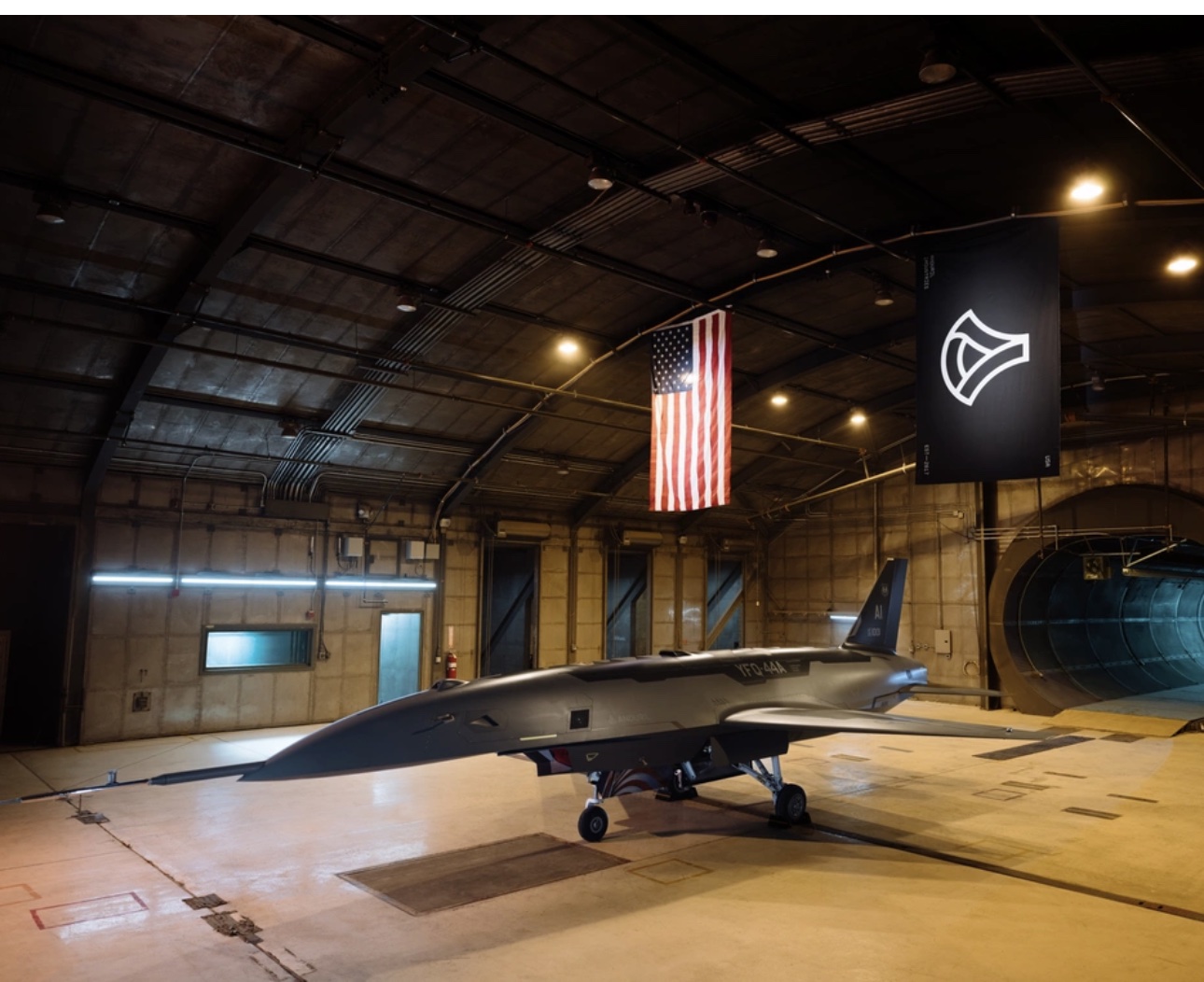
In March, General Atomics’ as-yet-unnamed YFQ-42A and Anduril Industries’ YFQ-44A Fury were downselected for CCA competitive Increment 1 consideration. The Fury may make its debut flight as early as mid-October, and Anduril has announced that it will develop a new aircraft for a counterpart U.S. Navy program.
September unveiled parallel efforts. On the 21st, Lockheed Martin unveiled its Vectis, a multi-mission Group 5 CCA featuring stealth technology that could “unlock new, integrated capabilities at an ultra-competitive speed and price point.” Three days later, the Air Force announced it would award “concept refinement contracts” for another program iteration from a pool of as many as 20 solicited vendors, with the goal of putting several on contract during FY26 and perhaps taking multiple projects into production. These may represent a variety of sophistication, attritibility and price points.
The CCA Mandate
Rethinking the battlespace has intensified for reasons both within and beyond U.S. borders. With topline manned fighters costing north of $80 million each, the overall fleet has shrunk. Technology glitches and budget variables can trigger delays. Vendor lock can narrowcast capabilities even as technology accelerates. Humans in the cockpit can endure only so much G force and time in the air.
Andrew Van Timmeren, whose perspective spans from flying F-22 Raptors to become Anduril’s director–air dominance systems, amplified the move toward CCA-NGAD. “The Raptor is amazing at when it does,” the former pilot whose call sign was “Scar” told IUS. “The B-21, a very awesome capability, is something like $600 million a copy. One of the things CCA provides is relevant combat capability for an affordable price. You want to get to a lot more airborne, democratized capabilities across the formation to facilitate overall combat effectiveness.”
The U.S. isn’t the only interested party looking at CCA. The Royal Australian Air Force has made more than 100 test flights with Boeing Australia’s MQ-28 Ghost Bat. Project Mosquito was the United Kingdom’s try at a Lightweight Affordable Novel Combat Aircraft (LANCA), though this loyal wingman concept was cancelled, reportedly for cost and efficiency reasons.
And as shown in its recent military parade, China is ramping up CCA-compatible fighter squadrons to project power even as the United States has to do the same across great expanses far from home (details in https://insideunmannedsystems.com/china-reveals-large-new-stealth-fighter-drones-alongside-collaborative-combat-aircraft/).
Can this major pivot toward manned-unmanned teaming be delivered with clarity, on time and on budget? In May, the Army shelved its FTUAS reconnaissance-surveillance program to sort out priorities and technology requirements—after seven years of development. CCAs are set to cost just a fraction of what a frontline fighter does, but at millions of dollars times 1,000 units, “cheap” is a relative term—especially when the manned F-47 controlling fighter’s demand for major funding has given Congress pause. The FY26 defense budget accelerates the commitment to CCA, but Pentagon commitments have a long record of ballooning, forcing hard choices: the Navy’s F/A-XX Next-Generation Carrier-Based Fighter budget yo-yoed this year, first cut by about 80%, perhaps to fund the F-47, with reinstatements now under discussion. Even well-funded manufacturers risk investments made in the face of uncertainty.
And this level of uncrewed-crewed integration has yet to be combat-tested.
Yet, GA-ASI’s Brinkley pithily summed up the high-low mix CCAs can bring to NGAD. “We can’t go out every single time loaded with silver bullets hoping we run into werewolves. Sometimes, we have to go out with just regular bullets, and a lot of them. I think what CCA brings is volume, at an affordable price.”
Introducing the Vehicles
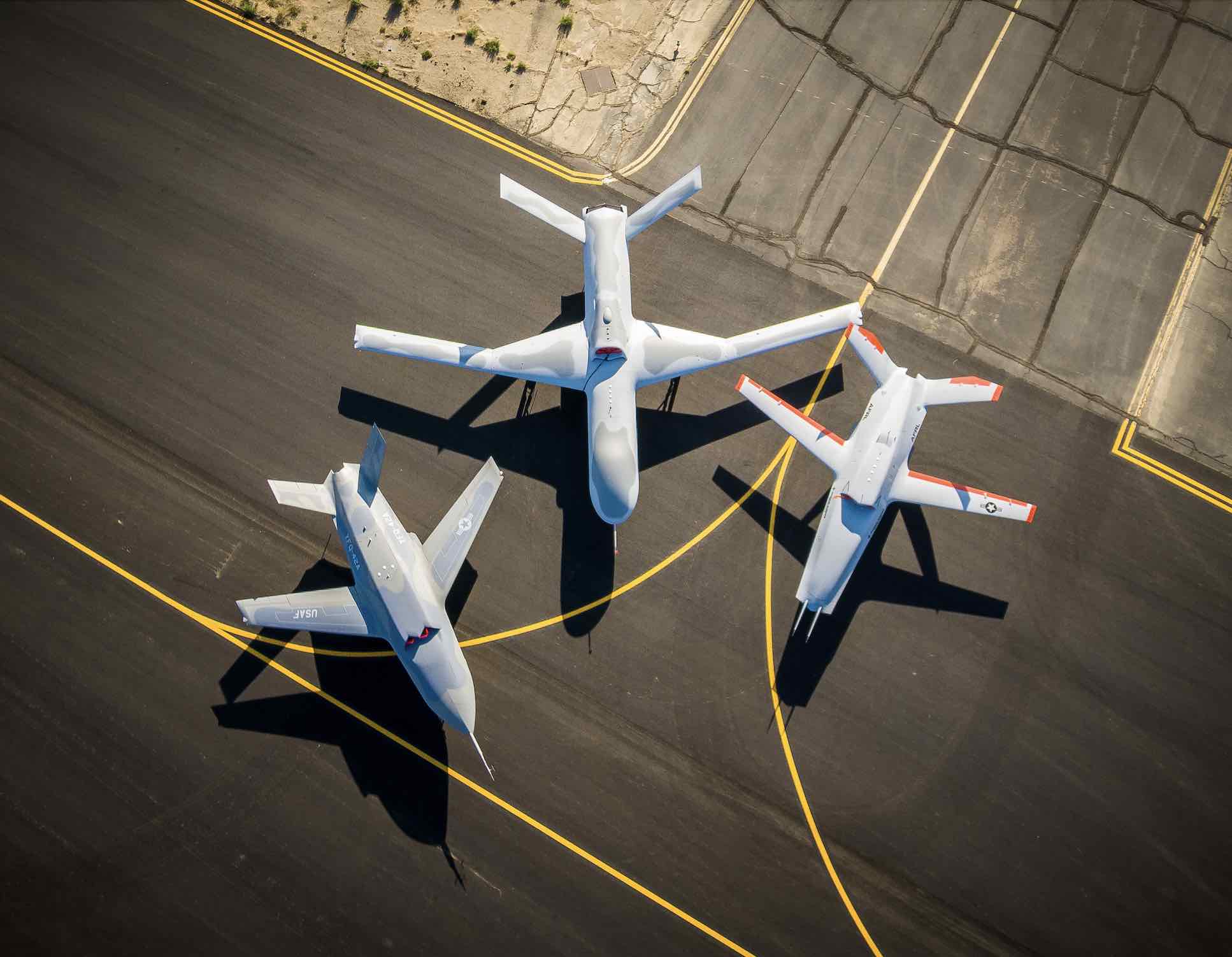
Vehicle statistics haven’t been announced, but details can be gleaned and guestimated. A YFQ-42A antecedent is the MQ-20 Avenger, which General Atomics has used for five years to test its autonomy core. The turbofan-powered Avenger is said to be 44 feet long, with a 66-foot wingspan and a maximum takeoff weight of about 18,000 pounds. It has an internal weapons bay and external hardpoints. As the accompanying photo of General Atomics’ UAV lineup shows, the YFQ-42A is smaller than its counterpart.
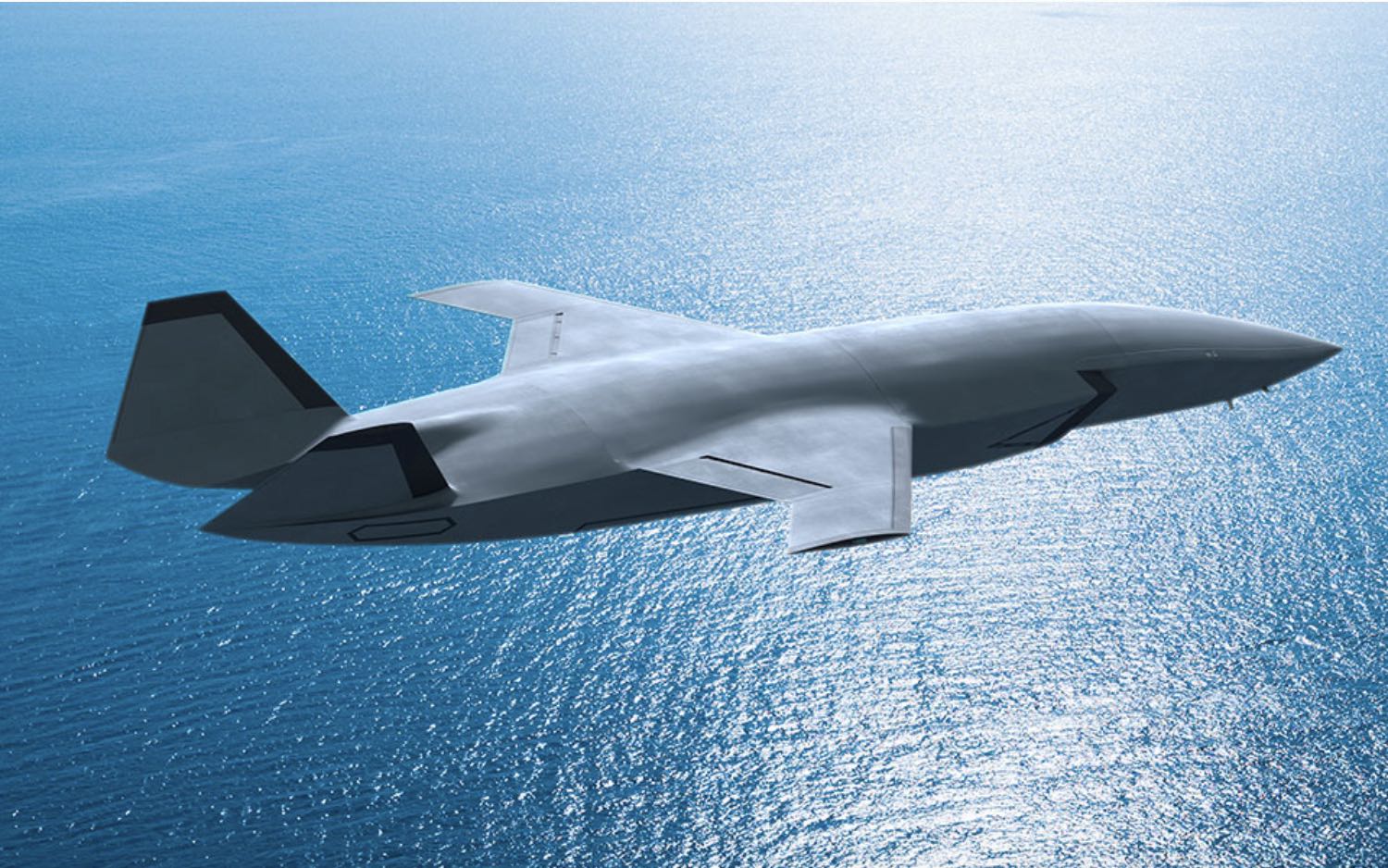
Brinkley noted that work on what General Atomics calls its Gambit series has allowed the YFQ-42A to evolve quickly. Within his taxonomy, “Gambit One” would be the XQ-67 Off-Board Sensing Station (OBSS) tech demonstrator that first flew in February 2024. “I guess conceptually, the YFQ-42A would line up with kind of a ‘Gambit Two,’” Brinkley said, but with enhanced speed and maneuverability. The newer airframe has slender wings, a single engine, a V-tail and what looks like an internal weapons bay. The vehicle includes proprietary mission systems but is designed and digitally engineered to meet the Air Force’s interoperability mandate.
“Within 16 months of getting the contract for the CCA from the Air Force, we reimagined it from a sensing platform to a shooting platform,” Brinkley said. “And General Atomics has already flown two of these [variants] in the last two years.”
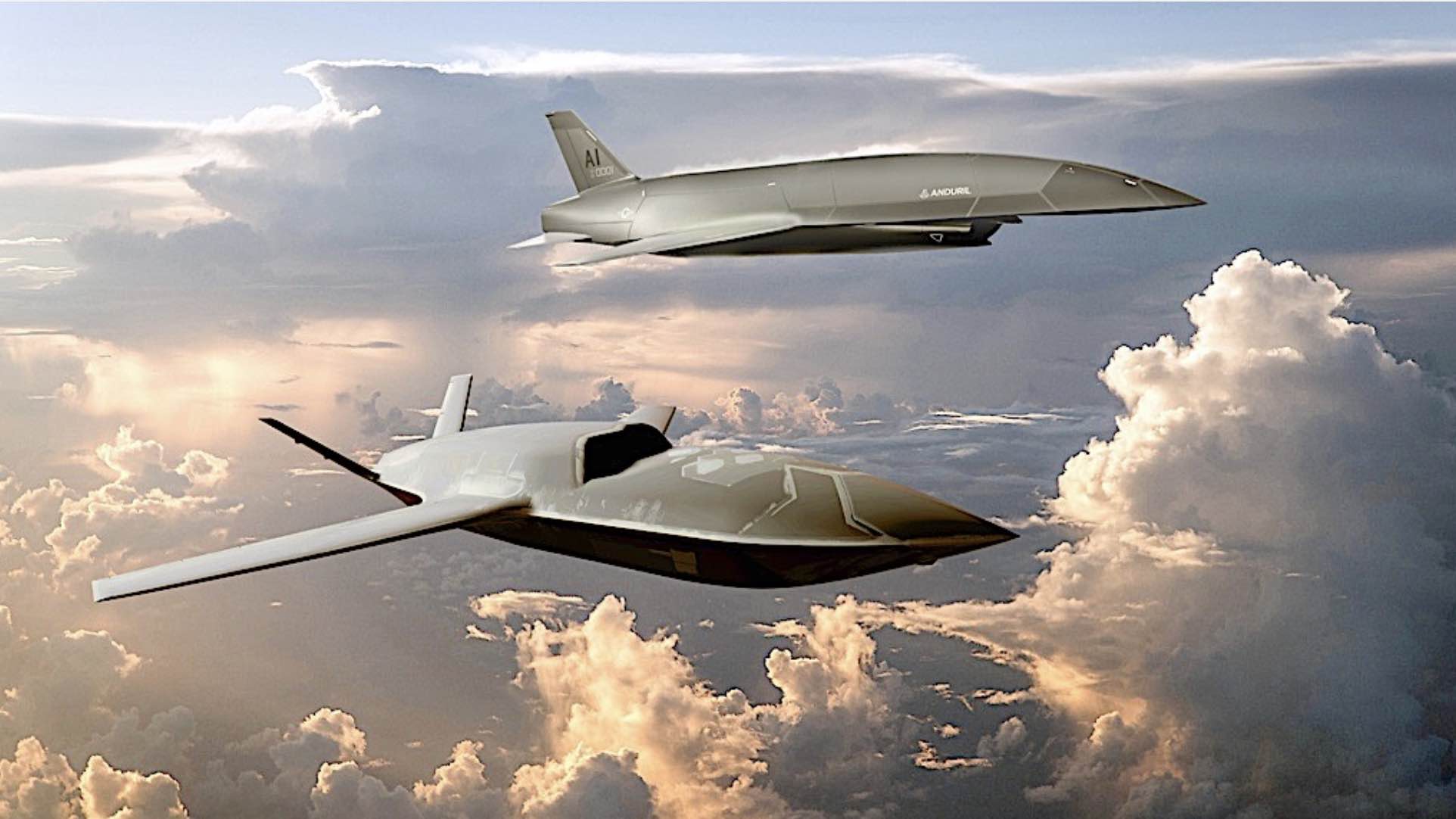
Anduril’s Fury was initiated by Blue Force Technologies, which Anduril acquired in 2023. Originally named “Grackle” (as in the long-tailed blackbird common in Blue Force’s North Carolina), the YFQ-44A Fury also stresses open architecture and integrated systems. It features a sharklike profile and thin swept wings, with The War Zone putting dimensions at 20 feet long with a 17-foot wingspan. Its turbofan engine is said to generate high-subsonic speed and an altitude of 50,000 feet.
Anduril’s Lattice autonomous sensemaking and command and control platform can integrate and normalize heterogenous data in real-time, “enabling a single human to command and coordinate a wide range of autonomous assets across the ocean, land and sky to deliver successful mission outcomes.”
Beyond the two currently selected systems, alternative approaches are emerging. Thought it was not downselected for Increment 1, Lockheed Martin hopes its Vectis vehicle can expand CCA capabilities. Vectis hails from Lockheed’s venerable Skunk Works, the design home of pioneering planes from the U-2 to the SR-71 Blackbird to the F-22 Raptor. It isn’t designed for a particular program, and it both lines up and differs from the Air Force’s official CCA entrants.
Similarities? Lockheed Martin’s multidomain combat systems (MDCX) common control system and MOSA/GRA capabilities meet CCA mandates for mission compatibility and flexibility. For example, a Lockheed animation depicts its Angry Bees touchscreen controlling four vehicles.
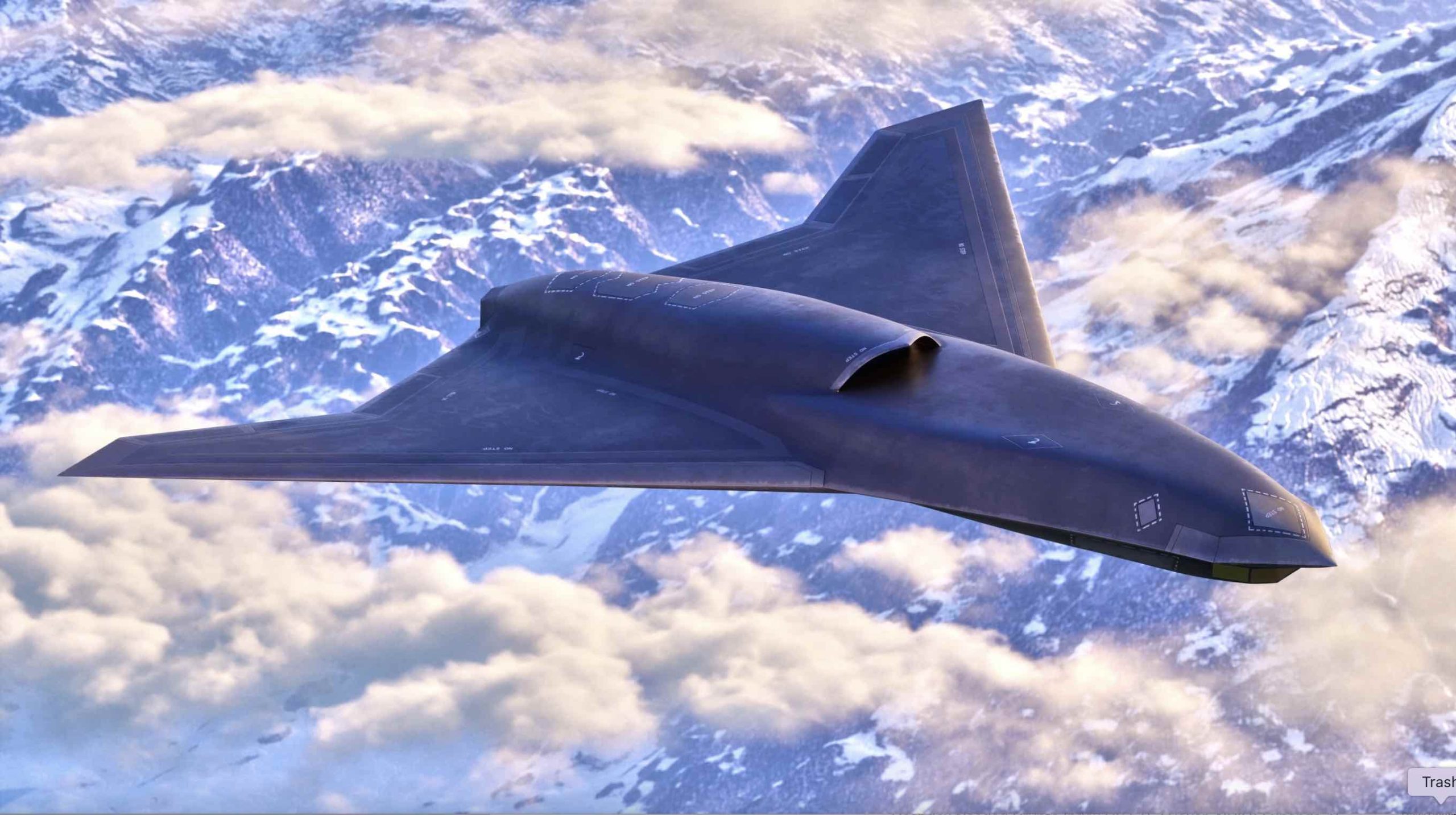
Differences? Vectis’ tailless airframe has a blended wing aimed at minimizing radar cross-section—offering “a highly capable, customizable and affordable agile drone framework,” Lockheed Martin Vice President and General Manager OJ Sanchez said, according to a news release. Perhaps the biggest innovation is stealth technology, which Lockheed has developed as far back as its F-117 Nighthawk.
Lockheed has tested Vectis’ capabilities in mixed combat simulations with F-22s and F-35s. Development is underway and company hopes to fly a prototype by 2027. With more than 1,100 of its F-35s in service globally and experience on the Navy side, the company may be able to build an additional case independent of the F-47.
Lockheed wasn’t downselected for CCA Increment 1, perhaps because the Air Force was stressing stand-off capabilities over high levels of stealth. On its part, Lockheed maintains that its stealth capability offers “best in CCA class survivability” and can offset unacceptable losses during sustained conflict—a time when the loyal wingman price point already will exceed that of even high-end surface to air missiles.
Corporate Approaches
“The Air Force is leveraging insights and technologies from a variety of related programs to accelerate the development and fielding of CCA,” an Air Force official told Inside Unmanned Systems. Here, a case could be made that the flyoff to date is between longstanding and disruptive companies. UAV manufacturer General Atomics was founded in 1955 as a division of aviation titan General Dynamics, while software disruptor Anduril was established in 2017. But each company’s spokesperson posited moving toward a sweet spot between experience and innovation.
“Unmanned aircraft is all we do, and we’ve been doing it for a long time,” GA-ASI’s Brinkley said. The MQ-9 Reaper UAV, which first flew in 2001, has ranked near or at the top for mission-capability, he noted, and Gambit iterations have followed on with a core system that offers common avionics, fuselage systems and landing gears, with potential mission-oriented variations for other services and international customers. “We’ve used the MQ-20 Avenger as a CCA surrogate for a long time. Is [Avenger] as maneuverable—no, it’s bigger, heavier. But when you’re working through teaming and connectivity and bandwidth, it doesn’t really matter.”
Brinkley cited 5 million square feet of manufacturing space already in place and certified parts that did not exist until General Atomics invented them. “I think where we stand apart is the demonstrated ability to pivot and fly new jets quickly with new missions. It’s very modular, for instance, for international needs, giving them the opportunity to put some of their own sensors or weapons or indigenous products inside their aircraft.
“You mentioned the difference between established and disruptive. I think General Atomics sits in this sweet spot.”
Anduril Industries’ unmanned line includes ALTIUS, which has succeeded in the military’s autonomous launched effects sphere. Anduril cites its sweet spot as having a team that “brings together the smartest Silicon Valley engineers with veterans who have been on the front lines and have first-hand knowledge of the mission.”
Van Timmeren has been Anduril’s director–air dominance systems for just over two years. “Modern software companies like Anduril can leverage modern manufacturing capabilities to quickly deliver meaningful combat capability,” he said. “And I think that matched up really nicely with the Air Force Collaborative Combat Aircraft program Increment 1 priorities.”
As a vice president at Blue Force Technologies, Van Timmeren came along with Anduril’s purchase of that company. He recalled Fury’s evolution as a series of pivots.
At a meeting with Air Force brass, Blue Force pitched the Grackle (“terrible name,” he allowed) as a high-performance ISR vehicle—“a map of the Earth kind of thing.” The feedback, he recalled, was “great idea, but we don’t have a requirement for this.” Instead, they were encouraged to develop an adversary vehicle. “That’s how we started to get this flywheel going around this idea for this high-performance unmanned fighter.”
NGAD’s announcement and Anduril’s acquisition of Blue Force fueled another shift. “Blue Force had a great airplane idea, but zero software chops,” Van Timmeren said. “Anduril has amazing software chops but didn’t have a mature platform. So, the puzzle pieces match really well.
“We pivoted into a clear market need and then started development. Up to this point, our digital modeling has mapped well to what’s happening physically.” So much so that Anduril plans to fly its first flight autonomously—“no stick and throttle, no person piloting throughout the duration of the sortie. We’re going to click a button and she’s going to fly.
“We’re trying to tackle the hard parts as early as possible.”
MOSA, Sensors and More
Manned-unmanned teaming is leading to fundamental changes in both data integration and the very nature of how forces will operate in contested areas.
“CCA is leveraging numerous open system and Government Reference Architectures [GRA] to aid in development, integration and interoperability to meet speed to ramp goals,” the Air Force official said. “These architectures provide the necessary interface definitions and starter kits to conduct software and hardware design.” Producing and sharing relevant data sets, the official added, will allow for “collaborative operation to include closing kill chains with other CCAs and also in collaboration with crewed teammates.”
The General Atomics and Anduril representatives outlined how they are embracing Modular Open Systems Approach (MOSA) and GRA to enhance interoperability.
“From a General Atomics perspective, you start from a place where you can add and subtract missions, change your mission profile without going back to the drawing board completely,” Brinkley said. “It allows us to scale right, to plan supply chain, so all we’re changing is this one small piece.”
The goal is to mix core proprietary software with best in breed provider contributions that can be swapped out for continued improvement. “We’ve been able to fly government software,” Brinkley said. “We’ve been able to fly our own software. We’ve teamed up with small AI companies and flown their software. Earlier this year, we flew with Shield AI. General Atomics has a software called TacAce, and we were able to switch from TacAce to Hivemind during the flight.”
Van Timmeren homed in on GRAs. “One of the things that the government is leaning hard on, and we agree with as an OEM,” he said, “is these open-architecture standards that create the logical and physical backbone to facilitate the maximum amount of swapping of hardware and software.”
Van Timmeren differentiated between “mass” and “massless” payloads. “A mass payload is like an IR, some sort of sensor, a physical weight. A massless payload is a different software capability, and we want to be using these open architecture standards to get to that North Star, which is that swapping in interchangeability, so the vehicle could be doing something completely different from Monday to Tuesday.
“What we’re trying to do is leverage the max amount possible,” he continued. “Commercial off the shelf is readily available globally. We’re using things that are catalog components for other aircraft. We’re more than happy to put best of breed in the vehicle, because the ultimate goal is combat effectiveness.”
Doctrine and Training
The Air Force sees CCA as a new concept with a correspondingly different organization. “These units are designed to scale combat power without scaling manpower,” the Air Force official said, “requiring an order of magnitude fewer personnel compared to traditional squadrons. The mission will be to provide combat-ready aircraft at a moment’s notice.”
Nevertheless, the program has proof points to surmount. As a 2024 Center For Strategic & International Studies report noted, “the challenge of twenty-first century operational art, therefore, will be deciding how best to pair human judgment with the precision and speed of machines.”
“The Air Force and other aviation arms across the services need to invest in flexible battle networks and in concepts and training regimes that help adapt the core processes of command and control to the realities of modern warfare,” the report continued. This is true whether for command centers or human pilots flying one plane while overseeing and coordinating multiple semi-autonomous wingmen amid the chaos of battle.
“If CCAs lack it, they are likely to render missions brittle, causing overwhelmed pilots to have to manage more information—in their cockpit and on devices controlling CCAs—than the human mind can process…”
Consequently, pilots and operators alike must learn to wield integrated real-time data for maximum combat effectiveness. “It’s incredibly important,” Anduril’s Van Timmeren said about this type of training. “The intent of CCA is to have humans on the loop, where a person will give consent or command to autonomous actions. If I have to fly four different things, that’s impossible. But if I can offload much of that decision-making up to the next logical point, I have that [human] quarterback.”
That quarterback still needs to lead the team. “Human-machine teaming,” the Air Force spokesperson told IUS, “preserves ethical control, builds trust and increases warfighter survivabilty and combat impact.” To ensure those values, an Experiment Operations Unit (EOU) was elevated to squadron status this June to develop and test concepts for how CCA will operate effectively in the battlespace. “A proving ground for testing and refining human-machine teaming concepts for CCA in realistic scenarios” is how a release defined it. The unit is integrating into the Virtual Warfare Center and the Joint Integrated Test and Training Center Nellis “to conduct realistic simulations and refine non-materiel considerations of CCA employment concepts in a virtual environment.”
“Their whole job is to create what that new unit of CCA could look like,” Van Timmeren said.
The Beat Goes On
The Air Force spokesperson acknowledged a desire to remain flexible as the program goes forward, citing contributions from the MQ-20 Avenger, the XQ-67, the MQ-28 Ghost Bat and Skyborg, the 2020 program that involved 10 companies—including former CCA contenders Boeing, Kratos and Northrop Grumman—in manned-unmanned evolution. “Each of these programs contributes valuable lessons learned and technological advancements that are directly informing the design, development and deployment of CCA.”
Regardless of which company prevails, “CCA is a top priority for the Air Force,” the spokesperson reiterated. “We are investing to rapidly field the first increment of CCA and plan to begin the second increment of development in early FY26.”
Brinkley cited the need for speed. “The United States does not want to wait 10 years to get these aircraft. So, one of the real challenges is understanding how to get the production, manufacturing, supply chain in place, and have redundances to prevent shutdown in production.”
Both General Atomics and Anduril say they’re ready to move forward. “Everybody here feels like they’ve cracked the code,” Brinkley concluded. “As recently as 2019, we were building 100 airplanes a year. These are smaller and they have different manufacturing techniques, but we are going to build this infrastructure out in advance and be ready for the future that is coming.”
Van Timmeren was confident of Anduril’s abilities. “We are going to make a difference in the operational utility and capability of the air domain.”
Van Timmeren closed on a personal note. “I miss the Raptor every day, but I think I’m just wearing a different uniform. This is what gets me up every morning: ‘How can I try and make them as capable as they possibly can be?’ There’s no doubt in my mind that my bros—which is a term to cover both the guys and girls in the cockpits—are going to be made that much more effective by these CCAs being out there.”
In the Navy
On August 20th, the Navy indicated that it was joining the move to CCR. General Atomics and Anduril were cited as receiving contracts, as well as Boeing and Northrop Grumman. Lockheed-Martin was said to be developing Common Control architecture for the drone. (See https://insideunmannedsystems.com/navy-issues-five-contracts-for-carrier-based-collaborative-combat-drones/ for full contract coverage.). At the same time, it’s unclear whether the Navy’s planned F/A-XX sixth-generation fighter will secure sustainable funding.
Among the proposed vehicles is Boeing’s MQ-28 Ghost Bat, a multi-mission vehicle produced by Boeing Australia for that country’s air force. It features advanced robotics and composite materials, and its removable nose can swap out modular payloads. Boeing also produces the Navy’s FA-18E/F Super Hornet jet.
Northrop Grumman has not detailed its entry, but in 2013 its X-47B was the first UAV to land on a carrier and it built the longstanding F-14 Tomcat variable-wing fighter.
Of course, the Navy’s CCA will have to be carrier-operations capable, from handling salt air to mastering the relative navigation associated with a moving ship to reinforcing landing gear for catapult launching and retrieval.
General Atomics and Anduril are taking their evolutionary and disruptive approaches to their proposed entries. GA-ASI spokesman C. Mark Brinkley noted that at the 2024 Farnborough Air Show in the U.K., “General Atomics rolled out this concept of what we were called Gambit 5, a carrier-based CCA.” He also cited General Atomics’ 10 years of experience with naval programs, including landing its STOL Mojave UAV on a British carrier. GA also has worked on the EMAG (electro-magnetic) catapult for state-of-the-art Ford class carriers.
Anduril has produced autonomous underwater vehicles, including Ghost Shark and Dive LD, which can launch its Copperhead torpedo-like multirole AUV. The company would similarly innovate for a collaborative teaming aircraft. “If we were to build a Navy CCA, it would probably look nothing like a Fury,” a company official said at this year’s Air & Space Forces Association conference. “They would not be Fury derivatives.” He did add that vehicles could share internal software, avionics and production techniques.
Though General Atomics lost out to Boeing on the MQ-25 Stingray, the aerial refueler/ISR vehicle that is scheduled to be the Navy’s first carrier-based UAS, Brinkley saw a developmental silver lining: “Our engineers learned a lot.”
CCA Funding Surges
The Association for Uncrewed Vehicle Systems International (AUVSI) tracks funding for uncrewed vehicles in the DOD’s budget each year with an underlying data set that captures granular details on more than 500 programs. A query on this data set for initiatives supporting the Collaborative Combat Aircraft (CCA) shows significant investments are being made in recent years. Here’s the associated record of rising fiscal support.*
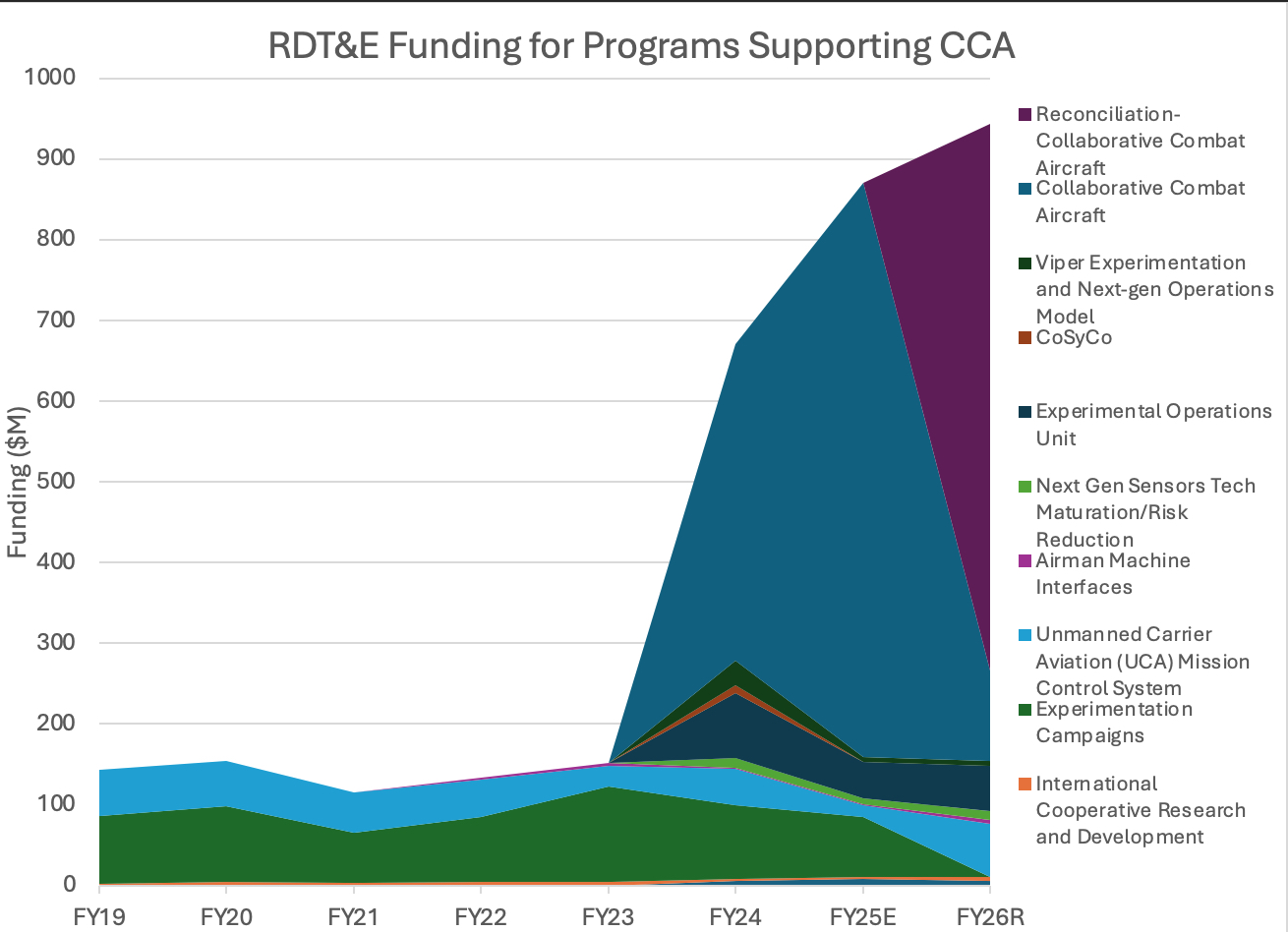
The Collaborative Combat Aircraft effort includes operational analyses/studies, technology candidate assessments, development, integration, test, prototyping, and demonstrations to identify operational concepts and technologies. Ongoing studies are conducted to refine CCA concepts as well as air-superiority related technologies.
The first direct reference to CCA in the budget documentation was identified in FY 2023 with the transition of pioneering advancements in the Air Force’s Skyborg effort. The following year, a project titled “CoSyCo” was initiated under the Rapid Prototyping, Experimentation & Development program with $10M to fund digital engineering for software, network and autonomy dedicated to CCA. The BQM-177 aerial target was used as a surrogate for early testing with two Increment 1 prototypes selected in 2024 and flight testing planned for late 2025. FY 2024 also represents the first year that CCA funding was established as a stand-alone project under the Next Generation Air Dominance (NGAD) program with $392M budgeted. The funding has grown steadily through FY 2025 and FY 2026, with FY 2026 accounting for $111.365M in discretionary and $678M in mandatory (reconciliation) funding. Furthermore, based on the most recent projections from the DOD, FY 2027 could see in excess of $3B allocated for CCA.
The strong support for the CCA was further emphasized in the most recent version of the FY 2026 National Defense Authorization Act (NDAA). Congressional committees are pushing for rapid development of these capabilities to counter adversarial threats posed by recent growth in mass-produced, modern capabilities.
Beyond NGAD, solutions which will enable future capabilities of CCA are being developed in the Autonomous Collaborative Platforms program. Two key initiatives are funded in this program:
• The Viper Experimentation and Nextgen Operations Model (VENOM): the candidate concepts consist of establishing human-on-the-loop autonomy testbeds, enabling modifications and implementing initial autonomy reference architecture to reduce risk for CCA autonomy.
• Experimental Operations Unit (EOU): FY26 allocations are especially related to Agile Combat Employment, maintenance and logistics, crewed-uncrewed teaming, training requirements, uncrewed employment, and the development of needed publications, training and policy documents.
*Note: AUVSI has released its Interactive Federal Defense Spending Workbook, built from the FY26 President’s Budget. The live, filterable Tableau dashboard allows users to drill down into budget details by domain (air, ground, maritime, counter-UxS), technology, agency and timeline, with updates throughout the congressional budget process.
Interested parties can Subscribe now to access the Interactive Workbook and consider adding consulting hours with AUVSI’s Research team for tailored analysis, opportunity mapping, and board-ready briefs.