
Drones have transformed modern warfare. From Ukraine to the Middle East, uncrewed aircraft systems (UAS) have extended operational reach, reduced risk to personnel, and enabled new forms of precision engagement. But the lessons learned abroad are no longer distant.
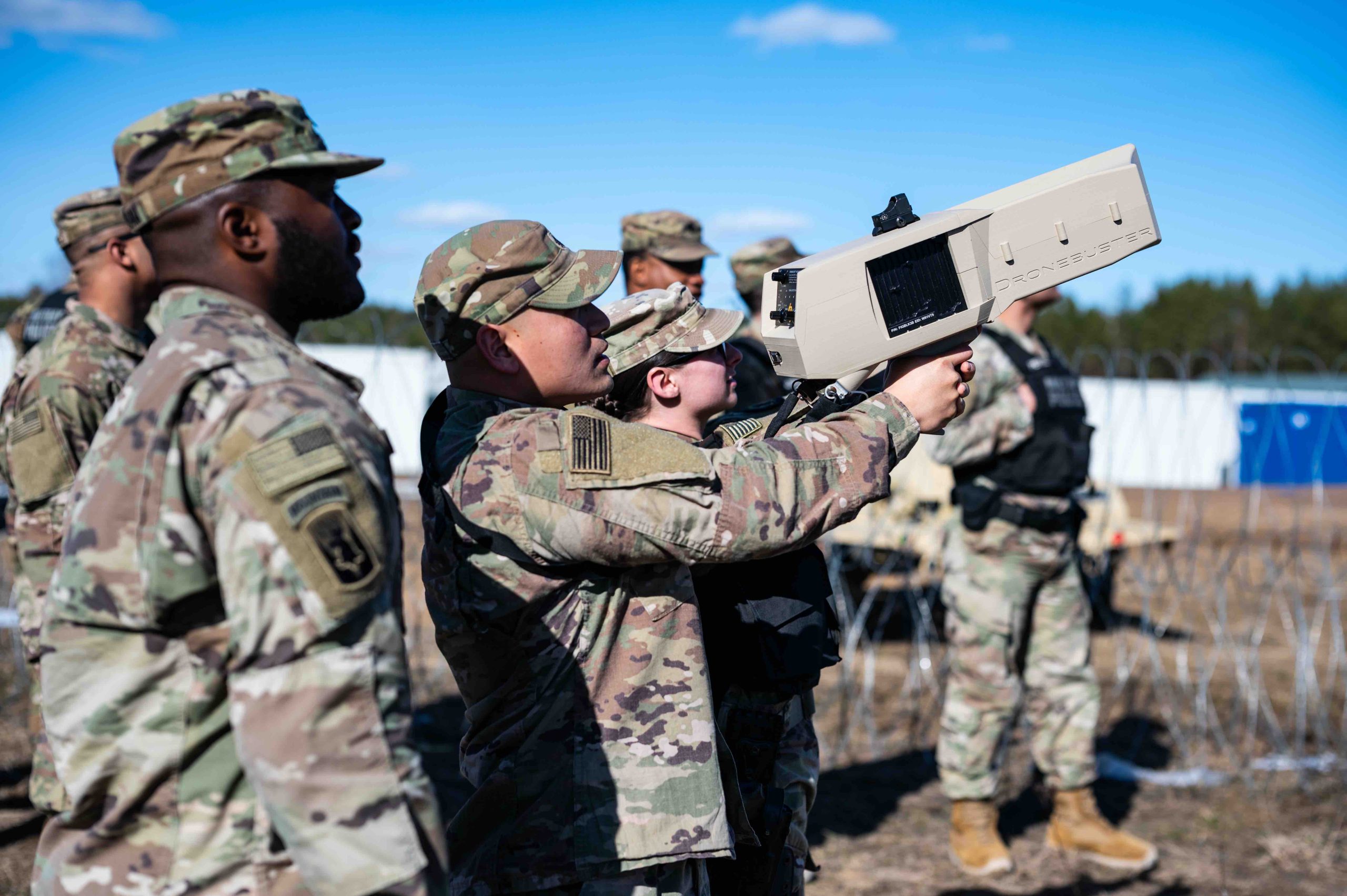
Low-cost, commercially available drones are also reshaping the threat environment here at home. Airports, power plants, ports, correctional facilities, and stadiums have all experienced incursions by unauthorized drones. The question is no longer if, but when a drone-related incident could have serious consequences for public safety or critical infrastructure.
This evolving landscape makes one thing clear: the United States needs a modern, integrated counter-UAS (C-UAS) framework. Drones are inherently dual-use technologies, capable of safeguarding communities, enabling inspections, and responding to emergencies, but also exploitable by malicious actors. Policies, authorities, and technological readiness must catch up to the pace of innovation.
The Threat Is Here, and Growing
Globally, adversaries are leveraging drones for surveillance, sabotage, and kinetic attacks. Ukraine’s Operation Spiderweb demonstrated how swarms of small drones can evade air defenses. In the Middle East, drones are used not only to strike targets, but to disrupt enemy networks, blind sensors, and degrade operational effectiveness. The barriers to entry are low, the technology is widely accessible, and the intent of adversaries is clear.
At home, the signs are equally apparent. Airports and critical infrastructure operators report more unauthorized incursions, sensitive sites face surveillance attempts, and public safety agencies are encountering drones at crime scenes and correctional facilities. Today, only four federal agencies, the Department of War (DoW), Department of Homeland Security (DHS), Department of Energy (DOE), and Department of Justice (DOJ), are authorized to detect and mitigate UAS threats, and their authorities are very limited. State and local law enforcement, stadium security, and other critical infrastructure operators largely lack legal tools to understand what is in the air, and if there is a threat, respond.
FEMA’s $500 Million C-UAS Grant Program: A Critical Step
The timing could not be more urgent. The United States will host the 2026 FIFA World Cup and the 2028 Olympics, two of the largest and most complex mass-gathering events in American history. Stadiums, fan zones, transit hubs, team hotels, and broadcast compounds will all face heightened risk. A single unauthorized drone over a stadium, airport approach path, or fan gathering can halt operations or trigger evacuations. Under current law, local authorities can’t act, and federal teams can’t be everywhere at once.
The World Cup will stress-test America’s preparedness in real time this summer. Without expanded authorities, state and local law enforcement will be forced to rely on federal response teams that may be miles away and responsible for several venues at once. That is not a sustainable or secure model. Congress must pass legislation which grants state and local law enforcement authority to detect and, in tightly regulated circumstances, mitigate drones at protected events, to close this security gap.
To help address this gap, FEMA recently launched a $500 million nationwide C-UAS grant program to support state, local, tribal, and territorial agencies. This is the first time the federal government has provided dedicated, large-scale funding for C-UAS capabilities. For the first time, local governments can begin building the foundational elements of counter-drone security: integrated detection systems, Remote ID receivers and analytic tools, fixed and mobile sensors, cybersecurity protections, and training for operators who will eventually be responsible for responding to incidents.
Equally important, the grants allow jurisdictions to develop concepts of operation and interagency coordination plans that have been nearly impossible to create without resources. C-UAS is not plug-and-play; it requires planning, spectrum deconfliction, command-and-control procedures, and clear lines of authority. FEMA’s program gives communities the ability to prepare responsibly rather than reactively.
Supply Chain Resilience
Ensuring that drones deployed near critical infrastructure are secure and trustworthy is a national security imperative. Today, approximately 70% of the world’s commercial drones and many key components originate from China. These platforms carry well-documented vulnerabilities, from opaque software to undisclosed data pathways and components that could be manipulated or disrupted. These risks are not theoretical; multiple U.S. intelligence agencies have identified them as potential threats to national security and the integrity of counter-UAS operations. That is why AUVSI has supported implementation of Section 1709 of the FY25 NDAA, which places DJI, Autel, and their affiliates on the FCC Covered List and accelerates the transition away from high-risk adversarial nation manufactured platforms.
Addressing these risks requires building a resilient domestic and allied supply chain. As investment and talent increasingly shift toward U.S. and partner-nation manufacturing of trusted platforms and components, common standards, transparent architectures, and independent verification frameworks become essential.
Toward a Modern, Integrated Framework
Countering malicious drones requires a unified national framework, not a patchwork of authorities. Technology alone cannot solve the problem, and neither can legislation in isolation. Detection, mitigation, cybersecurity, and incident response must operate as a coordinated system, giving every level of government a clear role and the tools to act.
A modern framework must account for the full geography of risk. Ports, shipyards, offshore energy platforms, and inland waterways remain under-protected despite their importance to national security and commerce. Investments in maritime-capable detection and mitigation technologies are essential. Standardized incident reporting across jurisdictions is equally critical to create a national operating picture; without shared data, the U.S. is effectively flying blind.
Together, these elements form the backbone of a credible counter-UAS posture: empowered authorities, secure and interoperable technology, full-domain coverage, and shared situational awareness. AUVSI stands ready to partner with Congress, federal agencies, state and local authorities, and industry to ensure drones continue to provide extraordinary benefits while minimizing risk. The dual-use reality of drones demands action now. By aligning technology, policy, and training, the U.S. can build a secure, resilient, and trusted uncrewed systems ecosystem—one that strengthens homeland security and maintains America’s competitive edge.
The threats are real, the technology is capable, and the time to act is now.
Michael Robbins is president and CEO at the Association for Uncrewed Vehicle Systems International (AUVSI).