
Shield AI announced at SOF Week that it had been selected by the Office of the Under Secretary of Defense for Research and Engineering to integrate its Hivemind autonomy software onto the Low-Cost Uncrewed Combat Attack System — the Pentagon’s reverse-engineered Shahed-136 one-way attack drone that made its combat debut during Operation Epic Fury on February 28.
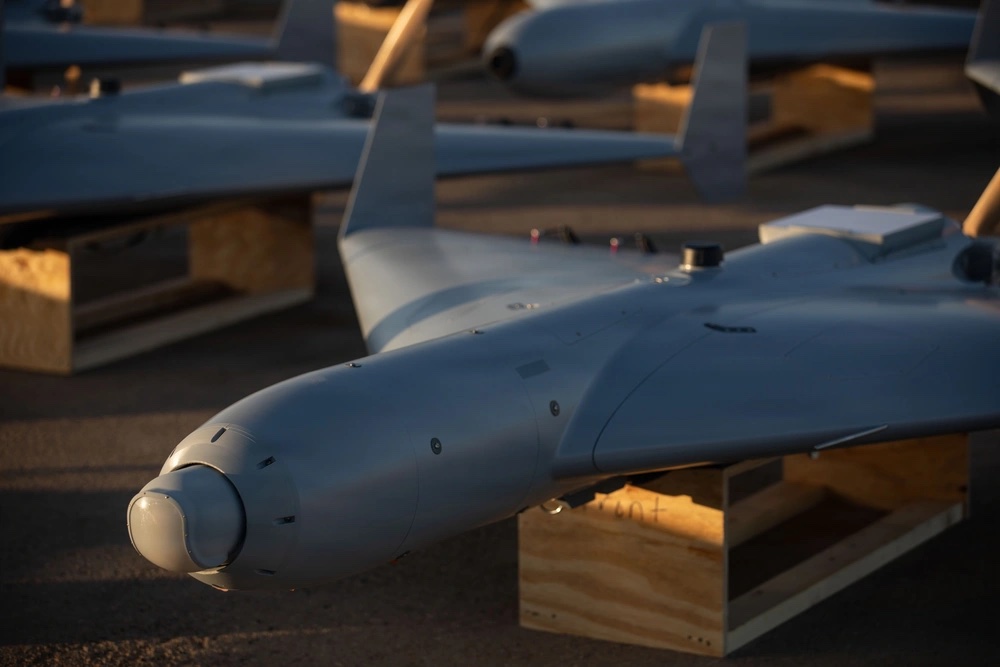
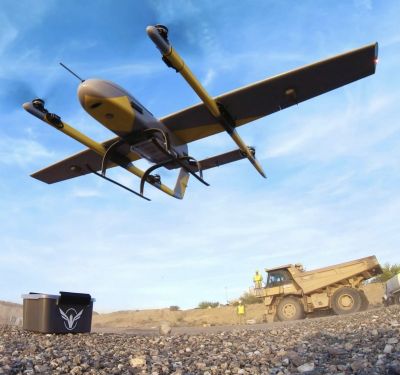
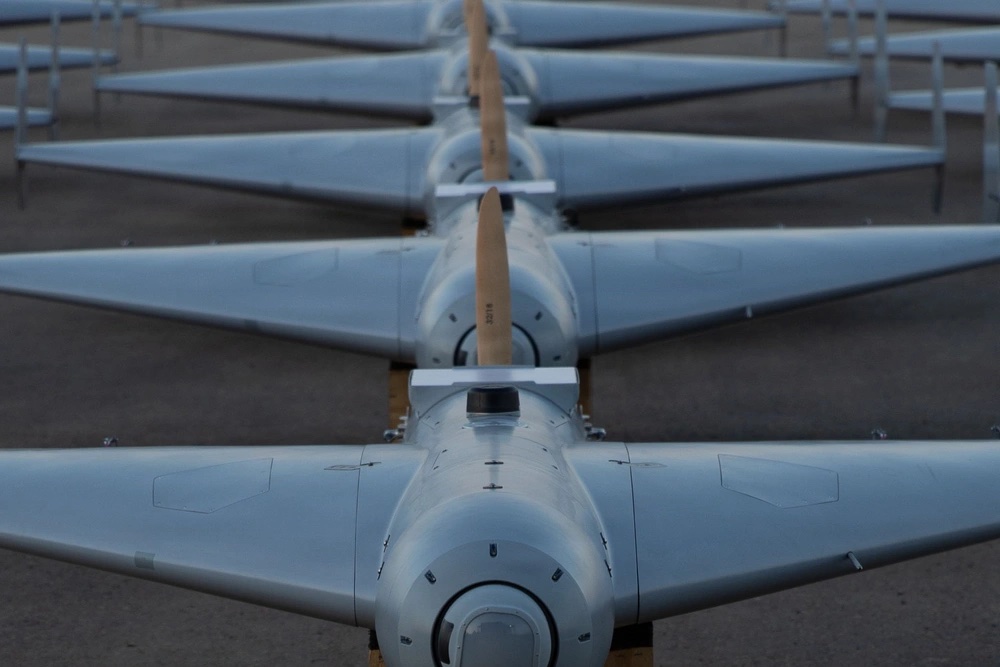
The LUCAS program, developed by the Office of the Deputy Assistant Secretary of Defense for Prototyping and Experimentation, is built around the principle of affordable mass: large numbers of low-cost systems launched together to overwhelm adversary defenses. The drone, built by Arizona-based SpektreWorks from a reverse-engineered Iranian Shahed recovered from the Ukrainian battlefield, is approximately ten feet long with a roughly eight-foot wingspan, costs around $35,000 per unit, and carries a payload comparable in explosive yield to approximately twice that of a Hellfire missile. CENTCOM publicly confirmed its combat use in the opening strikes of Operation Epic Fury and has since used the platform under Task Force Scorpion Strike, the first U.S. military unit explicitly designed to operate one-way attack drones at scale.
What Shield AI is adding is the intelligence layer. Under the new contract, Hivemind will serve as the AI pilot for the LUCAS program, enabling groups of drones to coordinate, maneuver, and adapt together to changing battlefield conditions in real time based on warfighter input. A single operator will command the swarm while humans retain control over any decision to strike. “LUCAS is about delivering affordable mass, but mass without coordination is limited in value,” said Brandon Tseng, Shield AI’s president and co-founder. “Hivemind is the AI pilot that makes that mass intelligent. It’s the autonomy layer that enables teams of drones to sense, decide, and act at scale.” The result, the company says, shortens the time from detection to action across the kill chain. An operational demonstration with a swarm of ten or more LUCAS drones under a single operator is planned for this fall, with initial flight testing of Hivemind-equipped airframes expected before then.
The announcement came alongside Shield AI’s presence on the SOF Week show floor, where the company displayed the V-BAT and made the case for Hivemind as a platform-agnostic autonomy stack. Tseng used the show to sharpen his competitive argument. Speaking to press at SOF Week, Tseng argued that the vast majority of autonomous military systems in the current inventory fail when GPS and communications are jammed, and that combat-proven performance in Ukraine — not trade show demonstrations — is the only meaningful bar for evaluating which platforms can survive a contested environment. The V-BAT has flown more than 130 sorties with Ukrainian forces, locating Russian air defense systems in heavily jammed environments, and executed hundreds of targeting operations in theater according to the company. In April, the U.S. Navy selected Shield AI to compete for up to $800 million in contractor-owned, contractor-operated ISR services using V-BAT. Tseng said at the show he expects AI-piloted swarms of 20 to 100 platforms to become a battlefield norm within five years.
The LUCAS contract does not guarantee a transition to full operational integration with the broader program. What it does is put a calendar date on the next phase of American autonomous strike doctrine — and that demonstration is now less than six months away.