
The need for more adaptable solutions and the U.S. Air Force’s new Autonomy Government Reference Architecture, or A-GRA, are driving a shift in the autonomous drone software market, moving the industry from relying on bespoke solutions that create vendor lock to treating software like a separable, interchangeable layer that can be leveraged across multiple platforms.
For years, autonomous drone software was baked into platforms from the start, with manufacturers developing their own proprietary autonomy stacks. In this one-stop-shop approach, nobody sold the brains separate from the body. But, as needs on both the military and commercial sides have changed, so too has the overarching business model, resulting in a significant shift in the market.
There’s now a demand for adaptable software solutions that can be leveraged across multiple platforms and mission sets. Flexibility is no longer a luxury; it’s a must. End users don’t want to be locked into one bespoke solution, and that’s creating a more competitive market where anybody can play.
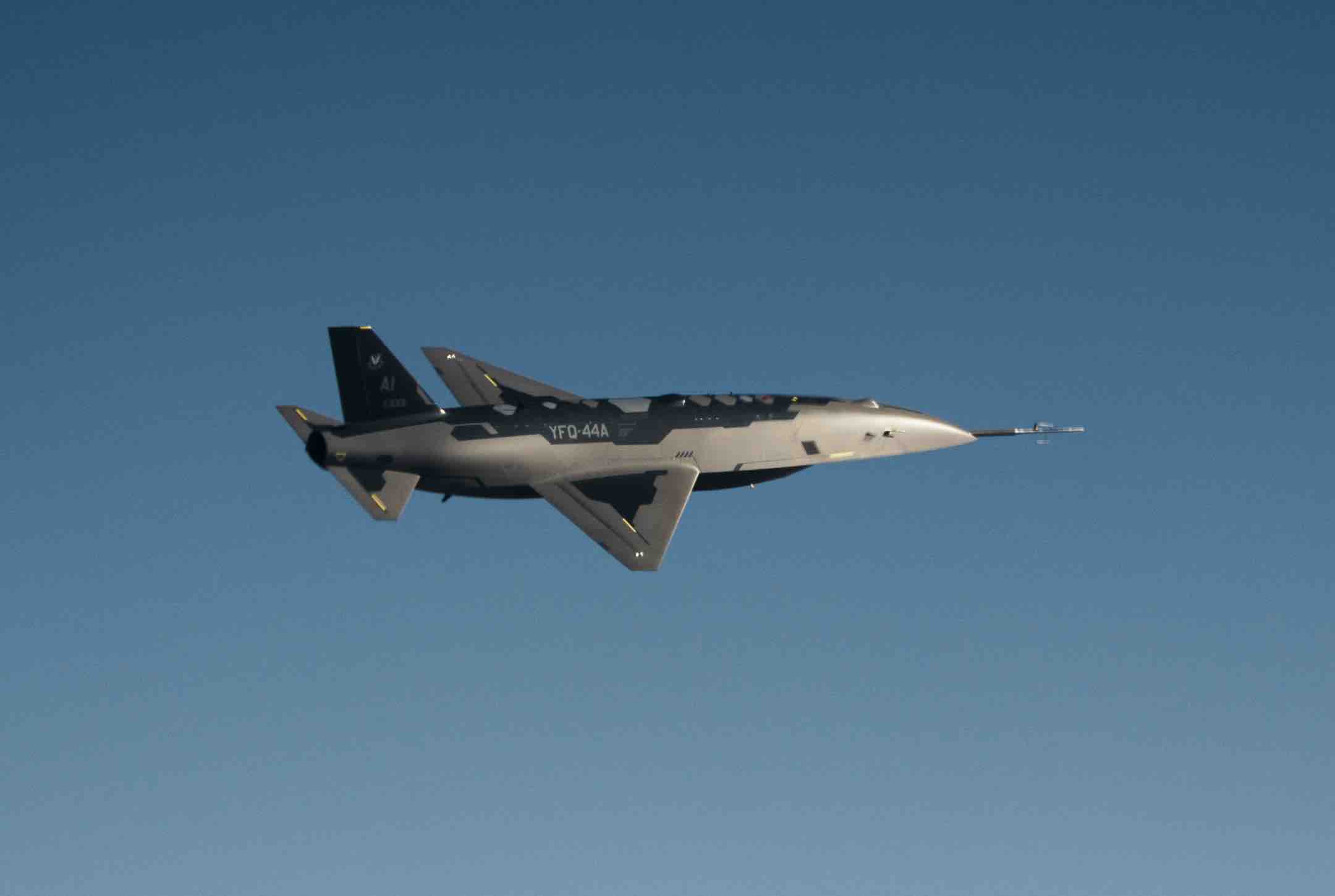
The U.S. Air Force has become a driving force behind this shift. In February, the Air Force announced plans to deploy its Autonomy Government Reference Architecture (A-GRA) across its Collaborative Combat Aircraft (CCA) program. Already, they’ve flown Collins Aerospace’s Sidekick software on General Atomics’ YFQ-42A and integrated Shield AI’s Hivemind with Anduril’s YFQ-44A—proving software is a separable, interchangeable layer.
The goal, Air Force Portfolio Acquisition Executive Col. Timothy Helfrich said, is to create “a competitive ecosystem where the best algorithms can be deployed rapidly to the warfighter on any A-GRA compliant platform, regardless of the vendor providing the algorithm.”
This approach establishes open standards and defined interfaces that “fundamentally change how drone software is developed and integrated,” said Ryan Bunge, president, Mission Systems for Collins Aerospace, an RTX business. Developing a common, government-owned framework helps create interoperability while allowing end users to avoid vendor lock. It’s “equally transformative” for the industry as a whole, and will “accelerate innovation, lower cost, and provide more flexible, upgradable autonomous capabilities.”
Being able to independently select mission autonomy and software regardless of what aircraft is used is what Shield AI’s Christian Gutierrez, vice president of Hivemind Solutions, describes as a “historic shift in defense acquisition toward a software-led autonomy.” Implementing A-GRA, he said, will establish a universal standard for mission autonomy and “a modular, open-systems approach to prioritize speed, innovation and a software-first mindset.”
“A-GRA lets us incorporate top tier autonomy components—whether developed by us or third parties—so operators always get the most capable solution available,” Bunge said. “It also supports a healthier business model, allowing companies to invest in a single autonomy core that can scale across multiple platforms, rather than reinventing solutions for each program.”
Both the autonomous drone software and the market behind it are clearly evolving, setting up the next era in drone operations, where standards are developed and flexibility is the norm.
AI Driving Software Advances
A-GRA moves the market away from bespoke, vendor locked systems to modular architectures, and that spurs competition, Gutierrez said. But it also simplifies integration, allowing for faster upgrades.
“Governments can integrate autonomy across platforms and improve it over time without rebuilding systems,” he said. “This reduces risk, accelerates fielding, and allows capability to evolve continuously in response to real world needs.”
And evolve it has.
“It’s spiraling so fast,” said Doug Dynes, President of Palladyne Aerospace and Defense. “By the time people start making and writing requirements, it’s evolved again. So, how do we keep up? That’s the part we’re trying to get a handle on, and is one of the areas where AI is helping.”
AI, he said, is addressing the “speed to need issue that we’re facing, especially in light of Ukraine and what’s happening in Iran.” Palladyne’s software leverages AI to link the sensor to the domain side. It works on the Android Tactical Assault Kit (ATKA), with the AI able to fly and operate any drone.
AI also has improved threat identification, which is a big issue for military customers, Dynes said. They need drones to get to and identify a potential threat quickly so a determination can be made on how to approach it. In seconds, AI identifies both threats and decoys, based on sensor packages, and relays that information to decision-makers.
“Russia probably has one decoy for every real asset, China is one to three,” he said. “I don’t want to expend a multimillion dollar missile taking out cardboard. So, how do I group the threats? How do I identify the threats and how do I give the operator the intelligence needed in time to act? And I need that information within two or three seconds because I need to give either a kill order or a stand down order, and that’s very important.”
The ability to manufacturer small, inexpensive drones in large volumes has driven the need for one to many operations on the battlefield, said Alex Fink, CEO of Swarmer, a company dedicated to giving Ukrainian forces the ability to coordinate multiple unmanned systems to balance an asymmetric battlefield. Ukraine made 4.7 million drones last year; 1 to 1 operations won’t work. That’s a bottleneck software like Swarmer’s eliminates.
The software has several layers, he said, with the base handling the basic functions of the drone swarm including over the air updates, streaming and multicast. It also handles messaging between drones, leveraging encrypted radio links. On top of that, Swarmer AI enables every drone to make its own decisions based on the information it has; there is no swarm leader. The third layer creates the mission sets, with different drones taking on different tasks.
Humans still make life and death decisions, determining what the targets are and how to prioritize them—but without micromanaging how the drone is flying, a task software is better equipped to handle.
Swarmer, Fink said, is hardware agnostic and can support various manufacturers in the same mission. It “has been coincidentally aligned with A-GRA’s goals to enable interoperability, prevent vendor lock-in, and accelerate the fielding of these autonomous capabilities across all domains, for the U.S. and our allied partners.”
“It’s critical to understand just how fast drone warfare is moving; tactics change monthly, hardware by the week, and software updates can now happen mid-flight,” Fink said. “We designed our system to be hardware agnostic and adapt rapidly, based on the pressing needs of warfighters in actual combat operations in Ukraine.”
Gutierrez agrees that autonomy has moved from “preplanned behavior to real time decision-making in contested environments.” But the real shift, he said, is toward intelligence at the edge.
Hivemind makes it possible for drones to sense, decide and act independently during a mission, Gutierrez said. A platform is given an objective ahead of the mission, but without a complete understanding of the threat environment. It must then interpret data once it’s in the environment, make decisions based on that information, and take action that aligns with mission objectives—without constant communication or human control.
“In modern warfare, GPS is denied, communications are degraded, and systems cannot rely on constant reach back,” he said. “The challenge is not just building autonomous features. It is delivering intelligence on the platform that allows it to operate independently. That is what enables scale, speed and survivability.”
The Commercial Side
The AI streamlines once clunky processes for commercial and public safety drone operations, allowing UAS to not only know there’s a mission, but what the outcome should be, said Thomas Jimenez, Director of UAS Enterprise Sales for uAvionix, a company that integrates ADS-B, non-cooperative detection and real-time UAS tracking with autonomous drone software stacks.
“When you tell it to go to such and such street and look for a suspect, it knows what the suspect looks like. That’s the evolution,” he said. “Before, a drone might have 40 programmed missions it would do. The next stage is understanding the goal, which could be I need to find a bad guy or inspect a solar panel.”
Autonomous drone software has moved beyond basic stabilization and waypoint navigation to perception, decision-making and adaptative flight that’s all happening in real time, a Skydio spokesperson said. Skydio is among the companies still offering that one-stop approach, providing everything customers need for a fully integrated solution.
“The biggest shift has been toward drones that can understand and react to complex, dynamic environments without relying on GPS or manual piloting,” the spokesperson said. “This evolution is being driven by advances in AI and computer vision, improvements in onboard compute, and increasing demand for drones that can operate reliably in real-world conditions such as infrastructure inspection, public safety and defense.”
Emerging Business Models
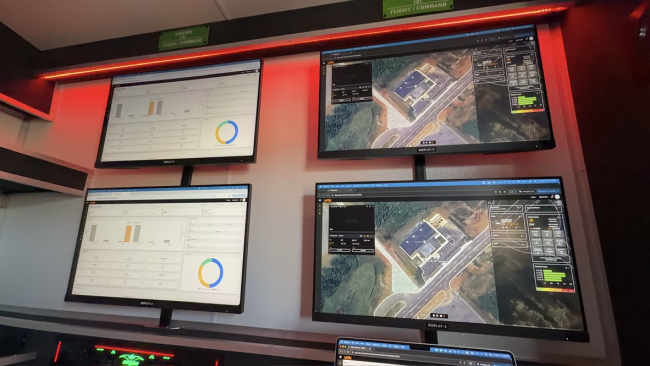
As we await a finalized Part 108 ruling that will enable routine BVLOS flights, many vendors are working to develop a foundational tech stack that allows drones to operate at a very low risk and significantly reduced human involvement, VOTIX CEO Edwin Sanchez said.
Most of the drone industry requires flexibility; they want to be able to take advantage of new technologies as they evolve to comply better with regulations and industry standards, whether that’s sensors, UTM or DAA, Sanchez said. And they need to be able to do it without having to “break the mold every time,” which is time consuming and costly.
The market, Gutierrez said, is moving toward software frameworks that enable rapid fielding, scale and continuous upgrades across platforms. Shield AI’s approach is to provide an autonomy layer that “supports fast integration, scales across fleets, and enables continuous improvement while maintaining safety and reliability.”
“Customers want autonomy that works in the real world and evolves at the speed of relevance, he said, which includes operating in degraded environments and integrating with existing systems.”
For Swarmer, it’s important to support many vendors, Fink said. There are more than 500 drone manufacturers operating in Ukraine; only supporting one would limit them to a much smaller piece of the market. It also gives their customers more options; they can more easily combine, for example, UAS from one manufacturer with ground vehicles form another.
Of course, some manufactures, like Skydio, are sticking with vertically integrated solutions, an approach that has its own benefits.
Skydio’s autonomy is built on AI-driven perception and planning that runs directly onboard the drone and leverages computer vision to understand its surroundings in real time, the spokesperson said. This allows the drone to navigate in complex environments and complete missions with little input from a human, enabling safer operations.
Autonomy is an architecture, the spokesperson said, not a feature. Skydio tightly integrates across hardware, onboard autonomy, and cloud-based workflows. Rather than treating autonomy as a separate software layer, Skydio designs the full system—which means perception, planning and control are optimized together.
“Skydio’s approach is to deliver autonomy as part of a complete system that includes the drone, the docking system, onboard software and supporting cloud capabilities,” the spokesperson said. “This allows us to ensure performance, reliability and ease of use across the entire workflow, which is especially important for mission-critical applications.”
Skydio also recognizes that, as drone programs scale, interoperability has become increasingly important. Many organizations want to connect drone operations with existing systems for asset management, analytics and workflows. APIs and developer tools make such integration possible, allowing Skydio customers and partners to incorporate drone data and operations into broader enterprise systems—fully integrating drones into customer workflows.
Another business model shift is licensing, Sanchez said. Most software solutions are moving away from licensing per drone and instead charging per workflow executed or benefit obtained. That makes it easier for end users to measure. It also means they’re not paying for drones that aren’t being used; they’re only charged for the hours their drones actually operated.
“There’s a direct link between what I’m paying for and the benefit that I’m obtaining,” Sanchez said. “It allows users to really reshape their workflows or their operations to squeeze the most value out of whatever technology they have underneath the operation. And it is easier to stack it up.”
Looking Ahead
The autonomous drone software market is moving rapidly toward open, modular and portable architectures, Bunge said, with the “government’s push for commonality and portability a major catalyst. They can look at mixing and matching both the core autonomy and the subcomponents, selecting the capabilities that best suit each mission.”
“As the force shifts toward heterogeneous fleets—multiple types of CCAs working alongside a wide range of crewed platforms—the need for a shared architecture becomes even more critical,” he said. “These systems have to operate seamlessly together.”
Government driven open standards, he continued, make that possible, enabling industry to collaborate more effectively to accelerate innovation.
The most meaningful advancements in autonomy software will come from this new openness, he said, including more rapid upgrades, more plug-and-play mission capabilities, and smarter, more adaptive autonomy that can be deployed across any platform.
Autonomy will enable affordable mass, Gutierrez said, but the advantage will go to those who can iterate fastest.
“Autonomy is becoming foundational to how military capability is built and sustained,” he said. “It is not just about deploying systems; it is about continuously improving them. The future will be defined by the ability to continuously develop, test and deploy autonomy at scale.”
Interoperability will become “paramount,” Sanchez said, and the right software stack provides that: “We will observe infrastructure deployment with multi-purpose capability—the only way to make drone operations at scale cost-efficient and profitable—that autonomously and dynamically engages and interoperates with diverse tech ecosystems during the execution of a given workflow.”
In terms of capabilities, autonomous drone software will continue to gather data at the edge, leveraging AI to capture and analyze data in real time, VOTIX’s Edwin Sanchez said.
“Future AI model vendors will deliver updates automatically, already validated for safety, enabling instant deployment,” said Michael Bastin, director of distributed systems at Northrop Grumman. “This will allow many military systems to operate together under a single autonomy policy, accelerating innovation in the market.”
As operations become more complex and include larger fleets of drones, more sophisticated autonomous stacks will be required to manage it all, Sanchez said. He used a utility company as an example. These users likely have drone fleets at various places, some docked and some not, and must support them all from a command center. Things can get complicated pretty quickly in this scenario, calling for more autonomy and software stacks that can orchestrate it, as well as a shared architecture that include, for example, standards for communication and data exchange/protection. That is how the industry scales.
“With the complexity and scale that we need now in terms of software, there’s going to be a huge evolution in being able to coexist with diverse and disparate systems,” Sanchez said. “And that disparity is going to gradually move into accepting standards.”
The A-GRA initiative, Sanchez said, provides the autonomous drone software market with a standardized framework to interoperate. Orchestrating diverse systems is the only way drone initiatives will be able to scale, whether on the military side, for commercial operations or Advanced Air Mobility (AAM).
“A standard is needed for the industry mirroring A-GRA,” he said. “As observed in recent international conflicts, the government must be in the capacity to rapidly ingest and deploy diverse systems. This is only possible if both the government and the private sectors run on similar standards.”
Different Levels of Autonomy
Today, software like Swarmer’s offers different levels of autonomy depending on what customers want. At the lowest level, the drone is sent to the target area, with one pilot controlling many drones, Swarmer’s Alex Fink said. The next level is the drone selecting the target based on targets pre-approved by the user and engaging autonomously.
The last, which isn’t deployed yet, is the kill box approach, Fink said. Users designate an area where a target could appear in the next 10 to 15 minutes, specifying the type of pre-approved target. So, for example, any truck that appears in the next 15 minutes is a target the drone should take out.
The A-GRA Tests
The Collins flight test paired uncrewed aircraft with crewed fighter jets to “push sensor reach, boost weapons effectiveness, and elevate overall mission performance,” said Ryan Bunge of Collins Aerospace. Autonomy mode enabled a four-hour autonomous flight, with one human managing operations from the ground. The collaborative mission autonomy solution integrated seamlessly with the YFQ-42A’s mission systems, and highlighted Sidekick’s adaptability.
“The test demonstrated smooth, reliable integration between Collins’ Sidekick autonomy software and the aircraft’s mission systems, delivering precise, responsive control throughout the flight,” Bunge said. “It’s a meaningful milestone and a strong proof point in advancing the U.S. Air Force’s CCA program.”
Shield AI completed a similar test with Anduril’s YFQ-44A, demonstrating full integration and mission autonomy on the aircraft. This includes handling mid-mission updates and initial operational behaviors.
These tests illustrate the “potential of airpower built on mission autonomy,” Shield AI’s Christian Gutierrez said, with the collaboration reflecting “a new era of defense acquisition, where autonomy is treated as a foundational warfighting capability on par with the aircraft itself.”
The significance, Gutierrez said, is “autonomy is not theoretical. It is being proven in real world conditions, and that is where the gap exists in the market.”
“We flew real autonomy on a real aircraft and executed the mission end to end,” he said. “This was not a simulation, and that matters.”
The platform agnostic Hivemind has demonstrated A-GRA-aligned autonomy across multiple government and industry test efforts, including work with General Atomics’ MQ-20 Avenger, Northrop Grumman’s Talon IQ autonomous ecosystem, U.S. Navy BQM-177 test aircraft, and the Airbus UH-72A Lakota helicopter.
A Modular Design in Action
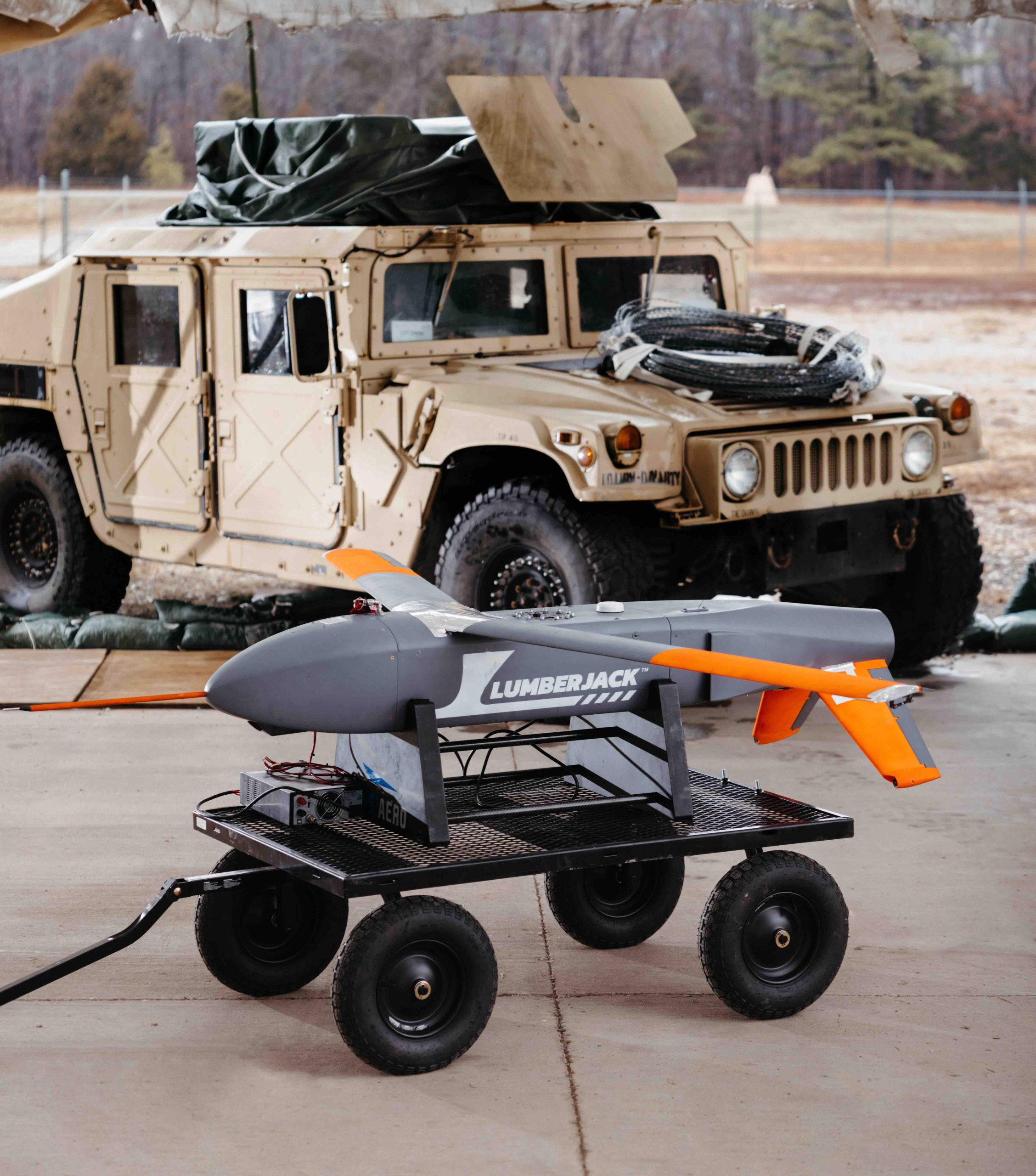
Northrop Grumman recently demonstrated that the U.S. Army can mission plan, execute and monitor Lumberjack directly from the Maven Smart System (MSS) at a Command-and-Control Headquarters without using a Ground Control Station.
Lumberjack, an affordable, one-to-many engagement system, can deploy kinetic or non-kinetic payloads from tactical ranges, said Michael Bastin, director of distributed systems at Northrop Grumman. A modular design allows it to support multiple missions, including kinetic submunitions, EW, SIGINT, datalink and countermeasures. Customers can quickly and affordably update payloads to keep up with evolving threats, with the ability to switch payloads in a few weeks’ time.
“The U.S. will always need—and Northrop Grumman will continue to provide—the advanced capabilities that exquisite platforms offer warfighters,” Bastin said. “As adversaries deploy low-cost, asymmetric systems in rapidly changing battlefields, open interfaces, modular designs, and AI/ML features in products like Lumberjack help the U.S. effectively counter these threats.”
Lumberjack’s autonomous drone software is designed to “integrate and update top autonomous features as needed” and combines Northrop Grumman, Palantir and ES Aero software. It can easily add third-party capabilities based on government needs.
Working with the Software
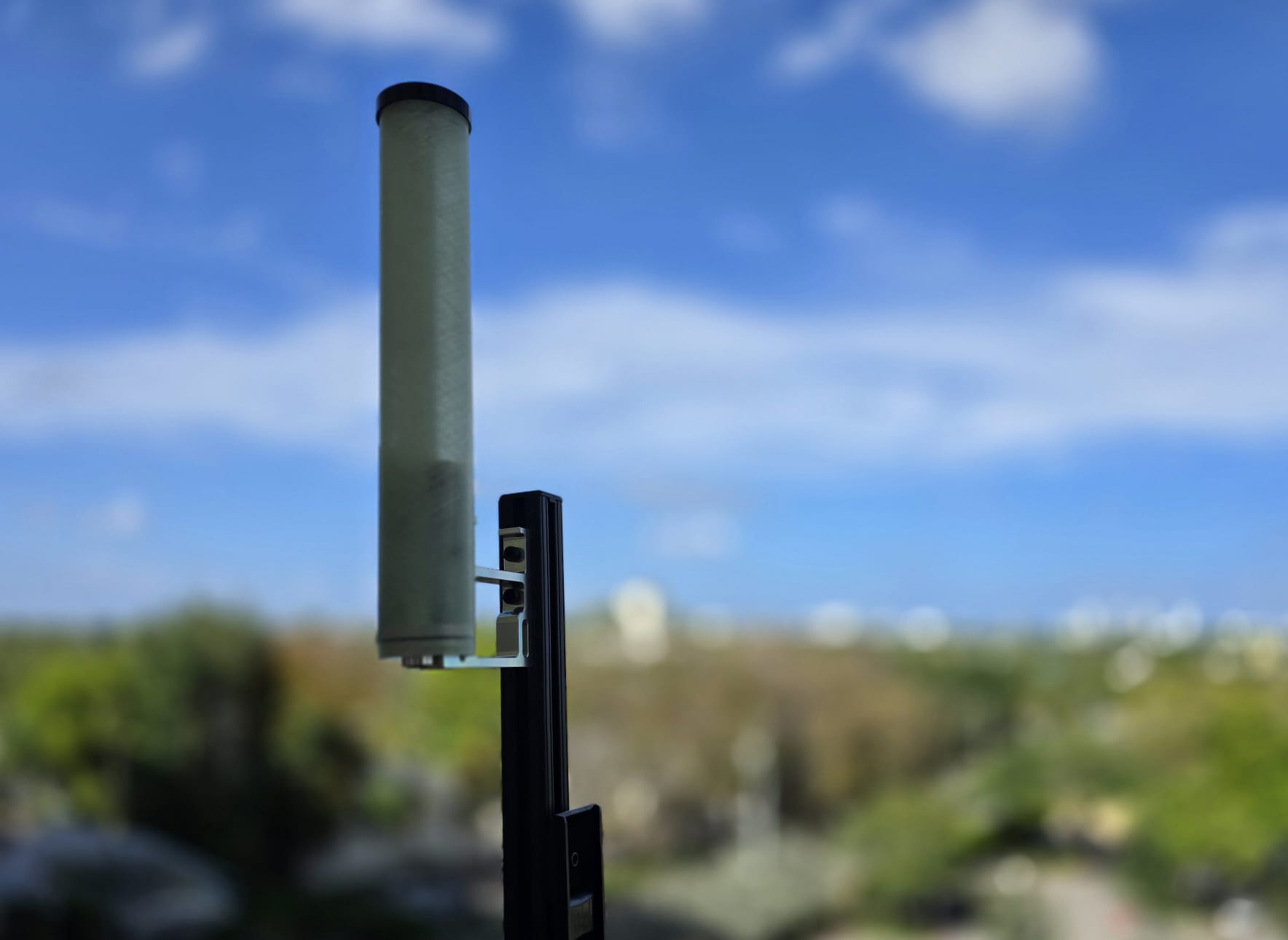
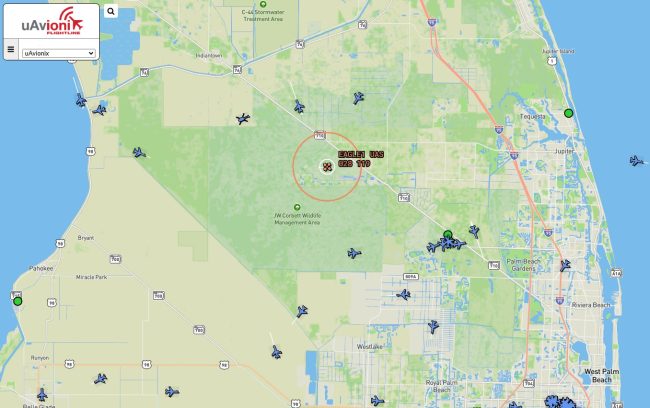
uAvionix’s FlightLine, an aviation-grade Surveillance Data Service Provider (SDSP), integrates with autonomous drone software, constantly feeding real time air traffic into the solutions, Thomas Jimenez of uAvionix said. The low latency solution will identify a nearby plane, for example, and send an alert. The drone, guided by its autonomous software, will then determine if it needs to make a maneuver to avoid the aircraft and, if so, what the maneuver will be.
FlightLine can be integrated into any software, with multiple ground sensors fielded across the U.S. Some users field their own, Jimenez said. They all integrate into the company’s cloud system, with data pushed out to the autonomous drone software via an API. The autonomous drone software understands new and mid-air collisions around their aircraft, and with the data provided can decide what to do to avoid the potential conflict.
Stabilizing the Market
As standards develop, the number of drone manufacturers and support systems will consolidate, Dynes said.
“It’s like a AA battery all the way around the world is still a AA battery because we’ve got a standard for that,” he said. “Until that standard kind of stabilizes within the drone market, we’re going to see this flux, but as soon as it starts to stabilize, it’ll start ratcheting down very quickly.”
Simplifying Orchestration
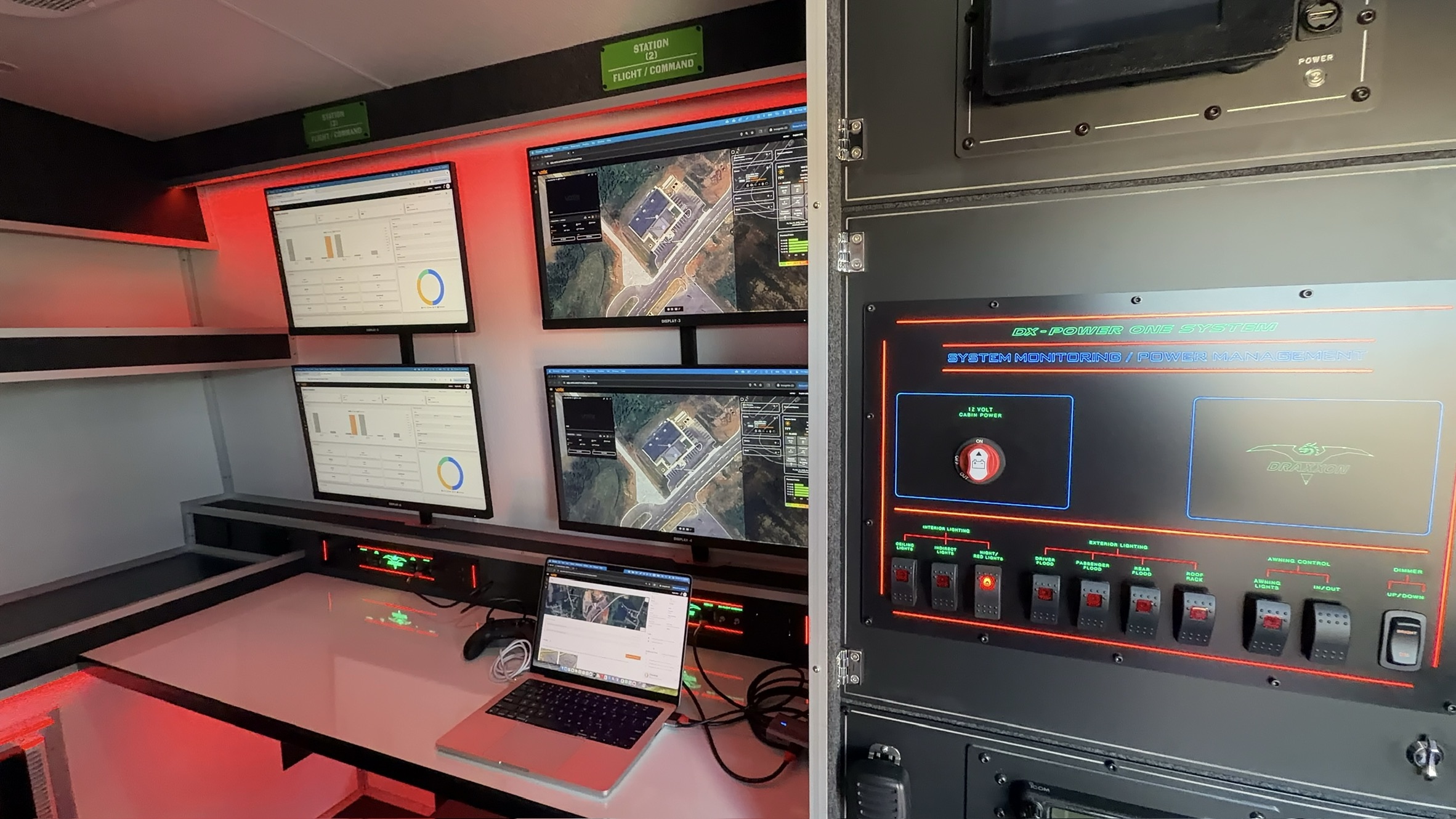
VOTIX, a universal end-to-end operating system, Edwin Sanchez said, is focused on “simplifying drone orchestration and automation.” Sanchez likens it to the symphony orchestra, where there are hundreds of instruments, musicians and an audience. That audience has paid for a full performance, and the orchestra needs to deliver on that promise. VOTIX works before the show, during the show and after to ensure “the whole performance is executed in the best possible way,” tying all the different components together.
VOTIX is drone agnostic, easy to integrate and supports “operations of any sort,” Sanchez said. Companies can implement VOTIX and evolve to the “most sophisticated stages” without having to change software, supporting customers over time.