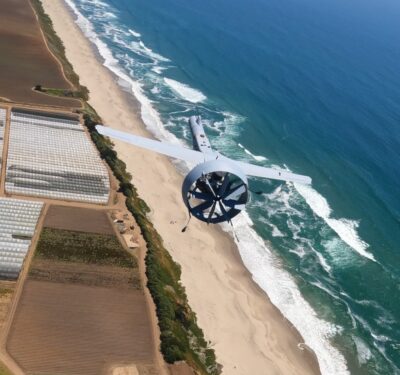

DCMA is accelerating a trusted marketplace for vetted drones and components.
On January 1st, the Defense Contract Management Agency (DCMA) assumed responsibility for rapidly transitioning Blue List UAS certification into an NDAA-compliant marketplace compatible with the DoD’s “Unleashing U.S. Drone Dominance” directive.
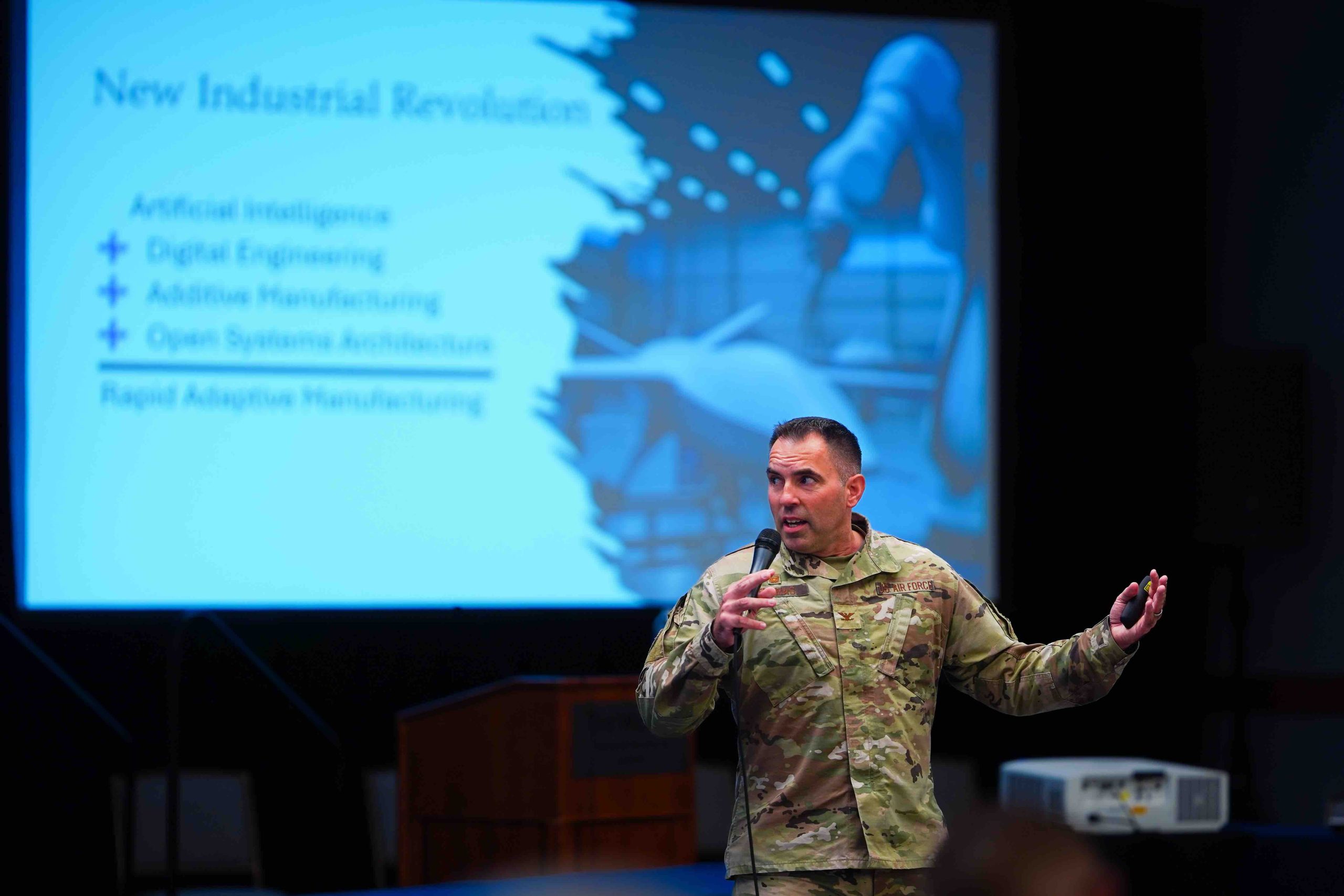
In an exclusive, Air Force Col. Dustin Thomas, the agency’s commander, Unmanned Systems-Experimental, explains why the agency’s new approach can turn a fragmented market into a trusted pipeline for safe, fast, flexible options.
Why DCMA?
“DIU [the Defense Innovation Unit] did a great job creating the prototype. DCMA, on the other hand, is built for scale. Now that the Department [of Defense] wants to scale the use of small UAS, DCMA is the natural partner to take the innovation DIU built and begin growing it.”
DCMA’s Role
“To deliver capability with confidence,” he said about DCMA’s role in acquisition reform. “In the unmanned space, that means we’re adapting how the Department buys and sustains commercial technology so it can be used in warfighting environments without losing speed or trust.”
Unmanned Systems–Experimental
“We stood up Unmanned Systems–Experimental [US-X] in 2025 to be a pathfinder for the agency as unmanned systems move at commercial tempo, span every domain and increasingly involve new production methods and supply chains. US-X allows DCMA to test new models, learn quickly and then scale what works across the enterprise.”
Program Goal
“The Department can reduce duplicated effort, shorten timelines, strengthen supply chain awareness and move faster from ‘commercially available’ to ‘fieldable and trusted.’ The point is not to add bureaucracy; it’s to replace slow, one-off processes with a repeatable trust framework that supports speed and assurance.”
Key Security Concerns
“FOCI (foreign ownership, control and influence)
“Basic cyber compliance
“Supply chain analysis
“A physical teardown of the system to confirm what’s actually inside and ensure compliance.”
The Blue List Marketplace
“We’re building the Blue List marketplace, where contracting actions can become much faster because we’re connecting units to vetted vendors through a trusted pipeline.
“DCMA is going to change the Blue UAS in a few ways, and most of them are about scaling.
Beyond unmanned air systems. “That’s what you’ll increasingly hear it called the Blue List, not just Blue UAS, because it expands beyond air systems to other small, commercially available unmanned systems.
More assessors. Multiple rather than a single assessor are now recognized.
Additional vetting partners “so we can get on the Blue List and sell compliant equipment to the U.S. military faster.”
Website enhancement. “Under DIU, it was a list. Under DCMA, we are expanding it to become more of an ecosystem and eventually a place where users can purchase directly (using their own contracting pathways), with confidence that ‘if it’s on the Blue List, it is vetted and ready to be purchased.’
“DCMA’s new web-page development contract with Carahsoft Technology will enable ServiceNow SaaS licenses, platform modules, implementation/configuration and sustainment support for DCMAs UAS Blue List transition and enterprise workflow modernization.”
Certification and Compliance
“One of our main focus areas is components, not just platforms.”
A system with mostly already-Blue components may have only one or two items in need of deeper assessment, “which can make it cheaper and faster to get onto the Blue List. Recognized third-party assessors now can perform the physical teardown work. And we’re moving toward a model where companies can go to recognized assessors to pursue Blue status on their own—while the government can still sponsor assessments when needed.”
And if a system is non-compliant?
“When noncompliant parts show up, the assessors and the government team work with companies to identify alternate components and build a pathway to become compliant. For some companies that can be quick; for others, it can take longer to fully work out supply chains.
“We keep it efficient by creating a trusted, reusable pathway so units don’t have to start over every time they need a small system.”
Trust and Repeatability
Col. Thomas identified four key criteria for evaluation:
“Is it compliant and trustworthy?
“Do we understand the supply chain and critical parts?
“Can it be built repeatedly and delivered at scale?
“Can we verify what’s actually inside the system (not just what a spec sheet says)?
Relationship With Drone Dominance
“We’ve been in lockstep with Drone Dominance as it stands up. As Drone Dominance moves into events and downselects, our team supports by moving quickly on the compliance checked needed to enable confident selection and fielding.”
Going Forward
“DCMA has a unique advantage the Department needs right now: we are physically present inside plants, with professionals who see real production conditions—capacity, quality trends, schedule health and supplier performance—as it’s happening. That is why I’ve said DCMA is ‘the pulse’ and ‘the sensor network’ for the health of the industrial base—and why we function as an ‘early warning system’ when supply chains break or risks emerge.“
AI/ML are key to faster response before supply chain issues turn into delays, cost growth or readiness impacts, Col. Thomas added.
“AI and automation are moving at a pace we couldn’t have imagined when DCMA was formed. Our job is to turn that reality into an operational advantage: faster insight, earlier warning, smarter surveillance and a more resilient industrial base that can deliver at the tempo future conflict will demand.
“Speed matters and trust enables speed.”