
As drone threats push detection ranges outward, C-UAS performance is increasingly decided at the limits of visibility—where targets are only a few pixels, signal-to-noise ratio dominates, and system architecture matters more than algorithms alone.
From Proliferation to Performance Limits
Small, low-cost drones have rapidly expanded across military and public safety environments, creating what many now describe as an arms race between offensive UAS innovation and counter-UAS response. While much of the public conversation centers on defeat mechanisms—RF jamming, GPS denial, kinetic interceptors—the operational reality is that C-UAS effectiveness is determined much earlier in the detection-to-defeat sequence.
As discussed in a recent Teledyne FLIR technical paper examining thermal infrared sensor design for counter-UAS defense, every air defense architecture ultimately resolves into three interconnected subsystems: sensor systems, command and control, and defeat systems. Defeat mechanisms may vary widely, but without reliable detection and tracking, downstream actions are irrelevant.
This shift reframes the central challenge. The question is no longer whether drones can be detected. The real issue is how reliably they can be detected, tracked, and classified at operationally relevant distances—often before they present a clear visual signature. Increasingly, this challenge unfolds at what system designers describe as the “edge of visibility.”
The Few-Pixel Reality of Long-Range Drone Detection
At extended ranges, small quadcopters or fixed-wing drones may occupy only a handful of pixels on a sensor—sometimes as few as 2×2 or below 10×10. At this scale, detection is not primarily limited by resolution; it is constrained by signal-to-noise ratio (SNR) at the pixel or small-patch level.
Electro-optical cameras provide higher angular resolution and more pixels on target. However, small drones often exhibit limited contrast against sky backgrounds, reducing effective SNR. Thermal infrared sensors detect emitted thermal energy rather than visible light, enabling reliable 24/7 operation and often making it possible to detect motion against colder sky backgrounds even when targets occupy only a few pixels.
At the limit of detection, several factors converge:
- Apparent drone size approaches the optical system’s point spread function (PSF)
- Atmospheric effects—including haze, scattering, and turbulence—reduce contrast and introduce blur
- Targets intermittently cross complex backgrounds such as trees, buildings, or clouds
- Pixel-level SNR may fall into low single-digit ranges
In this regime, detection becomes less about producing a recognizable image and more about identifying statistical signals embedded within noise. The drone is no longer an object in the intuitive sense—it is a faint signature that must be distinguished from background variability.
Understanding this physical constraint is fundamental. No downstream algorithm can recover information that was never present at the sensor level.
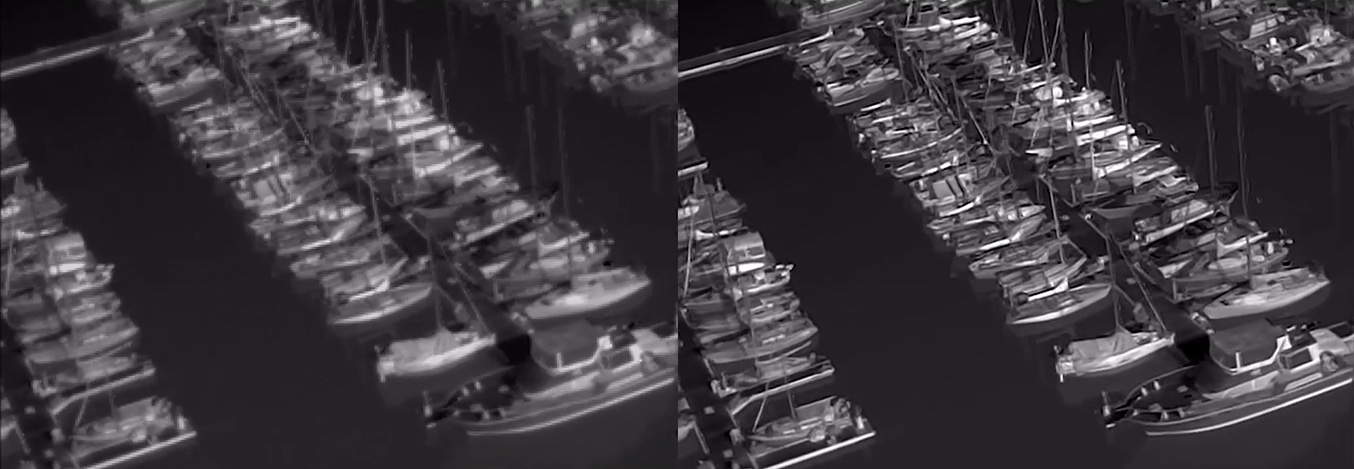
Imaging Physics vs. Algorithms: Why MTI and AI Are Necessary—but Not Sufficient
Modern EO/IR C-UAS systems typically employ layered detection pipelines combining classical motion detection techniques with machine learning. Moving Target Indication (MTI) methods—including frame differencing and background subtraction—often serve as the first stage, generating candidate detections from video streams.
Near the detection limit, however, noise and motion become difficult to distinguish. Pixel-level fluctuations under high gain or low light can resemble small moving targets. Environmental dynamics—moving foliage, clouds, water reflections, heat shimmer, and shadows—create false motion that can overwhelm simple detection algorithms.
AI-based object detectors add another level of sophistication, supporting classification tasks such as distinguishing drones from birds or aircraft. These systems follow similar perception stages used by human observers: detection, recognition, and identification.
Yet machine learning models also encounter limits when targets become extremely small. Below approximately 10×10 pixels, most neural networks lose reliable shape and texture cues. At sizes closer to 3×3 or 5×5 pixels, only gross motion and faint contrast signals remain.
Under these conditions, performance becomes highly sensitive to training data. Models trained on clean daytime imagery or limited backgrounds may struggle in real operational environments that include haze, low light, motion blur, or varied terrain. Tracking pipelines can also degrade when detections become inconsistent from frame to frame.
The practical implication for system designers is straightforward: algorithm performance is fundamentally bounded by sensor data quality. Artificial intelligence can improve detection workflows, but it does not eliminate the underlying physics that govern imaging systems.
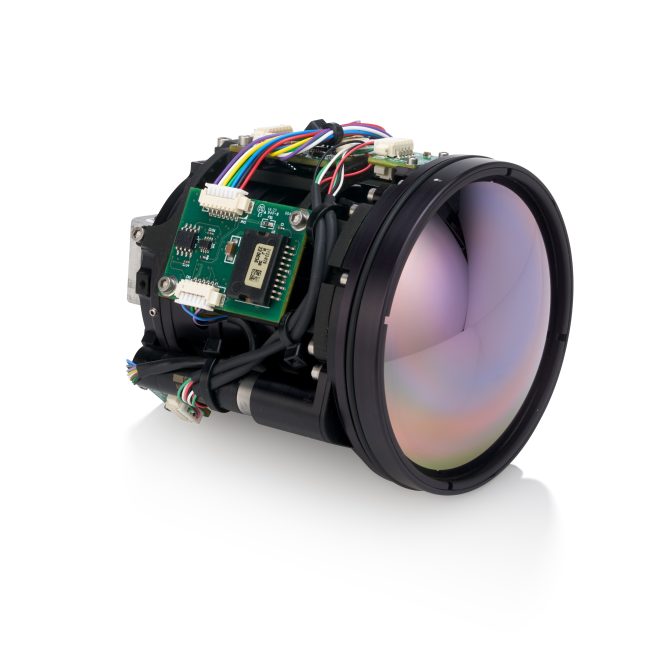
The Integrator Trade Space: Imaging-Only vs. Multi-Sensor Architectures
C-UAS detection systems generally fall into two architectural categories, each optimized for different operational objectives.
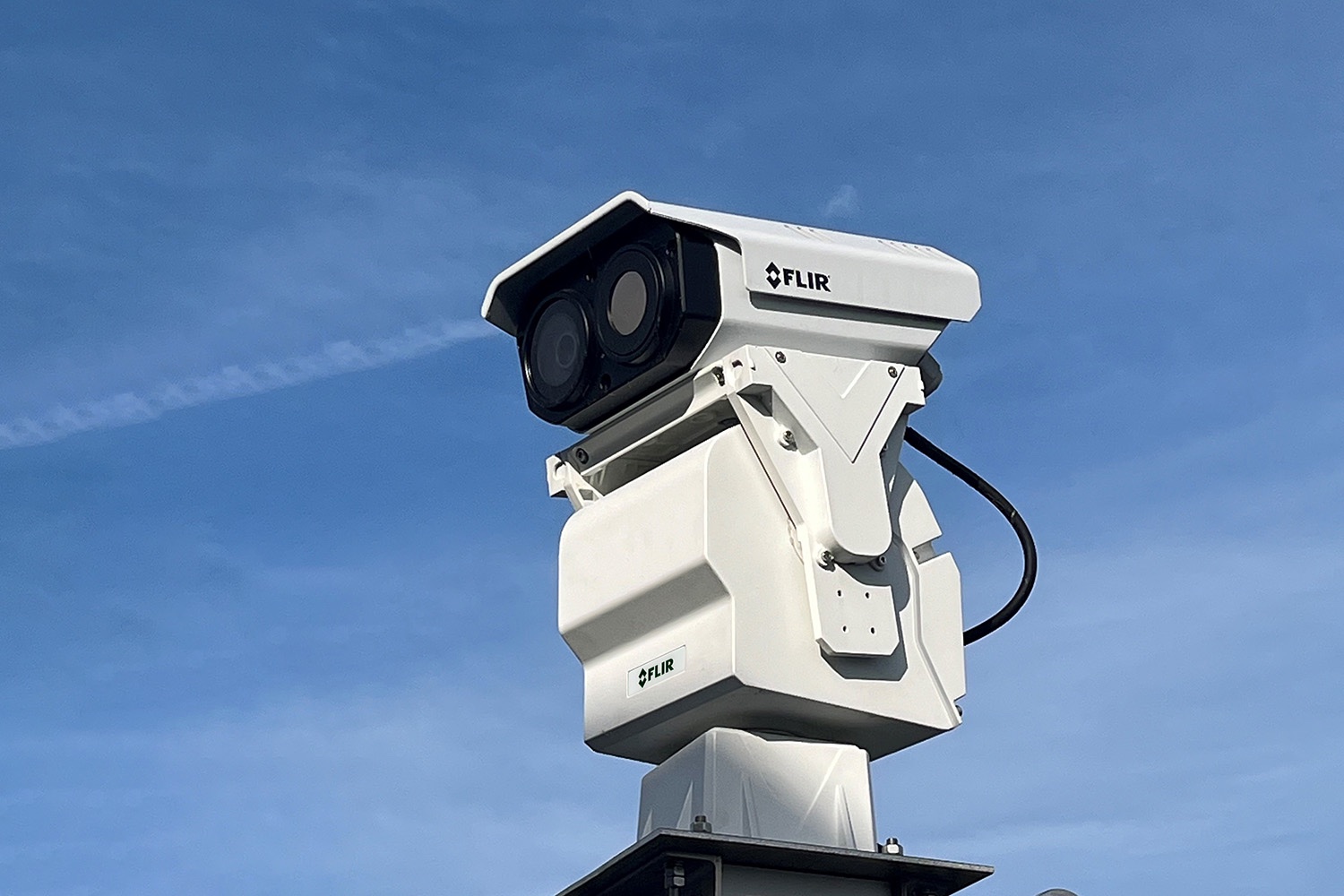
Lower-cost, imaging-only systems typically combine EO cameras with uncooled longwave infrared (LWIR) sensors. These systems often use fixed or limited field-of-view optics and are deployed in perimeter monitoring roles. Their simplicity enables broad deployment at relatively modest cost, making them attractive for protecting infrastructure, public venues, and fixed installations.
High-performance, multi-sensor systems incorporate a broader sensing suite. In addition to EO cameras, they often include cooled midwave infrared (MWIR) sensors with long-range continuous zoom optics, radar cueing, and sometimes acoustic detection. These architectures support extended detection ranges and enable radar-guided camera slew-to-cue functionality for rapid target confirmation.
In practical deployments, these architectures often coexist within layered defenses. Fixed perimeter installations may rely on distributed imaging nodes for persistent coverage, while higher-performance multi-sensor systems provide longer-range cueing and confirmation in mission-critical environments.
These two approaches are not competitive alternatives—they are complementary layers within a broader defense strategy. Imaging-only systems may provide distributed coverage across large areas, while multi-sensor platforms deliver longer-range detection and higher-confidence identification.
From an engineering perspective, the choice between uncooled LWIR and cooled MWIR sensors reflects both performance and economic considerations. As focal lengths increase and detection range requirements grow, system designs often transition toward cooled sensors that support longer optics and greater sensitivity.
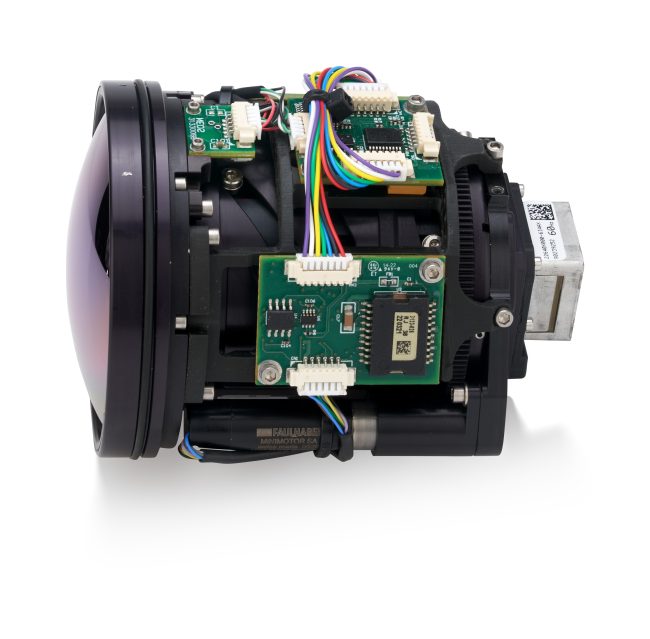
Image Signal Processing as a First-Order System Layer
While optics and sensors determine the raw data captured by a system, image signal processing (ISP) determines how effectively that data can be used.
In EO/IR cameras, the raw output from focal plane arrays is typically noisy, nonlinear, and uncorrected. ISP pipelines transform this raw sensor data into stable, calibrated imagery suitable for human viewing and automated analysis.
This processing includes calibration, noise reduction, non-uniformity correction, and contrast optimization. The resulting improvements directly influence signal-to-noise ratio and the stability of faint targets across frames.
At the edge of visibility, even modest improvements in signal stability can produce meaningful operational effects. Effective processing can help suppress false motion that triggers MTI detections, stabilize weak targets across multiple frames, and improve the reliability of tracking algorithms and AI classifiers.
For system integrators, this means ISP should be viewed not as a cosmetic enhancement but as a critical system layer. Improvements in signal processing can extend usable detection performance without requiring changes to optics or sensor class.
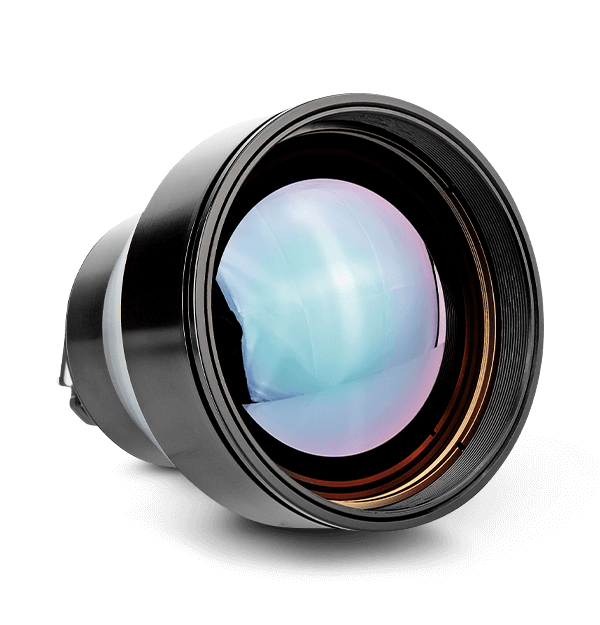
OEM EO/IR Cores as Building Blocks in Layered C-UAS Designs
For integrators developing counter-drone systems, EO/IR imaging cores function as foundational components rather than standalone solutions.
Uncooled LWIR cores enable compact, scalable detection nodes that can be deployed widely across perimeter monitoring systems. Their size, power efficiency, and integration flexibility make them well suited for embedded architectures where distributed sensing is required.
Cooled MWIR cores support longer-range detection and tracking layers within higher-performance systems. Their increased sensitivity enables the use of longer focal lengths and continuous zoom optics, supporting identification tasks at extended distances.
Within layered architectures, these technologies serve complementary roles. Distributed LWIR nodes can provide broad situational awareness, while MWIR systems provide longer-range confirmation and tracking capabilities.
Sensor platforms such as Boson and Neutrino illustrate how modular EO/IR cores can support this layered design approach. By enabling integrators to combine different sensing capabilities within a common architecture, OEM imaging modules help balance cost, performance, and deployment scale across diverse operational environments.
Designing C-UAS Systems for Reality, Not the Demo
Counter-drone systems are often evaluated under controlled demonstration conditions with clear skies, cooperative targets, and ideal contrast. Operational environments rarely provide such advantages.
At long range, drones become faint signals embedded in noise, subject to atmospheric distortion, motion blur, and complex backgrounds. In these conditions, successful system performance depends on physics-aware design, careful sensor selection, and thoughtful integration across sensing, processing, and decision layers.
Defeat mechanisms may draw the most attention, but their effectiveness depends entirely on reliable upstream detection.
As drone threats continue to evolve in scale and sophistication, effective counter-UAS design will increasingly depend on engineering systems that can operate reliably at the edge of visibility.