
A memo signed June 29 gives one office authority over nearly all U.S. military drone and counter-drone programs—arriving three weeks after the Senate’s own proposal for a dedicated robotics combatant command.
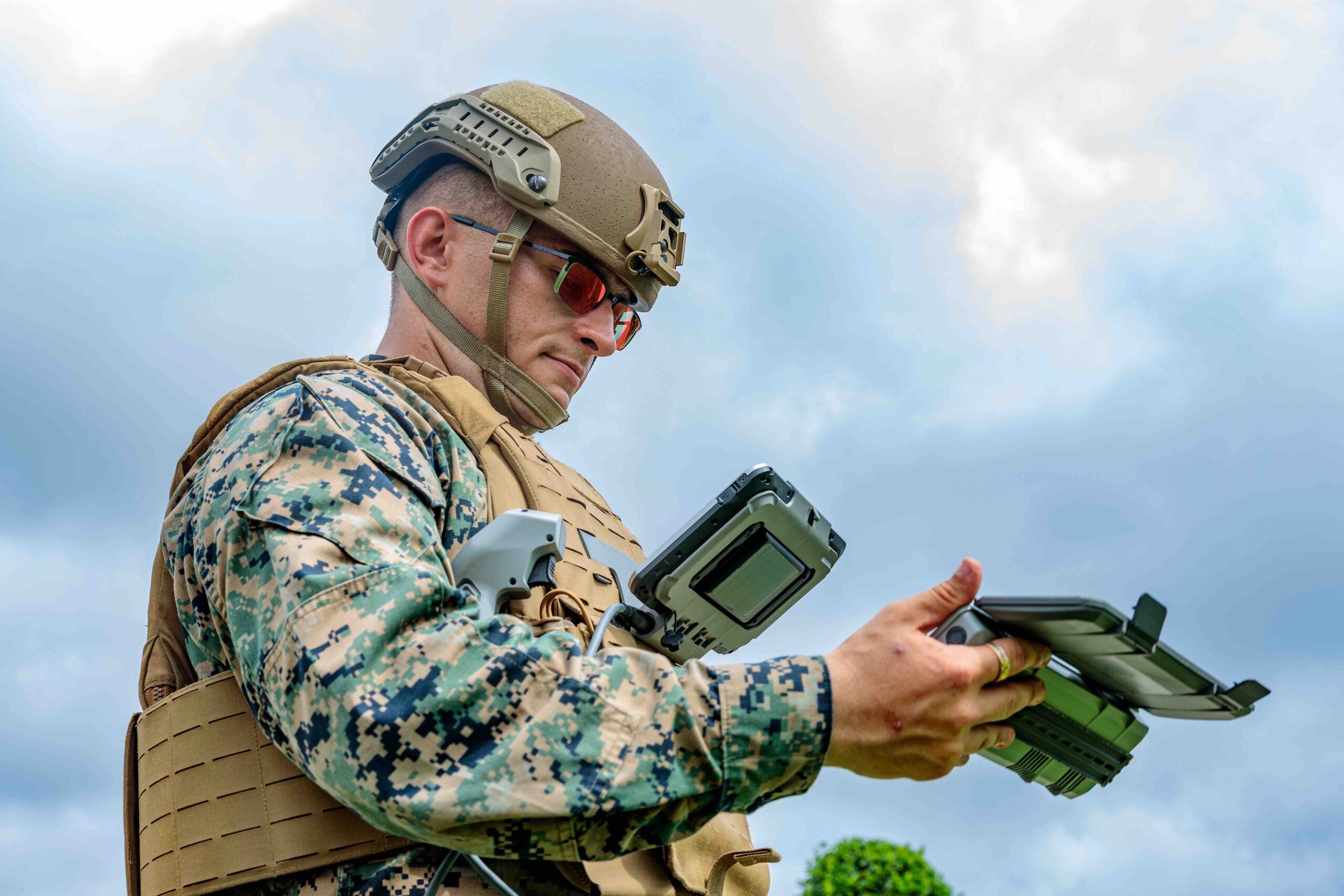
Defense Secretary Pete Hegseth signed a memorandum June 29 establishing a new Direct Reporting Portfolio Manager for unmanned offensive and defensive systems, designated DRPM-UxS, publicly released July 1. The office is the single joint integrator for nearly every unmanned and autonomous systems program in the Department of Defense (DoD) with its eventual director reporting directly to Deputy Defense Secretary Stephen Feinberg. The timing is hard to read as coincidence: The memo landed roughly three weeks after the Senate Armed Services Committee advanced its own, considerably more dramatic, proposal for restructuring how the Pentagon manages drones—a brand-new four-star combatant command devoted entirely to robotic and autonomous systems. Whether DRPM-UxS was designed to make that proposal unnecessary, or simply arrived alongside it, the two are now impossible to read separately.
A SWEEPING SET OF AUTHORITIES
The memo grounds the new office in four prior executive orders—EO 14307, “Unleashing American Drone Dominance,” and EO 14305, “Restoring American Airspace Sovereignty,” both signed June 6, 2025; EO 14265 on defense acquisition reform, signed April 9, 2025; and EO 14275 on federal procurement, signed April 15, 2025—along with a July 10, 2025 implementing memo from Hegseth that had already committed the department to building up domestic drone manufacturing and arming combat units with low-cost systems.
DRPM-UxS holds directive authority over Group 1-3 unmanned aerial systems, unmanned surface and underwater vessels, unmanned ground systems, autonomy and swarming software, counter-unmanned systems, unmanned systems logistics, and any unmanned or counter-unmanned systems marketplace the services want to stand up. Several higher-tier programs are explicitly carved out: the Navy’s medium unmanned surface vessel program, the carrier-based MQ-25 Stingray tanker, the MQ-4 Triton surveillance aircraft, and the Air Force’s Collaborative Combat Aircraft remain with their existing acquisition executives. Unmanned underwater vessels will be coordinated with the Direct Reporting Program Manager for Submarines, currently Vice Adm. Robert Gaucher.
On acquisition, DRPM-UxS is designated Milestone Decision Authority for its portfolio, taking precedence on acquisition matters below only the secretary and deputy secretary of defense—a level of authority the Under Secretary of Defense for Acquisition and Sustainment will directly support, according to the memo, including through Other Transaction Authorities and Commercial Solutions Openings. The office also gains direct input into program elements and funding levels during the President’s Budget Request process, authority to direct service contracting activities, and technical authority to set joint standards—including Modular Open Systems Architecture and Open Mission Systems/Universal Command and Control Interface requirements—across the portfolio. Additional authorities include original classification authority up to Top Secret, power to halt fielding of any system not ready for production, direct-hire authority exempt from department hiring freezes, and Code 3 military airlift priority for official travel. DRPM-UxS will also chair the sUAS Industrial Base Working Group mandated under Section 914 of the fiscal 2026 National Defense Authorization Act.
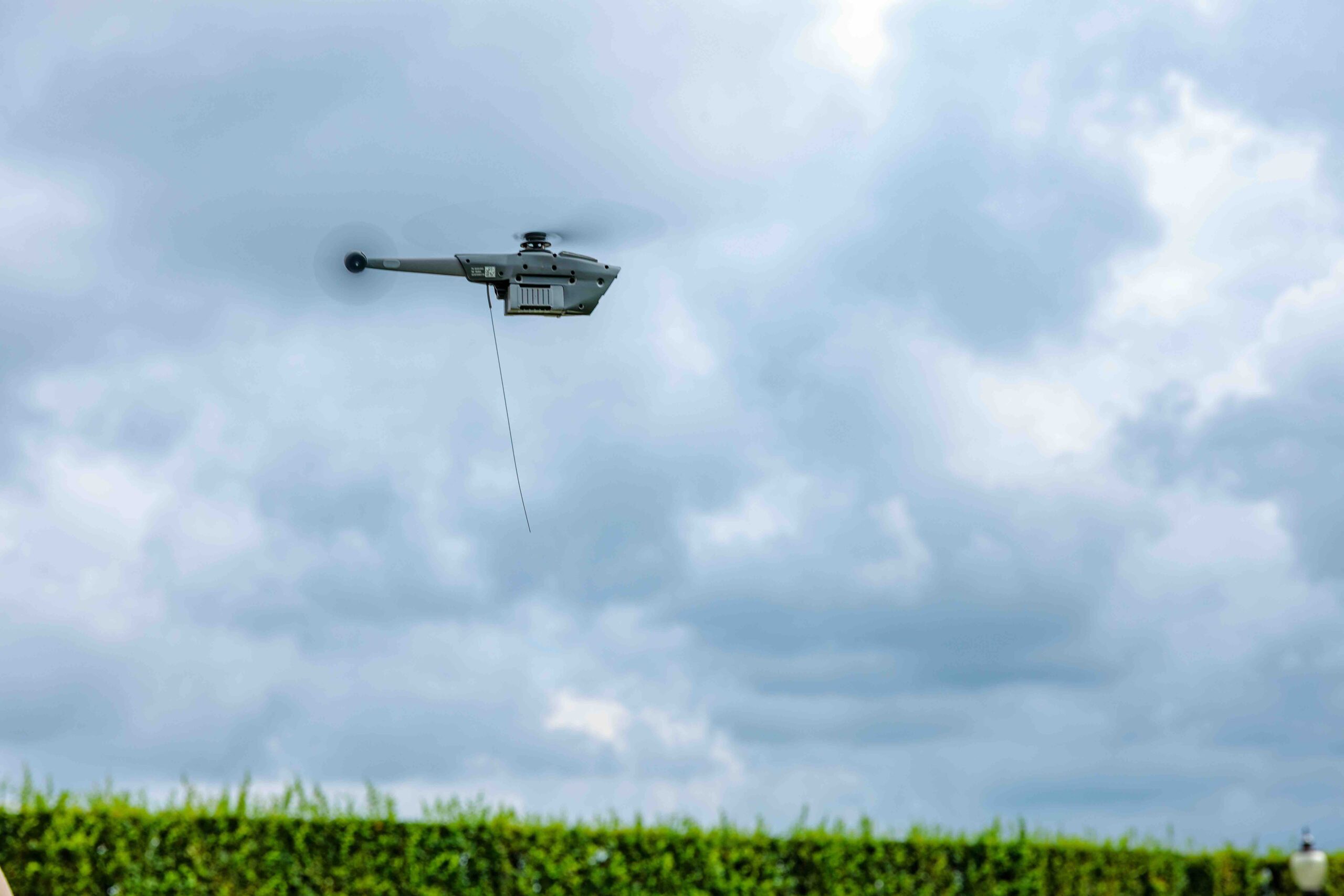
To establish an immediate operational baseline, the memo dual-hats the directors of Joint Interagency Task Force (JIATF) 401 and the Defense Autonomous Warfare Group as elements under DRPM-UxS. JIATF 401’s director gains added responsibility for countering all drone systems regardless of domain, beyond the task force’s existing counter small UAS mission; Defense Autonomous Warfare Group (DAWG), which grew out of the prior administration’s Replicator initiative, brings its swarm autonomy portfolio into the same structure. Both organizations’ existing personnel alignment and billet structures remain unchanged for now. The Defense Innovation Unit (DIU) becomes the designated primary industry engagement interface for DRPM-UxS portfolio programs, building on its earlier role as the original home of the Blue UAS list before that vetting function moved to the Defense Contract Management Agency for scale. DIU Director Owen West, who also serves as the Pentagon’s senior advisor for the separate Drone Dominance Program, has said DIU “stands ready to run the drone dominance playbook” at the larger scale DRPM-UxS is meant to build toward.
The memo sets a firm deadline structure for standing up the office: 30 days to begin staffing core functions including contracting, legal, legislative affairs and IT; 60 days to deliver an organizational construct to the deputy secretary; 90 days to define the full UxS program baseline and submit an implementation plan; and 120 days to prepare a plan covering near-term program challenges, production-gate milestones and a timeline to full operating capability. Monthly progress updates and quarterly in-person briefings to the deputy secretary are required afterward. As of this writing, no individual has been named to lead the office, even on an interim basis, and it remains unclear whether the position will require Senate confirmation; a Pentagon spokesperson has declined to say whether an interim director has been designated.
THE CONGRESSIONAL ALTERNATIVE: A COMBATANT COMMAND FOR ROBOTS
DRPM-UxS did not emerge in a vacuum. On June 11, the Senate Armed Services Committee released a summary of its fiscal 2027 National Defense Authorization Act, which the committee cleared the following day on an 18-9 vote. Section 917 of that bill directs the Pentagon to consider standing up what the committee calls the “Robotic and Autonomous Systems Combatant Command”—a proposal that would, if enacted and exercised, create the first entirely new combatant command since U.S. Space Command was reestablished in 2019. Congressional staff briefing reporters on the provision said the concept draws in part on Ukraine’s 2024 establishment of its own Unmanned Systems Forces and Russia’s parallel move in 2025. The proposed command, sometimes shorthanded RASCOM, would carry special test and evaluation authorities and limited streamlined acquisition authorities aimed specifically at buying commercial drone technology off marketplaces at a faster pace than traditional programs allow.
The proposal drew immediate institutional pushback. In a June 30 letter to SASC Chairman Roger Wicker and ranking member Jack Reed, the Air & Space Forces Association (AFA) formally objected, with AFA Chairman Kathleen Ferguson and President and CEO Lt. Gen. Burt Field (Ret.) writing that the new command “would greatly complicate the development, acquisition and operational use” of unmanned systems across all the services. A congressional staffer, discussing the provision on background, characterized the debate inside the Pentagon as long-running and unresolved—over whether some form of centralized authority makes sense early in a technology’s maturity, with functions later transitioning back out to the individual services, or whether a permanent, separate command structure is the better answer.
Notably, the DRPM-UxS memo makes no mention of RASCOM or the pending NDAA language at all. But the authorities it hands to the new office—Milestone Decision Authority, direct budget input, technical standard-setting, contracting direction across the services—track closely with the kind of centralized acquisition speed the Senate bill’s authors were reaching for through a combatant command structure. Hegseth had previewed some version of this move as early as an April 29 hearing before the House Armed Services Committee, telling lawmakers a sub-unified command for autonomous warfare was coming; the DRPM-UxS memo delivered a portfolio manager office instead of a stood-up sub-unified command, using an organizational template—the direct reporting program manager—the department has now applied three times in a year, following Gen. Michael Guetlein’s appointment to lead the Golden Dome missile defense effort in July 2025 and Gen. Dale White’s appointment over a portfolio of major Air Force weapons programs, including the B-21 bomber, F-47 fighter and Sentinel ICBM, later that year. Air Force officials have credited that restructuring with helping stabilize the Sentinel program following its 2024 Nunn-McCurdy cost overrun review.
Whether DRPM-UxS satisfies the underlying concern driving RASCOM, or merely competes with it for the same bureaucratic space, is an open question the fiscal 2027 NDAA process hasn’t yet answered. The Senate’s bill still needs to be reconciled with the House Armed Services Committee’s own version and signed into law before RASCOM becomes anything more than a permissive option Congress has authorized the department to pursue—it is not a mandate, and DRPM-UxS gives the Pentagon a plausible answer to point to if it prefers not to exercise that option.
THE BUDGET BEHIND THE REORGANIZATION
The reorganization arrives alongside a fiscal 2027 budget request that would essentially triple unmanned and counter-unmanned spending compared with fiscal 2026 enacted levels, to roughly $74 billion. That figure breaks down into $20.6 billion for counter-UAS programs—a 424% increase over the current enacted level, including funding tied to the Drone Dominance Program’s mandatory procurement—$16.9 billion to procure unmanned systems across air, surface, subsurface and ground domains, and $13.5 billion to build a commercially integrated logistics network capable of sustaining autonomous operations under contested conditions. That scale of spending is a large part of why DRPM-UxS’s budget authorities matter as much as its programmatic ones. An office with direct input into the President’s Budget Request process, sitting above the individual services on acquisition decisions for that much money, has leverage that a coordinating task force or working group does not.
WHAT TO WATCH
Several open questions will determine how much DRPM-UxS actually changes in practice. First is who gets named to lead it, and on what authority—the memo set no deadline for naming a director, and none had been announced as of early August. Second is how the fiscal 2027 NDAA’s RASCOM language fares once the House and Senate reconcile their bills, and whether the Pentagon’s preemptive move undercuts the political case for a new combatant command or whether lawmakers push ahead regardless. Third is how the dual-hatting of JIATF 401 and DAWG plays out in practice, given that both organizations keep their existing missions and staff even as their directors take on department-wide responsibilities. And fourth is how DRPM-UxS’s 90-day program baseline, due in late September, treats the carve-outs for the Navy’s MUSV program and other major platforms that remain outside its authority—a boundary that will likely be tested the first time a program’s mission set blurs across that line.