
As modern battlefields shift to dispersed, tech-driven fights, squad leaders need organic sUAS—American-made, secure, and sustainable—plus updated doctrine, realistic training, and a logistics pipeline that scales from batteries to BVLOS tactics.
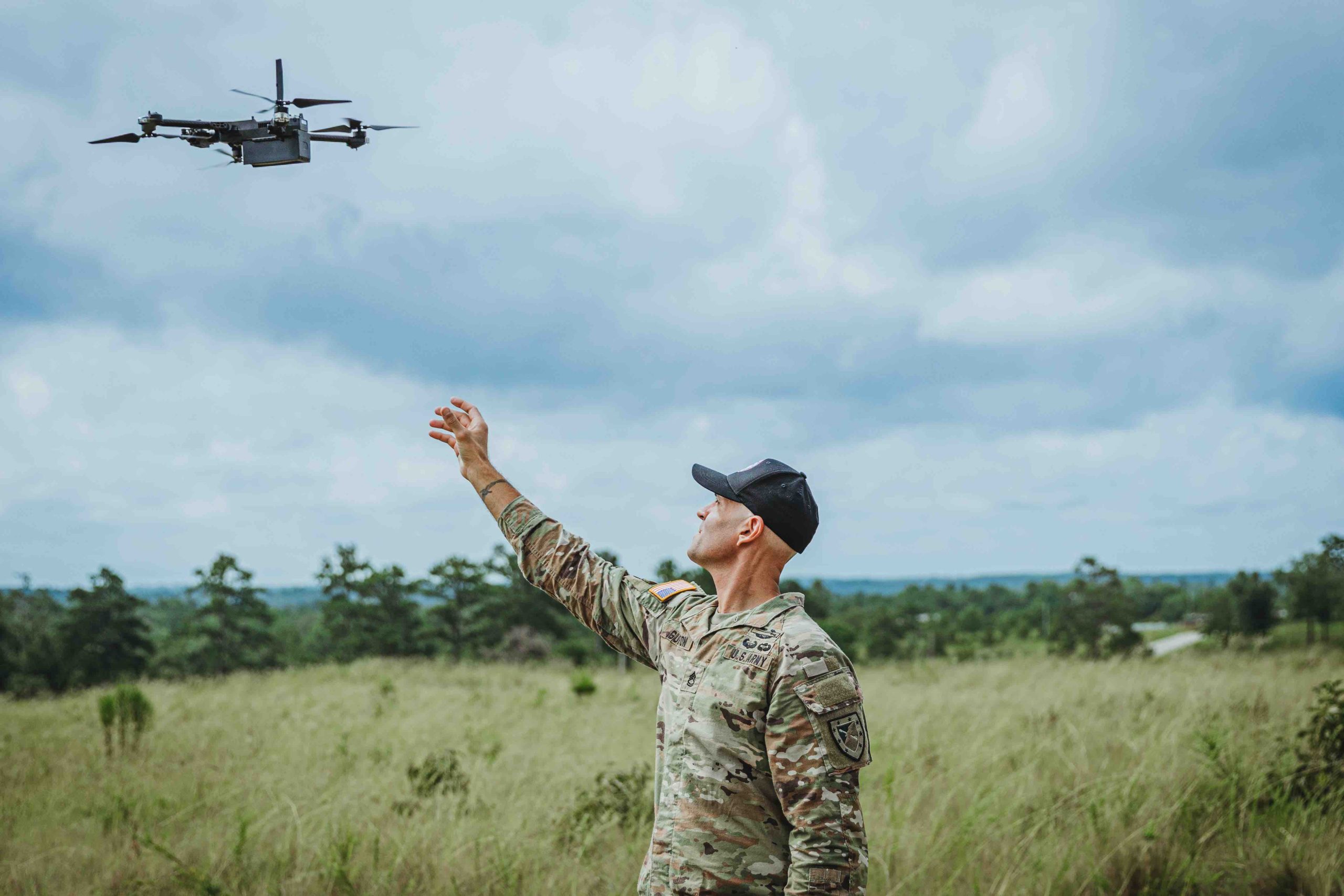
For most of the history of armed conflict, combatants have achieved victory on the battlefield through large-scale strategic maneuvers. Modern warfare is rapidly evolving and moving away from this historic model. More often than not, small-unit leaders operating at the tactical edge have a much greater effect on the outcome of battles. As this trend continues, there has never been a more crucial time to provide squad leaders with the training and tools necessary to enhance efficiency and increase lethality.
Whether the focus is on current conflicts in theaters such as Ukraine and Gaza or potential conflicts between the West and East, small-unit leaders will have a greater influence on the outcome of an operation than generals and politicians. Military conflicts around the world are fluid, fast-paced engagements in complex and technologically driven environments.
As the U.S. DoD pushes for greater production of American-made drones, the role of small Unmanned Aircraft Systems (sUAS) at the tactical edge has never been more critical.
In recent months, the DoW has placed a growing emphasis on ensuring that squad-level leaders can access intelligence, surveillance, and reconnaissance (ISR) organically and, more importantly, act on it. This focus is evident in the awarded and open contracts under initiatives such as the U.S. Army Small Uncrewed Aircraft Systems Programs. sUAS are no longer viewed as a nice-to-have technology; they are now recognized as a necessity. For this shift to be successful, the military will need to invest in thousands of drones, update training exercises, evolve its doctrine, and establish a logistical pipeline for deploying and maintaining these assets.
The SECDEF’s Push for American-Made Solutions
On July 10, 2025, the Secretary of Defense issued a directive that has the power to reshape the use of sUAS across the military. While drones were already in wide use by the armed forces, this new order emphasized moving away from foreign-made drones, particularly those manufactured in China, and instead focusing on American-made systems. Concerns over cybersecurity threats, supply chain reliability, and the use of drones manufactured by adversary nations on the battlefield were at the heart of the new directive.
With the new directive, the SECDEF has placed trusted supply chains and U.S. drone manufacturers as a priority of defense planning. Drones manufactured in the U.S. would have the advantage of being less susceptible to electronic exploitation. Additionally, a robust domestic manufacturing ecosystem would allow for scaling production needs as conflicts arise. The directive aligns with broader defense initiatives aimed at securing data from interception and manipulation by adversaries. Placing a drone in the hands of squad leaders begins to address the SECDEF’s concerns, which he previously stated when he said, “U.S. units are not outfitted with the lethal small drones the modern battlefield requires.”
For domestic manufacturers, the directive is a welcome and potentially lucrative initiative, but it is not without its challenges. With an increased demand for drones in the hands of small-unit leaders, suppliers will need to invest in innovation and increase production capacity to a level that exceeds current capabilities.
The real challenge for manufacturers in the U.S. is not just in designing drones that meet the needs of squad leaders, but scaling production fast enough to meet those needs. Building out supply chains, expanding manufacturing facilities, and investing heavily in human capital are a necessity. Many companies within the industry are small in comparison to giants like DJI and Skydio. Meeting production needs will be a significant hurdle for smaller firms to overcome. If these obstacles for suppliers can be addressed, the warfighter’s capabilities will be revolutionized.
The Operational Requirement in the Context of Squad Doctrine
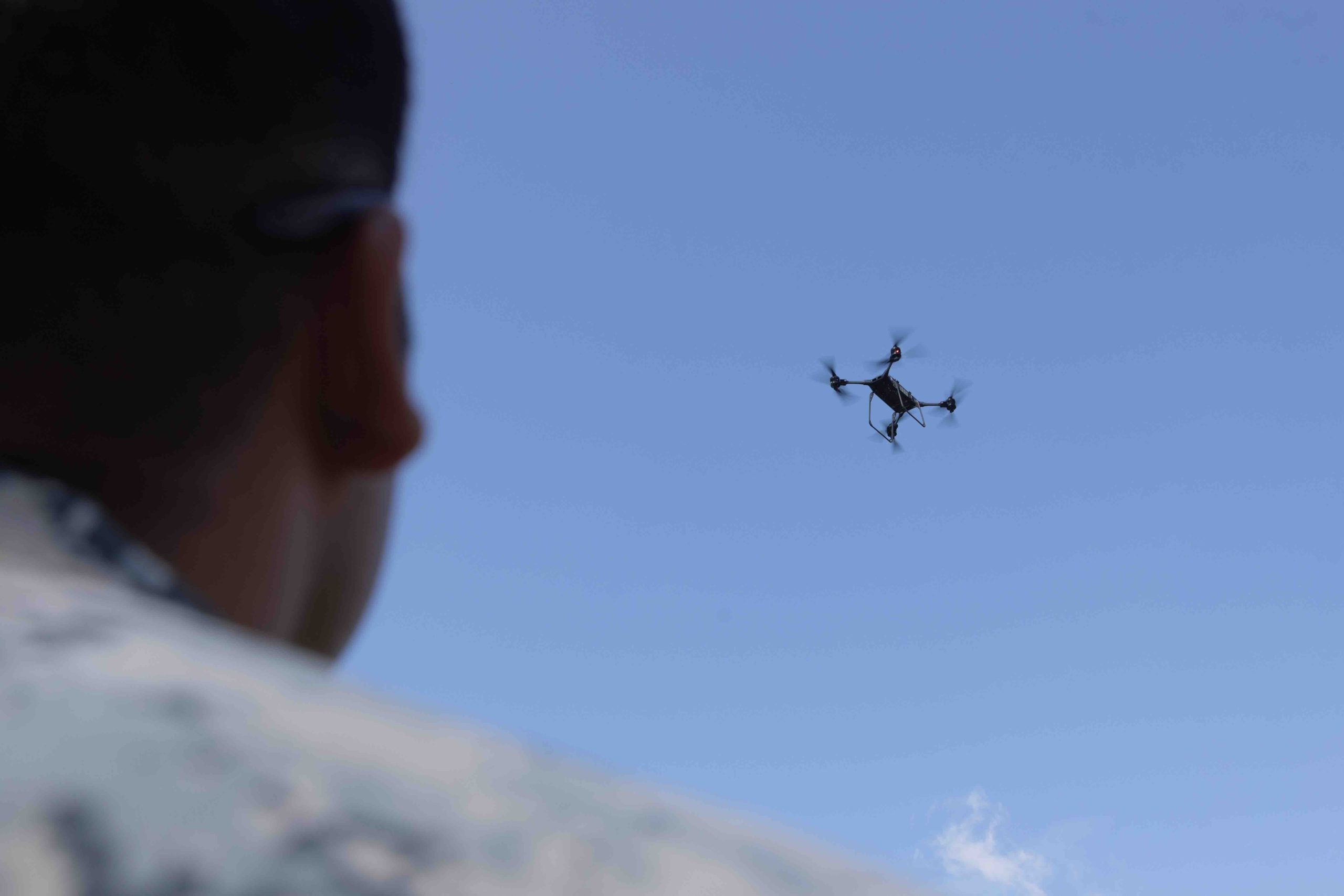
Doctrine is the backbone of military training. In the Marine Corps, Marine Rifle Squad MCRP 3-10A.4, and in the Army, Infantry Platoon and Squad ATP 3-21.8 are the foundation of all small unit operations. These manuals provide the Marine or Soldier with everything they need to understand the organization, roles and responsibilities, and best practices for squad-level operations. Both doctrines emphasize the squad as the primary element in close combat. Adding sUAS provides these units with a much-needed tool that enhances the squad leader’s ability to gather intelligence and build situational awareness.
As squad leaders, Marines and Soldiers must have a fundamental understanding of reconnaissance and intelligence gathering. Until recently, the primary tool for gathering battlefield information at the squad level was limited to what the unit could see and hear. Drone technology enables the squad leader to extend their organic collection efforts beyond the line of sight. Perhaps there is no better example of this than in the urban combat environment.
The Second Battle of Fallujah, which took place in Fallujah, Iraq, in 2004, was one of the bloodiest urban conflicts of recent history. I was a young Marine Corps officer at the time and participated in the fighting in and outside the city. During room-clearing operations, we did not have the benefit of drones or other equipment to investigate a room before entering. From personal experience, it’s a real gut check when it is your turn to enter the room first. Our job would have been infinitely safer had sUAS technology been available to us.
If the full adoption of drones at the squad level is to be successful, foundational publications such as MCRP 3-10A.4 and ATP 3-21.8 will need to be updated or at least supplemented with additional doctrine. At a minimum, doctrine will need to reflect BVLOS reconnaissance techniques, targeting for fires integration, drone overwatch, ambush detection, and independent ISR.
Many units have already taken on this challenge. For example, in June 2025, the 1st Marine Division Schools released a 90-page handbook titled sUAS/C-sUAS Integration Handbook. The handbook is a guide to drone and counter-drone warfare and was developed in conjunction with the 1st Marine Division School’s sUAS/CsUAS Integration Course. Their model is one that other units across the armed forces will need to follow.
Specifications That Matter
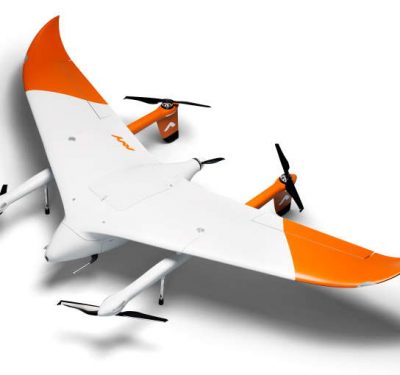
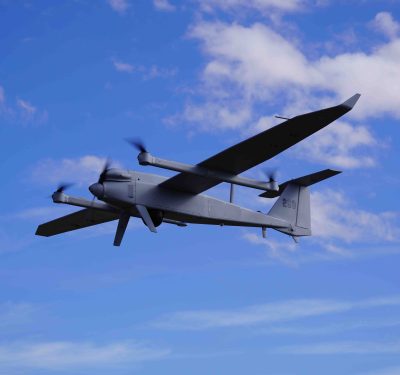
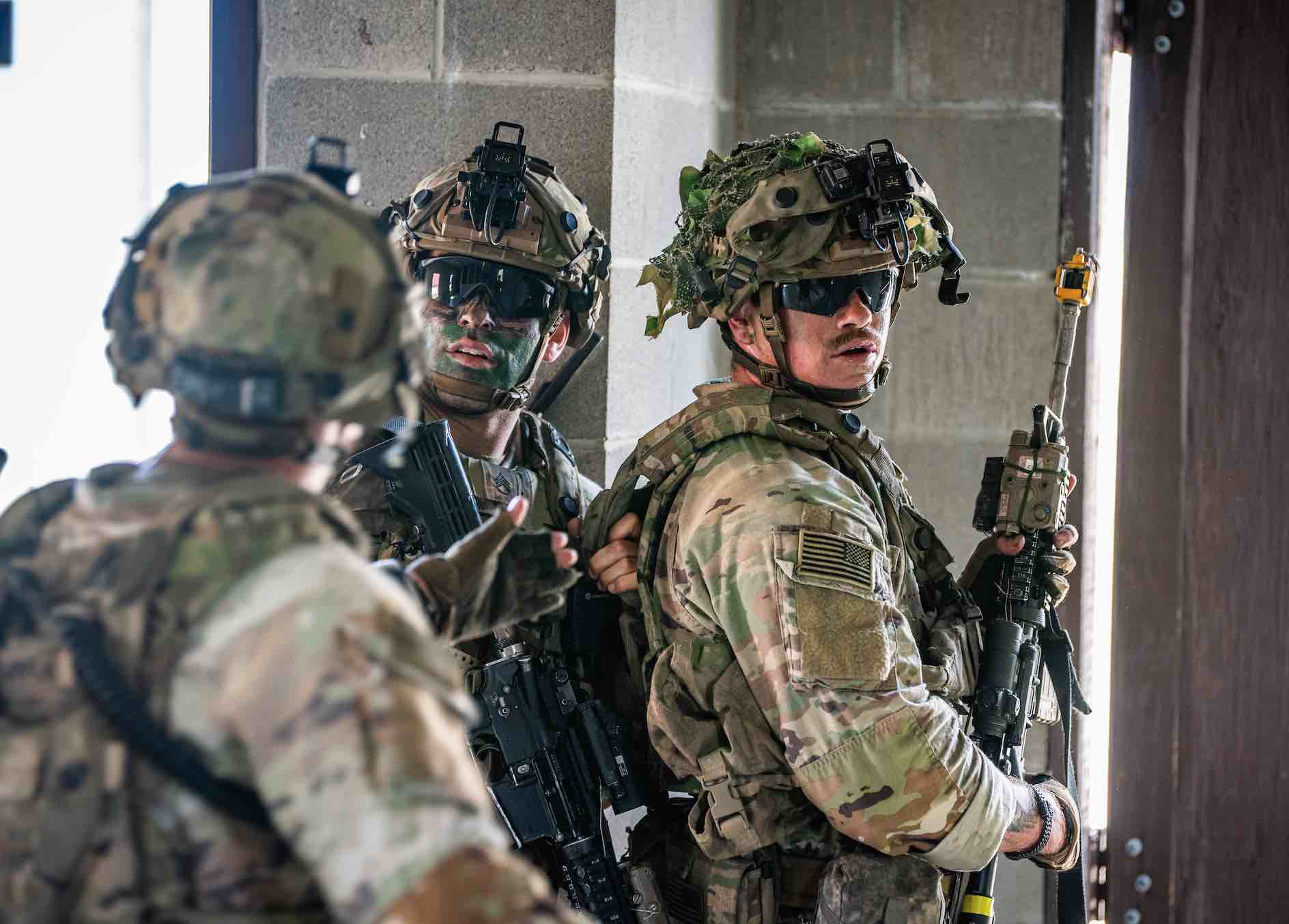
To be practical tools for small unit leaders, sUAS must possess certain specifications that make them ideal for this application. Some of the current market solutions, such as Teal’s Black Widow and Skydio’s X10D, have already been awarded contracts for use by squad leaders. Drones such as these have proven themselves to meet the military’s criteria. The Army’s request for these drones signifies a clear move to support squad leaders with sUAS.
If the SECDEF’s guidance is to be executed, manufacturers like Skydio and Teal will need to ramp up production, constantly innovate, and source new offerings that meet rapidly changing needs.
While individual programs will have their own specific criteria that suppliers must follow, to be an effective tool for squad leaders, sUAS will share certain specifications ideal for combat operations at the tactical edge. At a bare minimum, sUAS will need to perform well in the following areas.
- Flight times: 30-60 minutes
- Range: 5-15 km
- Payloads/sensors: RGB, thermal (640X512)
- Environmental resilience: IP54-IP67
- Noise signature: 40 dB or less
- Portability: Small and compact
- Security underpins: AES-256 encryption
Flight times are one of the most important specifications. sUAS are extraordinary tools on the battlefield, but if batteries are drained, they become little more than dead weight for the warfighter to carry. At an extreme minimum, flight times of 30 minutes are acceptable, but flight times closer to 60 minutes are ideal. Longer flight times enable more data collection and enhanced situational awareness.
Some operations, such as those in dense urban areas, will require less range than those in large open areas. Squad leaders need the flexibility of a sUAS that can offer the same support in a variety of combat settings. A minimum range of 5 km will be sufficient, but the objective should be to achieve a range of 15 km or more, if possible.
When it comes to payloads, a high-resolution RGB camera is the extreme minimum. sUAS should also have a thermal camera with at least a 640 X 512 resolution. Thermal imaging allows squad leaders access to greater information, especially during night operations or in visually obscured environments. The combination of RGB and thermal cameras enhances decision-making and provides easier targeting, especially as AI is further integrated into sUAS, thereby lowering the cognitive burden on the warfighter.
IP ratings are the ideal method for capturing environmental resilience. All sUAS employed by squads should at least be IP54, providing some resistance to water and dust. Given the harsh conditions of combat, the best platforms will test to ratings of IP67, making them ideal for use in heavy rains, mud, and desert conditions.
In the heat of battle, the noise signature of a sUAS is less critical. When performing squad-level reconnaissance missions, silence is paramount. 40 dB or less is ideal, but the closer to silent the better.
Small, lightweight, yet rugged are the hallmarks of sUAS for this application. Manufacturers should strive to produce drones weighing less than two pounds that can be deployed in seconds.
Finally, sUAS must have survivability against hacks and cyber threats. The minimum threshold is AES-256 encryption, but a push toward quantum-resistant encryption will quickly become a necessity in the near future.
By meeting and ideally exceeding these minimum thresholds, manufacturers can provide sUAS that achieve the SECDEF’s guidance. More importantly, sUAS with these capabilities will give the squad leader unprecedented access to intelligence at a level never seen before in large-scale combat.
Training and Deployment
The armed forces’ current training practices are robust and effective. Technology alone doesn’t change the outcome of battles. The effectiveness of new tools, such as sUAS, depends on the training and discipline of the Marine or Soldier, in this case, the squad leader. Just as a rifle is an extension of the Marine or Soldier, sUAS must become a part of the squad leader and their employment must be seamlessly integrated into the decision-making cycle under combat conditions.
Following a period of instruction on the design and capabilities of sUAS, training should begin with the fundamentals of launch and recovery in contested environments, ensuring drones can be deployed quickly under fire or in degraded conditions. Equally important is the ability to conduct rapid ISR interpretation and decision-making, where operators and leaders translate the data collected into actionable maneuvers without delay.
As squads remain part of combined arms formations, the integration of sUAS into broader operations is another focus area, ensuring that drone-derived intelligence supports armor, artillery, aviation, and fires in a coherent manner. Finally, maintenance and troubleshooting in austere environments are crucial, as squads cannot rely on higher-level support during prolonged missions.
With the goal of deploying sUAS to every squad in the military, sUAS need to become part of the standard equipment issued to a squad. While deployment models designed around providing each squad with a specialized drone operator could prove useful, the ideal model is to make both the sUAS and those trained in using the sUAS organic. In the same way, every Marine is capable of operating all weapons systems within a squad; all members of the squad should ideally be capable of operating the unit’s sUAS.
Thankfully, the DoD is already moving in this direction. As doctrine evolves, so has the training that is built on it. Both the Army and Marine Corps have made significant strides toward the full integration of sUAS into their forces. The Army’s Transformation in Contact program and the Marine Corps’ Attack Drone Team concept are two examples of each service’s commitment to innovation. It is a clear indication that the armed forces are moving away from ad hoc solutions with sUAS to structured programs and widespread implementation of the technology, especially at the squad level.
Looking forward, best practices will need to evolve so that sUAS employment is not treated as an add-on capability but as a standard part of mission rehearsals and after-action reviews. Only through rigorous training and deliberate integration will sUAS fulfill their potential as essential tools for the modern squad.
Strategic Takeaway and Path Forward
sUAS have the potential to significantly enhance the effectiveness and lethality of squad-level units in the military. Foundational manuals of the armed forces, like MCRP 3-10A.4 and ATP 3-21.8, have provided squad-level units with the doctrine they need to be successful in previous engagements. The SECDEF’s guidance to put sUAS in the hands of every squad has the power to aid in securing future military victories.
Ultimately, sUAS implemented at the squad level will not only improve the effectiveness of small-unit leaders but also help tie into the larger strategic picture. It is realistic that, in the near future, sUAS will integrate with platforms such as the Air Force’s CCA (Collaborative Combat Aircraft) program. Autonomous platforms such as the YFQ-42A will work in conjunction with sUAS and provide an ISR picture unlike any we have seen before.
The path forward requires updated doctrine, sUAS capable of meeting the warfighter’s needs, and the training and deployment to ensure the maximum benefit is realized on the battlefield. With the proper support, squad leaders equipped with sUAS will usher in a new era of combat dominance.
Bio: David Daly is a former USMC Major with numerous tours of war in Iraq and Afghanistan. He is the co-owner of three companies within the drone industry: Vigilante Drones and Consulting, Altitude University, and High Stakes University. Through his companies, he empowers end users to get the most out of drone technology.