
As mass-produced strike and FPV drones reshape battlefields from Ukraine to the Red Sea, the United States is scrambling to bend the cost curve, scale affordable interceptors, and build a layered, networked C-UAS architecture before it must learn the hardest lessons in combat.
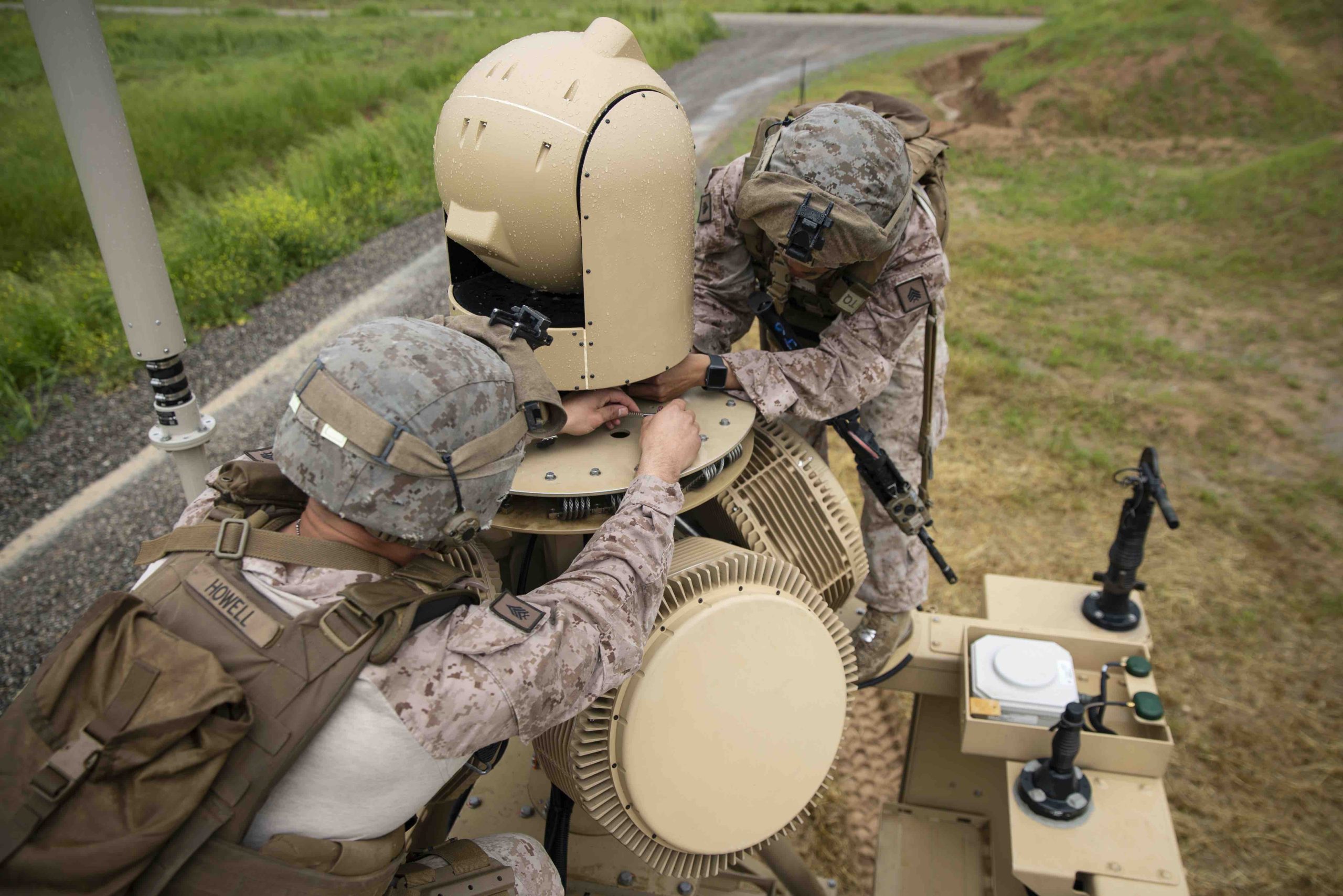
The U.S.’s national defense budget in 2026 may dedicate around $7.5 billion towards counter-unmanned aerial systems (C-UAS), according to one mid-summer estimate. Events of 2025 spell out exactly why.
In the Middle East, the U.S. military spent billions of dollars of munitions shooting down or pre-emptively attacking cheap UAVs launched by comparatively weak military powers.
Then in short wars this year India and Israel used differing drone warfare methods to heavily damage the air defenses of Pakistan and Iran respectively, both of which launched large volume drone attacks in response.
June saw a cunning infiltrated drone attack by Ukraine damaging or destroying perhaps one-third of Russia’s irreplaceable nuclear-capable long-range bombers. Over eastern Ukraine, surveillance and kamikaze drones turned defensive positions on battlefields strewn with fiber optic cables and wrecked vehicles into a 20-mile-deep drone ‘death zone’.
In parallel, Russian and Ukrainian strategic air raid campaigns multiplied in scale with dissimilar impacts on economies, infrastructure and civilian populations—knocking out 50% of Ukraine’s energy sector, and nearly one quarter of Russia’s oil refining capacity.
Amidst Russian raids peaking at 800 strike drones on September 9-10, roughly 20 proceeded to penetrate Polish airspace. Hastily mobilized NATO defenses only managed to down four, illustrating the alliance’s unpreparedness facing such a large but foreseeable threat.
“We must recognize that we’re facing a mass scale attack: hundreds, perhaps thousands, of UAVs,” Samuel Bendett, an expert on Russian drones at the CNAS think tank, said. “You need training and education for a military force to manage and withstand such an attack. And there’s got to be a realistic expectation you can’t stop all of them.”
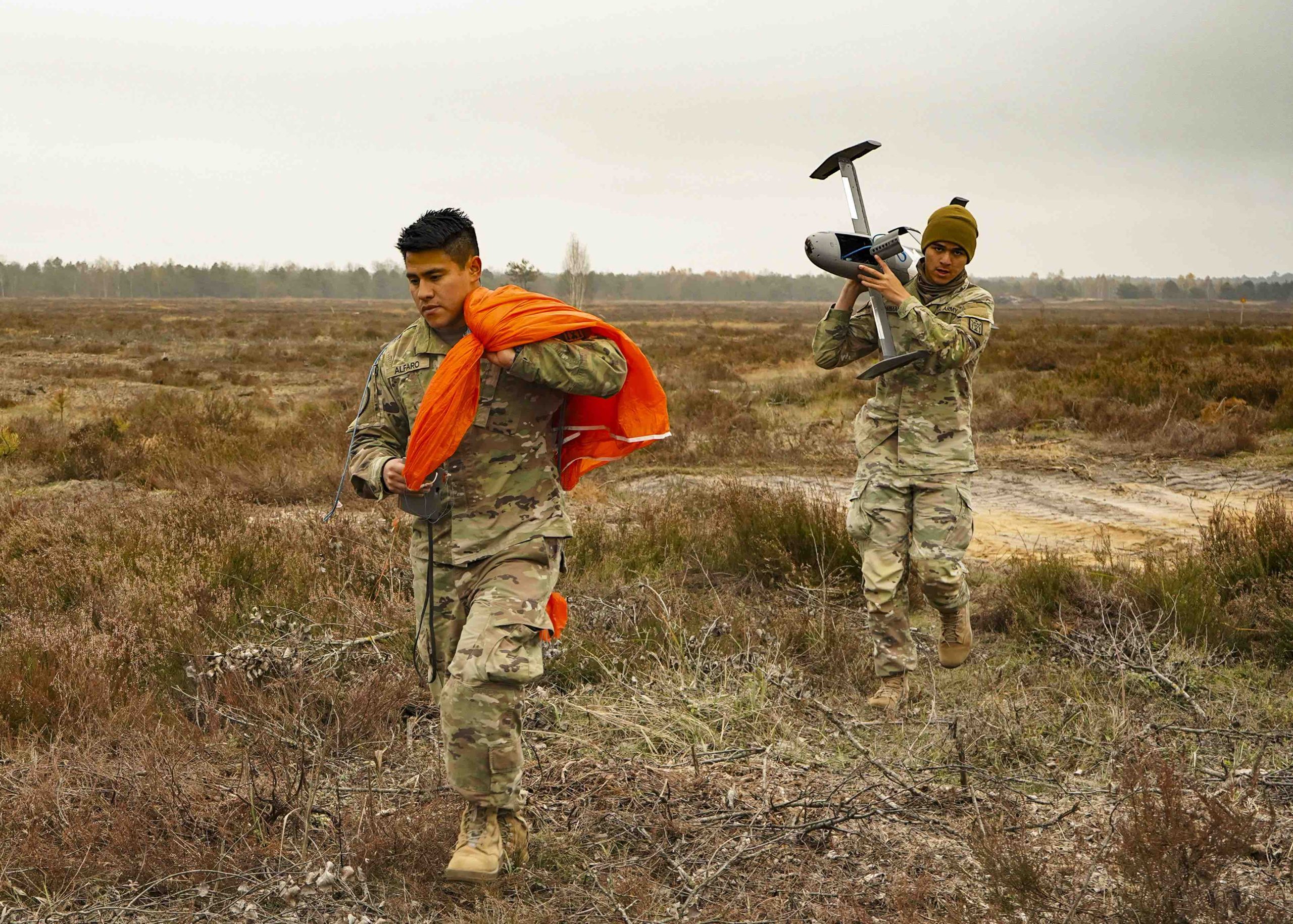
The Cost Curve Conundrum
The Russia-Ukraine war is showing the world that lethal UAVs can be produced, evolved and deployed on a truly massive scale even by countries with economic bases far smaller than those of the U.S. or China.
This is resulting in sustained industrialized attrition warfare unlike any since World War II, with Russia variously estimated to be producing 50,000 and 70,000 Shahed-style strike drones annually, already exceeding NATO’s defensive capacity. Then consider production of tactical FPV UAVs may be 30 times greater—likely at least 1.5 million Bendett told IUS.
While all can agree using multi-million dollar Patriot and SM-2 surface-to-air missiles against Shahed-136s estimated to cost $20,000 to $40,000 each is undesirable, even supposedly affordable American C-UAS interceptors often cost many times more than typical target—despite a growing number of Ukrainian UAS demonstrating ability to counter Group 1-3 drones at equivalent or lower cost.
Producing 1,000 missiles with 95% kill probabilities monthly may not be a winning strategy if an adversary can generate 5,000 drone sorties monthly. High-reliability countermeasures will retain an enduring role protecting key assets, but it’s in affordable volume solutions that the U.S. and allies are presently most lacking.
The CNAS think tank’s Countering the Swarm study by Stacie Pettyjohn and Molly Campbell concludes the U.S. “lacks sufficient purpose-built counter-drone systems, large reserves of affordable interceptors, and a modern short-range air defense capacity.”
America’s distributed force deployments require large stockpiles of affordable short-range kinetic interceptors, supported by resupply logistics able to function in contested conditions. Even then, “U.S. forces likely will struggle to defeat large, pulsed salvos, complex attacks, and autonomous swarms without new technologies such as HPMs [High Powered Microwaves] and AI. At a certain point, defenses that counter incoming drones one by one are going to become saturated and either run out of interceptors or fail because they can’t re-aim quickly enough to intercept the drones before they impact.”
In other words, sophisticated swarming attacks enabled by AI autonomy may in fact require defensive AI with command-and-control capabilities to rapidly rationalize, coordinate and execute diverse defensive counterfires.
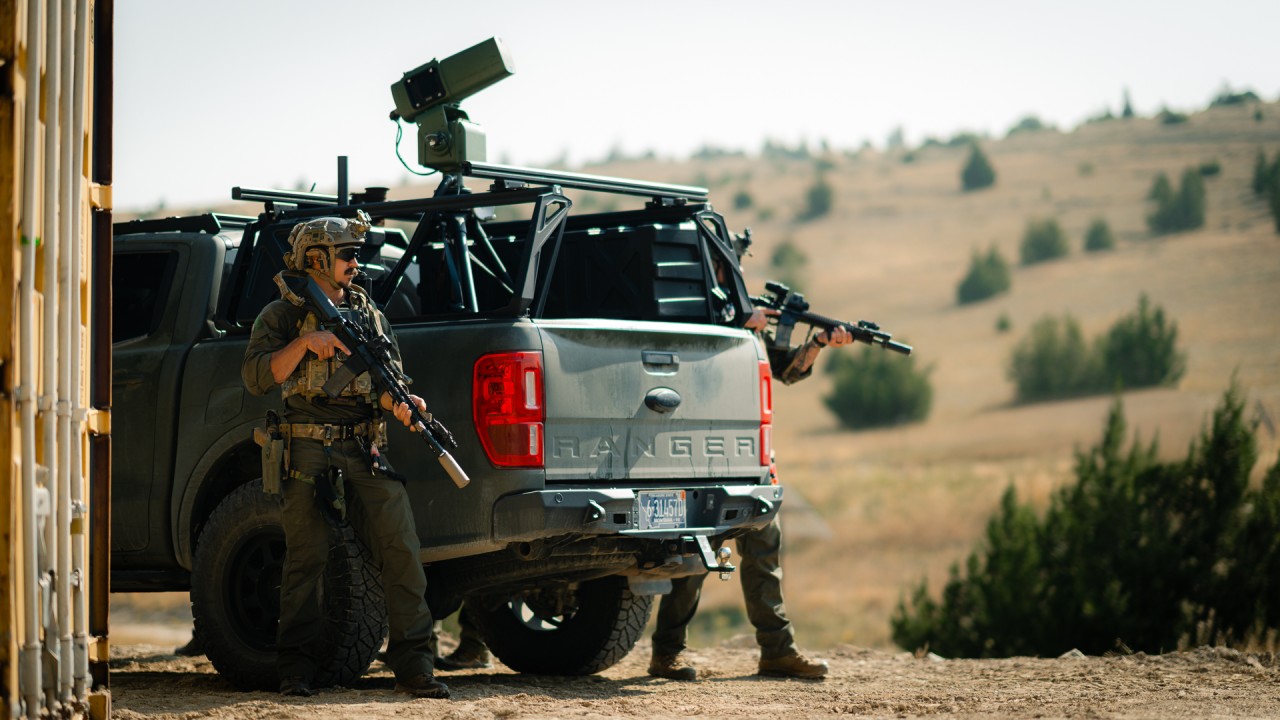
Lasers and High-Powered Microwave Weapons
Directed energy weapon promise extremely cheap per-shot C-UAS engagements, but none have entered regular operational U.S. service despite extensive R&D due to development and SWAP challenges. A 2023-2024 combat test of Stryker APCs armed with 50 Kilowatt lasers reportedly proceeded unfavorably, though Israel has successfully combat deployed its 100 KW Iron Beam laser against drones (range 6 miles). Lasers may disable UAVs at range by blinding attacks or thermal buildup, however analysts see possibly greater importance in High Powered Microwaves (HPMs). Though short ranged, HPMs disable electronic systems (not just comms links) of potentially multiple threats across a broader arc, making them a potentially potent counter to swarming and autonomous UASs. Strykers equipped with Epirus’s Leonidas HPM system are also undergoing testing.
Millions of Drones: The China-U.S. Drone Arms Races
China’s military drone sector has traditionally pursued more exquisite UCAV-style UAS. Chinese businesses hold roughly 90% market share of the civilian drone industry, which in the context of Beijing’s Civil-Military Fusion doctrine, is highly convertible towards building lower-cost tactical UAS and long-range strike drones in wartime contingencies.
A cheaper Shahed surrogate called the Feiling-300D priced at $10,000, with range above 600 miles, has reportedly been tested for teaming with missiles and jet fighters.
“China is investing heavily in kamikaze drones and developing autonomous drone swarms, and it will soon have one of the largest and most capable drone forces in the world,” writes Pettyjohn in her report, also noting development of long-range mothership drones like Jiu Tian aimed at releasing over a hundred Group 1 UASs.
While sustaining development of larger UAS, Beijing recently touched off a new program to field one million tactical UAS by 2026. Meanwhile, the U.S. reports procuring 50,000 UAS in 2025, and plans to acquire 200,000 more in 2027.
To be fair, some experts criticize large sUAS buys outside of imminent hostilities due to risks of rapid obsolescence combined with uncertainty as to the nearness and context of the next major conflict. For example, in a Pacific-facing conflict, long-range strike drones are likely more consequential than tactical-UAS and may further increase in importance after depletion of long-range missile inventories in initial weeks of fighting.
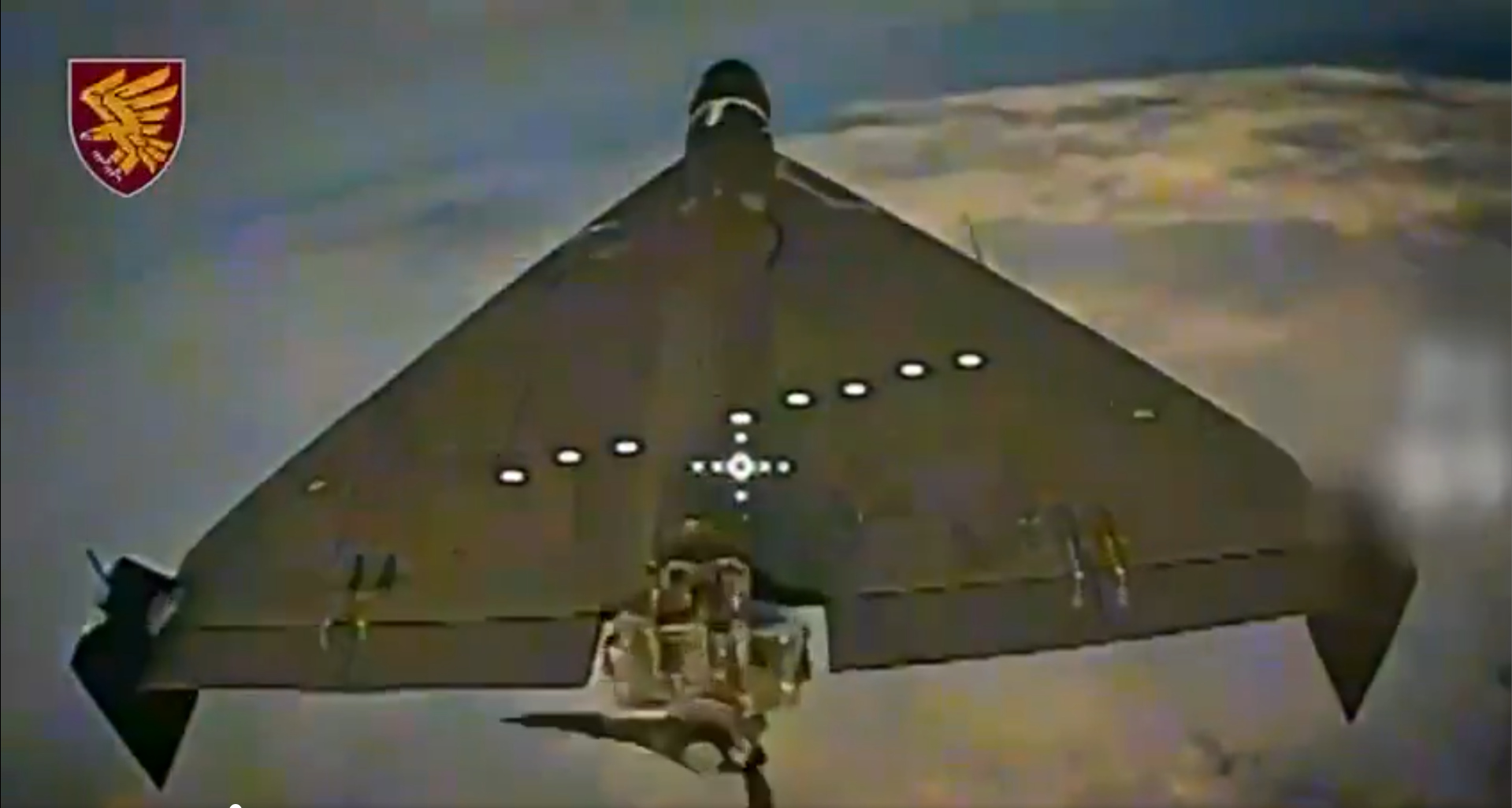
Networks, Fire Control, Inter-Operability
Defeating drones isn’t only about matching numbers with equal or greater numbers. Indeed, that may be impossible given the manufacturing gap with China. “The answer isn’t to outspend the adversary; it’s to outsmart them,” says George Schwartz, the Air Defense Strategy executive VP at DZYNE. “Defeating these systems demands distributed, networked, rapidly deployable tools that integrate seamlessly into a layered defense network.”
DZYNE produces a Detect-Track-Identify-MITIGATE (DTIM) system and up-scaled kits for vehicles and fixed installations. Such devices help counter tactical Group 1 and 2 UAS. DZYNE is also venturing into new territory as it develops a low-cost kinetic-kill interceptor against Group 3 drones.
“This is a medium to long range fire and forget capability that adds a scalable, cost-effective magazine depth into existing air defense systems,” DZYNE VP Wayne Goodrich told IUS, “Designed to not require additional manpower or unique training to operate this system. It will restore a cost and production rate advantage to the growing Group 3 threats.”
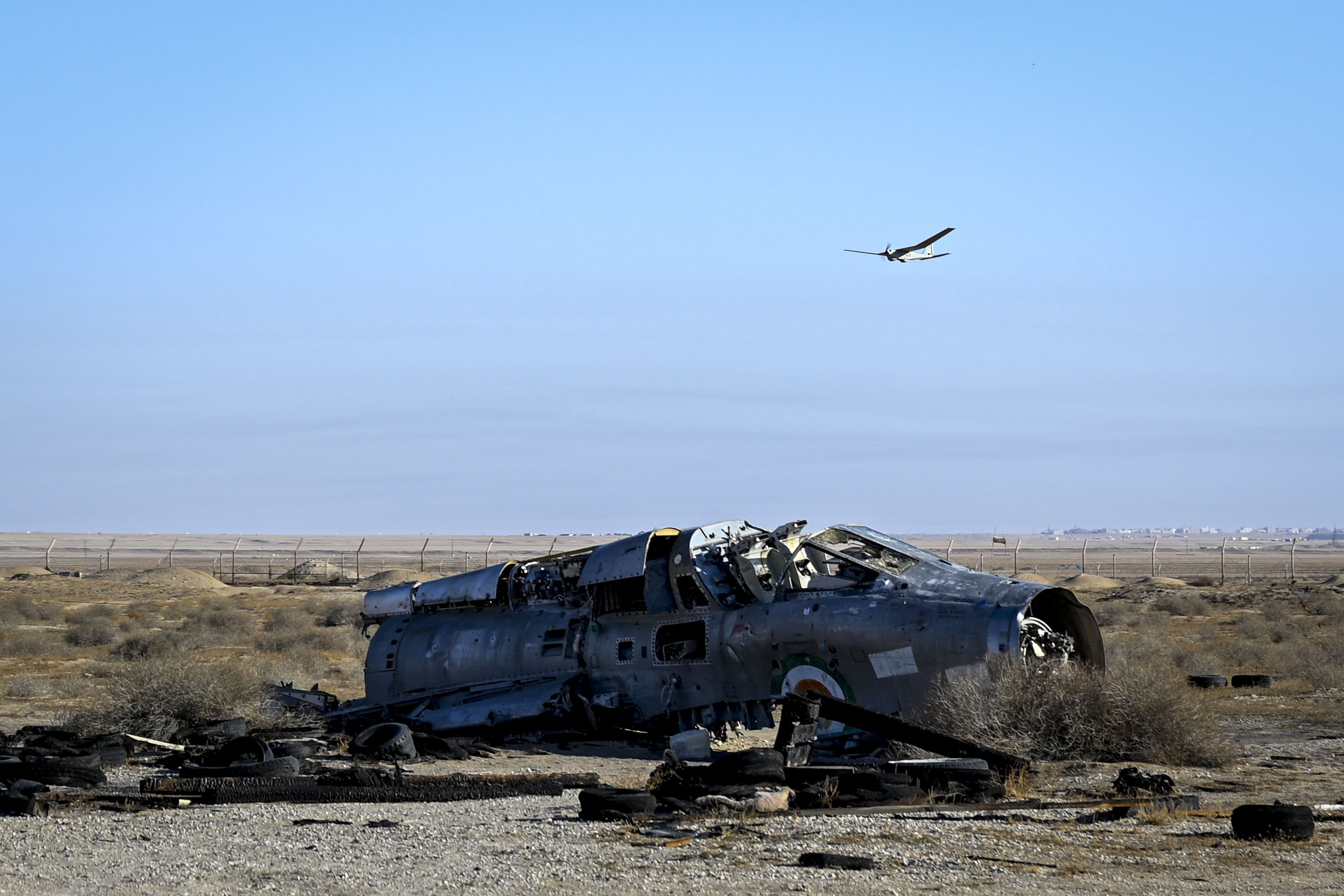
The New Reign of Systems Integrators?
No single system and defeat method can satisfactorily defeat all drone threats, as UAS themselves are both diverse and adaptable.
“There’s no one magic bullet,” Bendett says, noting how Ukraine layers solutions in its integrated air defense system (IADS) including drone interceptors, surface-to-air missiles, electronic warfare and gun-based solutions. “It’s a system of systems, EW, SIGINT, jamming, suppression, and different types of kinetic action against different types of incoming drones.”
UAS and C-UAS systems alike have seen diversified, iterative buys by the Pentagon rather than monolithic, decades-long mega-programs like those for Abram tanks and F-16 fighters. In that context, creating overarching command-and-control systems ensuring interoperability and plug-and-play for air defense networks may prove more important than any individual C-UAS sensor defeat-method, given the furious pace of iteration and evolution observed in Ukraine and Russia.
Perhaps control systems and APIs integrating sensors, command-and-control and defeat methods may prove more commercially rewarding long-term than subcomponents themselves which risk having shorter service.
However, key qualities of systems integrators—flexibility and interoperability, reliability of software and comms networks, fast yet precise man-machine interface and ergonomics, smart but not excessive AI and autonomy—are challenging to quantify without realistic testing in conjunction with real-world systems and trained personnel.
C-UAS Can’t Remain Just the Job of Air Defenders
Armies love the efficiencies that come from siloing complicated specialties into distinct units and combat arms. But military analysts stress that strict adherence to that approach would be a deadly mistake when it comes to C-UAS.
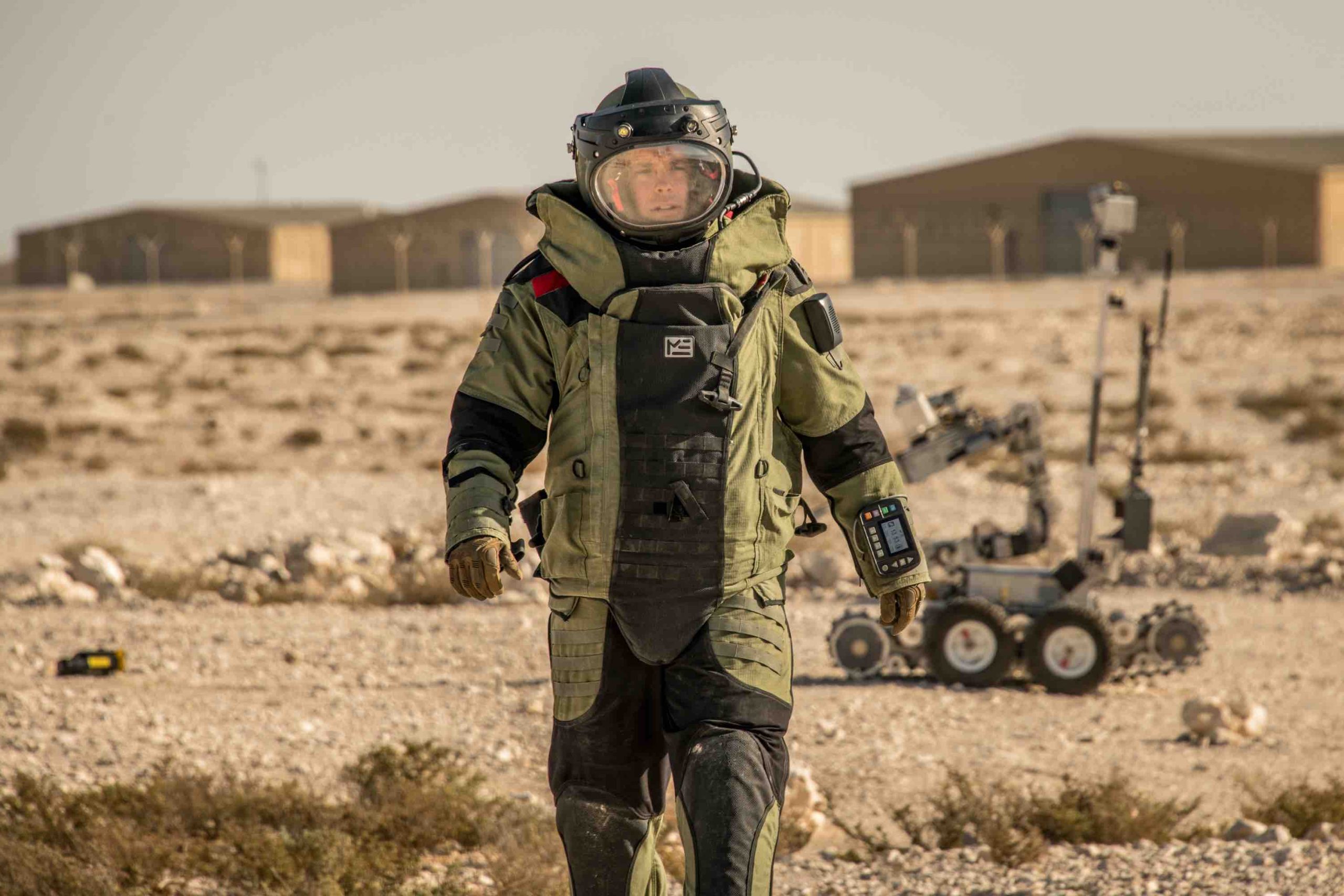
Dedicated SHORADS units will lead the fight against sUAS threat but can’t be everywhere at once nor be expected to stop every drone. Combat troops, and even logistical units and personnel at relevant installations, must field their own self-defense C-UAS solutions of appropriate complexity and range.
Those solutions aren’t solely technological, Bendett says. “It’s also about educating both your mobile and stationary forces to avoid or shoot down incoming FPVs and quadcopters at short distance. How to build things, use cover to mask signatures, and what you should or shouldn’t do in a dugout or trench. And the training must be constant, whether on naval vessels, aerial assets, or military installations.”
Pettyjohn writes that the U.S. must develop more realistic C-UAS training as soldiers in the Middle East reported finding their prior C-UAS training and tests unrealistically optimistic compared to real combat conditions.
She also stresses the importance of passive defenses mitigating damage inflicted by penetrating drones. Such defenses can range from L-shaped bunker entrances, miles-long anti-drone nets deployed over key supply lines, enclosed shelters and convincing decoys to protect aircraft and high-value weapons, and cage armor on armored vehicles.
RF Jamming and electronic warfare
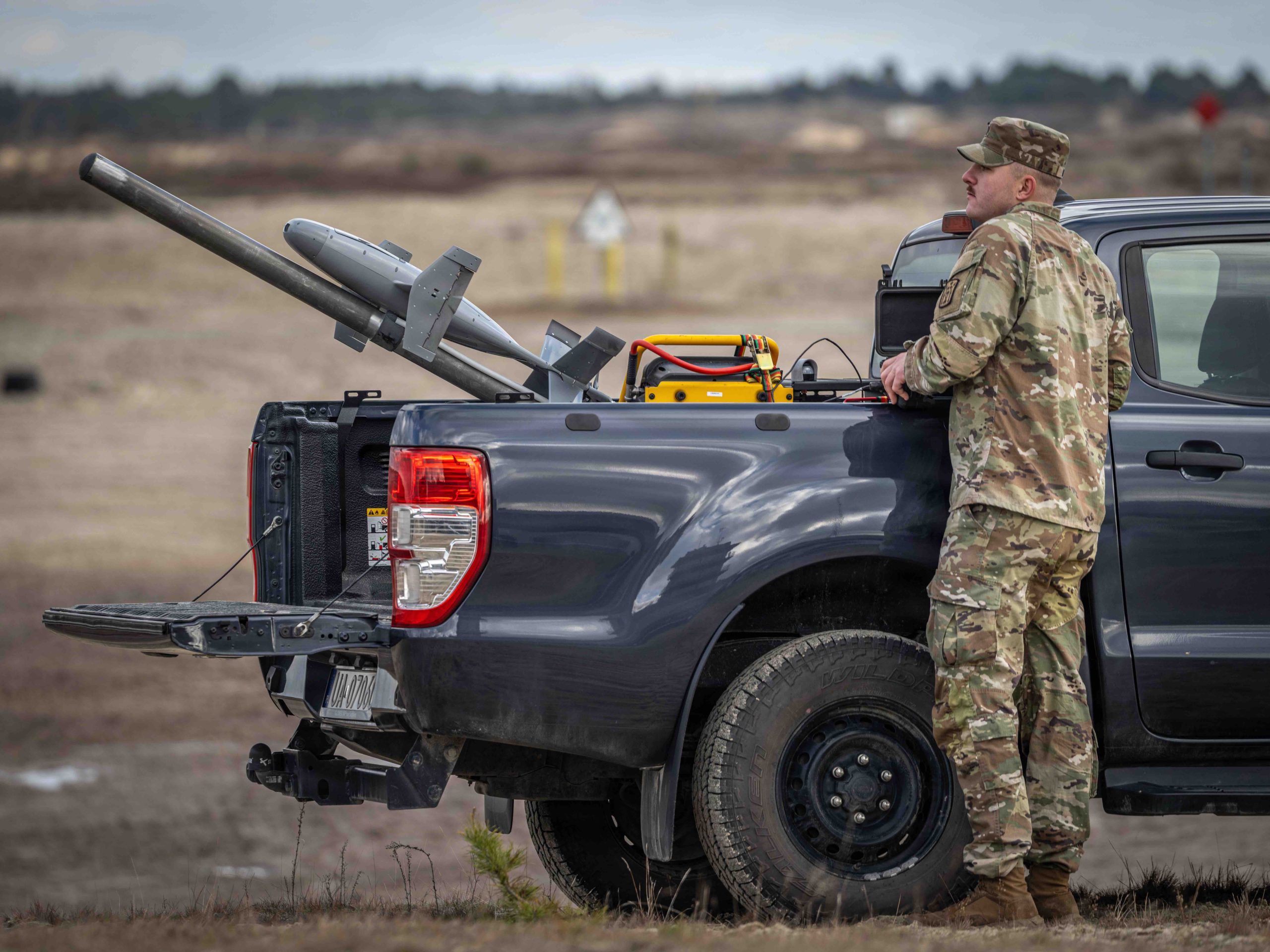
Jamming arguably remains the most popular solution for disabling or degrading drones, and can likely claim the highest ‘body count’ among defeat methods, reaching maximum potency against civilian-grade UAS. Besides swamping control signals, jamming can suppress vital satellite-navigation systems and video feed transmissions. Alternately, spoofing can see electronic- or cyber-warfare means transmit misleading instructions to drone PNT (Position, Navigation and Timing) and control systems.
Russian and Ukrainian frontline UAS operators therefore engage in an ongoing cat-and-mouse game switching frequencies periodically to avoid those undergoing jamming—opening windows of operational effectiveness until the enemy inevitably figures out the new ones to jam.
However, more and more UAS are reducing dependency on control-links and satellite navigation by leveraging improved AI autonomy and fiber-optics. The latter maintains the link for old school remote piloting regardless of jamming or altitude. The former allows drones to execute missions without direction.
Russia and Ukraine have also developed methods to sustain even RF-dependent UAS in an EW environment, including repeater relaying drones, self-healing mesh-networking with other nearby drones, and hacking into local cellular networks. Ukrainian drone pilot Serhii Flash has noted in social media that improved networking and multi-band redundancy on newer Russian UAVs requires much denser jamming to overcome.
Trish Navidzadeh, marketing manager at DZYNE made the case to IUS in favor of RF jamming’s continual relevance for military C-UAS. “While autonomy and fiber-optic control reduce reliance on RF command links, the vast majority of threat drones in conflict zones today still rely on RF-based control and GNSS for navigation… Jamming remains a preferred non-kinetic countermeasure due to its low cost, low collateral damage, and rapid response capability.”
Drone Interceptors
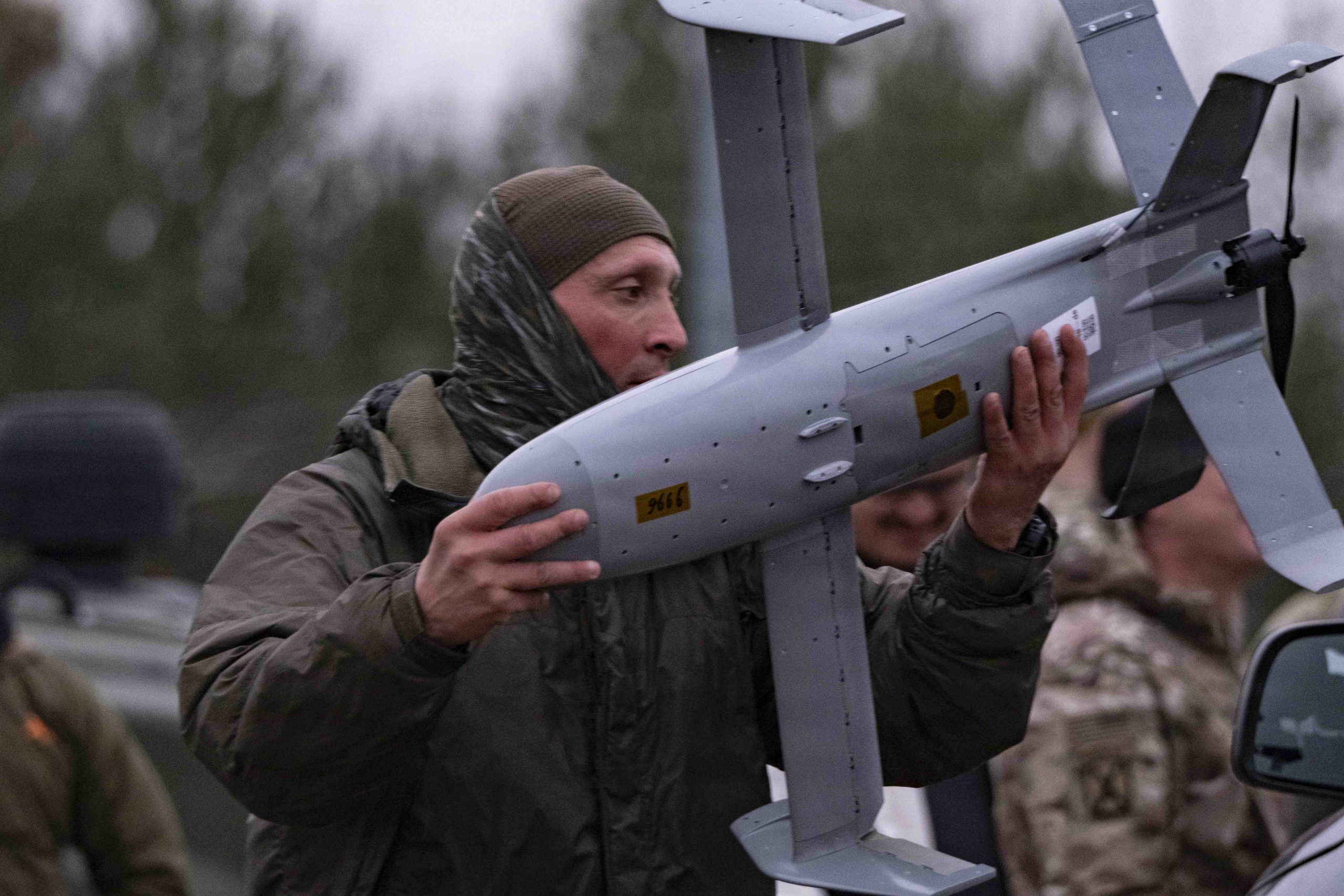
The big buzz you hear now is for drone interceptors. These may yet allow cost-efficient and scalable defeat of enemy UAS. But that’s more theory than reality for the U.S. military at present.
Yes, jet-powered Coyote Block 2 and 3 interceptors deployed from Army LIDS SHORADS systems and U.S. Navy destroyers reportedly kill drones reliably and are cheaper than a Stinger missile—but still not cost-advantageous at $100,000 to $200,000 dollars per unit. Newer Block 3s are reusable, though relatively little has been made public about their operational performance and non-kinetic defeat method.
Another jet-powered interceptor entering U.S. service—Anduril’s Roadrunner—is capable of vertical landing recovery if it doesn’t engage a target, enabling patrol-style deployment strategies. But reports suggest these may cost around $500,000 apiece.
By contrast, Ukraine began large-scale deployment of dedicated FPV drone interceptors in 2024 costing low single-digit thousands of dollars. Attack recordings show such interceptors destroying hundreds of medium-altitude ISR drones of significantly greater cost.
Early interceptors lacked the performance to overtake Shahed-136s, but multiple low-cost Shahed killers began operational service in 2025 that remain significantly cheaper than their targets. These range from the $15,000 AS3 Surveyor interceptor and its MEROPS systems developed with funding by Google CEO Eric Schmidt already in Polish service as well as Ukrainian serive to the $2,100 Sting quad-rotor VTOL interceptor by the Wild Hornets NGO. Meanwhile, General Chereshyna offers the $1,150 AIR Group 2 interceptor with over 5,000 reported intercepts.
Ukraine’s cheaper interceptors have reduced engagement envelopes and kill probability compared to expensive Western alternatives but they are delivering a volume of UAV kills an equivalent cost of 95% solution interceptors couldn’t. Arguably, there’s need for both higher-performance and low-cost interceptors given the need to prepare for different threats and contingencies.
Drone Jammers and Wearable Early Warning Sensors
Portable drone jammers can be pointed at visible drone threats and impose loss of control links and potentially GNSS or video signals.
However, sUAS can be difficult to spot or overhear, so drone guns are ideally paired with early warning sensors. For example, DZYNE’s DTIM kit weighing 8.8-pounds includes a wearable DTI sensor effective out to 4.3 miles providing haptic feedback upon threat detection and directional information via a TAK display. The latest hand-held Drone Buster 4 ‘mitigation system’ incorporates GNSS spoofing capability in addition to control-link jamming.
C-UAS early warning capabilities may eventually be enhanced with augmented reality goggles like those in the Army’s troubled IVAS program currently being recompeted. Such goggles might not only assist with optical detection and highlight approaching threats, but even overlay threats tagged by other sensors sharing a network.
Finally, a Cheap Anti-Drone Missile
The U.S. defense industry does deserve credit for operationalizing and successfully combat deploying at least one cost-efficient counter-drone weapon for jet fighters: the laser-guided Advanced Precision Kill Weapon System II. It’s a conversion of cheap unguided 70-millimeter rockets to home on illuminated targets using a laser seeker. At around $30,000, these are roughly cost-equal to Shahed drones.
American C-UAS in Action
The U.S. military began its modern C-UAS efforts in 2015 in response to ISIS’s use of UAS in Iraq, fielding by the 2020s a new generation short-range air defenses and EW systems including MADIS, Coyote Block 2 and 3, APKWS Block 2 rockets, and LIDS systems.
These technologies finally saw larger scale combat testing in the series of interrelated Middle Eastern conflicts triggered by the Gaza War beginning in October 2023. U.S. air, ground and naval forces in the region combatted hundreds of strike drones launched by Iran and its regional allies, either at U.S. bases and ships, civilian shipping, or Israel.
CNAS’s report sheds new light on aspects of this American C-UAS conflict, which on one level successfully neutralized most drone threats, averting major loss of life—though at alarming expenditures of resources and in the Red Sea, without achieving strategic objectives.
10th Mountain Division in Iraq, Jordan and Syria 2023-2024
Eight U.S. bases in the Middle East sustained 170 attacks between October and July 2024, primarily by strike drones. Initial attacks saw U.S. forces disable only two of four drones, failing to prevent a hangar strike. But troops primarily from 10th Mountain Division’s 2nd Brigade Combat Team adapted and eventually downed 80% of subsequent drones, including 28 by three ‘drone aces’, none of whom were air defense specialists.
The primary threats were various Iranian strike drones: Shahed-101/Murad-5s, Shahed-131s and -136s, and Ababil-2/Quasef designs. Most were disabled in fully manual engagements taking between 30 to 120 seconds. Older radars typically detected drones from just 4 mile range while also picking up numerous false tracks, leaving defenders less than 60 seconds to engage. Old software requiring 14 clicks to execute an engagement, and the need to consult multiple screens due to lack of common operating picture further slowed C-UAS engagements. Given the time crunch, initial C-UAS procedures requiring positive visual, or signature ID proved too slow.
Surrounding terrain severely impacted detection ranges, meaning each base required different configurations of C-UAS capabilities for effective self-defense. However, the KuRFS-T radar used by Army FS-LIDS units proved effective out to 12 miles and was far better at discriminating against clutter. Following a Shahed strike that killed three sleeping American soldiers at Tower 22 on January 28, 2024, investigators found the incoming threat had been detected but dismissed as birds or clutter. An additional 150 American soldiers were injured by drone attacks during the campaign.
Across bases, C-UAS defenders employed a mix of FS-LIDS, high-energy lasers, LPWS/Phalanx gatling guns, two types of drone interceptors, and prototype C-UAS capabilities. The prototypes all failed, according to Pettyjohn, despite having easily defeated UAVs in the Army’s “sanitized testing and evaluation processes.” Daily resupply of munitions—particularly Coyote interceptors— between the 8 bases also proved challenging and might have proved impossible in a high-intensity conflict.
The attacks were generally not very complex, though attackers adapted by routing around known air defense positions, flying low for terrain masking to delay detection. Reliance on pre-programmed attacks made their strike drones “impervious to jamming.”
Overall, the campaign revealed the need for sensors and weapons that detect and engage strike drones from further away, as strike drones potentially launched from over 100 miles away were only detected and engaged in the last few minutes before flight before impact.
The Red Sea Campaign, Revisited
Over the Red Sea, a U.S. carrier task force supported by Air Force fighters shot down roughly 480 Houthi drones using Standard-series missiles, EW, F-35C and Super Hornet naval jets, land-based F-16s, E-2 Hawkeye early warning planes, Seahawk helicopters, and 5” guns and CIWS close-defense autocannons.
Sensor data was fused from naval SPY-series radars and Hawkeyes using AI-assisted Maven systems to track UAS threats onto a time-delayed common operating picture—though data fusion remained inadequate across combat commands.
Nonetheless, 18% of Houthi attacks managed to strike civilian ships causing some damage and loss of life; none hit warships. There were indirect losses: a Super Hornet fell off a carrier during evasive action against a Houthi drone attack, two more lost in accidents and over a dozen MQ-9s were shot down over Yemen supporting counterstrikes targeting Houthi strike weapons. The Navy expended over a billion dollars of weapons against drones and missiles, particularly 220 costly Standard-series missiles, leaving stockpiles “dangerously low.”
Even the Super Hornet’s short-range Sidewinder air-to-air missiles cost an order-of-magnitude more than an individual kamikaze drone. Conversely, Air Force F-16s supporting the campaign employed cheaper APKWS II rockets. An intensive and expensive bombing campaign aiming to hit drones and missiles ‘left of launch’ failed to stop Houthi attacks but did reduce drone launches by 55%.
Pettyjohn argues the Navy must change its doctrine emphasizing engaging enemies at maximum range and firing two rounds per threat to ensure multiple opportunities to neutralize incoming danger. She argues drone threats must be systematically dealt with by lower cost interceptors, to conserve more expensive and capable weaponry. “Given the scale of the drone and missile threat, a more risk-acceptant shot doctrine may be needed.”
Infiltrated sUAS: Operations Spiderweb and Rising Lion
Analysts have long warned of the threat posed by small drones infiltrated close to high-value assets in ostensibly secure areas. Finally in June, two spectacular mass attacks by infiltrated sUAS provided examples no one could afford to ignore.
In Operation Spiderweb, Ukraine arranged for civilian trucks full of kamikaze drones to be parked near Russian strategic bomber bases. Released remotely on June 1 for mass attacks harnessing Russian cellphone networks for command and control, the unleashed drones destroyed or damaged over 20 precious strategic bombers.
Then on June 13 in the hours of Israel’s air war against Iran, kamikaze drones smuggled into clandestine desert bases near Tehran launched a mass attack against Iranian radars and comms networks, contributing to their shocking ineffectualness in the subsequent two weeks.
Of course, infiltration operations require unique and lengthy planning by intelligence agencies, and significant human and material resources. “Spiderweb took a long time to plan,” Bendett notes, “a year and a half altogether. But given an adversary that’s organized enough and has enough resources, the same can be planned against the U.S.”
Such prominent successes ensure other clandestine services will consider incorporating infiltrated drones into their playbook. For example, technically proficient infiltrators could plausibly acquire and modify civilian UAS for an infiltration attack. And coastal areas with maritime ingress will also remain persistently exposed to UAS from maritime platforms.
Sensitive installations everywhere—not just proverbial rough neighborhoods—require multi-layered C-UAS defenses, including non-RF-based defeat methods to account for autonomous or fiber-optic systems. Ideally, security at Offutt Air Force Base in Nebraska, home to the Air Force’s B-2 stealth bomber fleet, should feel confident it can defeat a Spiderweb-style attack.
Looking Ahead: A Practical C-UAS Action Plan and Shopping List
There are no simple answers to the UAS threat, but analysts agree there are proven cost-effective capabilities the Pentagon can focus its efforts upon, and best practices to integrate into C-UAS training and doctrine.
- Expand and ensure C-UAS training across the force, including use of man-portable or mobile systems
- Evolve naval shot doctrine for cost-efficient rather than maximal C-UAS fires
- Transition key C-UAS technologies, especially HPMs, into programs of record
- Pettyjohn writes the U.S. must procure more Coyotes, “battlefield-proven systems [that] need to be bought, though they are too expensive to be the sole solution.”
- Procure cheaper drone interceptors that can be stockpiled in large volumes
- Field higher resolution passive sensors to reduce vulnerability of active radar systems
- Upgrade maneuver SHORADS systems to match detection range of stationary SHORADS
- Develop AI-driven battle management systems to accelerate and rationalize kill chains
- Field proximity-fused cannon shells to improve C-UAS magazine depth
- Study Ukraine’s C-UAS and IADSs systems evolved under sustained, mass UAV attacks
Future Threats: Magnetic Navigation
As electronic warfare becomes more sophisticated, there’s increased interest in GNSS alternatives, such as using image-matching AIs in conjunction with optical sensors to recognize overflown terrain. Another ‘mapping’ approach involves magnetic navigation, using an optically pumped quantum magnetometer to measure the Earth’s magnetic fields at a given position. Then an AI geo-matches that signature to a unique point on the globe while filtering out diverse ambient clutter, including the mounting vehicle itself. Jamming the earth’s own signature would require extreme energy output and proximity.
SandboxAQ, an Alphabet spinoff focused on developing practical magnetic navigation technology, has already had its AQNav solution test-flown on an MQ-9 Predator drone. But IUS inquired, can it be miniaturized for use by smaller drones too?
“As magnetic sensors have continued their steady march down in SWaP+C, we anticipate that Group 3 platforms will soon be able to host these advanced alternative positioning systems,” says Luca Ferrara, SandboxAQ’s general manager of Navigation. He said typical Group 3 altitudes and operating ranges, combined with smaller size (making them easier to calibrate discrimination) make them good targets for magnetic-based techniques.
As China has invested 3-5 times more in quantum research than the U.S. and EU combined ($15-17 billion), such technologies might well make their way onto adversary UAS, reducing dependence on GNSS.