
After seven years of development, the government-owned Athena integration kit has reached initial operating capability for the National Capital Region, fusing multiple counter-UAS sensors into a single air picture for faster detection and response, according to CONR-1AF and Army officials.
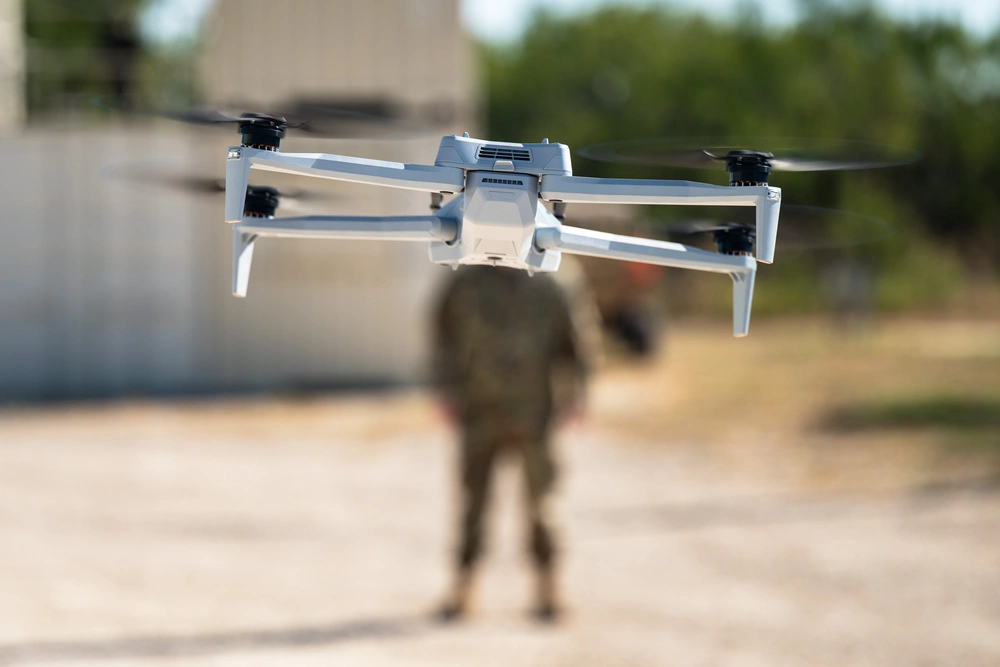
Beneath the routine airline and general aviation traffic over Washington, D.C., a new counter-UAS integration layer is now part of the region’s air defense architecture.
After seven years of collaboration and development, the Athena Counter-Unmanned Aircraft System (C-UAS) integration kit has achieved initial operating capability (IOC), strengthening the ability of U.S. forces to detect, identify and respond to unmanned aerial threats in the National Capital Region (NCR), according to a recent announcement from the Continental U.S. North American Aerospace Defense Command Region – First Air Force (CONR-1AF) and the U.S. Army Combat Capabilities Development Command Aviation & Missile Center.
Assessed as IOC jointly by CONR-1AF (Air Forces Northern & Air Forces Space) and DEVCOM Aviation & Missile Center, Athena is described as a government-owned, cyber-accredited capability directed for placement by the commander of NORAD and U.S. Northern Command (USNORTHCOM). The system is designed to provide a fused, actionable air picture to multiple command-and-control (C2) user interfaces supporting defense of the NCR.
“The Athena system represents a pivotal advancement in our ability to safeguard the skies,” said Lt. Gen. M. Luke Ahmann, commander of CONR-1AF (AFNORTH & AFSPACE), in the release. “It amplifies our counter-UAS capabilities by providing a single, integrated air picture, enabling us to detect, track, and neutralize threats with greater speed and precision. This is a critical tool for homeland defense in the 21st century.”
Sensor Fusion and Discrimination
Athena is built to perform three core functions for operators: system integration, sensor fusion, and identification or discrimination of UAS activity. Rather than adding yet another standalone sensor, the kit ingests data from multiple agencies’ C-UAS systems and produces a single, weapons-quality track for any detected unmanned aircraft.
Its discrimination capability fuses identification data to distinguish between small UAS and other objects detected in the sensor network, reducing ambiguity for operators watching the airspace. The resulting common operating picture is forwarded to several key C2 systems, giving decision-makers a unified view rather than a patchwork of separate feeds.
“Athena fuses information from multiple sensors to produce a more precise track than any individual sensor can provide,” said Lt. Col. Nicholas Detloff, division chief for CONR-1AF (AFNORTH & AFSPACE) A8C Strategic Requirements. “As a government-owned system, Athena also provides a cost-effective means of evolving with emerging threats.”
Part of a Layered Homeland Defense
CONR-1AF serves as the air component for USNORTHCOM and is responsible for air defense of the continental United States, the U.S. Virgin Islands and Puerto Rico, providing airspace surveillance and control for North America. Officials frame Athena’s IOC as part of that broader layered defense mission, particularly as small UAS and low-altitude threats continue to challenge traditional radar and air defense architectures.
By design, Athena does not replace existing C-UAS systems around the National Capital Region. Instead, it knits together a distributed network of sensors into a single, coordinated picture, giving commanders and controllers a clearer view of low-altitude air activity and helping them distinguish true unmanned threats from benign objects.
The successful deployment in the NCR, CONR-1AF said, reflects an ongoing emphasis on innovation and inter-agency collaboration in homeland defense—linking Air Force and Army development efforts with NORAD and USNORTHCOM’s operational requirements.
As small UAS incidents continue to test air defense and security procedures around critical sites, the Athena integration kit provides a glimpse of how future C-UAS architectures may evolve: less about adding individual sensors, and more about fusing what’s already in place into a common, decision-ready picture.