

At a December 3 hearing, lawmakers, OEMs and state aviation officials warned that U.S. leadership in advanced air mobility now hinges on predictable FAA certification, autonomy-ready regulation and new investment in general aviation infrastructure.
A fork in the road for U.S. AAM
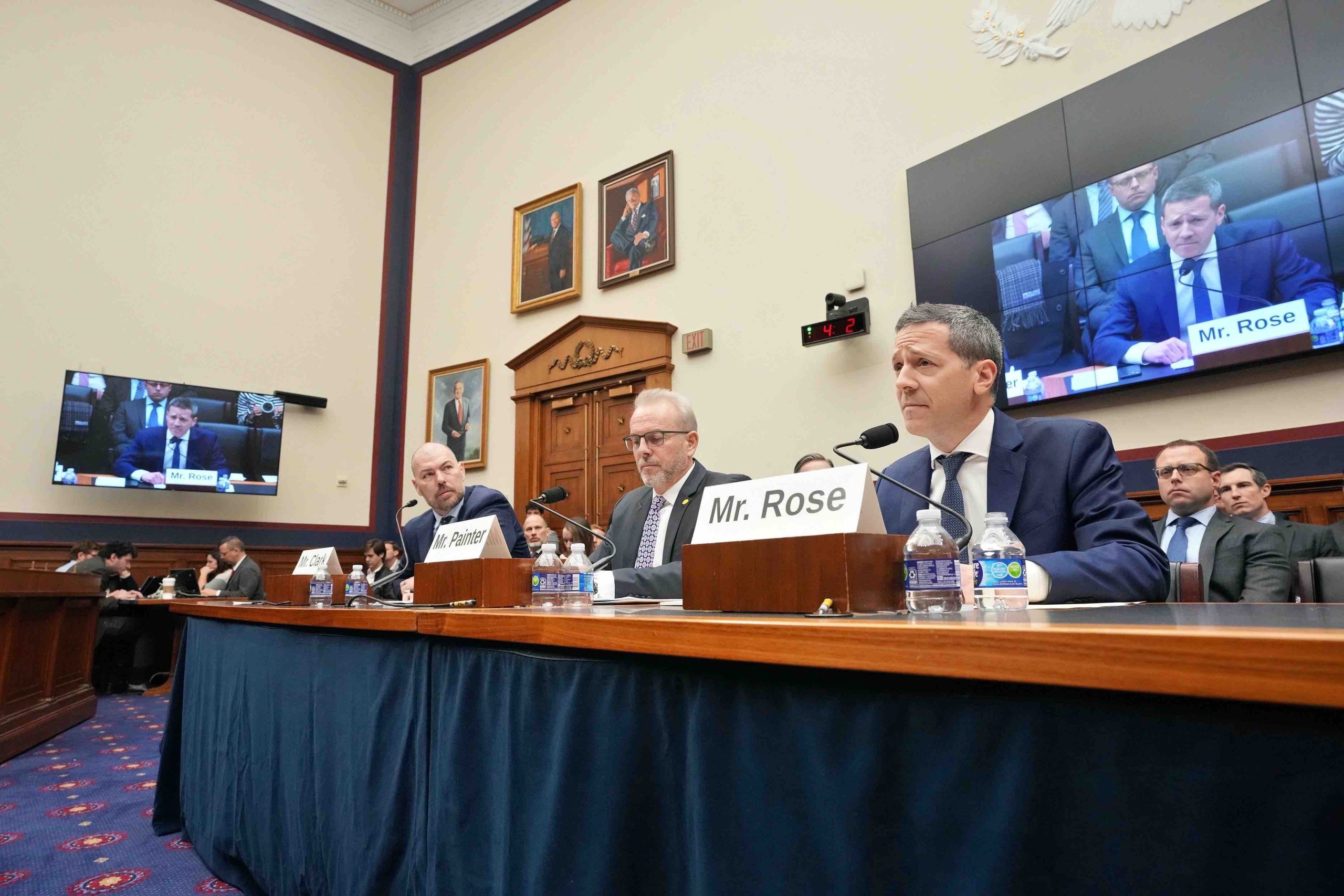
Opening a December 3 hearing on “America Builds: The State of the Advanced Air Mobility (AAM) Industry,” Aviation Subcommittee Chair Troy Nehls (R-TX) cast the moment as a binary strategic choice. The U.S., he said, can “embrace and unleash American innovation,” or “carry on with the status quo and watch as other nations surpass us in new and emerging technology.”
Nehls cited a 2021 industry projection that the AAM market could reach $115 billion annually by 2035 and support more than 280,000 high-paying jobs, but underscored that “no one has a type certificated (TC) aircraft yet.” He pointed to the 2024 FAA reauthorization, which for the first time included a dedicated AAM subtitle and required a powered-lift Special Federal Aviation Regulation (SFAR), now a year old, and highlighted the Administration’s new e-VTOL Integration Pilot Program (eIPP) as a successor to the UAS Integration Pilot Program.
The chair also tied the AAM discussion directly to broader air traffic control modernization. While the FAA expects initial powered-lift operations to resemble traditional aviation, he noted, they are ultimately anticipated to rely on increasing levels of autonomy—meaning any redesign of the NAS and ATC system has to assume new classes of aircraft and new operating concepts from the start.
Industry: ready to scale, but needs a predictable rulebook and autonomy pathway
OEM and technology witnesses largely agreed with Nehls’ framing: the U.S. is well-positioned to lead—but not guaranteed that outcome.
BETA Technologies CEO Kyle Clark called this “a pivotal moment in aviation history,” arguing that “new and emerging technologies present an unprecedented opportunity to cement American leadership in 21st-century aerospace innovation.” BETA has moved from R&D into manufacturing, with a fixed-wing electric ALIA CTOL backed by an orderbook of “over $1.3B in aircraft, all contingent upon FAA certification,” and a VTOL variant with a $2.5 billion backlog of firm orders and options. To build public confidence, Clark said BETA has logged “more than 100,000 nautical miles and land[ed] at over 380 airports,” including all-electric flights into JFK and Hartsfield-Jackson.
Clark praised Congress for including an AAM title in the FAA reauthorization and for allowing AIP funding to be used for AAM infrastructure, but warned that “uncertainty around when and how policy and guidance is developed” and reluctance to fully use FAA delegation are now key bottlenecks. BETA’s recommendations: “more dynamic efforts to recruit, retain, and train a highly skilled technical workforce,” “increased predictability and transparency” around certification timelines, and “more consistent use of delegation” so FAA specialists can focus on truly safety-critical issues.
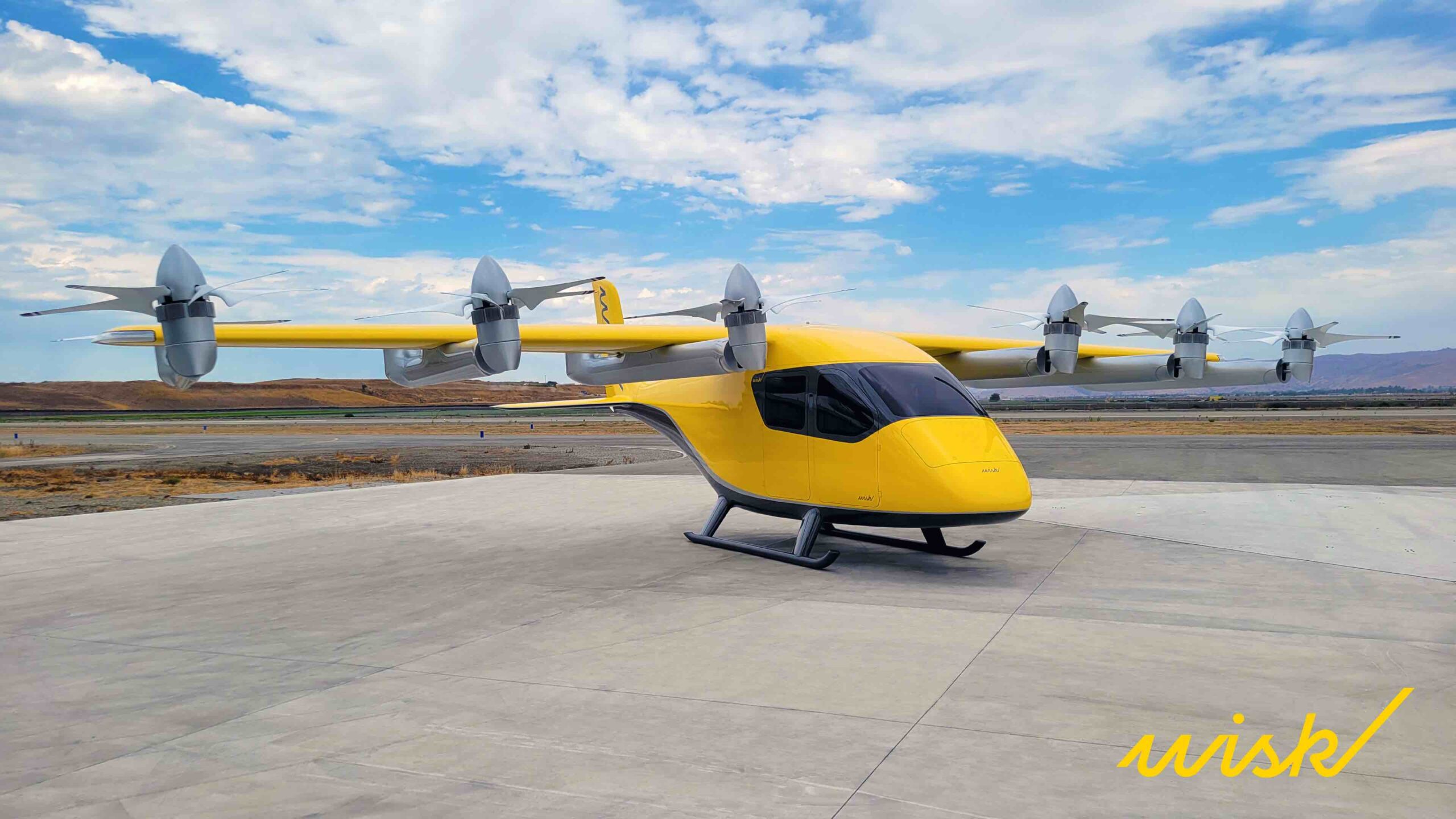
Wisk Aero CFO Tyler Painter made the case that autonomy is now central to U.S. AAM leadership. Wisk, a Boeing subsidiary, aims “to be the first to design and manufacture an FAA-certified, autonomous passenger-carrying air taxi,” drawing on “fifteen years and six generations of aircraft” to integrate its Gen 6 into the NAS. Autonomy, he argued, “is not a new or radical advancement in aviation, but rather an evolution of what exists today,” noting that “increasing levels of autonomy have and will continue to improve safety.” Wisk’s model uses no onboard pilot; instead, “remote crewmembers will supervise and communicate with Air Traffic Control (ATC),” and aircraft will initially fly “along pre-determined routes to pre-determined destinations” to keep integration predictable.
Painter cast the U.S. AAM National Strategy and the new eIPP as “a key vehicle” to build a regulatory framework for autonomy, and tied that work to ATC modernization. He pointed to existing technology that can “future-proof” the NAS, including digital airspace management tools now being developed by Wisk and affiliate SkyGrid, and called out the new Center for Advanced Aviation Technologies (CAAT) in Texas as a “key provision” of the 2024 reauthorization for unlocking autonomy elements.
Reliable Robotics CEO Robert Rose focused on bringing autonomy into the existing fleet as a safety tool and connectivity enabler. Reliable’s Autonomy System is being certified on the Cessna 208 Caravan to provide “auto-land, auto-taxi, auto-take off, automated collision avoidance, in the air and on the ground, fully automated contingency management and full aircraft autonomy,” with the goal of enabling FAA-certified remotely piloted cargo operations and providing detect-and-avoid capabilities via an in-house phased-array radar.
In parallel, Reliable operates Reliable Airlines, a Part 135 carrier that “flies six Cessna Caravans” and “over the next two years will become the first commercial air carrier in the United States to operate remotely piloted cargo flights that are fully integrated into controlled airspace.” On the defense side, Rose highlighted a $17.4 million Air Force contract to operate an autonomous Caravan with Pacific Air Forces for contested logistics, arguing that a dual-use Caravan with a defined certification path offers capabilities “for a fraction of the cost” of exquisite military UAS.
Rose’s policy asks tracked closely with Nehls’ concerns on ATC and infrastructure. He urged Congress to:
- Reinstate and expand the ADS-B Out rebate program to equip 50,000 aircraft, and prioritize FAA-accepted standards for low-cost and portable electronic conspicuity devices.
- Make completion and fielding of ACAS X a “top priority” as a safety-enhancing replacement for TCAS II and as an enabler for eVTOL, UAS and GA collision-avoidance.
- Treat transition to a Voice over IP Communications Enterprise (VoICE) as a core ATC modernization deliverable, including “real-time, safety-critical, party-line-enabled communication between users on the ground, such as remote pilots and ATC” to support scaled remotely piloted operations.
Taken together, the industry witnesses suggested that the U.S. is close to fielding certified electric, autonomous and remotely piloted aircraft—but that leadership will depend on how quickly the FAA can implement the reauthorization’s integration mandates, stand up new offices like the Airspace Modernization Office, and apply existing tools like delegation and TSOs to new technologies.
States: GA airports, harmonized policy and public buy-in as the launch pad
From the state and local perspective, National Association of State Aviation Officials (NASAO) president Greg Pecoraro stressed that AAM’s success will ultimately be tested “on the ground” at airports, in planning offices and in communities.
“Advanced Air Mobility has enormous potential to improve access to the aviation system for Americans in every part of the country,” he said, but “AAM needs to be safely and efficiently integrated into the existing aviation system.” State aviation agencies, he noted, “will be essential in enabling AAM operations through planning, zoning, site approval, licensing, airspace protection and funding, just as they have historically played for other aviation facilities.”
Pecoraro highlighted NASAO’s AAM Multistate Collaborative—“nearly 40 states” now participating—as a forum to align state-level policy and infrastructure and to provide feedback to federal partners on what rules will work in practice. Early consensus, captured in a series of topic papers, includes that:
- “Policy harmonization between states and relevant standards entities is vital for cohesive governance and successful integration of AAM.”
- “General aviation airports are well positioned to support near term AAM operations,” but will need “additional infrastructure investments… including enhanced navigation, communications, and safety systems.”
Several states have already moved from concept to action—commissioning studies, forming task forces and updating land-use guidance. Florida has developed a land-use compatibility and site-approval guide for vertiports; California is updating long-standing airport land-use frameworks to incorporate vertical infrastructure; Georgia has published a community guidebook for local AAM planning; North Dakota has invested in the VANTIS statewide BVLOS network; Virginia has launched an AAM test-site program; and Massachusetts and Michigan are beginning to treat airports as energy hubs, with projects such as a smart microgrid at Cape Cod Gateway Airport and multimodal chargers at Michigan airports.
Pecoraro’s bottom line for federal partners: as AAM “promises an extensive expansion of aviation activity across the country,” state aviation agencies need to be “full partners in the planning and policy development process,” with strengthened FAA–state collaboration to clarify gray areas and manage local equities.
Leadership still up for grabs
Across the panel, the message was that last year’s FAA reauthorization and the new SFAR and eIPP are necessary steps, but not sufficient on their own. Industry is building aircraft, autonomy systems and airport-based charging networks; states are positioning GA airports and updating planning frameworks; and Congress has put real money into ATC modernization.
Whether this translates into certified AAM fleets, integrated autonomous operations and durable U.S. leadership will depend on how quickly the FAA and its state partners can turn those frameworks into predictable certification pathways, interoperable infrastructure and day-to-day operational practice—before other nations advance more quickly and foreign competitors fill the gap.