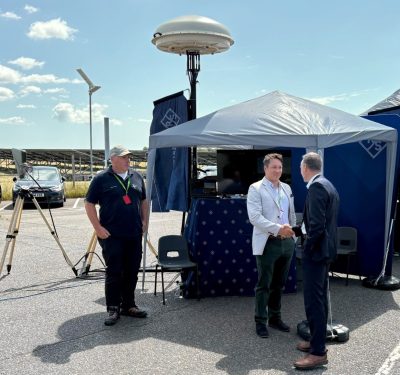

AeroVironment’s CEO Wahid Nawabi discusses how defense needs are shifting, and why the company is well positioned to be the leading neoprime in the market that’s emerging.
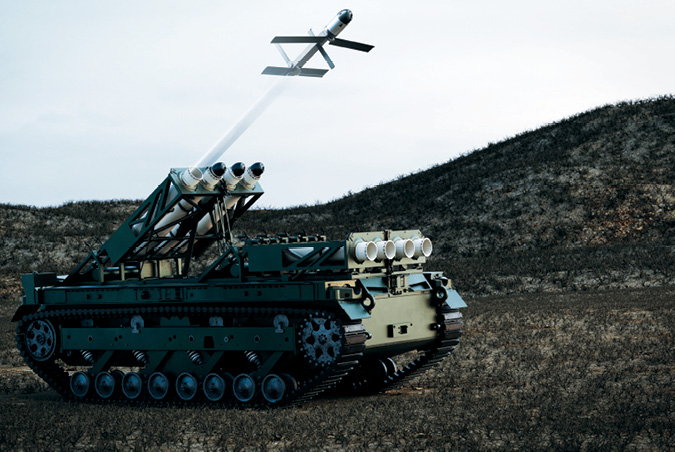
For years, AeroVironment (AV) could be understood through the platforms it built. That framing no longer captures either the company’s ambition or the defense market now taking shape around it.
In a recent conversation with Inside Unmanned Systems, CEO Wahid Nawabi made a larger argument. “We are the best example of a neoprime or a defense tech prime, that are out there,” he said, then quickly explained why he believes that claim is defensible. The next durable edge in defense, in his view, will not belong to the company with the flashiest prototype or the loudest autonomy pitch. It will belong to the one that can scale production, integrate capability, and deliver affordable mission systems in the real world.
Nawabi’s case begins with a distinction that is both simple and important. Building a prototype, he argued, is the easy part. “Less than 10% of the effort is in making prototypes and claiming you can do it,” he said. “Ninety percent of the effort is, can you make it in scale? Can you produce it in volume? Can it actually transition into a program of record?”
That statement does more than express his view of the market; it establishes the standard by which he wants AV to be judged: not on promise alone, not on a one-off demonstration, but on the ability to move from concept to production, from production to fielding, and from fielding to repeatable performance and operational trust.
That is where Nawabi believes AV is different from many of the companies now described as neoprimes. In his telling, the company’s advantage is not novelty. It is accumulated execution. “We’ve got a proven track record of actually transitioning new products into full-rate production and program-of-record execution,” he said. “We’ve already figured out how to scale.” He pushed that point further by tying it to customer behavior. “We already have customers who have said, ‘You can do it, you’ve done it, and you will do it again for us.’” In other words, the company does not see itself as trying to break into a new market from the outside. It sees itself as extending a long-developed capability into a market that is finally rewarding scale, field performance, and integrated operational value.
BREAKING THROUGH THE NOISE
The current defense market is crowded with claims. Many firms can show a promising airframe, a clever subsystem, or a compelling autonomy story. Far fewer can point to repeated transition from internal investment to fielded product, and then from fielded product to sustained customer use in more than one theater. Nawabi returned to this theme again and again. His message was not glamorous, but it was direct. The hard part is not proving something can work once. The harder task is proving that it can be produced in volume, delivered on schedule, and trusted enough to generate repeat business. That is a disciplined message in a market that often favors youth, speed, and excitement. It is also a message that feels increasingly aligned with what many defense buyers are looking for now.
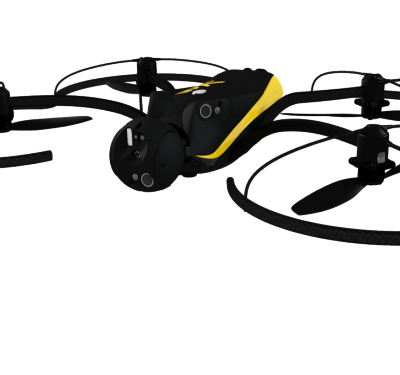
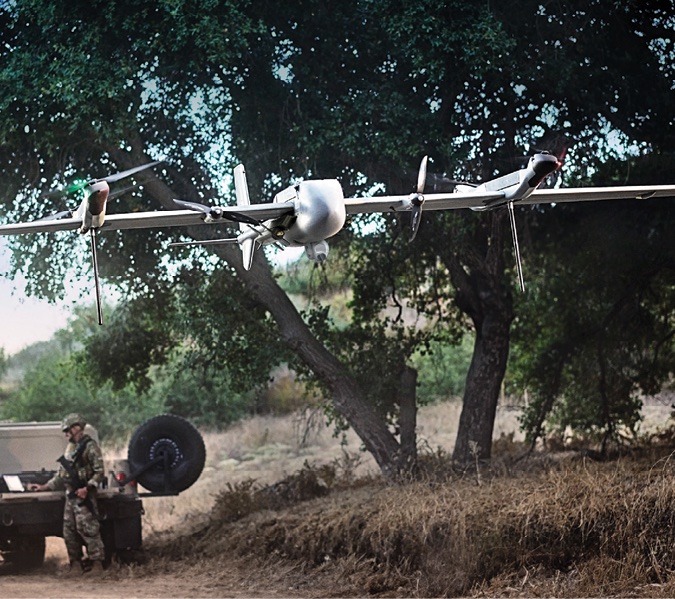
If one program illustrates that mindset, it is JUMP 20X. Nawabi used the platform not simply as a success story, but as evidence of disciplined conviction. AeroVironment’s earlier bet on Arcturus was, in his account, the product of careful judgment. “We chose them because we said they had figured it out, and they’re ahead of everyone else, and that solution has a lot of legs,” he said. That confidence did not disappear when procurement pathways moved in less rational directions. AV did not back away. “We did not take our foot off the gas in terms of investment,” Nawabi said. “I doubled down. I said, ‘Let’s go develop JUMP 20X because the customers want it.’”
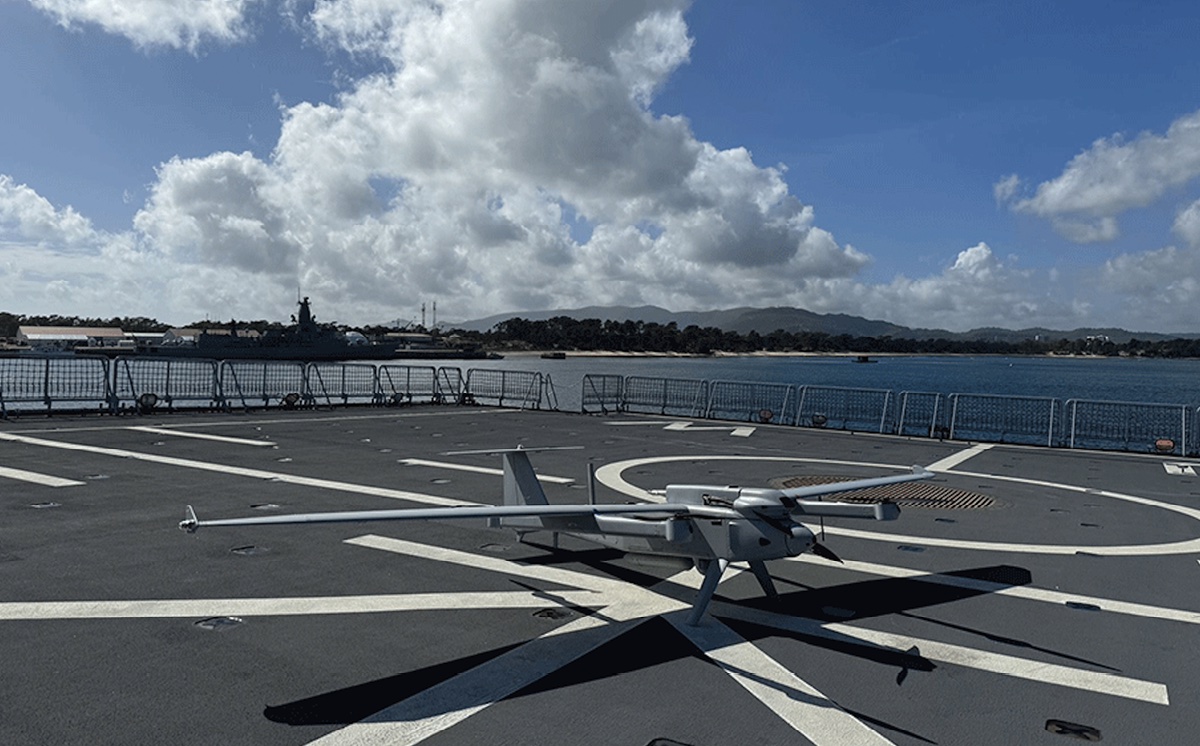
That line captures the company’s larger self-image. AV wants to be seen as a firm that stays close to mission need, even when the requirements process drifts. Nawabi described JUMP 20X as a system built around a specific operational demand. “JUMP 20X is specifically for the U.S. Navy,” he said, noting that the platform was designed to be marinized, powered by a heavy-fuel engine suitable for saltwater environments, capable of withstanding turbulence, and able to execute autonomous takeoff and landing. In that telling, the platform is not simply a derivative product. It is a direct response to real operational requirements, refined through persistence rather than shaped by fashion.
The recent Navy ISR selection, together with growing international traction, gave Nawabi grounds to present that persistence as validation. “That’s not a surprise to us that our system is prevailing and winning,” he said. “Our platform is performing and our system is actually achieving the mission sets of our customers, and the customers are saying, ‘This is what I need. I’ve used it. It works.’” He reinforced that point with a practical measure of momentum: “We are tripling the production of JUMP 20X.” That significance is not simply that the platform secured a win. It is that AV sees the outcome as evidence that sustained investment and production discipline can endure procurement volatility and ultimately align with operational demand.

BLUEHALO: A CAPABILITY INTEGRATION MOVE
BlueHalo becomes important here as a capability integration move rather than simply an acquisition story. Nawabi framed the deal less in financial terms than in terms of what it adds to AV’s operational stack. “We realized we needed these additional capabilities in the portfolio to operate as a true all-domain player and deliver an integrated, interoperable solution,” he said. He cited RF communications, long-haul laser communications, RF jamming systems, directed energy, and cyber capability as the critical additions. BlueHalo does not just broaden the portfolio; it helps AV connect ISR, loitering munitions, autonomy, and defensive systems into a more coherent mission architecture and ecosystem.
His own summary of that logic was expansive and emphatic. “When you put these things together, then you have the most powerful, compelling value proposition of an integrated system on the face of this planet,” he said. Even allowing for executive confidence, the statement is revealing. Nawabi is not arguing that BlueHalo simply gives AV more capabilities to sell. He is arguing that it expands what the company can credibly deliver. The acquisition matters because it helps AV connect sensing, communications, electronic warfare, cyber operations, and effectors into a more complete operational stack—one that supports greater interoperability, mission adaptability, and systems-level relevance. That is a much larger claim than product adjacency. It is a claim about delivering a more integrated and operationally coherent defense offering.
Nawabi also made clear that integration is hard work. “We’re very aggressively integrating with the two companies at very deep levels,” he said. “We’re moving product lines across the businesses already.” He added, “it’s a lot of work, but I think it’s setting us up for a lot of success in the years to come.”
AeroVironment understands integration not as a label, but as an operational process. The company appears to know that customers who want interoperable systems will not be satisfied by a portfolio slide. They will want evidence that the pieces are actually being made to work together.
AUTONOMY AS A DISCIPLINE
The same logic carries into Nawabi’s discussion of autonomy. He did not present autonomy as a slogan or as a feature that can simply be layered or bolted onto a platform. He presented it as a long-built discipline tied to computer vision, recognition confidence, mission workflow, and reduced cognitive load. “I invested in AI close to 12 years ago,” he said. He cited an earlier acquisition focused on computer vision and described the problem in concrete terms: “How do you distinguish a T-72 from an Abrams? How do you distinguish a Chinese vessel from an American one? And how do you ensure that recognition is not operating at 50% confidence, but at 95%?”
That framing shifts the autonomy discussion from marketing rhetoric to operational utility. Nawabi is not interested in autonomy as a generic promise, but in whether systems can identify, classify, hand off, and support engagement decisions with greater confidence and lower operator burden. He described a future in which an ISR platform finds a target, passes relevant information directly to another operator or system, and enables a more connected mission chain. At the same time, he drew a clear boundary. “There’s always a man in the loop,” he said. “We believe that it’s going to be a manned loop for many reasons.”
Nawabi was also careful not to overstate the maturity of what already exists. “It’s doable today,” he said of these more connected mission flows, “but it’s not completely, fully integrated at that level of autonomy and automatic, hands-off operations. But that’s the future.” That blend of ambition and restraint suggests AV sees autonomy as cumulative work. It is not a box to check. It is a set of hard problems to solve well enough that different platforms and effects can operate in a more coordinated way.
THE INNER LAYER
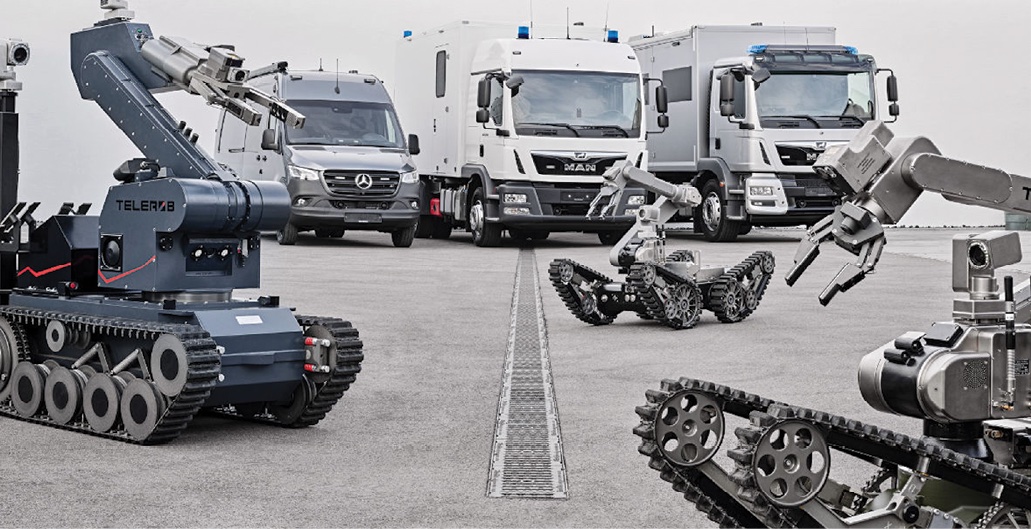
That operational framing became even more concrete when Nawabi turned to Golden Dome and homeland defense. Rather than focus on the more visible outer-layer discussions—hypersonics, ICBMs, and strategic missile defense—he emphasized what he called the “inner layer,” pointing instead to practical scenarios such as drones targeting a stadium or critical infrastructure such as a nuclear power plant. That is where he believes AV has something differentiated to offer. “We have a full solution for it,” he said. The phrase is ambitious, but he supported it by describing a layered system that combines surveillance drones, detection systems, jammers, directed energy, and software within a single operational framework.
He described the architecture as a straightforward operational sequence: identification, classification, geolocation, and mitigation. Mitigation itself, he said, proceeds in layers—jamming first, then directed energy, and finally kinetic defeat. That progression places AV’s unmanned systems, electronic warfare tools, and software investments within a single mission framework. The company is not merely claiming it can detect or defeat a drone. It is claiming it can connect detection, classification, geolocation, and mitigation within a layered defensive system. That is a broader and more serious proposition.
One of the more notable technical concepts in the interview was Nawabi’s description of AV Shield and AV Halo as a tile-based system. “We designed our solution for Golden Dome, with what we refer to as a tile-based system,” he said. The term is useful because it makes the architecture easier to understand. In this framework, a tile represents a layer of capability. One customer may need only detection and classification over a limited area. Another may require broader coverage. Another may need RF defeat. Still another may want a path to directed energy or kinetic integration. “These tiles are completely modular,” Nawabi said. “Every layer of the capability, like a software stack, can be applied and then connected to that other layer.”
That concept also helps explain how AV is thinking about practical customer use. The architecture is not organized around technical possibility alone, but around budget, jurisdiction, and mission need. “The customer decides what site they want to protect, what jurisdiction they have as to how much capability they can apply, and then, by the way, what their budget is in terms of how much they can acquire,” Nawabi said. The point is that layered defense is never purely technical. It is shaped by rules of engagement, procurement constraints, and deployment authority. The tile model gives AV a way to describe modular protection without implying that every customer will need—or be allowed to field—the same stack.

AFFORDABILITY MATTERS
Nawabi recounted a recent conversation with Gen. Michael A. Guetlein, the U.S. Space Force officer leading the Golden Dome effort, and was candid about what surprised him. “For him, affordability was the top priority,” he said. “I thought he was going to say speed of deployment was the top priority. He didn’t.” Nawabi then laid out the hierarchy as he understood it: affordability first, followed by industrial base resilience, cyber resilience, and interoperability. Whether every defense buyer would rank those priorities in exactly the same order matters less than what the list signals: a market increasingly aware that even highly capable systems have limited value if they cannot be fielded at scale, sustained securely, sourced reliably, and integrated across mixed operational environments.
For AV, that hierarchy reinforces the logic behind modularity, software upgrades, and system designs built to scale. Nawabi put it plainly: “Affordability matters, especially when it comes to large-scale deployment across the military.” He then identified interoperability as the next priority. “I think affordability is very important. I would say the next priority is the performance of the interoperability of the system.” He did not treat performance and interoperability as separate issues. In his view, a system that performs well but does not integrate cannot be considered fully capable.
THE NEXT WAVE
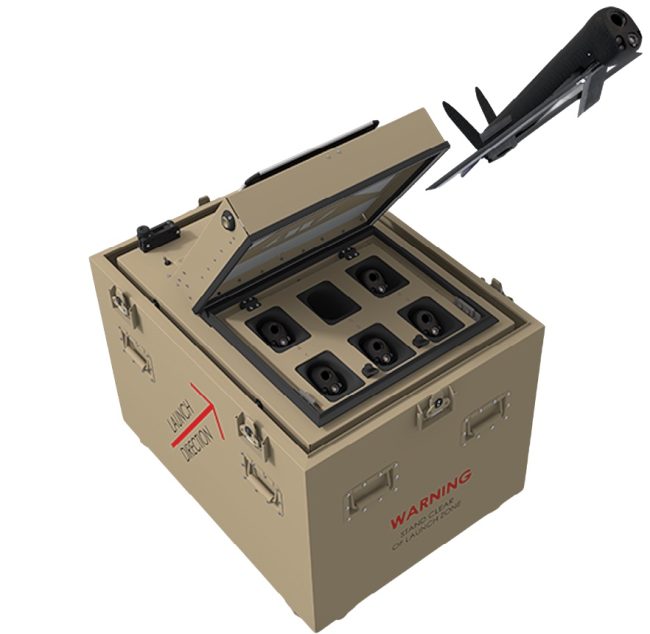
Taken together, Nawabi’s comments offer a theory of where defense value is shifting. In his view, the next winners will be defined less by novelty, prototype visibility, or autonomy as branding than by the ability to turn autonomy into trusted workflow, combine sensing, communications, and effect into coherent architecture, scale production without losing operational relevance, and field systems that meet the increasingly unforgiving demands of affordability, resilience, and interoperability. AV wants to be judged on that terrain—not simply as a drone company, and not merely as a broader portfolio player, but as a company delivering integrated, operationally relevant defense systems. How fully the market embraces that claim is still taking shape. But the argument itself is coherent and, more important, timely. In a defense environment now focused on industrial readiness, layered homeland protection, integrated autonomy, and scalable systems that can move beyond demonstration to repeatable mission value, the market may indeed be shifting. If the next phase of defense competition does favor companies that can produce, connect, configure, update, and deliver at mission speed and acceptable cost, then AV believes the market is moving toward strengths it has been building for years.