

Built around GNSS anti-jamming and visual navigation, the joint IroNav system is designed to let small uncrewed aircraft keep navigating, taking off and landing when satellite signals are jammed, spoofed or unavailable, according to product information.
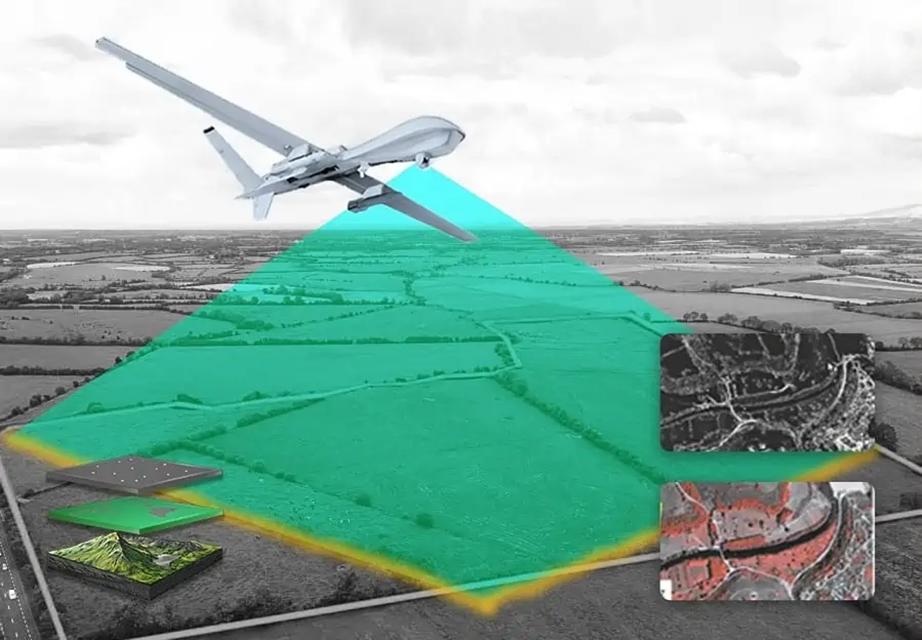
infiniDome and Wonder Robotics have teamed up on IroNav, a navigation package aimed at keeping small uncrewed aircraft on mission through GNSS interference and outright signal loss. The companies describe the system as an “alternative navigation” architecture for UAS operating in modern conflict zones and other contested RF environments, where jamming and spoofing are no longer rare events but a routine part of the operating picture.
At its core, IroNav links Wonder Robotics’ OptiPilot autonomous guidance, navigation and landing pod with infiniDome’s GNSS anti-jamming technology. When satellite navigation is available, the infiniDome layer is designed to protect GPS in real time, hardening the UAS receiver against interference so that autonomous flight controllers can keep using GNSS as their primary reference. If signals become unreliable or drop out entirely, the system hands off to an optical navigation mode that uses onboard vision for positioning and guidance rather than external signals or pre-surveyed maps, the companies’ product materials indicate.
The result is a two-layer navigation stack that tries to treat GNSS disruption as a baseline operating condition rather than an edge case. A “GPS availability voting” function is intended to continuously assess signal quality and decide whether the aircraft should trust satellite data, rely on visual navigation, or fuse the two. According to the companies, that decision logic is meant to prevent the common pattern where a UAS flies normally until jamming pushes the receiver over a threshold, then suddenly drops into a basic failsafe or emergency landing routine.
IroNav is described as being airframe-agnostic, with integration paths for multirotor and fixed-wing platforms, VTOL designs and FPV-class aircraft. Beyond en-route navigation, the system is marketed as enabling autonomous takeoff and landing without GNSS, including operations “on the move” from vehicles and in maritime environments. That capability is aimed at defense, homeland security and civil-protection users who need small UAS to recover to a ship, truck or other moving platform even when RF conditions are degraded.
The collaboration builds on infiniDome’s prior work in GNSS protection and resilient navigation. The company has previously demonstrated anti-jamming capabilities in a UAV-tailored navigation system with Honeywell and Easy Aerial, integrating GPS protection with radar-based velocity sensing and inertial navigation to keep multirotors flying under jamming conditions. infiniDome has also participated in GNSS resilience trials with European partners, where lightweight anti-jamming hardware was flown on UAVs to maintain satellite connectivity under intentional interference.
IroNav lands against a broader backdrop of rising GNSS interference affecting both defense and commercial operations. infiniDome and other vendors have documented what they describe as an exponential increase in interference events over the past decade, with jamming now a routine feature of electronic warfare, border security and area denial strategies that affect aviation, maritime and UAS operations alike. That trend is pushing small-UAS programs to think about resilient navigation as a core enabler for BVLOS, logistics, ISR and emergency-response missions, not just as a niche survivability feature.
infiniDome positions IroNav as a way to bring that level of resilience into smaller platforms that typically rely on a single GNSS receiver and a basic return-to-home protocol. Wonder Robotics, for its part, has been working to automate guidance and landing on complex sites—such as congested urban rooftops and dynamic maritime decks—where GNSS alone may not provide sufficient reliability or accuracy. Together, the companies say, the joint system is intended to give UAS operators a single navigation and landing solution that can ride through jamming, spoofing and other RF disruptions instead of abandoning the mission.