
In a Florida range trial tied to the DoD’s Swarm Forge program, Auterion says a single operator used its Skynode hardware and Nemyx swarm engine to guide three EFP-armed drones against three separate targets, marking what the company calls a global first for lethal, one-to-many small-UAS operations.
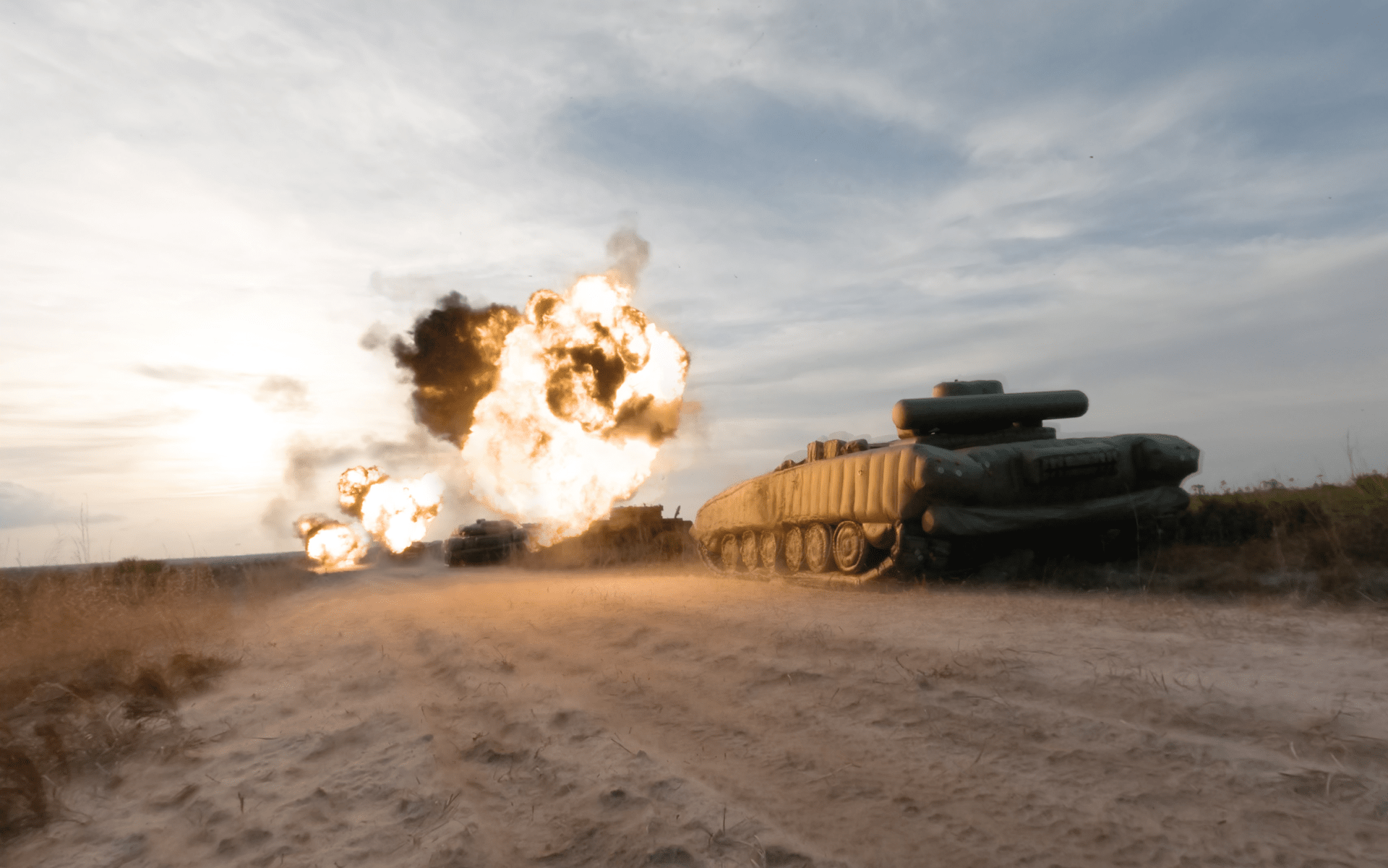
Auterion has conducted a live-fire drone swarm demonstration at a U.S. military range in Florida in which a single operator controlled three autonomous strike drones to hit three separate targets at the same time, a test the company is pitching as a major step toward “autonomous mass” on the battlefield.
In a press release dated January 19, 2026, Auterion said the event took place January 13 at Camp Blanding, Florida, during a Department of War range event attended by Air Force, Army, Navy and Marine Corps personnel. The test was executed with support from Kraken Kinetics, which provided Explosively Formed Penetrator (EFP) warheads integrated on small, attritable unmanned aircraft.
One operator, three targets
According to Auterion, the demonstration is the first time a commercial provider has shown a “true one-to-many lethal strike” with small, expendable systems in a live-fire environment. A single operator assigned objectives and authorized effects for three drones, which then autonomously navigated to and struck three distinct targets with EFP payloads designed to defeat heavy armor.
The company argues that this validated a 1:N operator-to-target ratio under realistic range conditions, turning what has often been discussed as a theoretical advantage of swarming into an operationally demonstrated tactic. Auterion positions this as a direct challenge to traditional first-person-view (FPV) concepts of employment that still assume one pilot per munition.
“The one-pilot, one-drone model is obsolete,” Auterion founder and CEO Lorenz Meier said in the announcement, adding that the test was meant to show how software can determine who brings mass to the fight by allowing a single warfighter to coordinate multiple simultaneous strikes.
Skynode and Nemyx at the core
The Florida event also served as a technology milestone for Auterion’s stack. The company said the demonstration relied on its Skynode avionics and the Nemyx swarm engine, which together handled navigation, formation control, deconfliction and terminal guidance once the human operator set the mission parameters and authorized weapons employment.
Nemyx has been under active development and evaluation over the past year. In a separate report earlier this month, Janes noted that the software has already been used to control a 20-UAV swarm during the U.S. Army’s Joint Pacific Multinational Readiness Center (JPMRC) 26-1 rotation in Hawaii, and that its architecture is built to scale to “hundreds” of unmanned aircraft, according to Meier.
Auterion also tied the live-fire trial to its broader role supplying Skynode strike kits for Ukraine, stating that it has shipped more than 30,000 such kits to support Kyiv’s defense and that the Florida test “completes the equation” by proving a lethal finish to the kill chain using its software-defined approach.
Early look at Swarm Forge
The company described the test as an “early preview” of the Department of War’s Swarm Forge program, which is intended to iteratively test and scale AI-enabled ways of fighting with and against autonomous capabilities by pairing elite military units with commercial technology developers.
By demonstrating simultaneous, precision EFP strikes on three independent targets under live-fire conditions—and doing so with observers from across the services—Auterion is clearly positioning itself as a swarm “prime” for that ecosystem. The company’s messaging emphasizes that swarm tactics are no longer experimental and that software-defined kill chains will allow small units to halt armored formations that previously required dedicated air or artillery support.
From mixed-fleet swarms to lethal mass
The Florida test follows a December 2025 demonstration in Munich in which Auterion brought together eight short-range FPV loitering munitions and two medium-range fixed-wing platforms from three different manufacturers under a single swarm operating system, executing a unified “find, fix and finish” sequence.
In that trial, FPV drones conducted low-altitude engagements while fixed-wing systems provided intelligence, surveillance and reconnaissance (ISR), all coordinated by Nemyx. Auterion and independent reporting from Janes both highlight that these previous events used live payloads and were intended to prove that the same software can manage surveillance UAVs and loitering munitions simultaneously.
With the Florida live-fire strike, Auterion is adding a lethal, one-operator, multi-target engagement to that progression and signaling the direction in which it believes Western unmanned concepts are headed: high-volume, attritable, software-coordinated swarms that compress the kill chain and shift mass and decision speed toward small, distributed units.
The demonstration underscores how quickly swarm autonomy is moving into instrumented range events with joint-service audiences—and how much of that evolution is being driven by software, interoperability and the ability to field affordable mass at scale.