
Joby Aviation has completed the first flight of a turbine-electric, autonomous VTOL demonstrator that blends a hybrid turbine powertrain with the company’s electric air taxi platform and SuperPilot autonomy stack, setting up a new dual-use path that reaches well beyond urban air mobility.
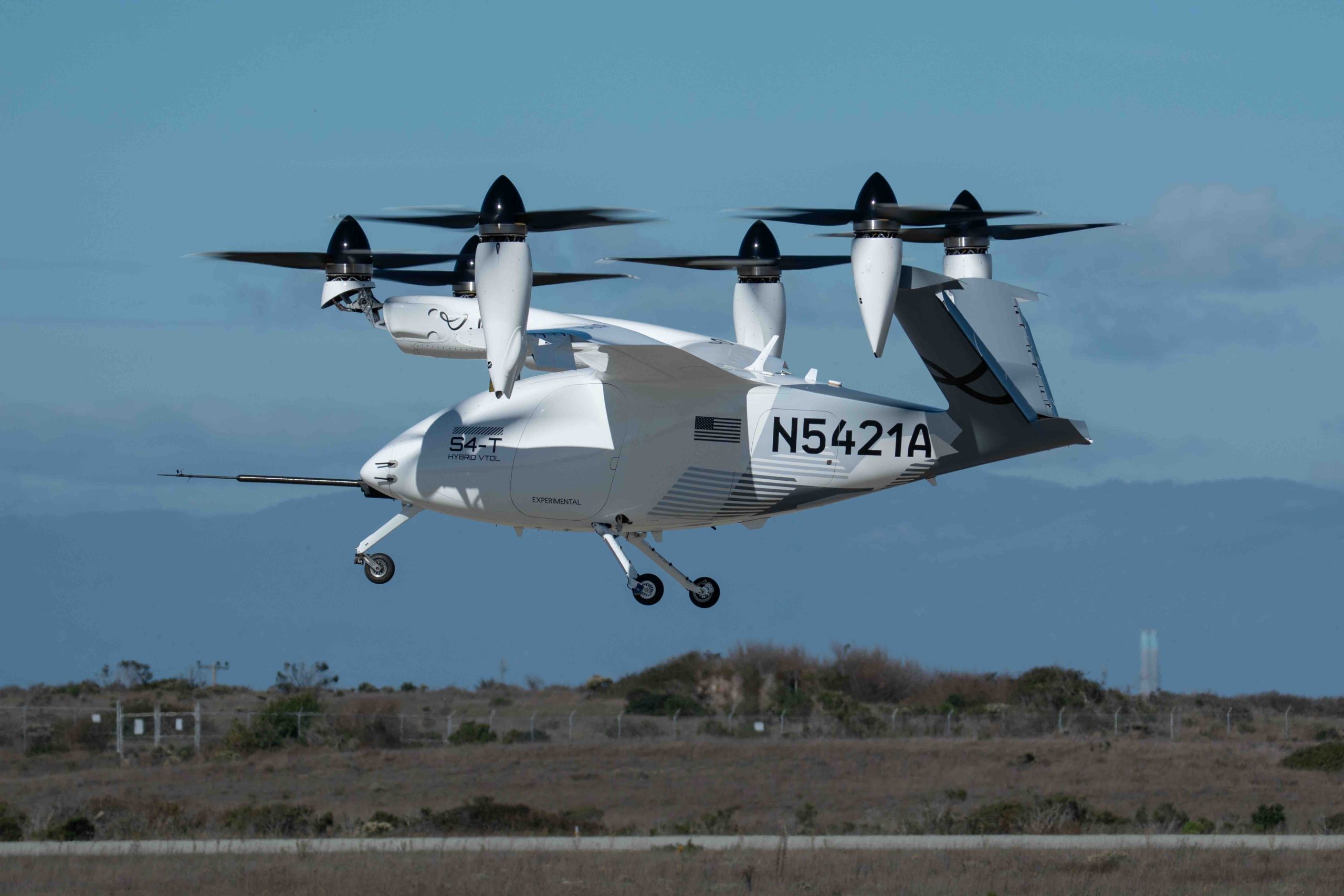
The demonstrator flew on November 7 at Joby’s facility in Marina, California, just three months after the company first outlined the hybrid concept and a new missionization partnership with L3Harris Technologies. Joby announced the milestone in a November 13 press release.
According to Joby, the aircraft is aimed at missions where battery-only eVTOLs struggle: longer-range air taxi routes and higher-payload operations for civilian, commercial and defense users.
Hybrid turbine-electric platform built on a certified eVTOL backbone
The turbine-electric demonstrator keeps the core architecture of Joby’s all-electric air taxi—now in the final stage of FAA type certification after more than 50,000 miles of flight testing—and adds a hybrid powertrain designed to extend range and loiter time.
Joby lists three headline features for the hybrid platform:
- Long range and endurance: Turbine-electric propulsion is intended to support longer routes and extended on-station times for multi-role missions, loyal wingman concepts and contested logistics.
- Agility: As a VTOL aircraft, it can operate from forward or austere locations without runway infrastructure.
- Autonomy-ready: The demonstrator is designed from the outset to use Joby’s SuperPilot autonomous flight technology.
SuperPilot, developed over more than five years, underpinned Joby’s recent participation in REFORPAC, a DOD exercise over the Pacific where an autonomous Cessna 208 logged over 7,000 miles and more than 40 flight hours in and around Hawaii while being managed primarily from Andersen Air Force Base in Guam, more than 3,000 miles away.
L3Harris to missionize the platform for defense
L3Harris will integrate mission systems onto the hybrid demonstrator, bringing its experience in sensors, effectors, communications and collaborative autonomy. The partners plan to begin operational demonstrations with U.S. government customers in 2026.
Joby says the U.S. government has requested more than $9 billion in the FY26 budget for “next-generation platforms” that are resilient, autonomous and hybrid, and positions the turbine-electric aircraft as a candidate for roles such as:
- Contested logistics and resupply
- Loyal wingman support to crewed aircraft
- Low-altitude support missions in complex airspace
“The future battlefield relies on unmanned systems augmenting manned platforms,” said Jason Lambert, President, Intelligence, Surveillance and Reconnaissance, L3Harris. He said the partnership is aimed at accelerating missionized VTOL aircraft to meet defense requirements.
Dual-use development and vertical integration
Joby is framing the turbine-electric demonstrator as a proving ground for both its hybrid propulsion roadmap and its autonomy stack, with benefits expected on the commercial side as well.
CEO and founder JoeBen Bevirt said the company’s vertically integrated approach—owning the aircraft, propulsion, software and autonomy—allows it to move from “concept to demonstration” and then on to deployment more quickly than traditional aerospace programs.
He also emphasized the “magic of dual-use technology,” arguing that tailoring the hybrid VTOL for Department of War needs advances the maturity of Joby’s hybrid and autonomous systems, which in turn should help unlock commercial use cases such as longer-range VTOL routes and autonomous operations in civil airspace.
What’s next
Following the initial Marina flight, the turbine-electric demonstrator will continue ground and flight testing before transitioning into government-focused operational trials in 2026.
For the unmanned and autonomy community, the program is worth watching on several fronts:
- It tests whether a hybrid VTOL can bridge today’s gap between urban eVTOL missions and the range and payload requirements of defense and regional mobility.
- It provides an early example of integrating a certification-bound commercial eVTOL platform with a missionized, autonomous configuration for government users.
- It extends Joby’s push into autonomous ISR and logistics concepts, building on the REFORPAC exercise and the company’s broader SuperPilot roadmap.
If the turbine-electric demonstrator performs as advertised, it could become a template for how certified eVTOL architectures are adapted into hybrid, autonomous platforms for both commercial and military missions—an increasingly important theme across the advanced air mobility and unmanned aviation sectors.