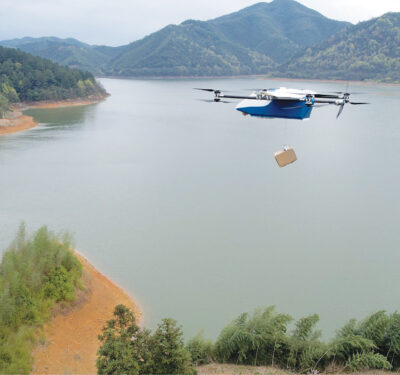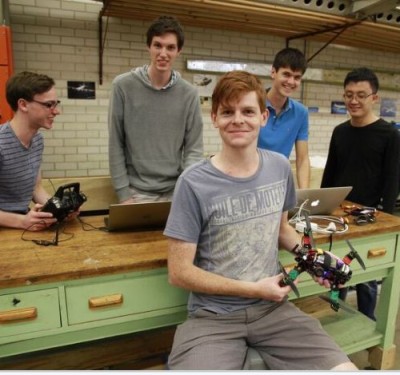

Michigan is merging its automotive heritage, geographic diversity, and educational capacity into a coordinated Advanced Air Mobility (AAM) strategy.
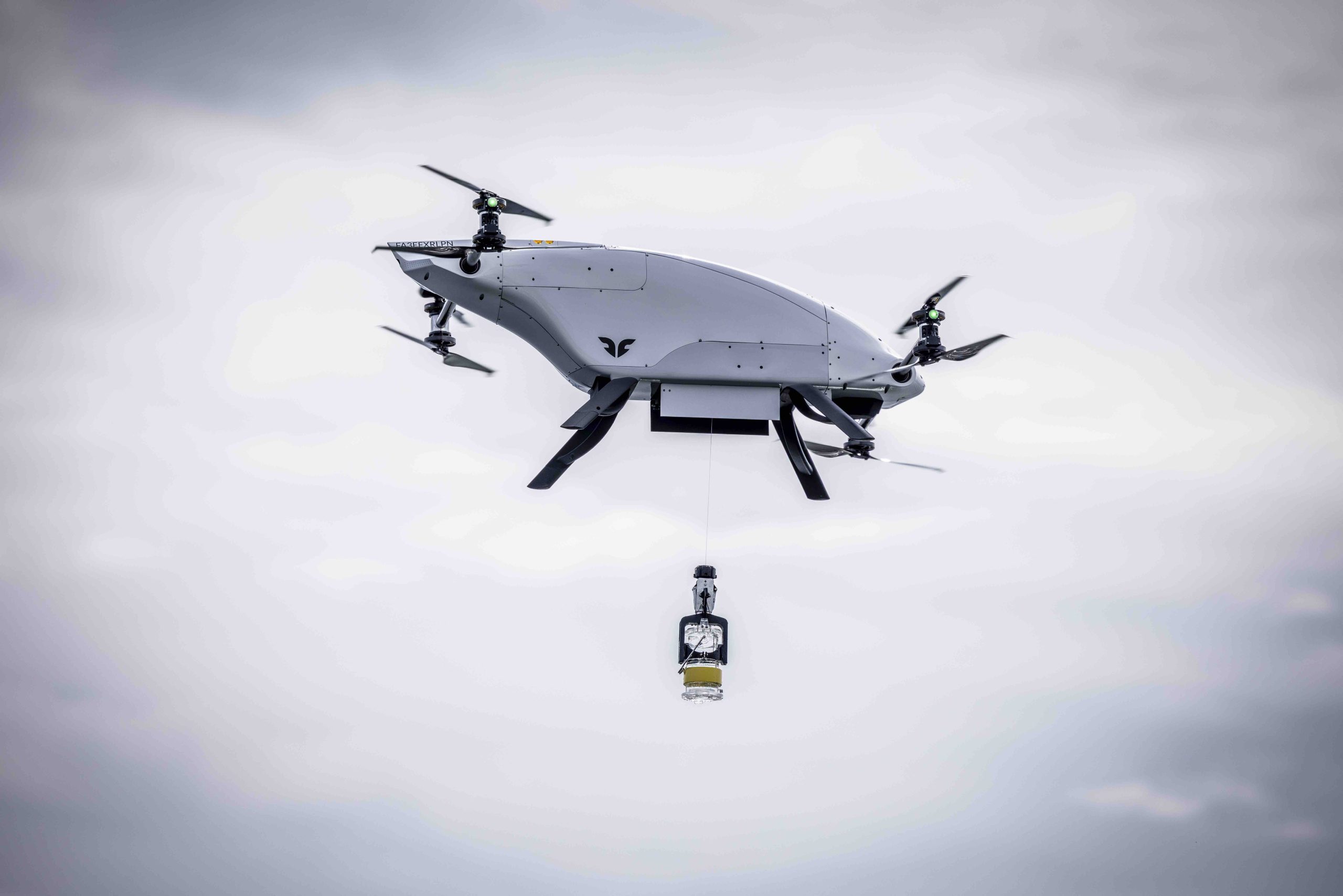
Through bold statewide grants, electric charging infrastructure, workforce pipelines, and industry partnerships, Michigan is positioning itself as a national exemplar in transforming unmanned aerial systems into real-world impact.
Michigan’s AAM strategy is rooted in its proven capability to pivot and innovate: from autoworking dominance to wartime production shifts during WWII, and even rapid ventilator manufacturing during COVID-19. As Justine Johnson, Michigan’s Chief Mobility Officer, noted in an interview, “diversification is something this industry knows how to do very well.”
That legacy positions Michigan to anchor future mobility—this time in the skies.
Building a Statewide AAM Ecosystem
At the heart of Michigan’s effort is Executive Directive 2025-4, establishing a whole-of-government AAM initiative led by the Office of Future Mobility & Electrification (OFME), with participation from MDOT, MEDC, LEO, DMVA, and the state’s aerospace development offices. The directive spells out priorities: scaling infrastructure, enabling BVLOS corridors, expanding defense testing assets, workforce development, and crafting AAM-aligned procurement and policies.
“We’re putting our hands up as a state and saying: Michigan is ready,” said Johnson. “This directive is a way to bring all the right players to the table—from workforce to testing infrastructure to commercialization pathways.”
Seeding Growth with the AAM Activation Fund
Launched in 2024, Michigan’s AAM Activation Fund supports market-led pilots demonstrating real-world use cases and informing regulatory, technical, and economic feasibility. Round 1 funded four projects with over $6 million:
- BETA Technologies Charging Cube deployments at four airports
- Michigan Central-region BVLOS pilots
- Skyports’ ship-to-shore drone logistics on Great Lakes
- Traverse Connect’s rural healthcare drone delivery trials in Northern Michigan
The second round (July 2025) added another $4.1 million for four more initiatives: CVS Health’s medication delivery trial, Jack Demmer/DroneUp automotive logistics pilot, a University of Michigan “M-Air” innovation/incubator hub, and further Traverse Connect expansion.
“That kind of deployment speed is what makes Michigan competitive,” Johnson said. “We’re not just talking—we’re cutting ribbons.”
Electric Aircraft Charging Infrastructure
In May 2025, Lansing’s Capital Region International Airport hosted the ribbon cutting of Michigan’s first state-funded BETA Charge Cube, powered by the Activation Fund. This UL-certified, 320kW charger can power both eVTOL aircraft and ground EVs in under an hour. Similar installations are underway at West Michigan Regional, Cherry Capital, and Willow Run, completing an electric mobility corridor across the state.
“It was just great to have the charging head at LAN airport—and a demonstration of one of their aircraft,” Johnson recalled. “It’s happening.”
Workforce: From K–12 to Industry
Michigan’s workforce strategy spans the full talent pipeline. Aviation academies like West Michigan Aviation Academy—ranked among the top U.S. high school aviation programs—and Northwest Michigan College’s UAS program are actively training students in drone operations. Community colleges, universities, and vocational training programs complement them, supplying engineers, operators, and maintainers.
“We’re thinking from K–12 all the way up,” Johnson said. “From technical colleges to research universities to retraining people already in the workforce, we’re making sure they’re tooled and trained.”
LEO ensures these educational pipelines align with real industry demand, including reskilling legacy autoworkers for aerospace manufacturing roles. “We’ve demonstrated diversification before—from building cars to war equipment in WWII, and ventilators during COVID. That agility is part of our muscle memory,” she added.
Strategic Use Case Focus
Michigan organizes its AAM efforts around four targeted use areas:
- Public Safety & Drone-as-First-Responder
- Infrastructure Inspection (pipelines, rail, utilities)
- Agritech & Crop Monitoring
- Logistics & Delivery, especially for just-in-time auto parts and medical supplies
“We’re seeing amazing use cases already—drones transporting lab samples for Munson Healthcare, for instance,” Johnson noted. “And real-time inspection of infrastructure and agricultural analysis are just beginning to scale.”
These domains map to broader state economic strengths—manufacturing, healthcare, rural development, and defense logistics.
Building on Academic & Regional Ecosystems
The “M-Air” initiative at the University of Michigan will scale research, K–12 to graduate training, startup incubation, and federal grant collaboration in aerospace. Partnering with Michigan Central in Detroit, it forms an aerial innovation corridor linking Detroit and Ann Arbor.
Traverse Connect’s pilot operations in Northern Michigan showcase rural mobility across terrain and lake environments. “That region has been amazing—seeing healthcare logistics in Traverse City take shape and drones flying back and forth with real samples is powerful,” said Johnson.
Anchoring AAM with State Power & Testing Infrastructure
Under the Executive Directive, Michigan is unlocking state assets for testing and deployment:
- National Guard and defense sites accessible for dual-use AAM testing
- FAA-partnered BVLOS corridors facilitated through MDOT and the Aeronautics Commission
“Michigan has defense infrastructure that’s second to none. It’s a huge advantage when you’re trying to scale real-world testing,” Johnson noted.
Measuring Success: Outcomes that Matter
MEDC and OFME are tracking metrics across:
- Economic impact: company attraction, job growth in AAM and component manufacturing
- Workforce preparedness: educational enrollment to placement
- Federal alignment: leveraging federal funds from FAA, DoD, DOE
- Policy innovation: vertiport design guidelines, streamlined siting, and UTM integration
- Public benefit: rural medicine delivery and disaster response readiness
“Success looks like attracting the right companies, training the right workers, and leveraging federal and private investment—while delivering public benefit,” Johnson said.
Michigan’s Institutional AAM Stack
- Office of Future Mobility & Electrification (OFME) – implementation lead
- MEDC – industry outreach and economic strategy
- MDOT / Aeronautics Commission – infrastructure deployment
- LEO (Labor & Economic Opportunity) – workforce transformation
- DMVA / ODAI – access to defense testing assets
- Michigan Aeronautics Commission – zonal airspace and vertiport planning
Why Michigan Stands Out in the National AAM Landscape
Manufacturing pedigree: Leveraging domestic supply chains and OEM relationships to develop drone hardware, software, and charging infrastructure.
Geographic diversity: An ideal mix of dense urban corridors, rural regions, lakeshore zones, and dispersed logistics paths.
Workforce integration: Seamless pipeline from K–12 aviation programs to vocational and university training.
Ecosystem coordination: Unified policy, grants, infrastructure, and testing in a multi-agency state framework.
Real infrastructure buildout: One of the first states deploying electric aircraft chargers and integrating vertiport readiness at operational airports.
From Ribbon Cutting to Rural Clinics
At LAN airport’s ribbon-cutting, BETA’s ALIA aircraft demonstration was more than symbolism—it marked a real investment in the corridor that will connect Lansing, Grand Rapids, Traverse City, Detroit, and beyond.
Meanwhile, in rural Northern Michigan, Traverse Connect’s healthcare delivery pilots are bringing life-critical lab samples to Munson Healthcare facilities and connecting underserved communities. Detroit’s M-Air hub and the Detroit–Ann Arbor “air mobility corridor” will enable BVLOS testing and technology commercialization, forging a next-gen aerospace cluster grounded in practical outcomes.
“We’re a state that builds things,” Johnson said. “And we’re showing we can build the future of aviation too.”
Michigan as a National AAM Exemplar
Michigan is more than an early adopter of AAM—it’s an orchestrator. By mobilizing its manufacturing base, aligning education and workforce agencies, deploying charging infrastructure, and funding practical pilots, the state is crafting a scalable model for national application.
Its advanced air mobility journey now combines mechanical heritage, policy clarity, ecosystem coordination, and community engagement in an integrated package. As drone delivery, eVTOL, and unmanned logistics mature, Michigan stands ready to fly.