
U.S. Defense Priorities Aim to Rehouse and Scale UAS Production
“I think the companies that are going to win are the companies that are going to invest in American manufacturing, in American technology and provide the absolute best products to the warfighter.” So said Brendan Stewart, SVP Regulatory and Government Affairs for Red Cat Holdings. “There’s a recognition that it is desirable to have the best roduct at the lowest cost, but that has to be balanced with sovereignty and security of your technology manufacturing and software supply chain.”
Stewart was referencing a roster of government initiatives spurring sustainable acquisition and supply chain resiliency at scale while offering data security, and red, white and blue (list) domain dominance.
“Drones,” as David Payne, Director of the Defense Intelligence Unit (DIU)’s Autonomy Portfolio, has said, “are an essential part of a modern warfighter’s kit, and we need an easy way to buy trusted, cutting edge drone technology from a rapidly expanding industrial base.”
An Accelerated Run-up
Dating from 2020 and now managed by the Defense Contract Management Agency [DCMA], the Blue Cleared and Select lists validate an ongoing roster of UAS that comply with the National Defense Authorization Act’s [NDAA} call for elevated security, performance and country of origin. Currently, U.S.-made drones on the Blue Cleared list qualified as “domestic end products” if homeland components reached a Buy American threshold of 65% by cost.
As part of the fiscal year 2024 NDAA, the American Security Drone Act (ASDA) prohibited U.S. federal agencies from purchasing or operating drones manufactured by “covered foreign entities of concern.” This past December, the FCC expanded its security umbrella, putting new foreign-produced UAS and their critical components on a Covered List per determinations “that such devices pose an unacceptable risk to the national security of the United States…”—until a surprise just two weeks later extended deadlines until January 1, 2027.
Then, in February, the “Drone Dominance Program” (DDP)—based on a 2025 executive order to propel leadership and independence across both defense and commercial spaces—charged 25 companies with competing to provide 340,000 low-cost one-way attack drones by 2027-28.
Collectively, these new trust policies offer domestic procurement advantages across purchasing, production and integration lines even as non-adversary international suppliers are aligning with them through compatibility and relocation. “It makes sense that the U.S. government would like equipment to be bought and manufactured in the U.S,” Asaf Punis, VP of Sales and Business Development, North America, for Israeli-American Orbit Communication Systems, said. “It’s just something we need to adapt to, to enhance and increase our U.S. capabilities. The companies that will not be able to do that, I think, will be left outside the U.S.”
Embracing Domestic Compliance
Red Cat’s Stewart amplified his bullish perspective on the homeland campaign’s value to the national marketplace. “It means, minimally, that you’re compliant with the legal requirements of NDAA sections 848 and 817,” he said, speaking from the Chicago area. “But really it means that the U.S. government trusts you sufficiently to use that drone in the most highly classified environment. Having those guardrails is what propels innovation in the right direction. And we’ve seen that with more and more manufacturers getting on the Blue list and building a more robust system of American technology.”
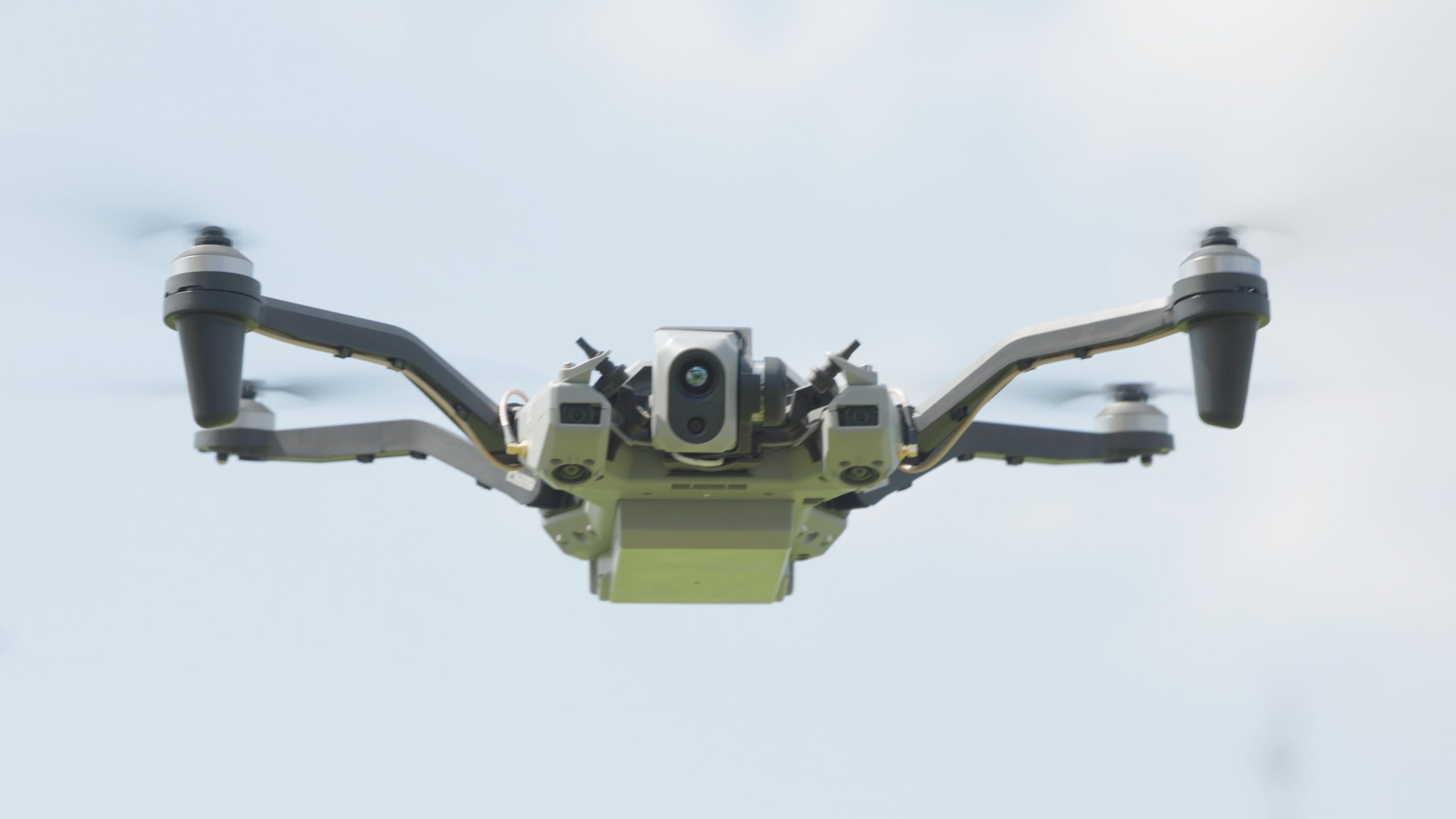
Red Cat acquisitions on the Blue Cleared list include the Teal 2 sUAS (from Teal), the hybrid fixed-wing VTOL tricopter Edge 130 (from FlightWave Aerospace Systems) and Red Cat’s Fang F7, a first person view-style unit developed for drone dominance.
“I think it really separates the manufacturers who are serious, who are focused on safety, security and reliability,” Stewart added.
Anduril Industries also is embracing the process, and its Ghost-X, an autonomous expeditionary UAS, appears on the Blue Cleared List. “Anduril’s strategy from the very beginning has been to design a platform that not only meets but exceeds the stringent requirements of the DIU [now DCMA] Blue List and Buy American initiatives,” a spokesperson for the Costa Mesa, California, company told Inside IUS. “This comprehensive and transparent process, starting with rigorous testing and leading to strategic supplier selection and domestic manufacturing, is how we ensure the Ghost UAS provides our warfighters with the most secure and dependable technology available.”
Red Cat’s Stewart sees a balance between cost and security.
“In a globalizing world, economics of cost of production are not the most important thing all the time; sometimes protecting those supply chains is equally important. I think the advantage of the Blue list is you have both government oversight and third party oversight from test agencies. I think this is a good sign of a healthy and maturing market.”
Trust and Verify
But what puts the “rigor” in rigorous verification?
“During Anduril’s Ghost-X development,” its company spokesperson said, “we rigorously identified supply chain vulnerabilities early to resolve assembly and sub-assembly to ensure no content from the PRC would be incorporated into the final production aircraft—before we scaled production. We proactively used hardware products from DIU Blue-certified suppliers outside of the PRC, underscoring our commitment to a secure and resilient supply chain. The majority of Ghost’s hardware is manufactured right here in the United States. This ensures not only compliance but also robust supply chain control and support for American industry.”
Oversight is equally important on the component side. For Tom Stepien, CEO of silicon battery manufacturer Amprius Technologies in Fremont, California, batteries top the list. “For commercial, industrial and defense drones, many drone customers need to understand where the battery is made and the source of the internal components. Domestic manufacturing and a trusted supply chain are essential to the next generation of defense drones.”
Red Cat’s Stewart explained the verification process. “The evidence package includes a full review of our code base on the drone. It involves a physical teardown with a third party evaluator through every single integrated circuit, verifying its origin and where it is on the supply chain. It’s a very intensive process.”
Inspection needs to guard against “allied washing of parts” or a supplier having funding from the Chinese government. Low-end parts such as screws and hubs can either be sourced from emerging markets or still come in under the Buy American 65% level.
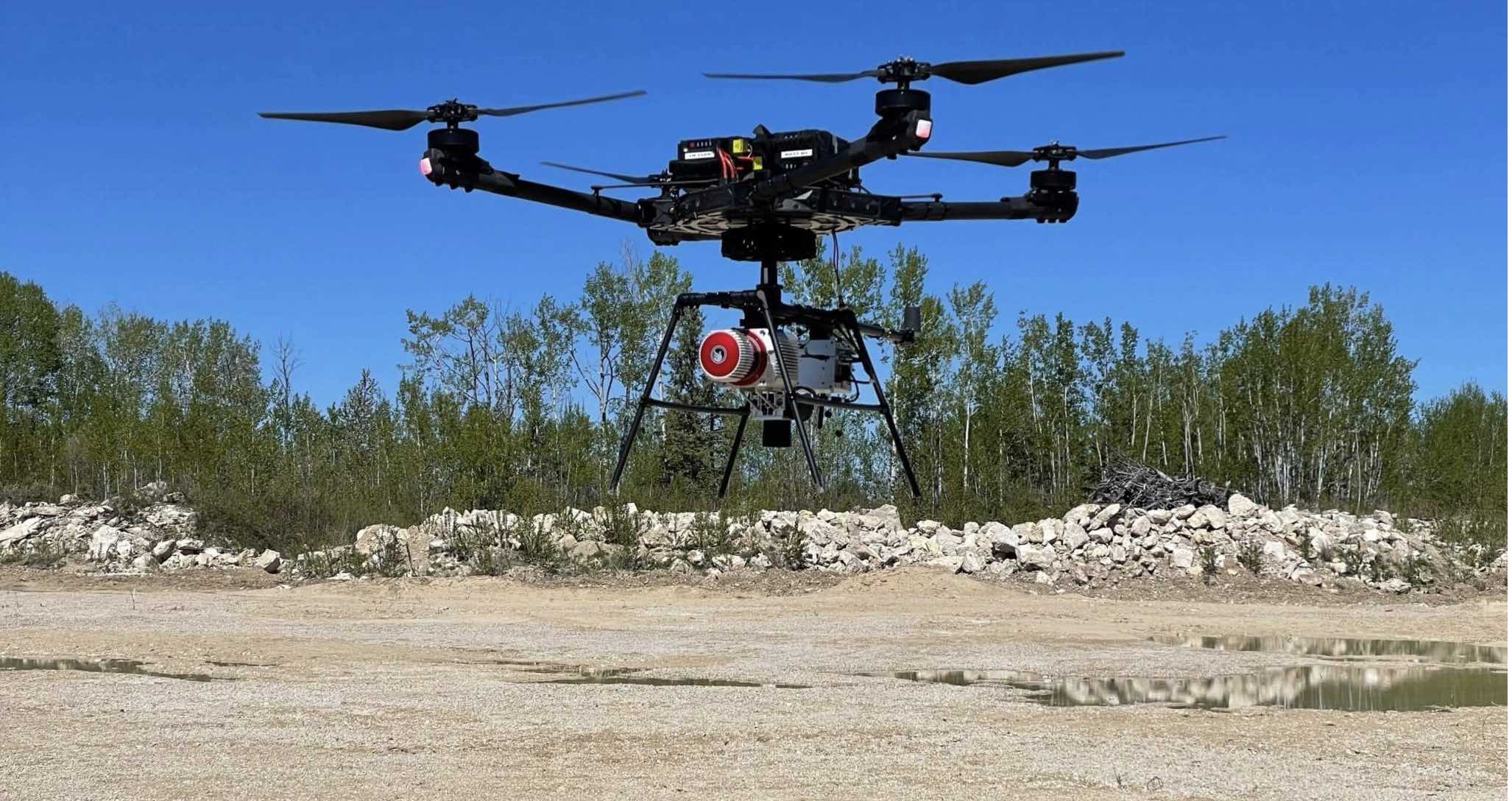
Aerial surveyor Phoenix LiDAR Systems has been pruning Chinese components from its systems for the last three or four years, CEO Rob Dannenberg said from Austin. “In reality, 90% of my products are NDAA-compliant, even if they don’t need to be. Since the NDAA became a thing several years ago, we haven’t had to make one change because we went with the highest level.”
Overall, Dannenberg sees the need and value of inspection. “Some people say it’s an admin burden. But it forced us to back up our supply chain, to have pure visibility in our Bill of Materials. When a third party evaluated our first unit, they found a transformer and an Ethernet switch from China. I was buying ports from a U.S.-based company but they came back to us and said, ‘Guys, this isn’t super-relevant but we thought you wanted to know.’ So, I had to go to the market, find a new Ethernet-like port, confirm [PRC product] wasn’t there.
“Did it change my price? Yes, by a penny-and-a-half. What it actually changed was hours of labor to revamp. But that again forces us to be better and audit our supply chain and make sure we do the proper QC that some of our suppliers aren’t taking shortcuts and reducing quality of parts.”
Dannenberg parsed a matrix of onboarding choices. Some high-end equipment is made in friendly countries, such as by Riegl in Austria, and are legal. “We don’t try to hide them,” he said. Phoenix’ miniRANGER 3 is on the Blue UAS list and a lot of its components are from the U.S., but performance sensors and IMUs are from Japan and France. “I can actually hit a 75% [by cost] threshold but I’d have to increase my price by a little bit.” For other projects, “good enough” can carry the day. The Honeywell IMU is “phenomenal, but it’s overkill on a mini and I can save an end user several thousand dollars by putting in a good IMU.”
A pending SAFE LiDAR Act, Dannenberg noted, could kill vehicles with even high-quality Chinese lasers. “I don’t want to sell something that a customer can’t use in three years.” Ironically, international demand for such models might require offshoring to meet it.
Dannenberg sees advantage from internal efficiencies, buying power and scale. “Most people are upping their prices,” including because of tariffs. “We’ve been decreasing.” Demand at Phoenix has increased around DJI bans. “Phoenix LiDAR is poised to, I hate to say, take advantage of this, not because of data security concerns but because we control all that data and have been building for supply chain resilience. Being an integrator, we can offer 52 flavors and do custom integrations.
“We already have integrations for the blue drones that are on the Blue list,” Dannenberg said. “And DCMA is providing clarify and making it more accessible for more manufacturers. Now that [Blue] is a little more public, my intent will be to add the rest of our payloads that are compliant, hopefully this year.”
Partnership and Constraints
Red Cat, Stewart noted, enjoys a “great relationship” with radio connectivity experts Doodle Labs. “We use Doodle Labs radios across the vast majority of our products.” Doodle co-CEO Ashish Parikh also hailed a years-long relationship. “There just weren’t any small radios that were multiband and could get their soldiers the performance they needed to go 10 clicks. So, they approached us to design the radio.”
That longevity has fed alignment with Blue UAS. “We’ve been in it for so long that we haven’t had to change anything,” Parikh said from Los Angeles. “NDAA rules, non-China, etc. Even back then, we had to scrub our BOM [Bill of Materials] list. It’s all American core technology.”
That said, Parikh noted some supply chain stress. “We work with a fantastic contract manufacturer in Singapore, but now, as the new rules are even tighter than NDAA, we’re exploring opening up domestic manufacturing. It’s a lot easier for us to take an existing product that’s already manufactured somewhere and just manufacture it here, because the core of the technology is American.”
Other domestic producers may have a greater repositioning problem, Parikh allowed. “China just provides so much of our core supply chain in the U.S., so a lot of companies are having to do that painful redesign work. Hardware takes a long time to actually develop a prototype and test it and get it to a level to deliver it to the government.”
Parikh also noted domestic procurement holes and resulting carveouts. “I mean, who makes magnets?” He believes the huge numbers called for by the Drone Dominance initiatives will fill more important gaps. “They want to spur people to make large volumes at a very fast clip at a very low cost. They’re providing incentives and volumes, the dollars behind it, and extra points for manufacturing XYZ. We’re negotiating with our partners that are contenders in Drone Dominance. We’re putting a lot of money at risk, pre-purchasing a bunch of components and pre-building a bunch of inventory in expectation of some awards very soon.
“I’m genuinely impressed. They’re really starting to make the moves that are spurring the industry.”
Onshoring and Exporting
U.S.-allied joint ventures can satisfy regulations and produce in the U.S.
Orbit Communication Systems has a product reach from SATCOM to avionics, telemetry to ground stations. “Orbit is a young company,” VP Asaf Punis joked about it being 76 years since the firm was founded in Israel, with 20 years and counting in the U.S. Manufacturing facilities are in Florida, and Punis spoke from Rockville, Maryland, even as Kratos Defense & Security Solutions was acquiring Orbit for an announced $356 million.
“I describe it as an international company with headquarters in Israel and a subsidiary in the U.S.,” he said. “And Kratos has some interesting activities where we can fit in.”
Punis homed in on Orbit’s multinational footprint. Orbit must follow both Israeli and U.S. export control regulation and now Buy American and tariff considerations. “Essentially, we do our own internal work to make sure we follow the regulation and then a review to convince clients that we follow it. For cyber-compliance, we develop the capability in-house. There are some leading cyber-compliance companies in Israel, so for us it’s very easy to work with them.” Punis observed that much Israeli technology is battle-tested. “I would prefer that there will be no war, but we have combat-proven products. Our systems have very successful solved some of the IDF’s major communication issues. And this is that we market to the world.”
The new U.S. regulations have shifted customer interaction. “They will want to have a look at the facilities, maybe do an audit. It’s quite straightforward.” Orbit limits how much inventory it carries, “mainly due to the fact that our industry is evolving so rapidly. When I just finished developing one satellite communication system, on that day I start developing the next generation.”
As for Buy American considerations, “we are putting a lot of internal effort in our supply chain and operations department to support this specific activity, which wasn’t required before. Inactive parts may come from elsewhere, “but the active components, the electronics, this is where we play. So, this is exactly the balance that we need to maintain, to make sure that we buy what we are allowed to buy and still meet the 65%. Before the Buy American Act, we would have selected the Korean component because it meets the quality requirements and the price is good. Now we will go to the U.S. vendor.
“We have to do that. It’s only a question of time; not if, when.”

International Alignment
Trust regulations may raise the content and security bars but allied companies operating primarily outside the U.S. are rising to clear them.
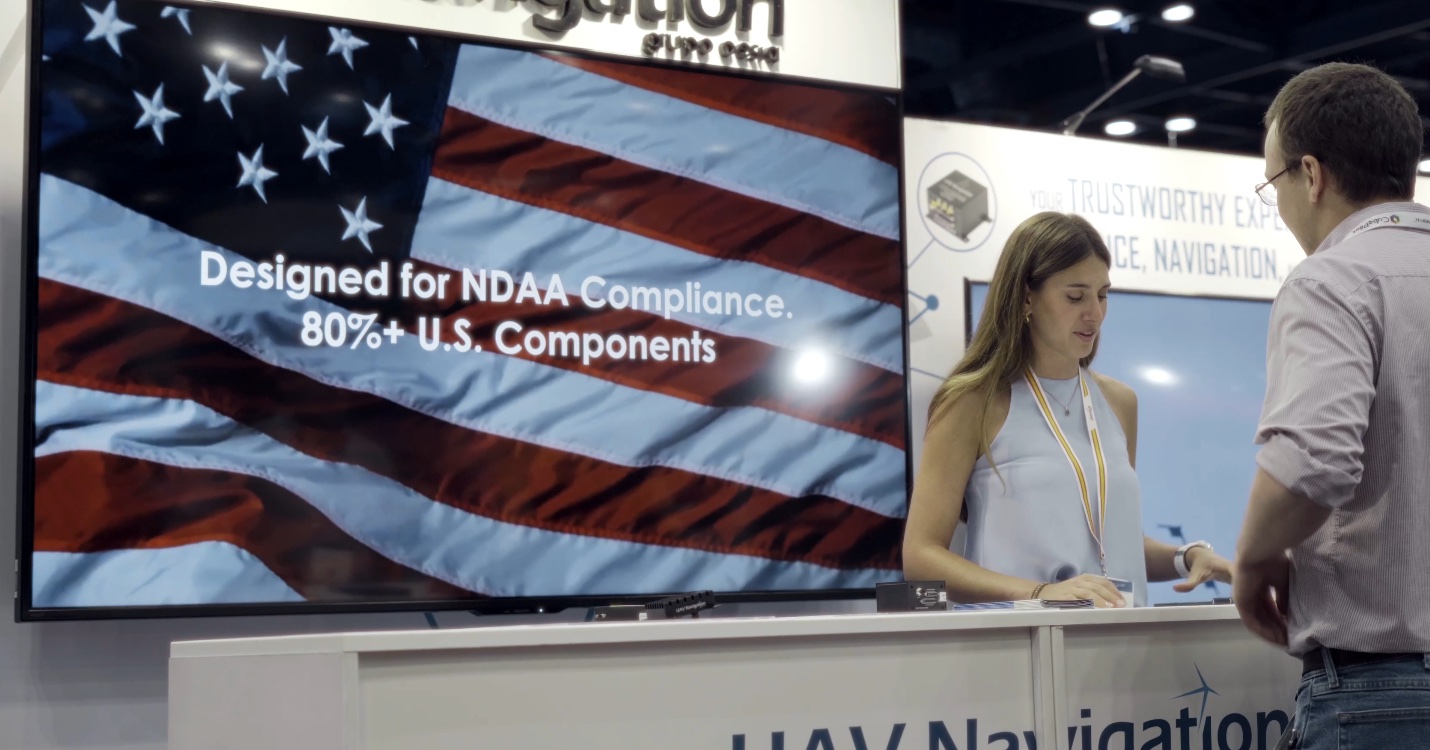
Grupo Oesia has more than 4,000 employees, and more than 90% of customers for UAV’s flight control solutions are outside Spain. “At the strategic level, we are deepening our engagement with the U.S. defense and industrial ecosystem with a long-term perspective,” Miguel Angel de Frutos Carro, managing director of Madrid-based UAV Navigation–Grupo Oesia, said.
Compliance and sustainability are addressed through a cross-functional approach involving product management, procurement and supply chain teams, and centralized legal and compliance functions. “The goal is straightforward: to demonstrate that we are already a reliable supplier today,” Angel de Frutos Carro said.
“Blue UAS and the Buy American Initiative have not required a fundamental change in our approach,” he said. “The majority of critical components in our systems—such as sensors, processors and memory—are already of U.S. origin, complemented by European components from long-standing trusted suppliers. The 65% domestic threshold is effectively within reach today. By the end of 2026 we expect to noticeably exceed this level—without any cost impact to our customers worldwide.”
The emerging U.S. regulatory framework, he continued, “is an opportunity to grow, invest and consolidate as a trusted partner. It is not a barrier; it favors established companies that can deliver secure, reliable products with transparent and traceable supply chains. If anything, it has opened new conversations in the U.S.”
Consequently, UAV is contemplating a permanent American presence—“not merely a sales office but an operational subsidiary with engineering and support capabilities. This reflects our long-term commitment to the U.S. market—it complements our global operations and does not come at the expense of service, pricing or capacity for our international customers.
“For a company with global reach like UAV Navigation, presence in the U.S. is essential.”
Mapping the Future
Firms that are manufacturing and scaling here with strong American technology, verifiable components and nimble supply chains will have a compliance advantage. Same with those that can make smart bets on pre-building and pre-purchasing.
Speed bumps may arise. “There is short period where things will get more difficult because you’re taking a wide global supply chain and condensing it largely into an American and Allied supply chain,” Red Cat’s Stewart said. “More investment in the space makes that problem go away. There’s a huge value in the government being sort of the risk-forward investor. The more DoD buys the more manufacturing costs are going to come down.” These cost reductions, he felt, can spin out into the civilian market “to replace the gap left by DJI.”
Will capital requirements, efficiencies and inventory drive consolidation? Phoenix LiDAR’s Dannenberg thinks the new rules provide clear direction while surging domestic activity may entice younger workers. He also sees a need for the drone/component industry to educate end users and interact with Congress and regulators, perhaps via an organization of integrators.
On his part, Doodle Lab’s Parikh thinks it will be harder for the guys in the garage to get in the game—“unless they’re the folks who are designing really novel and interesting products and small volumes spread because it’s an awesome product.” Red Cat’s Stewart feels that standardized rules and third-party verification procedures can empower small builders. “If I’m a startup working in a basement, I can pull the milspec document and figure out exactly what I need to do and then build that into my operating line.”
Red Cat’s Stewart remains bullish. “The first thing you’re going to see is a resurgence of American manufacturing throughout drones, but also in adjacent and peripheral industries.” Enacting Part 108 BVLOS rules will yield “a much more integrated, expansive and more commonly used drone ecosystem. Once we drive the cost out of the product, we really open up this opportunity to proliferate and drive ubiquity.
“We’re at the point where that really starts to occur in a meaningful way, and it’s pretty damn exciting.”

New FCC Controls: A Legal View
Guillermo Christensen, a partner at the K&L Gates global law firm, recently co-authored a “U.S. Policy and Regulatory Alert” around the FCC’s new controls. His background includes the CIA, the State Department and the FBI, and he has “observed the development of technology in the Ukraine conflict.” Speaking from Dubai, he drilled down into the America-focused trust programs and their implications for product design, supply chains and U.S. market access.
Christensen cited the 65% Buy American percentage by cost as better than parsing where a multitude of parts come from. “They’re digging into the details of components and understanding them much more than they used to. Non-U.S. suppliers are either going to have to figure out a way to get integrated into units that have predominantly U.S. content or they’re going to have to shift their production into the U.S. so that the value of the components is above 65%.”
He wondered if companies on the low end of the value chain can assume a complex supply chain verification process. And commercial and civil sectors such as agriculture and law enforcement could suffer from defense-to-commercial spillover bans. “This is a massive hit for the creative sector—aerial photography and all that stuff.” Producing replacement components around all kinds of applications could take time and raise costs. “Existing units could potentially become quite valuable.”
He also questioned the ban timeline, even with its extension until January 2027. “I guarantee you that a lot of people are going to be making the case for broader and longer-running exemptions. My suspicion is that there’s going to be a very active conversation between users as well as the industry, with users coming together to pressure the administration and the FCC to change how this is going to be implemented.”
Industry Impact
- U.S. government priorities will require strong supply chain verification of new products.
- New producers will need to identify and adopt key U.S. products.
- “Dumb” analog products may still be importable.
- “Holes” and increased prices may present themselves until domestic scaling and repositioning can fill them.
- International companies are moving quickly to comply and/or co-locate production to the U.S.
- Niche reselling and repair aftermarkets may grow to serve grandfathered platforms and components as they age or are damaged.
By the Numbers
Entities processed onto the Blue Payload and Framework Lists for users across defense and government agencies, Fall 2025.
- 81 Unique companies
- 39 Systems
- 165 Components
Source: Defense Innovation Unit.