
The Pentagon has moved to acquire the Project Eagle Merops counter-UAS system and its low-cost AS3 Surveyor interceptor drone for rapid deployment in the Middle East in response to large-scale raids by Iran’s Shahed and Arash one-way strike drones.
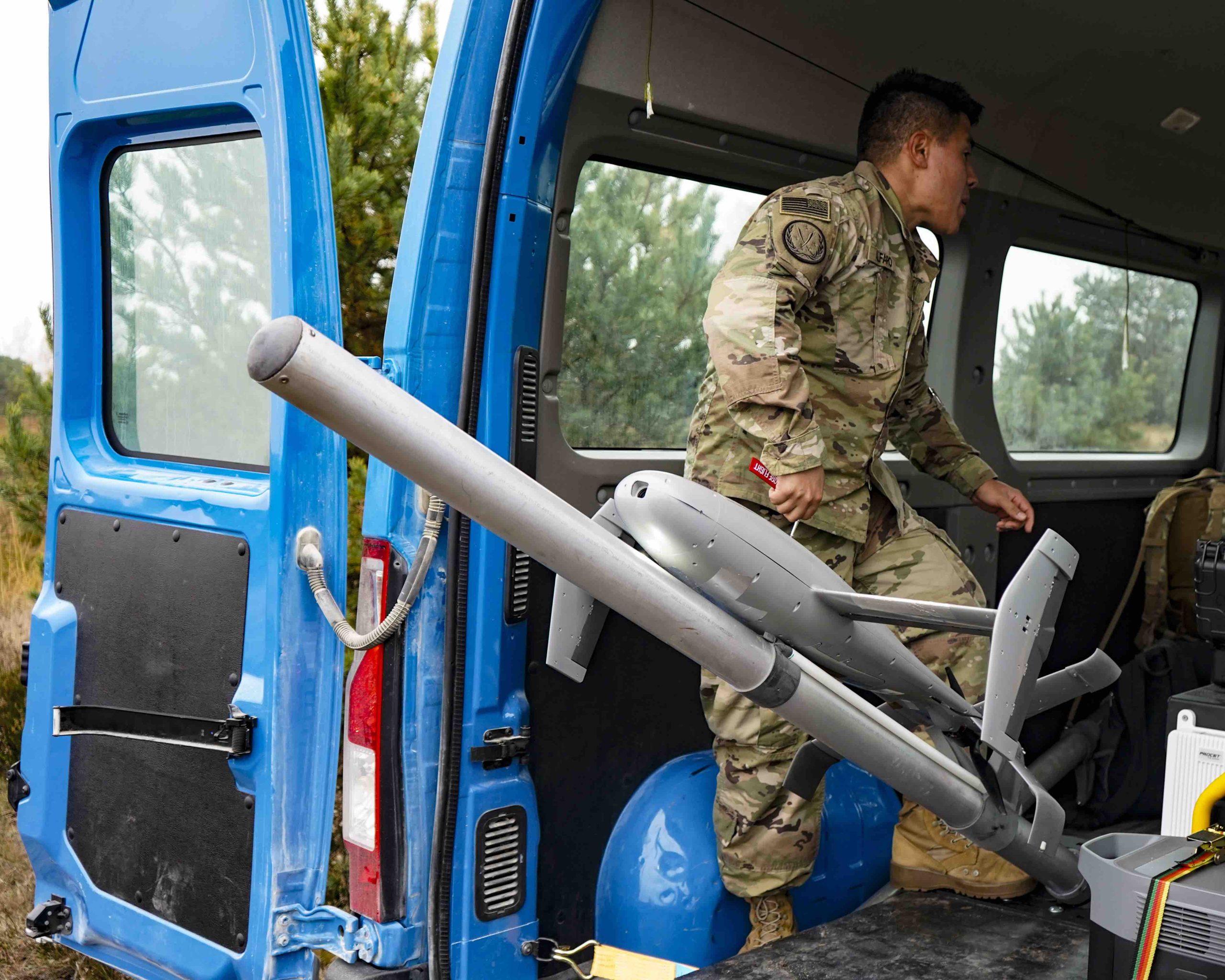
Originally developed and combat tested for Ukraine through an initiative led by a former Google executive, Merops systems—including what reports describe as a “large quantity of interceptors”—have been sent to the region as the United States and its partners respond to Iranian drone attacks.
At the same time, counter-UAS specialists from Ukraine experienced in battling Shahed drones have begun assisting U.S. forces in the Middle East, according to Ukrainian President Volodymyr Zelenskiy. Ukrainian personnel were reportedly dispatched to Jordan.
That deployment suggests reinforcement of the U.S. presence at Muwaffaq Salti Air Base, where reports indicate a radar associated with the THAAD missile defense system was earlier destroyed during Iranian strikes.
Recent reporting also indicates that an earlier Ukrainian proposal to upgrade counter-UAS defenses using large numbers of interceptor drones was declined by the United States in August 2025. Ukrainian officials now say they have received multiple international requests for assistance countering Iranian drone attacks.
Merops began combat testing in Ukraine by mid-2024 and has reportedly been credited with more than 1,000 intercepts of Shahed-type drones by November 2025. The system has also been introduced or evaluated by several NATO countries including Poland, Denmark and Romania.
The Pentagon began testing Merops in 2025, and the current procurement is intended to rapidly provide cost-efficient counter-UAS defenses to bases and civilian areas lacking sufficient short-range air defense coverage.
Cost imbalance in defending against strike drones
The air war playing out across the Persian Gulf has again drawn attention to the unfavorable economics of relying on traditional anti-aircraft missiles against relatively inexpensive strike drones.
Iran’s Shahed drones can travel long distances, deliver destructive payloads and—when not disrupted by electronic warfare—conduct relatively precise attacks despite costing comparatively little, with estimates placing the cost at roughly $40,000 per drone.
Even the U.S. jet-powered Coyote Block 2 drone interceptor costs several times more, while air-to-air missiles such as the AIM-9 Sidewinder and AIM-120 AMRAAM can cost hundreds of thousands to over a million dollars each. Patriot missile interceptors can cost several million dollars.
While Patriots are not the primary weapon used against Shahed drones, they may still be employed when other defensive options are unavailable to protect high-value targets.
By comparison, Merops’s AS3 Surveyor interceptor is reported to cost roughly $15,000 per shot while reaching speeds of about 175 miles per hour and offering an official range of approximately 12.5 miles. Reports indicate it has also proven effective against Russia’s jet-powered Geran-3 drones.
The bullet-shaped interceptor features a pusher-propeller engine, X-shaped tail fins and short mid-fuselage wings.
AS3 interceptors are deployed using a pneumatic launcher typically mounted on a pickup truck and can optionally be fitted with a parachute for recovery during training missions.
Based on combat experience in Ukraine, Merops control and satellite navigation systems have reportedly been hardened to resist electronic warfare interference.
The Surveyor interceptor supports both hit-to-kill intercepts and proximity-burst engagements using a 4.4-pound warhead, meaning a near miss may still disable a target. Reported interception rates against Shahed-type drones have reached as high as 95 percent.
At roughly one-tenth the price of a Coyote interceptor, Surveyor remains more expensive than some Ukrainian interceptor drones that cost only a few thousand dollars. However, it incorporates onboard sensors enabling automatic terminal guidance as well as fully remote-controlled piloting.
That design may allow the system to be integrated more quickly into U.S. service compared with cheaper interceptors that rely entirely on highly skilled manual piloting. Merops operators reportedly require about two weeks of training, with a four-person crew consisting of a commander, pilot and two technicians.
Integration with radar and layered air defenses
In addition to onboard sensors, the Merops system supports integration with external sensors to guide interceptors during the mid-course phase.
The system has already been integrated with several radars, including the Leonardo RPS-42 S-band pulse-Doppler AESA radar used in the U.S. Marine Corps’ L-MADIS counter-UAS system. Each 50-pound RPS-42 panel covers a 90-by-90-degree arc, with four panels capable of providing 360-degree coverage.
The radar reportedly has a maximum range of 18–24 miles, dropping to about three miles for small Group 1 drones.
Merops therefore may be able to integrate into existing layered air defense architectures. Deployed alongside L-MADIS and U.S. Army FS-LIDS and M-LIDS systems, AS3 interceptors could provide a significantly cheaper kinetic effector option that can be distributed geographically to protect additional threatened areas lacking short-range air defense coverage.
Why Shahed drones have proven challenging to defeat
Few emerging threats have been as widely anticipated as Iran’s expanding fleet of long-range one-way strike drones.
These systems first drew global attention in 2019 following attacks on Saudi oil facilities. In 2022 Iran transferred the technology to Russia, which began large-scale drone strikes against Ukraine.
By early 2026, Russia had reportedly launched more than 54,000 Shahed-type drones during the conflict.
U.S., Israeli and allied forces have also faced Iranian or Iranian-supplied drones in the Middle East since 2023, including during large-scale attacks targeting Israel in April 2024 and June 2026.
Despite warnings about Iran’s drone capabilities, the scale of Tehran’s arsenal in 2026 appears to have surprised some U.S. and Gulf defense planners, who had primarily invested in higher-end systems designed to counter Iran’s ballistic missile forces.
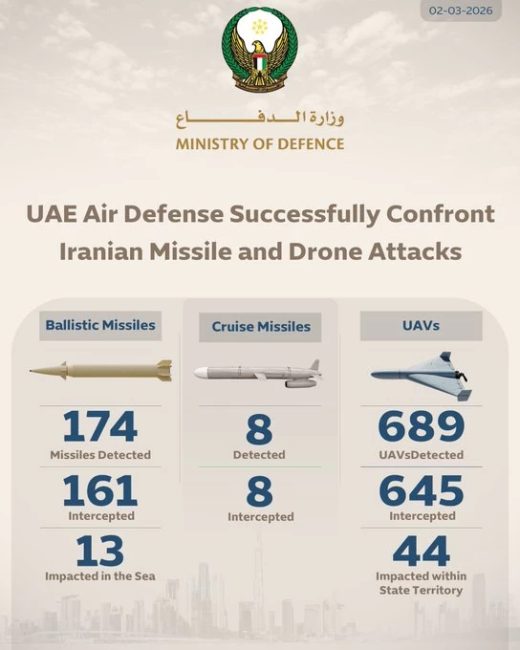
Statistics released by Gulf militaries during recent attacks suggest that a larger percentage of drones may penetrate air defenses compared with ballistic missiles.
While ballistic missiles travel much faster and carry larger warheads, they follow predictable trajectories and are easier to detect using radar and space-based infrared sensors.
Strike drones, by contrast, can maneuver, fly at low altitude and mask themselves against terrain. Their small radar cross-sections and slow speeds can make them difficult to distinguish from clutter or birds on radar systems.
These factors may explain why some Shahed drones have managed to penetrate defensive layers.
Ukraine and the interceptor drone model
Western interceptor systems such as the Fortem F700 DroneHunter began combat testing in Ukraine in 2022. Ukraine’s first mass-produced indigenous interceptors entered operational use in 2024, initially targeting Russian reconnaissance drones.
In 2025 electrically powered interceptor drones designed to defeat Shahed-type threats were introduced.
Ukraine’s Unmanned Systems Force says it now receives more than 1,500 interceptor drones per week and estimates that interceptor UAVs account for roughly 70 percent of Shahed drone kills.
Platforms currently in service include the Wild Hornet Sting, General Cherry Bullet, Skyfall P1-Sun, Rarog-10, Odin Win_Hit, and the Octopus-100 developed jointly by Ukrspecsystems and the United Kingdom’s TAF Industries.
Merops, meanwhile, emerged from an American-led international program reportedly supported by former Google CEO Eric Schmidt. After meetings with Ukrainian officials in September 2022, the initiative began under the name White Stork before being renamed Project Eagle in 2024.
Ukraine’s growing interceptor drone industry has already generated interest from Middle Eastern customers. Reports indicate the United Arab Emirates and Qatar have ordered Octopus interceptor drones, while other Gulf states have shown interest in Ukrainian systems.
Merops, P1 and Octopus illustrate how defending against one-way strike drones may not require traditional missile-based air defense systems with their associated costs.
Whether that remains the case as faster jet-powered strike drones such as the Shahed-238 and Geran-3 become more common remains to be seen.