
New regulations aim to bring drone component manufacturing onshore, creating short-term supply chain challenges but setting the stage for a surge in U.S. production aiming to translate into higher quality, lower prices and more opportunity.
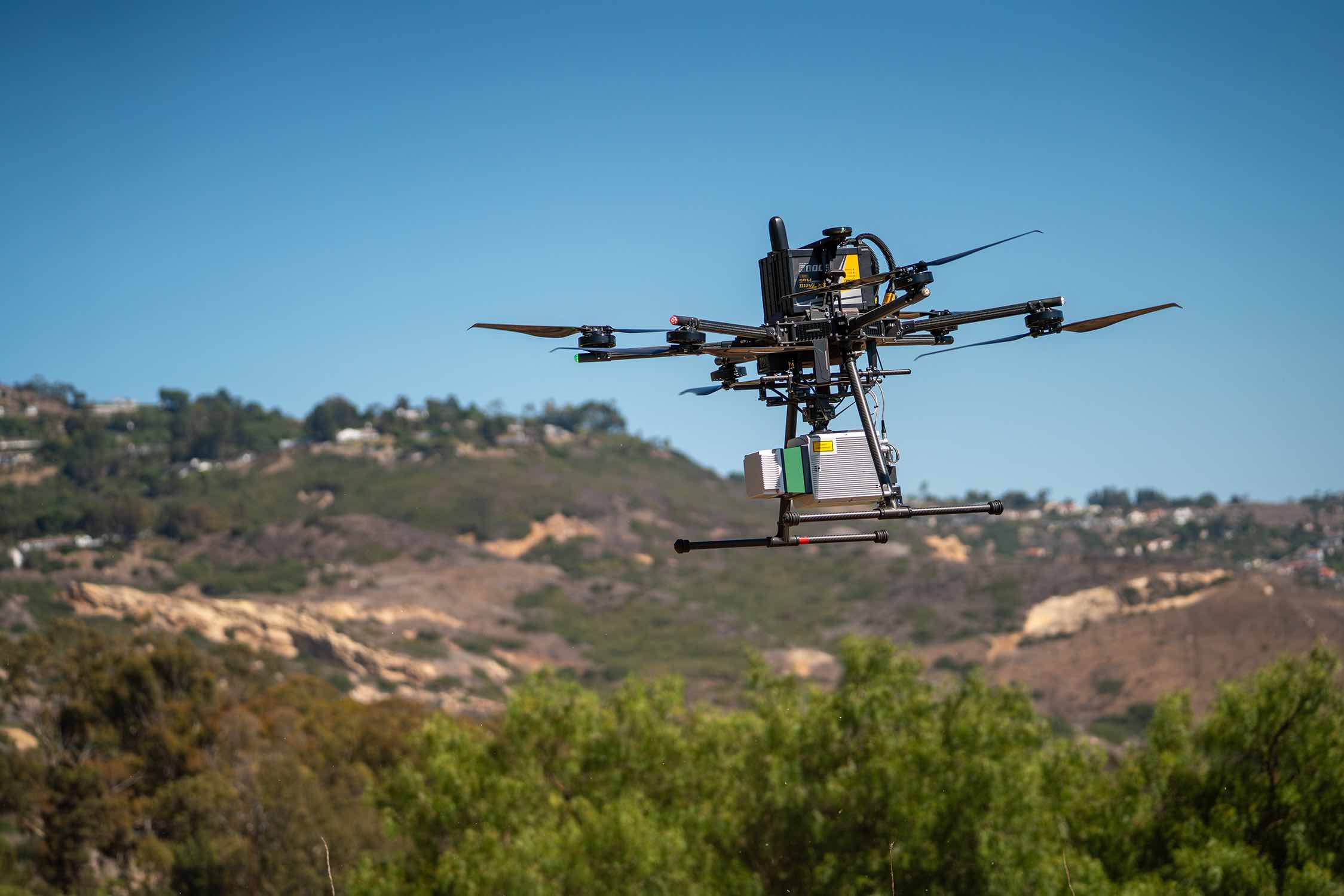
When Inspired Flight Technologies began manufacturing drones in 2020, they didn’t want to depend on supply chains from adversary countries like China. They instead opted to create systems built in the U.S. with mostly U.S. sourced components, relying on allied partners when domestic options were scarce.
Today, the company’s platforms are National Defense Authorization Act (NDAA) compliant and both Blue and Green list certified, and can seamlessly replace China-made DJI platforms, CEO Rick Stollmeyer said. Still, with the Federal Communications Commission (FCC) updating its “Covered List” to include UAS and critical components produced abroad, Inspired Flight is taking a close look at suppliers, scrutinizing what still needs to be brought onshore and what can stay with friendly countries for now.
The FCC announced the change in December, citing unacceptable risks to national security. A few weeks later, the FCC issued a follow-on Public Notice that created exemptions for Blue UAS platforms and drones that qualify as “domestic end products” under federal Buy American rules. Existing drone platforms can still be used, but China-made drones will eventually be phased out and replaced with domestically sourced systems.
Manufacturers both inside and outside the U.S. have spent the early part of 2026 “scrupulously reviewing all records and existing equipment authorization,” said Katie Inman, Partner at Holland & Knight and member of the law firm’s Public Policy and Regulation practice, while revisiting plans and planning updates to their platforms.
“I think it will be a while before we see the full effects of this,” she said, “but folks will do detailed reviews of records. Time and energy that may have been spent elsewhere will be put into coming up with new plans and figuring out how to adapt.”
This move to bring drone platform and component manufacturing onshore not only addressees the national security concerns that come with sourcing components from adversarial governments, Stollmeyer said, it also brings more manufacturing to the U.S., creating “much needed jobs” and supply chain stability.
“Trust needs to be built into the architecture from the start,” said Hailey Nichols, CEO of Locus Lock, a GNSS receiver company on the Blue UAS Framework list. “There will be higher up front costs, but the trade off is independent and reduced systemic risk, and that leads to a more stable, secure and resilient drone ecosystem.”
The benefits are clear, but getting there could prove painful for manufacturers relying on components from China and other covered countries, as they not only have to find new parts, whether batteries, IMUs, motors or a host of other components, they also will need to requalify their systems—which can be a lengthy process. To add to the challenge, the domestic industry, while it has come a long way in recent years, is still developing. The supply chain will be stressed, possibly resulting in delays.
Supermaterial applications company Lyten sees the tightening of sourcing rules as a natural, measured progression that’s played out over the last few years to “unravel dependencies” on China, Chief Sustainability Officer Keith Norman said. But it’s one that’s “shaking up the supply chain ecosystem significantly.”
A Critical Move
Taking steps to secure the supply chain “has never been more important,” Shield AI Chief Legal Officer Michael Yang said, “as sophisticated actors increasingly exploit global manufacturing and distribution networks.” The risks of relying on components from adversaries are just too high. Developing trusted supply chains ensure adversaries haven’t “poisoned components to make them ineffective, unreliable or destructive,” and it maintains reliable sources of supply” if there’s ever an interruption.
As China drones are phased out, there won’t be just one manufacturer taking over, Stollmeyer said. While this is a competitive industry, it also must be collaborative, as there’s going to be “dozens and dozens” of domestic manufacturers supporting “hundreds of thousands of services and end users.”
“Right now, DJI is dominating,” a defense drone manufacturer said. “We didn’t really play for 10 years or so. Now we’re playing, but the price point will be difficult for U.S. manufacturers to get to.”
Many manufacturers, like Inspired Flight, saw this supply chain shift coming. WingXpand, for example, has sourced NDAA compliant components from the beginning, creating relationships with two or three suppliers for every component, President and Co-founder Michelle Madaras said. If they couldn’t find a particular component that fit that criteria and could be produced in mass, they made it in-house.
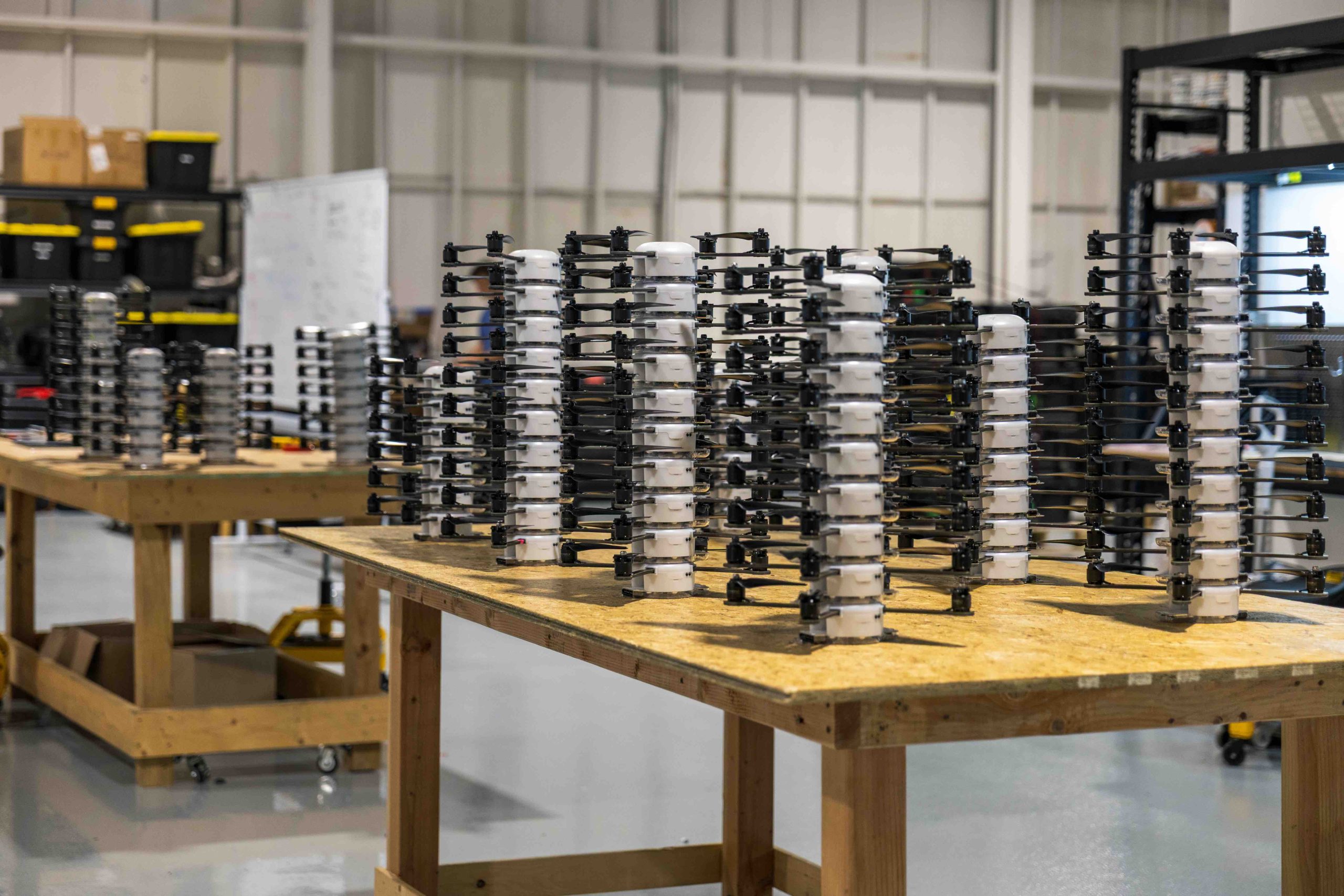
Allen Evans also saw an opportunity. He founded component supplier Unusual Machines two years ago, focusing on U.S. made batteries and flight controllers. Back then, the American Security Drone Act had created a big enough market of folks looking for domestic drone parts, but the more recent regulations coming from the FCC has “profoundly accelerated our business in terms of trying to secure the supply chain.”
While some companies prepared for this eventuality, others have not, and could be in for a painful process. One of the biggest challenges, at least in the near term, is lead time for securing domestically sourced components, Evans said. Motors, batteries and other pieces of the puzzle can take six months or more to acquire from U.S. suppliers, which could slow down system refreshes. And that may get worse as everyone looks to the same companies to fill supply chain needs.
Sourcing Domestic Components
All critical components, as defined by NDAA 848, present domestic sourcing challenges, Yang said, and include flight controllers, radios/data transmission devices, cameras, gimbals, ground control systems, and operating software. Other components added to the list include navigation systems, batteries, battery management systems and motors.
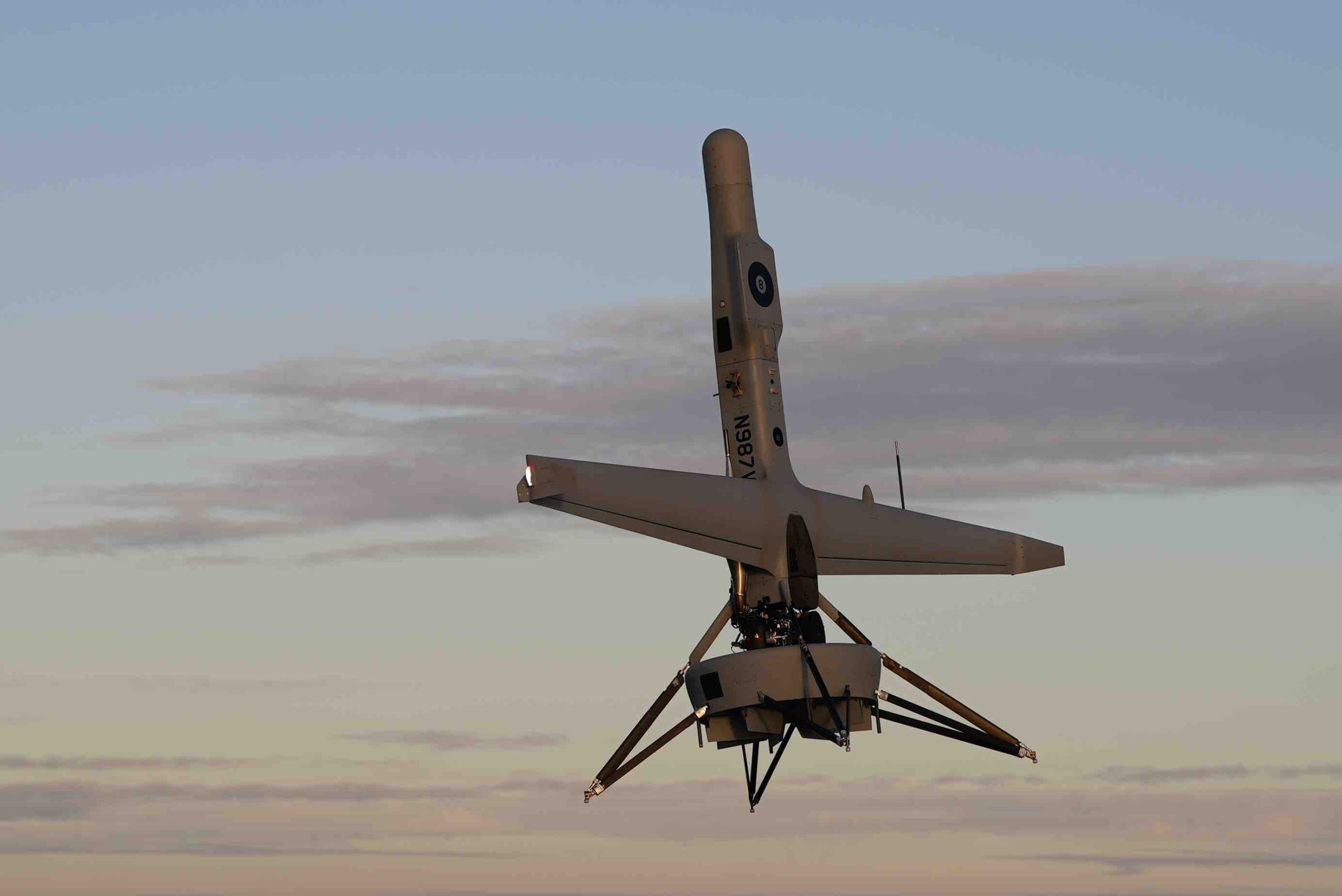
Batteries and motors represent the top component concerns for drone manufacturers, Holland & Knight’s Inman said. Here, we take a look at the challenges those and other components present.
Batteries
Most battery production happens in China, and bringing that to the U.S., while a start, isn’t enough; all the components must be assembled in NDAA compliant countries as well, said Tom Stepien, CEO of Amprius Technologies. That requires battery companies like Amprius to take a critical look at suppliers.
Amprius is well on its way to ensuring all components inside its cell are sourced domestically, Stepien said. Today, the number stands at five out of 11. By spring, it will by 11, giving their battery a “full check on NDAA compliance.”
“This allows us to reduce the burden on some of these design engineers inside drone companies,” he said, noting Amprius also has moved some of its production to Korea and recently announced its first U.S.-based partner, Nanotech Energy. “Our job is to make the task easier on the battery side of things with that NDAA pathway.”
Part of the challenge, Lyten’s Norman said, is most batteries require minerals, like graphite, that China maintains a “hugely dominant position in.” Lyten has positioned itself to not just try to replicate the existing battery supply chain, but actually create a different one.
About five years ago, Lyten began developing a lithium sulfur battery chemistry that has a simpler supply chain, Norman said. The cathode is made of sulfur instead of minerals and the anode is made of a metal that can be sourced from oil and gas and mining brine—all materials that are readily available in the U.S. Lyten is already selling this high energy density battery to the defense market and recently announced a facility expansion in California that will allow them to ramp up large scale production.
Motors
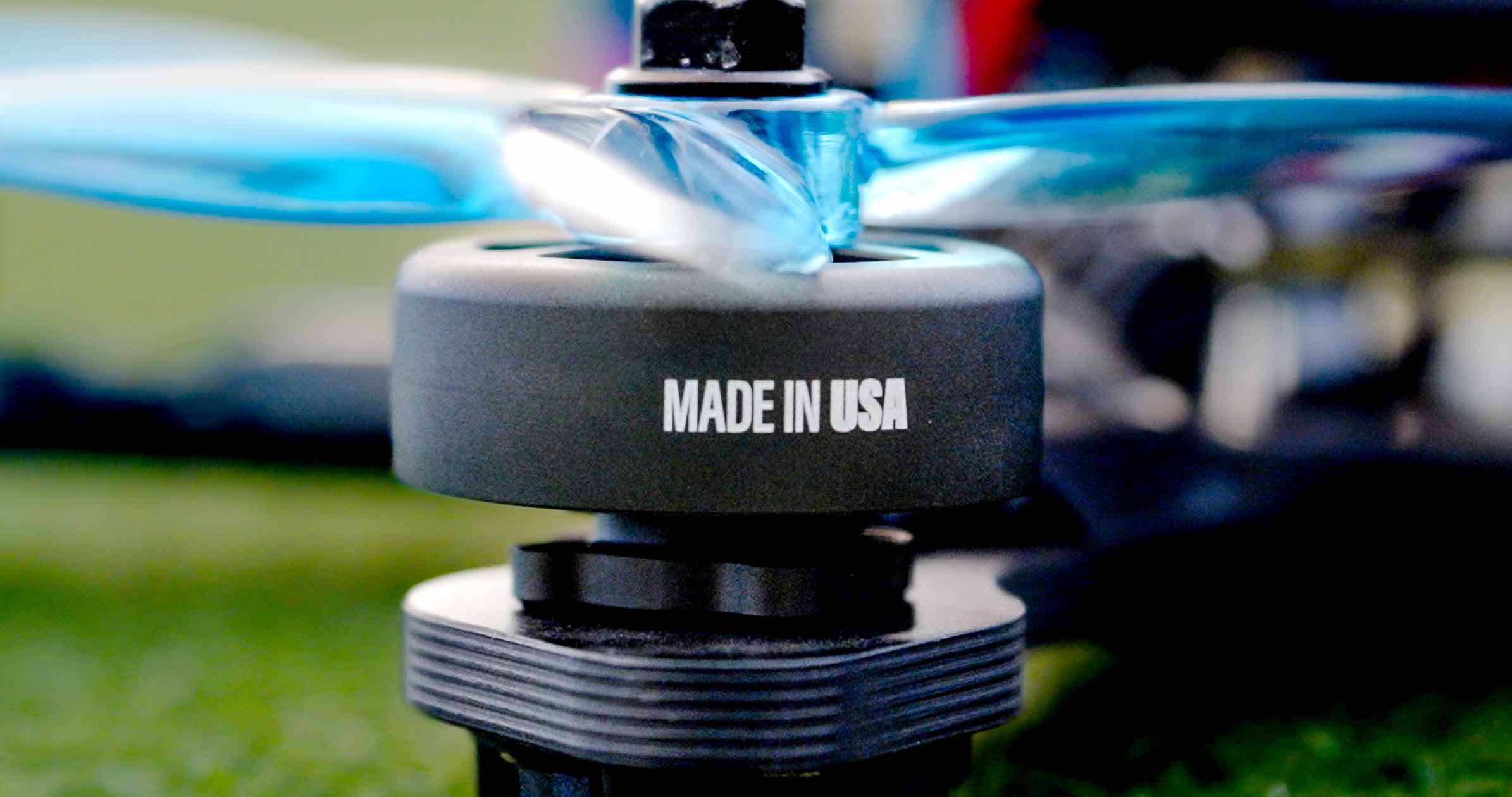
Motors are one of the most restrictive components, said Evans of Unusual Machines, with domestic supply chain lag time a big issue. It might take a month to get a new motor prototyped in China. In the U.S., it could be 9 to 12 months.
Why? Magnets. Magnets must be specially shaped for the motor design, and the magnet supply chain outside of China is “almost overwhelmed with demand.”
Metal parts
Anything using rare earth metals can be difficult to source domestically, Norman said. To meet that need, Lyten is using the “same material science innovation” in their batteries to “feed into an advanced composite system.”
“One of the biggest challenges for high strength parts has been the dependency on steel and metal from China,” Norman said. “We pull from natural gas, so a by product of the oil and gas industry, to create a carbon based material. We’re replacing metal processing with 3D filament scan print, and fully sourcing and manufacturing it in the U.S.”
Customers can 3D print drone replacement parts, creating “huge flexibility in the supply chain,” Norman said. It also allows them to make lightweight, strong parts and more novel designs.
Radios
Anything that stores or transmits data is “looked at under a microscope,” said Kyle Dorosz, CEO of Swarm Defense Technologies, but finding domestic solutions can be difficult. Swarm Defense, one of 25 companies selected to compete in the Drone Dominance Program (DDP), manufactures its radios, data storage devices, data cards and flight controllers in house, creating their own supply chain. But there are U.S. options for those who don’t want to take that on.
The Silvus StreamCaster 4400 Enhanced (SC4400E ) mobile ad-hoc network (MANET) Radio is an example. The radio was recently added to the Blue UAS Framework and AUVSI’s Green UAS Cleared Components list.
Electronics
In the last 50 years, more electronic components, even those designed in America or Europe, are increasingly manufactured in Asia, Yang said. This created a “positive trend for cost,” but has lead to supply chain challenges.
The price and availability of memory also has gone way up, Evans said, impacting the price of AI chips. Manufacturing these chips requires specialized equipment that represent a “significant capex.”
“This specialized equipment is only made two places in the world, so you have to get in line for it,” he said. “That’s one of the challenges to getting this set up really fast. And anybody who wants to bring in that equipment has to believe the market is going to be there in two years.”
Sourcing cameras is also challenging. Anybody making cameras gets sensors from Japan, Evans said. Unusual Machines recently moved their tooling to build out cameras in Taiwan. The next step is to bring production onshore in the next year or so.
“When you look for a camera, there are 500 options,” Dorosz said, “but when you look at what’s NDAA compliant, there’s only five to 10.”
Inspired Flight’s Stollmeyer has noticed improvements in various areas, including onboard compute, ESCs, circuit boards and even advanced semiconductor chip fabrication in the U.S., but there’s still a long way to go.
Navigation
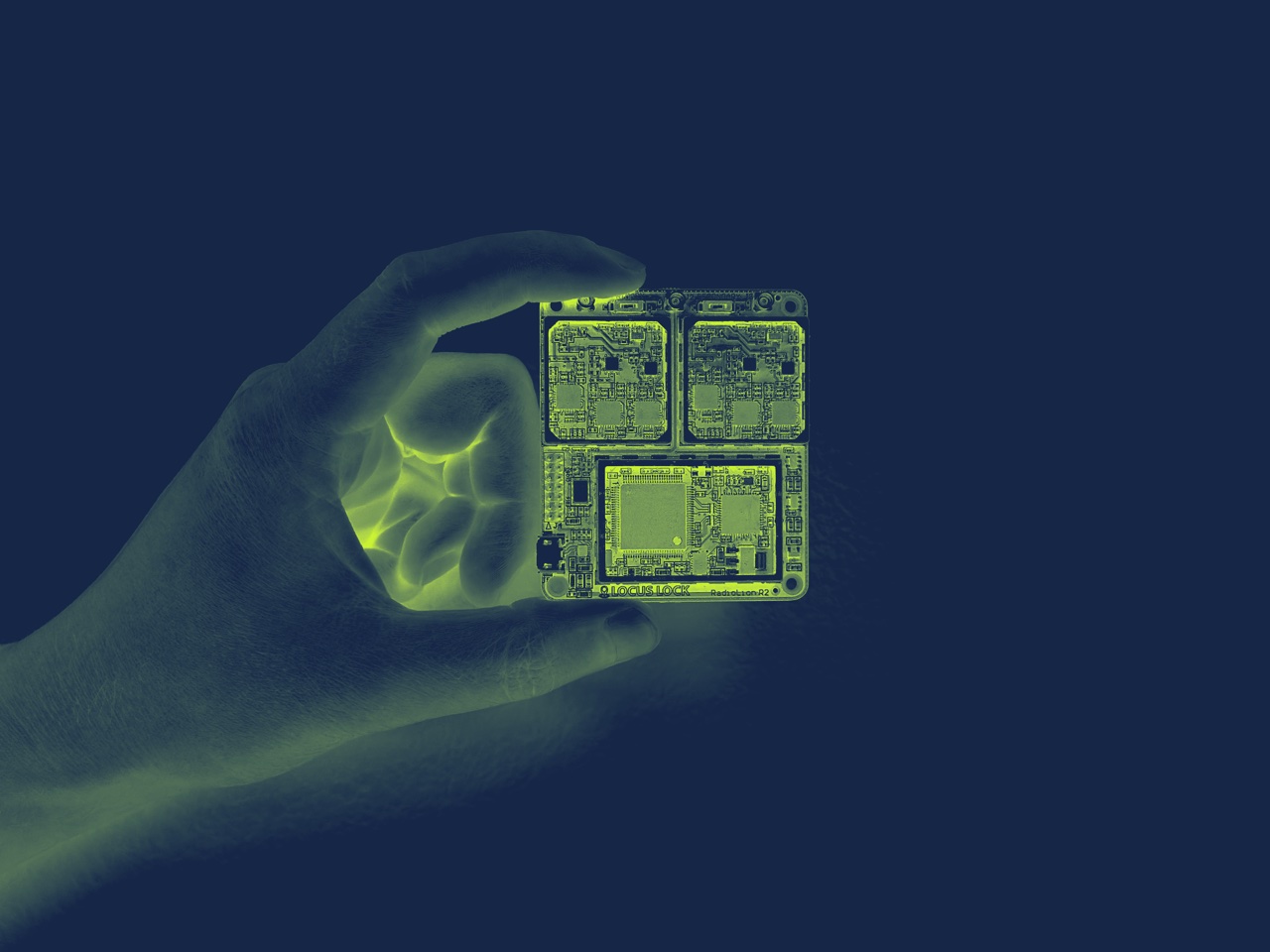
Navigation systems are foundational drone components, Nichols of Locus Lock said. Without a resilient PNT layer, “everything built on it is vulnerable.”
“If your navigation module isn’t compliant, your entire platform may not be fieldable into defense or critical infrastructure,” she said. “Trusted navigation has become a strategic component in the supply chain, not just a technical one.”
To become NDAA compliant, Locus Lock’s LEO100 GNSS-SDR had to go under a full supply chain review, including silicon sourcing and the underlying chip components. With the certification, defense and critical markets know their navigation solution is solid, a major “de-risking factor.”
Requalifying Systems
The consequences of swapping a component “can be brutal for both timeline and budget,” Yang said.
“Even for fast-moving companies, these changes need to go through a Change Control Board (CCB) and Engineering Change Order (ECO) process,” he said. “Swaps to a seemingly minor component can have ripple effects on other stakeholders like compliance, supply chain or production.”
If you swap out one chemistry of a battery cell for another chemistry, for example, the entire system must be reengineered, Stollmeyer said. It’s not plug and play as different components have different characteristics and firmware. The amount of time it takes to requalify depends on just how similar the parts are in form, fit and function.
Once the swap is made, manufacturers must complete extensive bench and flight testing to ensure flight characteristics haven’t been negatively impacted.
Then, of course, there’s the time spent sourcing components, Stollmeyer said. Inspired Flight narrows it down to two or three finalists, evaluating them against each other before making a decision.
“In addition to the basic checks,” Yang said, “we often complete site visits to supplier locations to review facilities, systems, equipment, processes, manufacturing controls and documentation as well as company culture. Depending on the part, there is usually an engineering effort to verify manufacturing processes, documentation and may include an onsite source inspection.”
Swapping components not only takes time, it diverts your engineering talent from other priorities, Stollmeyer said. So, while the new regulations are virtuous for the future of drone technology, it will slow industry down in the near term.
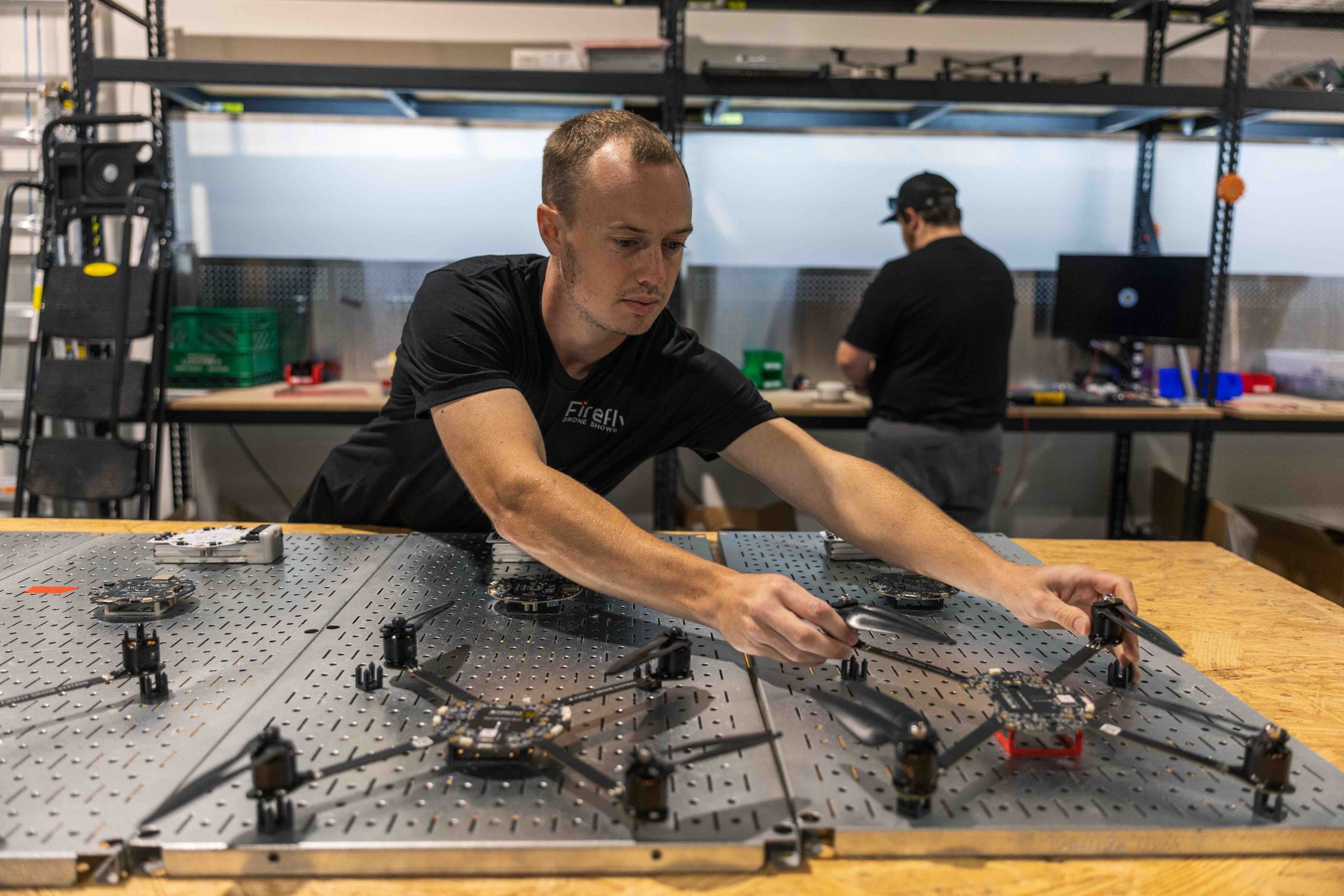
That impact will be much bigger on traditional, higher cost drones requiring a lot of initial engineering and design work, Norman said. Drones developed from rapid prototype 3D printing with simpler supply chains won’t feel the same level of disruption. Many of these manufacturers are already refreshing designs on six to eight week cycles—not because of supply chain issues, but because they’re learning from the field and improving their systems in real time. A battery swap that may have taken a year before can be implemented into the next design cycle, which is only weeks away.
“This is one of the most disruptive changes in the market,” Norman said, “and will enable this push for domesticating the supply chain.”
Looking Ahead
The new regulations will make the drone industry healthier, WingXpand’s Madaras said, even though it may be a bit painful getting there. The shift is already happening, with more states, for example, starting to prioritize U.S. made systems and reaching out to companies like WingXpand. The U.S. must lead the charge on both commercial and defense fronts, and “get after it quickly while we still have the opportunity to catch up.”
Yes, drone manufacturers need to scrutinize all their components down to the chips, and that’s going to take time. But the benefits for the industry and the U.S. will be great, Stepien of Amprius said.
“The companies that embrace this will be able to serve a growing market,” he said. “And not just in the U.S. Just look at what’s going on in NATO countries, where defense spending is increasing. These new sourcing rules can slowly open up markets that weren’t available before.”
The move to more rapidly prototype and deploy platforms, Norman said, will fundamentally change how the industry operates. New ideas will be integrated into designs faster, which means companies on the supply chain side will have to quickly adapt.
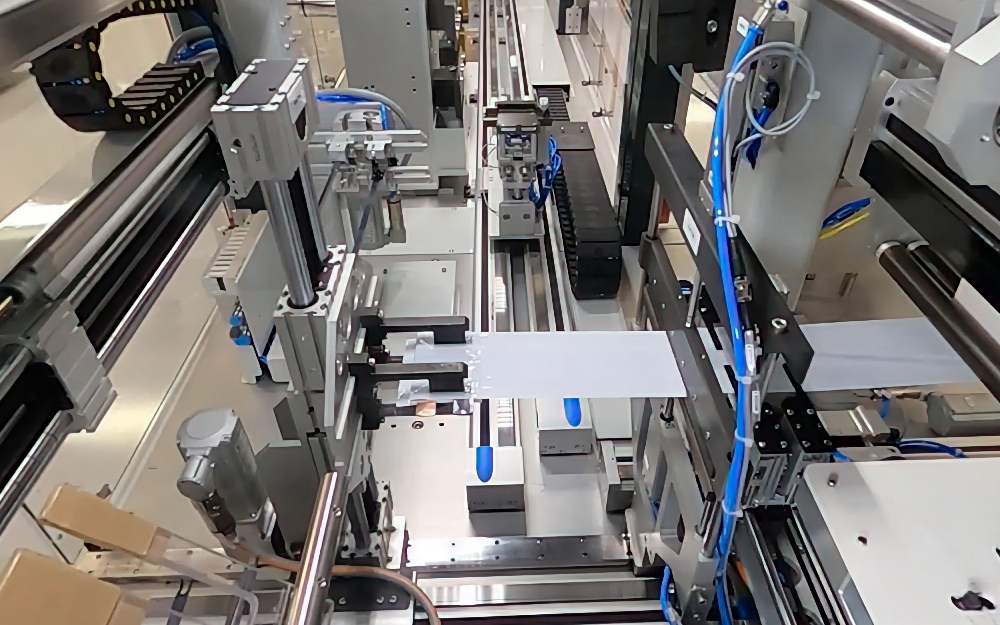
The push from the government to produce U.S. manufactured drones will spur domestic manufacturing, Dorosz of Swarm Defense said, and companies will be able to better compete with China on cost and quality.
“This is a really interesting opportunity to bring back that manufacturing skillset to the U.S.,” Evans said. Engineers can watch how components go through the production line, and change the design based on what they see. “A few generations of doing that drives down price and improves quality. …You end up getting to that end point even if you don’t see it out of the gate.”
There will be some uncertainty in the coming years, but we’ll get there “much faster than people think,” Evans said, because of the “legislatively created market vacuum the DDP represents. That program “is going to inject enough fuel to kickstart” this shift.
The government is also issuing contracts to actually buy these systems, Stollmeyer said. That benefits the entire ecosystem, allowing “better sources domestically and in allied countries to surface.” That will only continue, spurring production for both commercial and defense manufacturers.
It’s important to remember the FCC hasn’t banned DJI drones; while new platforms can’t be launched in the U.S., people can still buy a Mavic 4 Pro or use existing fleets. But there will be a natural oblivescence, with new U.S. built systems filling the gap, bringing more manufacturing and jobs stateside as well as enhanced security to critical infrastructure and warfighters.
“When faced with a challenge, the U.S. typically meets the challenge and exceeds expectations,” Inman said. “This is a perfect opportunity to do that. Industry can come out shining.”
Take a Critical Look
Inspired Flight recently developed a new ground controller that is manufactured in Vietnam, CEO Rick Stollmeyer said. That will come stateside eventually, but for now, it needs to stay put. Those are the kinds of decisions companies need to make as they work to refresh systems.
“It’s important for all drone manufacturers to look at this very analytically,” he said, “and see what needs to be migrated now and what can wait.”
Increasing Transparency
The DoW and other U.S. government customers have a “shared understanding of acceptable and supportable evidence,” Shield AI’s Michael Yang said, citing the consolidation of certification under the Blue List framework as a valuable step. The Defense Innovation Unit (DIU) enabled its implementation, with the Defense Contract Management Agency (DCMA)recently taking over to scale and sustain Blue List standards.
In the last few years, requirements for demonstrating critical components to customers has become “significantly more rigorous,” Yang said, with self-certification no longer the standard. Today, certification is increasingly conducted by independent third parties, particularly through the Recognized Assessor program established by DIU.
“These certification processes are comprehensive, encompassing detailed reviews such as verification of markings on individual subcomponents within printed circuit board assemblies (PCBAs) and the use of open-source intelligence to assess manufacturing practices,” he said. “This trend is expected to continue, with further stringency as DCMA expands its role. DCMA’s broader oversight is likely to increase transparency across supply-chain pathways and, ideally, foster closer collaboration with the defense industrial base to ensure production remains both compliant, sustainable and ultimately faster and more efficient.”
The Blue Lists
The Blue UAS Cleared List is a list of DoD approved drones that are compliant with section 848 of the FY20 NDAA, section 817 of the FY23 NDAA, and the 2024 American Security Drone Act, validated as cyber-secure, and available for government purchase and operation. U.S.-made drones on the Blue Cleared list qualify as “domestic end products” if homeland components reach a Buy American threshold of 65% by cost.
The Blue UAS Framework is a list of interoperable, NDAA compliant UAS components and software that provide options for government and industry partners. It includes critical components, sub-components, modules and software.
Cyber and Software Challenges
Simple hardware swaps can cause big software and cyber challenges. Shield AI’s Michael Yang explained:
“For UAS, the standard is an Authority to Operate (ATO) and Authority to Connect (ATC) to government systems. The officials who maintain these ATOs and ATCs take their systems and security seriously so any change to software requires approval for government use. So, hardware swaps can cause much more concerning ripple effects downstream on ATO/ATCs. Internally, we mitigate jolts to the system with a rigorous internal testing process. Having parallel pathways or hardware components qualified on an ATO can reduce the risk of system disallowance.”
The other challenge is the application of security controls.
“The current standard for securing information systems and organizations is NIST SP 800-53. It has over 1,000 active base controls. Many of these controls are not applicable to UAS but customers often have varying interpretations of what applies and what does not apply. Manufacturers, integrators and customers all jostle for responsibility of security controls and attempt to inherit as much as possible from upstream.”
Design Flexibility
Many companies foresaw the eventual supply chain shift to U.S. manufacturers and prepared by investing in components from U.S. and allied sources and keeping designs modular. This allows for “flexibility for our customers as well as for mitigations for inevitable future substitutions,” Shield AI’s Michael Yang said. “Modularity gives customers choice and, as designs or requirements change, can enable rapid iterations.”
From Commercial to Defense
In 2017, Kyle Dorosz started Firefly, a drone show company flying swarms. A few years later, a prime defense contractor building a counter-UAS system contacted them; they wanted to stress test the system with a large swarm. Since then, Firefly created its defense branch, Swarm Defense Technologies, and has worked with several programs, simulating drone threats to see how systems hold up against them and training soldiers on what it would be like to face 100 drones.
Making Moves
Drone manufacturers and component suppliers are making moves toward onshoring production. Here are a few examples:
– Orkid Tech, which develops a long-range VTOL, has been NDAA compliant for six months, with some components coming from NDAA compliant countries like France. Now, all their electronic components are made in the U.S., and any assembly done overseas has been moved stateside for U.S. customers. Orkid also recently appointed LGP Aerospace as its exclusive master distributor for the United States, Canada, and U.S. foreign defense sales to help the company scale its North America presence.
– Amprius expanded U.S. production of its silicon-anode lithium-ion batteries through its first domestic contract-manufacturing partnership with Nanotech Energy. The companies are scaling Amprius’ SA128 21700 cell at 6.8 Ah and 320 Wh/kg, optimized for longer runtime and lighter weight.
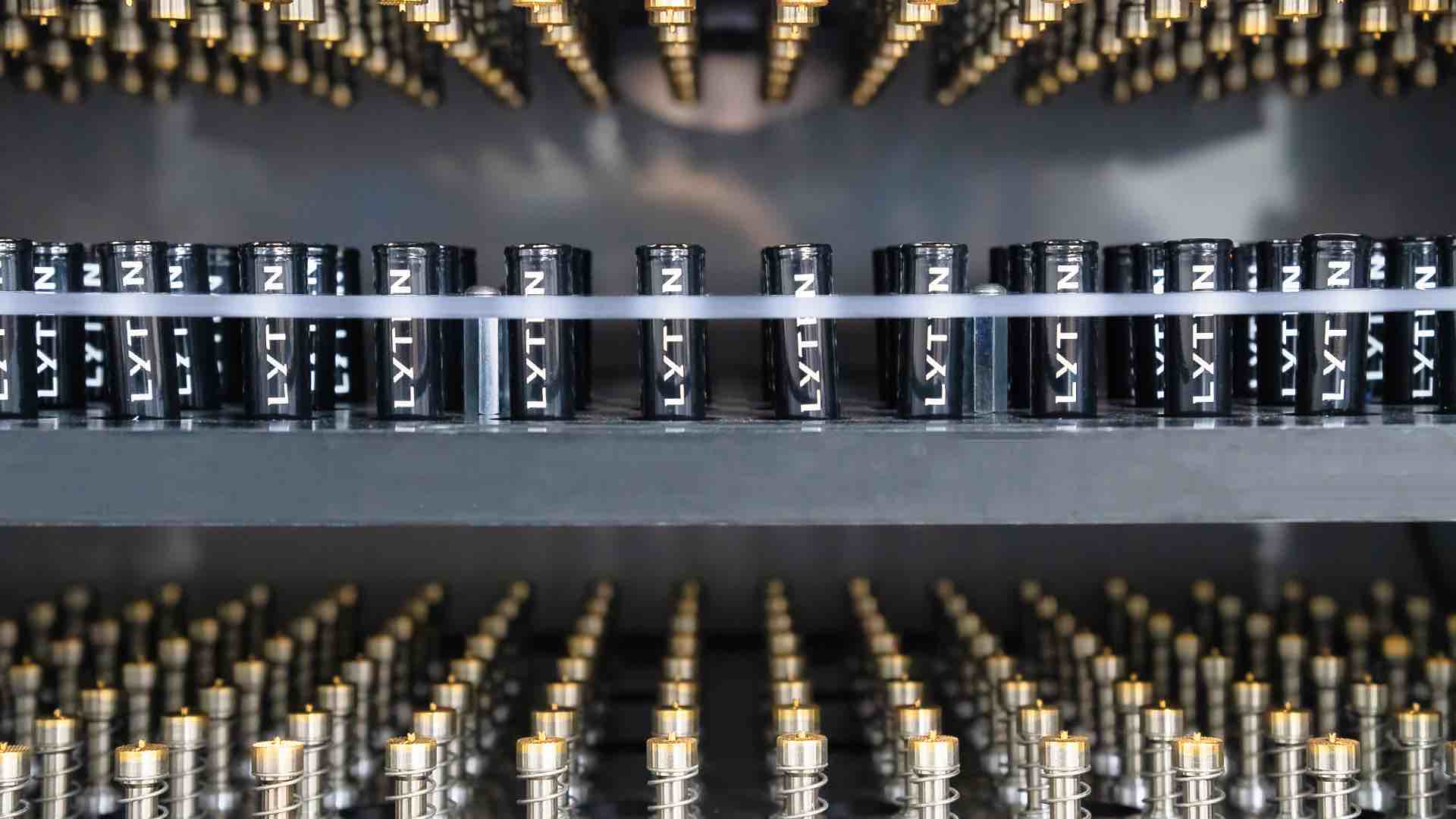
– Lyten launched a drone propulsion unit to scale delivery of U.S. sourced and manufactured lithium-sulfur batteries for drone applications and expanded manufacturing capacity in its California product facilities.
– KULR Technology Group and Hylio announced they will collaborate to design, prototype, qualify, and domestically manufacture NDAA-compliant battery systems to integrate into Hylio’s UAS platforms.
The Threat
Shield AI’s Michael Yang shared two examples that illustrate why we must secure the supply chain:
-In September 2024, a coordinated series of explosions involving thousands of wireless pagers and walkie-talkies in Lebanon and Syria resulted in dozens of deaths and thousands of injuries. This was “widely attributed to a state actor’s tampering of communication devices.”
– In February 2025, Russian authorities reported shipments of first-person view (FPV) drone headsets loaded with explosive charges detonated upon activation in multiple regions of western Russia and eastern Ukraine. This caused serious injuries.
“These incidents demonstrate that adversaries are not only targeting software and networks but also inserting physical hazards into hardware and consumer technologies,” Yang said, “exposing critical gaps in supply chain integrity that have direct implications for national security and defense readiness.”