
Teledyne FLIR has unveiled FirstLook 125, a new iteration of the tiny ‘throwable’ tracked UGV used by infantry, EOD and public security first responders as highly portable terrain-resilient ground reconnaissance systems that can be literally chucked through a window if necessary. The new model introduces the company’s signature thermal sensors, a big speed boost, and networking with the company’s popular Black Hornet nanodrone.
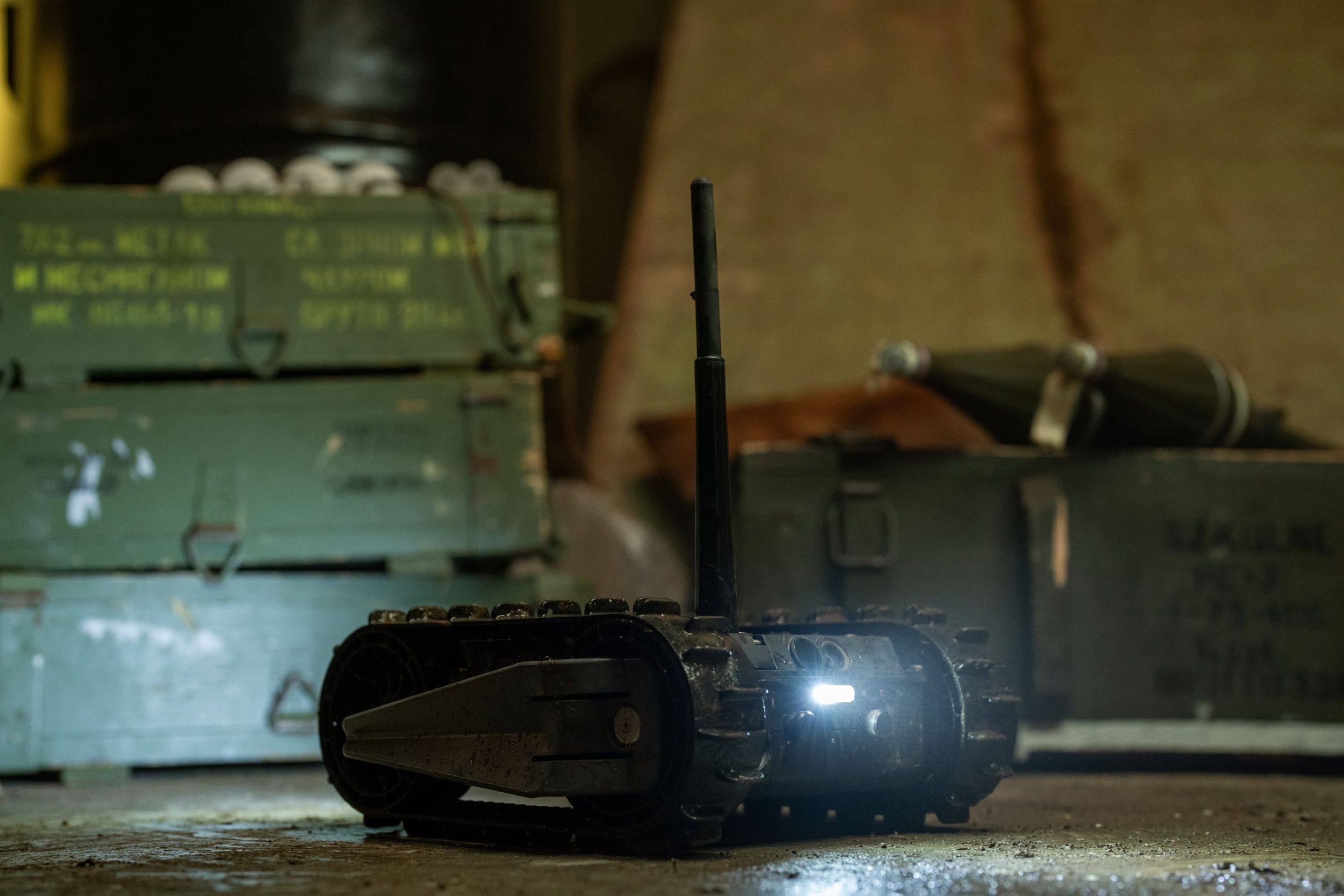
FirstLook traces its lineage back Roomba-inventor iRobot, which in 2011 debuted its throwable FirstLook 110 UGV to rapid interest from the Pentagon. iRobot’s defense branch was spun off into Endeavour Robotics in 2016 then three years later acquired by Teledyne-FLIR, which is now seeking to evolve the original design.
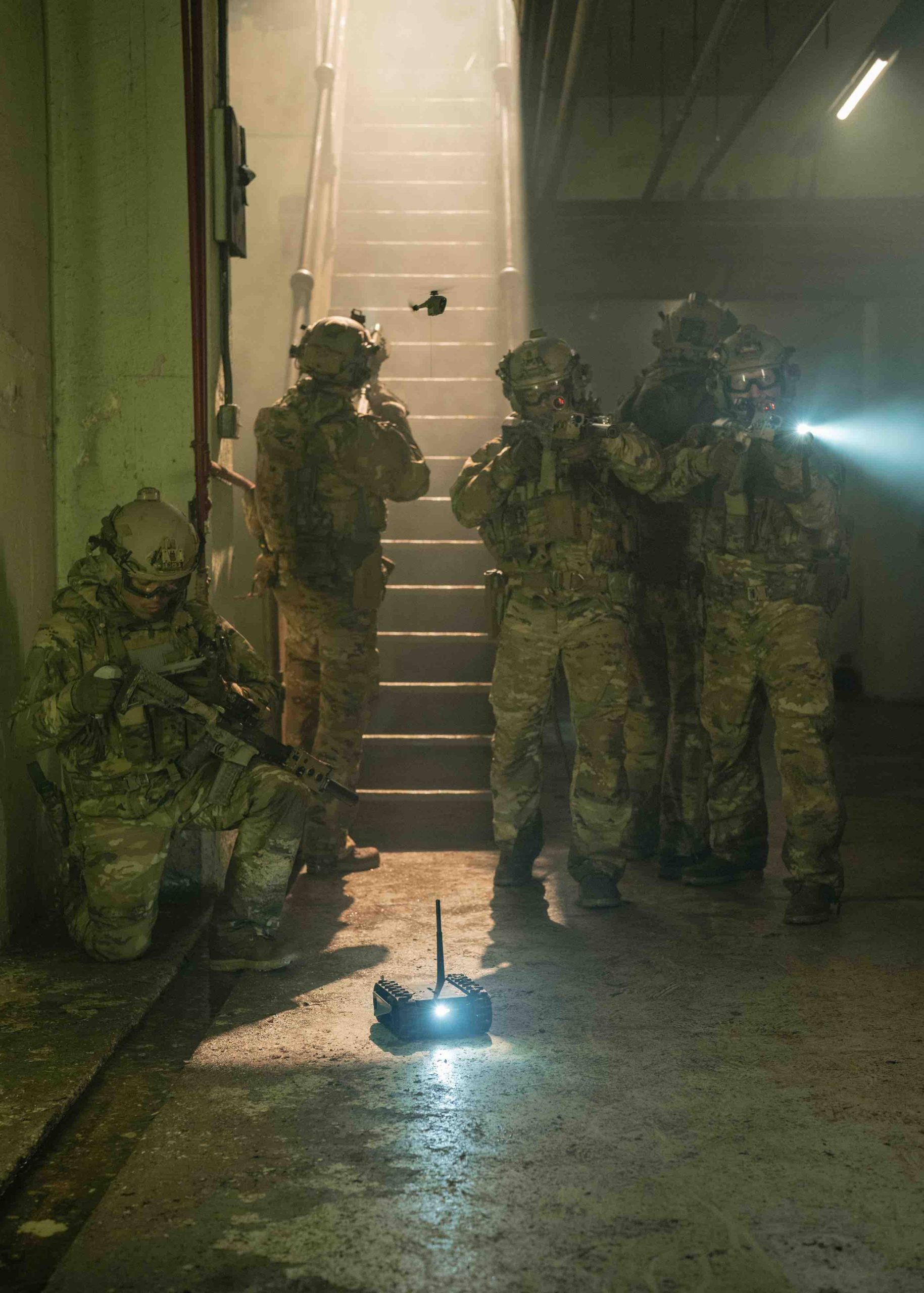
For FirstLook 125, Teledyne FLIR says it incorporated the same controller and operational ATAK/Nett Warrior interface architecture as its popular Black Hornet 4 nanodrone widely disseminated in U.S. and NATO infantry squads/fireteams. The idea is for FirstLook 125 to extend workflow and capabilities established for Black Hornet into a new ground-crawling dimension.
Furthermore, the Black Hornets and FirstLook 125s can function as radio relays for one another. That suggests interesting potential ConOps in which one platform helps extend the useable range of the other in various scenarios—whether over greater distance, or into comms-denied interior/subterranean environments presenting access challenges.
Compared to the preceding FirstLook 110, FirstLook 125 weighs 14% heavier at 5.7 pounds and has slightly reduced obstacle clearance (6”) and maximum runtime (5 hours), but now boasts nearly twice the maximum speed at 6 miles per hour. Critically, its sensor suite is expanded to include front and rear facing Boson 640+ thermal cameras, in addition to 360-degree HD cameras (with both regular and near infrared lights) and two-way audio. Sensor feeds and commands are transmitted and received via AES 256-encrypted datalinks.
The platform can still survive drops from 16 feet high—or being thrown 33 feet—and right itself using articulated flippers.
According to Teledyne’s datasheet, the diminutive UGV can climb 30-degree slopes or 6” obstacles and perform zero radius turns; and it has a maximum speed of 6 miles per hour and runtime of 5 hours. The datasheet notes a payload port option, but maximum capacity or support for specific mission systems like manipulator arms remains undetailed. However, manipulator arms for disarming mines or unexploded ordnance, however, are commonly seen installed on FirstLook 110s employed by U.S. military units.
FirstLook was one of four Teledyne-FLIR UGVs supported in a $15 million five-year contract issued by the Pentagon in 2024. FirstLook 110s are individually generally priced around $20,000-$25,000 today, which, factoring in inflation, corresponds to a $15,000/UGV cost recorded for a 2012 Pentagon order for 100.
Integration with Black Hornet and thermal sensors would seemingly make the FirstLook 125 even better adapted to helping infantry, EOD specialists and public security personnel perform ‘first in’ reconnaissance into dangerous or very cramped/cluttered areas that may be poorly illuminated and outside reach or ordinary comms links.