
The U.S. Army is standing up a new “fast lane” for counter-UAS and tactical edge systems, and it’s starting to fill up. Built around live experimentation, prize challenges and a European-based marketplace, the model aims to move vetted systems from demo to delivery in months instead of years, for both U.S. and NATO forces.

Fortem Technologies and MatrixSpace have both been tied to the Army’s new Global Tactical Edge Acquisition Directorate (G-TEAD) Marketplace, an acquisition mechanism designed to move proven technology to operational units in weeks instead of years.
For industry, that makes G-TEAD a repeatable path from live experimentation and xTech competitions to streamlined procurement for U.S. and NATO forces. A recent legal analysis, drawing on the Army’s SAM.gov notice, describes the G-TEAD Marketplace as “a flexible acquisition vehicle and innovation platform designed to accelerate delivery of operationally ready (TRL 6+) equipment and software” to Army units and allied partners. Seen that way, it is as much a structural change in how the Army buys as it is a new contract vehicle.
At the same time, G-TEAD sits inside the Army’s broader “innovation at the edge” reform push, what the service now calls Army PIT (Portfolio, Integration and Transformation). PIT bundles together the G-TEAD Marketplace, the Joint Innovation Outpost, the FUZE program and other tools meant to give portfolio acquisition executives faster, more flexible ways to pull commercially developed technology into operational formations.
How Does G-TEAD Work?
G-TEAD is building a Commanders Marketplace, a curated catalog of vetted systems that have been successfully demonstrated and are ready for near-term fielding. The public-facing site frames it as “Army technology solutions” available through challenges, experiments, and other on-ramps. In effect, it functions like a defense-focused “app store,” where commanders with ordering authority can shop among pre-vetted systems that already meet competition and interoperability requirements.
The underlying SAM.gov description emphasizes that the Marketplace will host Technology Readiness Level (TRL) 6 and above systems, with an initial focus on counter-UAS and tactical edge capabilities, but with the ability to expand into other mission sets. It also flags support for Foreign Military Sales and direct commercial sales, signaling that G-TEAD is meant from the outset to be a joint U.S.–allied procurement channel.
In practice, it’s intended to:
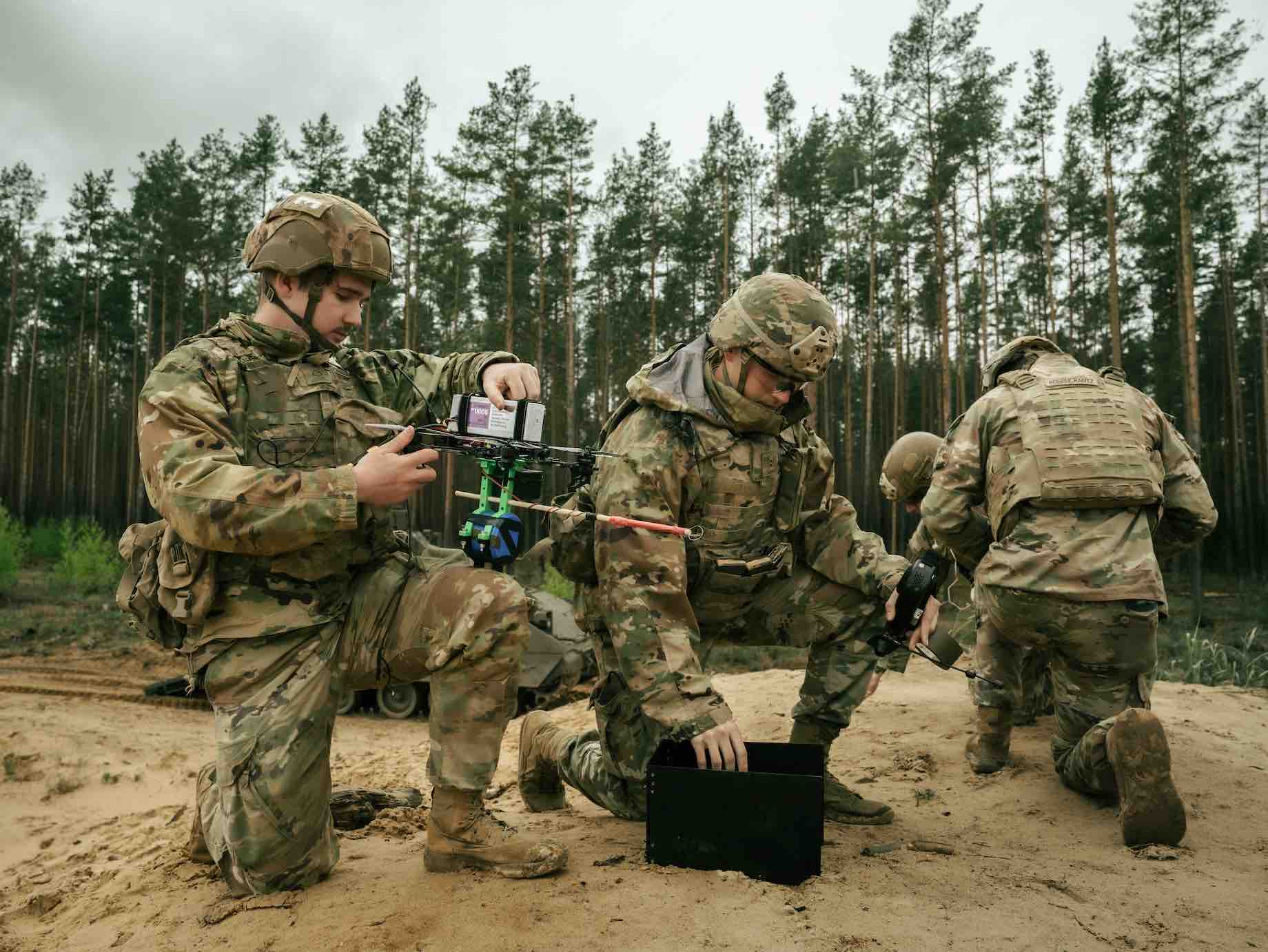
- Use experimentation events like Project Flytrap to screen and stress systems with real soldiers.
- Use xTech prize competitions as the competitive down-select mechanism under 10 U.S.C. § 4025 and related authorities.
- Populate the Marketplace with winners that can then be bought quickly under existing rapid acquisition pathways.
The xTechCounter Strike competition documentation makes that linkage explicit: finalists receive prize funding, carry out live experimentation in Europe, and “may be considered for addition to the Global Tactical Edge Acquisition Directorate (G-TEAD) Marketplace,” positioning them for rapid follow-on agreements. Final winners are expected to deliver capabilities within 90 days of award, with a menu of follow-on authorities ranging from OTAs and prototype projects to experimental procurement and SBIR/STTR.
Beyond the prize challenge path, G-TEAD is also meant to onboard systems that have already proven themselves in operational deployments. The Marketplace announcement notes that vendors outside xTech can be invited to demonstrate and, if successful, be added as catalog items using the same rapid-acquisition logic.
It’s a structural answer to a familiar problem for small and mid-tier vendors: winning demos but stalling out before meaningful procurement.
Operation Flytrap 4.5 and xTechCounter Strike
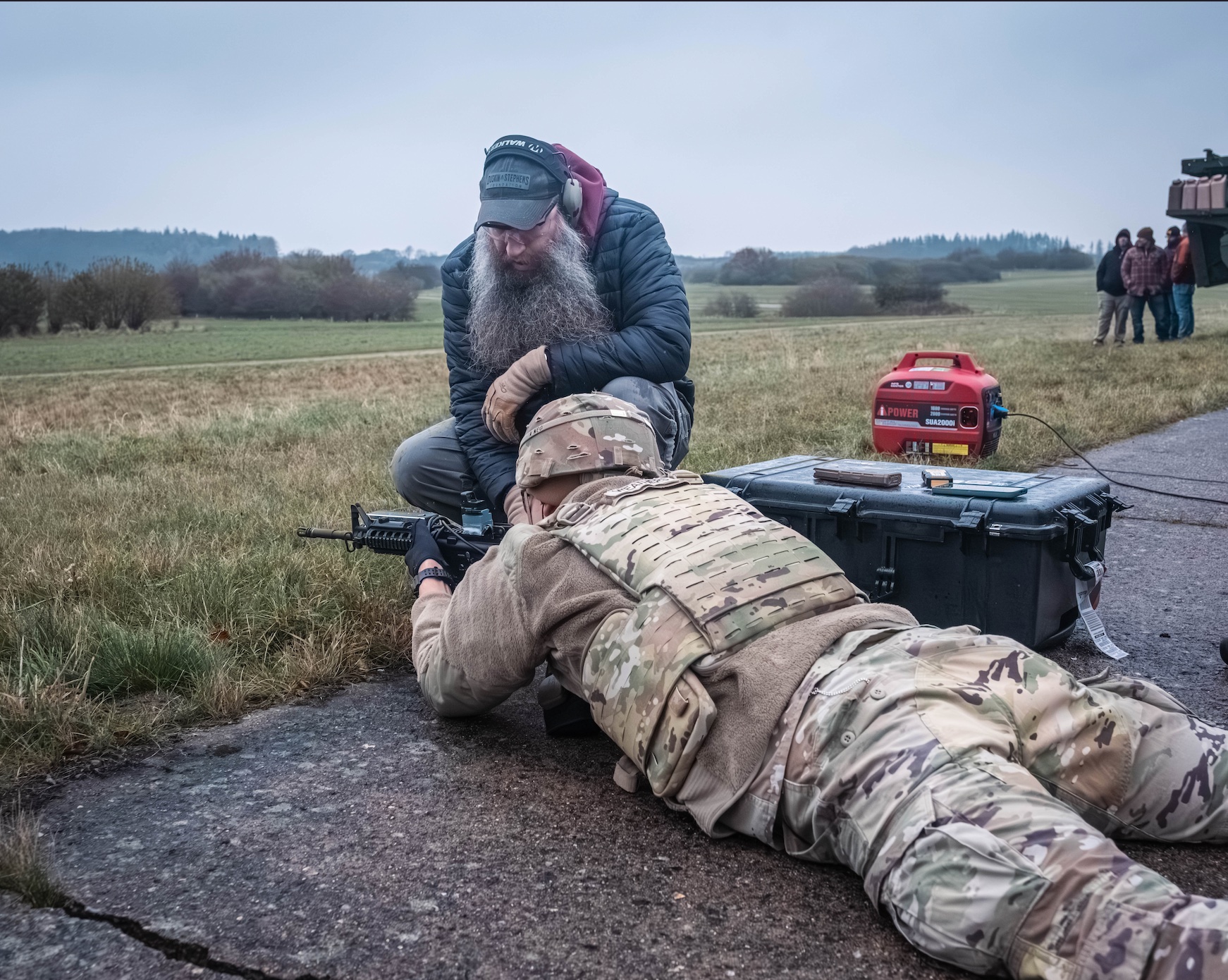
G-TEAD’s role came into focus during Project Flytrap 4.5 at Truppenübungsplatz Putlos, Germany, where the Army’s 52nd Air Defense Artillery Brigade and 10th Army Air and Missile Defense Command evaluated “lower-cost, portable sensors and shooters” for the Eastern Flank Deterrence Line (EFDL), NATO’s plan for a unified, layered air defense shield along its eastern border.
Project Flytrap is the Army’s signature live C-UAS experimentation series in Europe. Previous Flytrap iterations focused on maneuver units and base defense; Flytrap 4.5 added a sharper emphasis on scalable systems that could be plugged into the emerging Eastern Flank architecture. Planning began nearly a year earlier at the request of U.S. Army Europe and Africa and NATO Allied Land Command, with the 52nd ADA Brigade tasked to identify air defense technologies that could counter the growing density of low-cost Russian drones and missiles.
The competition was structured in two phases. From a field of more than 200 applicants, up to 15 finalists were selected based on white papers, pricing data and prior demonstration experience. In front of Army, DoD and NATO subject-matter experts, finalists conducted live fire and field evaluations alongside soldiers from the 10th AAMDC, V Corps and the 2nd Cavalry Regiment.
The Army’s xTech program named four winners:
- AG3 Labs – Locus red-team drone platform (threat-simulated UAS)
- Armaments Research Company (ARC) – weapon-borne passive sensing for C-UAS operations
- MatrixSpace – active UAS detection with expeditionary AI radar
- Mountain Horse Solutions – passive UAS detection
Each winner receives a $350,000 prize and is positioned for addition to the G-TEAD Marketplace, making them eligible for rapid follow-on agreements and contracting opportunities.
On the ground, the exercise was framed around the Eastern Flank Deterrence Line. Col. Haileyesus Bairu, commander of the 52nd ADA Brigade, underscored the shift in focus toward the small, proliferated threat: “We have to start thinking about the group ones, the group twos, the group threes – the smaller and cheaper systems.” For NATO, Project Flytrap serves as both a technology demonstration and a rehearsal for a future in which massed drone raids are routine and air defense must scale accordingly.
Why the Army Needs a G-TEAD-style Approach
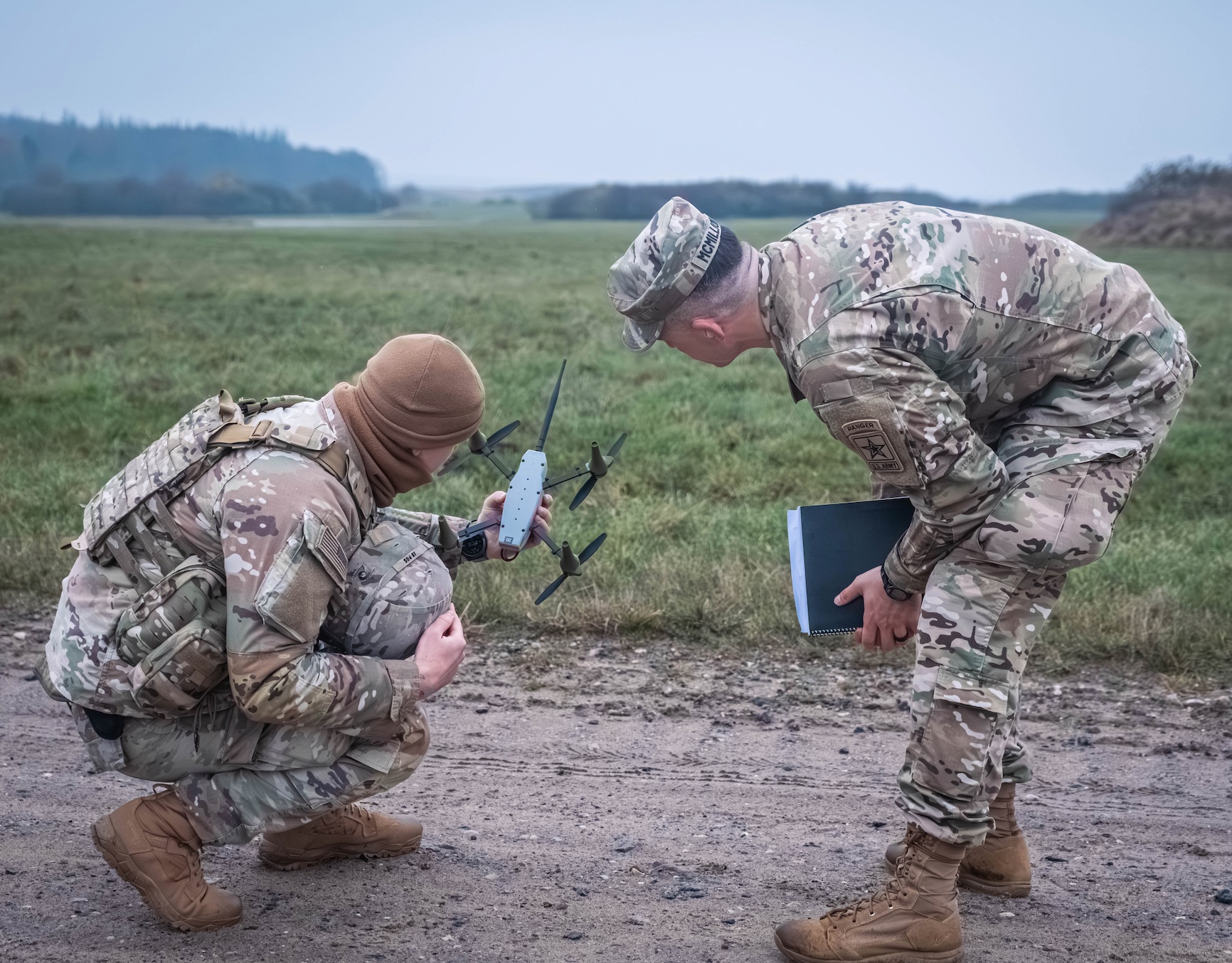
Behind G-TEAD is a simple operational problem: the Army and its NATO partners are seeing a rapid, real-world learning curve in drone warfare, and the acquisition system must keep pace. Russian and Ukrainian forces have turned small UAS, FPV drones and loitering munitions into a daily reality along NATO’s eastern flank. Cheap drones are forcing expensive, manpower-intensive responses—scrambling fighters, moving air defense units, surging ISR—that don’t scale.
The Eastern Flank Deterrence Line concept, as articulated in recent think-tank and Army briefings, is to build a layered, affordable defense that can defeat “mass” hundreds of Shahed-class drones and missiles at sustainable cost. That requires large numbers of attritable sensors and effectors, rapid iteration as the threat evolves, and open architectures so national systems can plug into a common data layer.
Project Flytrap 4.5 and the xTechCounter Strike competition are the Army’s attempt to flip that equation by finding attritable, maneuverable, automated sensors and shooters that can plug into FAAD-C2 and NATO standards and then be bought in quantity. As Army officials have stressed, high-end systems like Patriot and Avenger won’t go away, but they need a layer of lower-cost C-sUAS systems underneath them to protect maneuver forces, logistics hubs and critical infrastructure.
For C-UAS companies, this model matters because it’s not just another exercise, it’s designed to be a structural way for the Army to turn rapidly evolving threat lessons into actual recurring buys. For commanders, it is a way to reduce the time from “demand signal” to fielded capability to something closer to 90–120 days, timelines that have been demonstrated in early Eastern Flank deployments of drone-on-drone systems and soldier-operated C-UAS kits.
MatrixSpace: AI radar as the “active sensor” slot
Among the Flytrap winners, MatrixSpace stands out as the only active sensing provider selected from 15 finalists. The company’s expeditionary AI radar and 360° AI radar, powered by its AiEdge software stack, were evaluated for fast setup, all-weather performance and seamless integration into the Army’s FAAD-C2 using the NATO-standard SAPIENT protocol.
MatrixSpace’s own account of the event highlights several features that align closely with G-TEAD’s design goals: ultra-low size, weight, power and cost (SWaP-C); AI-driven detection and classification of low, slow, small targets; and a software architecture that can support multi-sensor fusion and wide-area deployment. The radars are intended to be carried and set up by small teams, providing coverage in gaps where larger fixed sensors are impractical.
That combination is precisely what G-TEAD is trying to push into the Marketplace: modular, network-ready sensors that can be dropped into Eastern Flank defenses and other contested environments without bespoke integration projects.
Fortem: an early C-UAS “shooter” on the shelf
If MatrixSpace represents the sensor side of the equation, Fortem Technologies is emerging as one of the Marketplace’s first shooter entries.
Under its agreement, Army units and other U.S. agencies with contracting authority can acquire Fortem’s DroneHunter interceptor and SkyDome airspace security solution without additional competition, using the Marketplace as a contracting framework to cut down traditional procurement delays. Certain NATO and allied agencies can also place orders, subject to applicable agreements.
In its own announcement, Fortem framed the designation in stark terms. “This is transformational for our customers and for the mission of saving lives,” said Jon Gruen, the company’s CEO. That is precisely the tempo the Eastern Flank Deterrence Line and similar efforts demand.
The company’s technology is already combat-proven in Ukraine, making it a logical early candidate for a marketplace that aims to field “ready-now” C-UAS capability. DroneHunter’s kinetic drone-on-drone interceptors and the SkyDome Family of Systems combining TrueView radar, AI-enabled detection and autonomous engagement, give G-TEAD an initial “shooter” option that has moved beyond prototypes into live operational use.
Fortem indicates it will work closely with Army Contracting Command, capability leads and operational units as the framework expands across theaters and mission sets. That ongoing collaboration will likely influence how future iterations of DroneHunter, TrueView sensors and SkyDome software evolve to meet emerging requirements from both U.S. and allied customers using the Marketplace.
For Army and NATO units, it offers a way to stock the Eastern Flank Deterrence Line and similar deployments with rapidly updatable C-UAS “building blocks” instead of waiting for traditional programs of record.
Fortem’s early admission and MatrixSpace’s xTech win don’t tell the whole story of G-TEAD, but they do show where the Army is going: away from one-off demos and toward a standing, competition-driven marketplace that could reshape who wins, and who gets left behind, in the next phase of counter-drone acquisition.
G-TEAD Takeaways
- If you’re a C-UAS or sensor vendor, G-TEAD is now one of the critical pathways you need to understand. It is where xTech winners, Flytrap veterans and proven operational systems converge into a catalog that commanders can actually buy from.
- If you’re a program manager or integrator, G-TEAD’s Commanders Marketplace is likely to become a go-to source of pre-screened, interoperable building blocks for tactical edge air defense—sensors, effectors and software that are already wired for FAAD-C2, SAPIENT and MOSA-centric architectures.
- If you’re watching the industrial base, the companies that can repeatedly clear this experimentation-to-Marketplace pipeline are the ones most likely to scale into enduring C-UAS portfolios, especially across the Eastern Flank and other theaters where low-cost drones are reshaping the geometry of air defense.
The emerging C-UAS “marketplace logic”
For UAS and C-UAS stakeholders, the G-TEAD Marketplace is the outline of a new Army playbook for small, fast-moving capabilities:
- Experimentation isn’t the end point. By tying xTech, Project Flytrap and G-TEAD together, the Army is trying to fix the classic “demo purgatory” problem, where promising systems win exercises but die in acquisition. Winners are now explicitly pointed toward a follow-on procurement rail, with competition requirements satisfied up front by the prize process.
- NATO and partners are baked in from the start. The Flytrap/EFDL focus and the Marketplace’s emphasis on U.S. and NATO procurements put coalition interoperability at the center of the design, not as an afterthought. The SAM.gov description and related summaries point to G-TEAD as a unified environment that supports U.S., NATO and partner buys, including FMS and DCS options.
- Legal and contracting authorities are pre-wired. xTechCounter Strike is run under 10 U.S.C. § 4025 (prize authority) and explicitly linked to a menu of follow-on statutes—from prototype projects and experimental procurement to OTA and innovative commercial product authorities—so that winning the competition serves as a competitive down-select for later awards. This structure is deliberately intended to give program offices and portfolio acquisition executives multiple pathways to move quickly toward production.
- G-TEAD is part of a 90–120 day pipeline. Public commentary around the Eastern Flank Deterrence Line and G-TEAD points to early pilot efforts already demonstrating a 90–120 day “demand to delivery” cycle, with soldier-driven experimentation, forward 3D printing for low-cost effectors, and rapid follow-on buys. That is the tempo the Army wants to institutionalize across its tactical edge portfolio.