
Government funding, new legislation and the drone threat moving from the battlefield into our communities are all accelerating growth in local and state law enforcement C-UAS adoption.
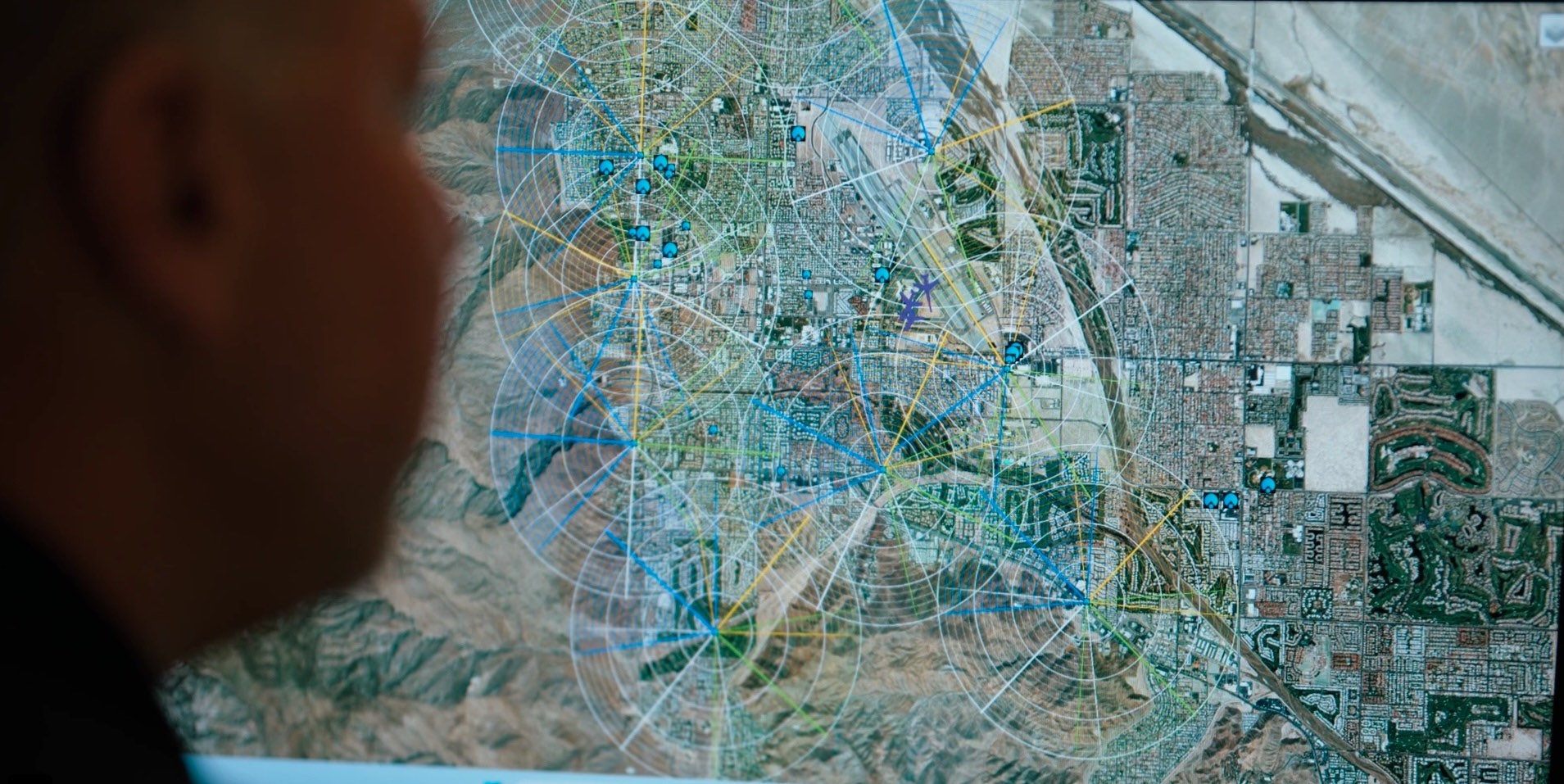
Until recently, counter-UAS (C-UAS) deployments weren’t part of the security posture for state and local law enforcement agencies. Such equipment was reserved for high profile venues and events, and to protect our soldiers on the battlefield. Agencies didn’t have the budget, the authority, or really the need to invest in the kind of continuous airspace protection C-UAS affords. The federal government stepped in when needed to offer protection, and that was that.
But, over the last year or so, the landscape has shifted. As drones continue to proliferate, nefarious actors have become more sophisticated. The risk has evolved, the threat now extending beyond the battlefield and one-off events into our local communities and everyday lives. And it’s a threat that certainly couldn’t be ignored as the U.S. ramped up security for the FIFA World Cup 2026—a catalyst that has driven state and local C-UAS investment and adoption.
The massive event, spanning 38 days from early June to mid-July and 11 U.S. cities, threw public safety—and the emerging drone threat—into the spotlight. Counter-drone capabilities became critical to protecting stadiums and other World Cup venues, and a focal point of security plans. So much so that the FEMA C-UAS Grant Program was created late last year, allocating $500 million over two fiscal years for C-UAS investment—with the first $250 million prioritized for World Cup host states.
World Cup security teams were required to complete training and receive certification through the FBI National Counter UAS Training Center in Huntsville, Ala., to receive funds. Cities like Kansas City, L.A., Seattle, Boston, Dallas and New York have leveraged that money to invest in various types of C-UAS technology, with many taking a layered approach to protection.
Congress also passed the Safer Skies Act last December, extending C-UAS mitigation authority to state, local, tribal, and territorial law enforcement who meet training requirements. Before, only the federal government could deploy defeat technology, a frustration for agencies who could detect rogue drone activity but couldn’t do much about it, other than locate and talk to the pilot.
While the rules governing what law enforcement can actually do with mitigation aren’t final yet, the Safer Skies Act represents a significant leap forward, releasing the “pent up demand” building within law enforcement and public safety agencies, D-Fend Solutions Chief Marketing Officer Jeffrey Starr said. This legislation, combined with the government funding, means budget constraints are no longer a barrier to C-UAS adoption, nor is lack of authority to act against identified threats.
And security teams in World Cup host cities came prepared to put the technology into action.
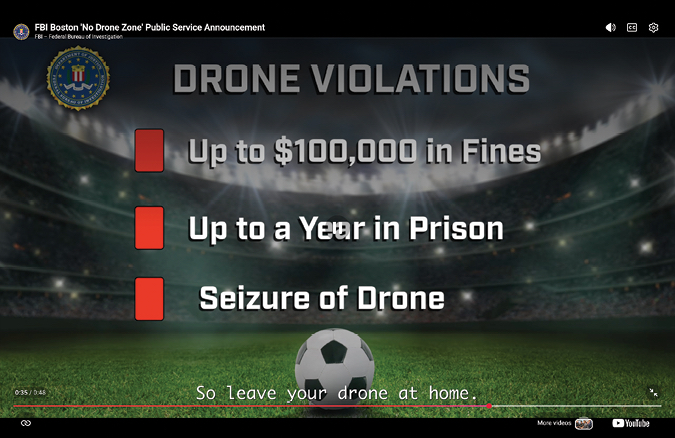
“We will be deploying drone mitigation and interception teams with the capabilities to detect, track and assess unauthorized drone activity that threatens aviation safety or the public around venues at major events,” Patrick Grandy, assistant director in charge of the FBI’s Los Angeles field office, said during a press conference about LA’s drone mitigation plans for the World Cup. “Our counter-UAS teams will be working before, during and after FIFA games, and we will be strictly enforcing laws when it comes to violators.”
Host cities are expected to continue leveraging the technology long after the 2026 World Cup comes to a close. Take New York as an example. In late May, The New York City Police Department announced a permanent C-UAS unit with the authority to electronically disable and take down hostile drones. In all, the city is spending $6.5 million on drone mitigation equipment, NYPD Commissioner Jessica Tisch said during a press conference.
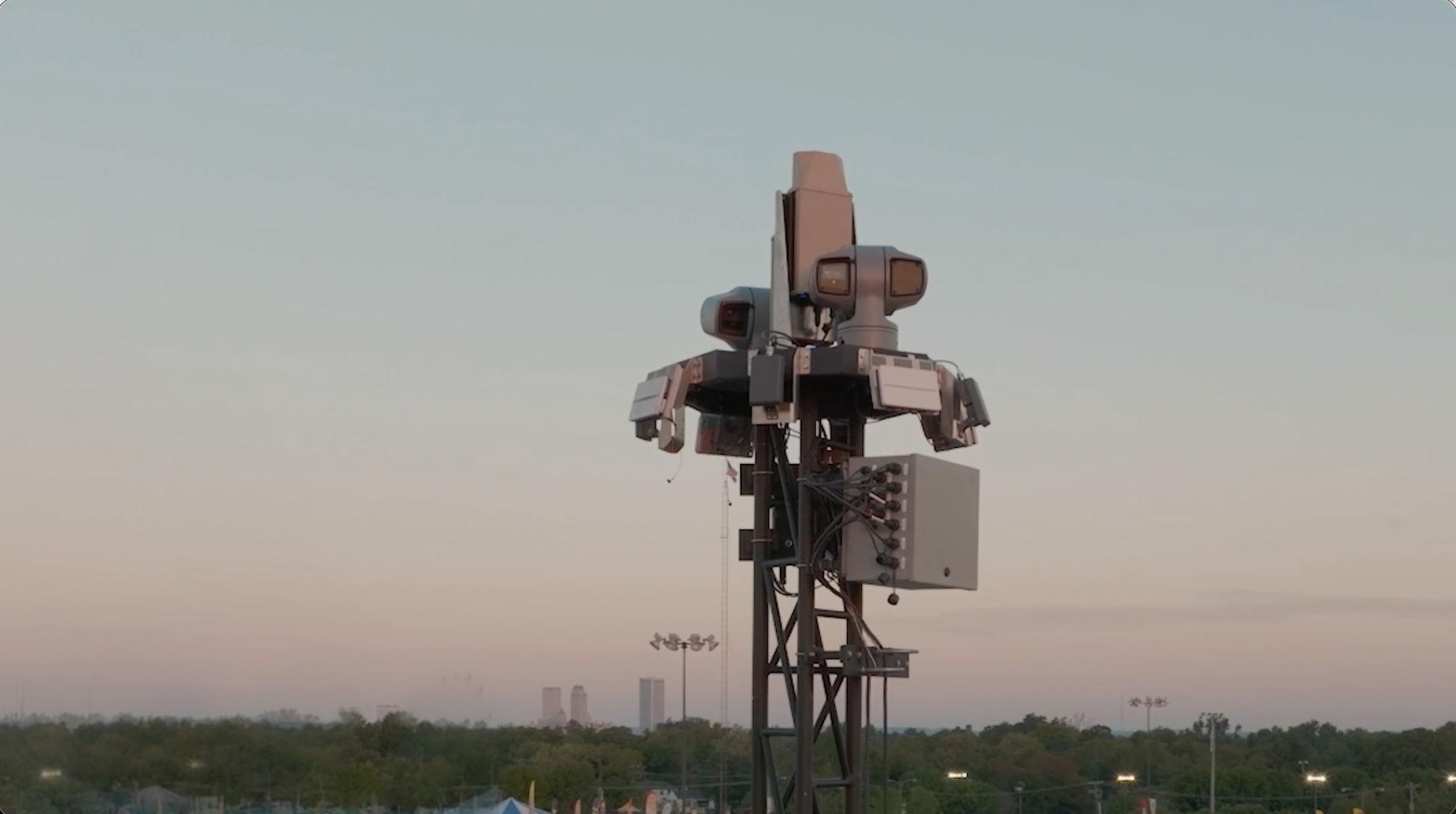
While the World Cup has spurred adoption, C-UAS investment will only continue to grow on the state and local law enforcement side. It has become an emerging market, and one C-UAS vendors must be ready to serve at scale. But this segment, while it has its similarities, is different from the defense and federal customers C-UAS companies are used to serving, particularly when it comes to budgets and mitigation needs. Still, it represents a huge opportunity for the solutions providers prepared to seize it.
As Travis Scott, Dedrone’s vice president of commercial sales, put it, the FEMA program and the FIFA World Cup certainly helped drive adoption, but that’s “not the whole story.” This is only the beginning.
“The World Cup is a catalyst, not the cause,” SkySafe CRO Melissa Swisher said. “While the hard deadline of the World Cup kicking off drove the timeline, the need for airspace intelligence has existed before this and will continue to after. The agencies deploying C-UAS technology for the World Cup are doing so to build a capability they intend to sustain across all events post-World Cup.”
OTHER FACTORS DRIVING ADOPTION
In the early days, most drone incidents were curiosity-driven, Swisher said. Hobbyists might fly a drone near a stadium trying to record an event, not realizing they were violating airspace restrictions.
Today’s risk profile is very different. There’s been a “massive growth” of drones in the airspace, most doing positive work, Starr said, but some deployed for criminal activity. Drones are now being flown to, for example, surveil secure facilities, monitor law enforcement operations or smuggle contraband. Some are even weaponized.
“That shift,” Swisher said, “has moved C-UAS from a nice-to-have into a mission-critical capability for many departments.”
Rogue drones pose a risk whenever there’s a large gathering, said John Knag, VP of Product at MatrixSpace, whether it be a sporting event, concert, state fair or a parade. There’s also an increase in drone activity around corrections facilities, with UAS being leveraged to move materials in and out, as well as a need to secure critical infrastructure. To manage all these threats, public safety must have control of the airspace. That’s what a layered C-UAS approach provides.
Agencies, Knag said, have “woken up” to the threat, and are now moving to put the right C-UAS equipment in place to protect their communities.
“They know it now,” he said. “You look at what’s happening, not just in Ukraine, but the Middle East, and how private infrastructure has been attacked by Iran. We are vulnerable all over the place. It’s really shifted from a from a landscape where we were convincing people they need security to them coming to us saying, ‘Hey, I need security. How can you help?’”
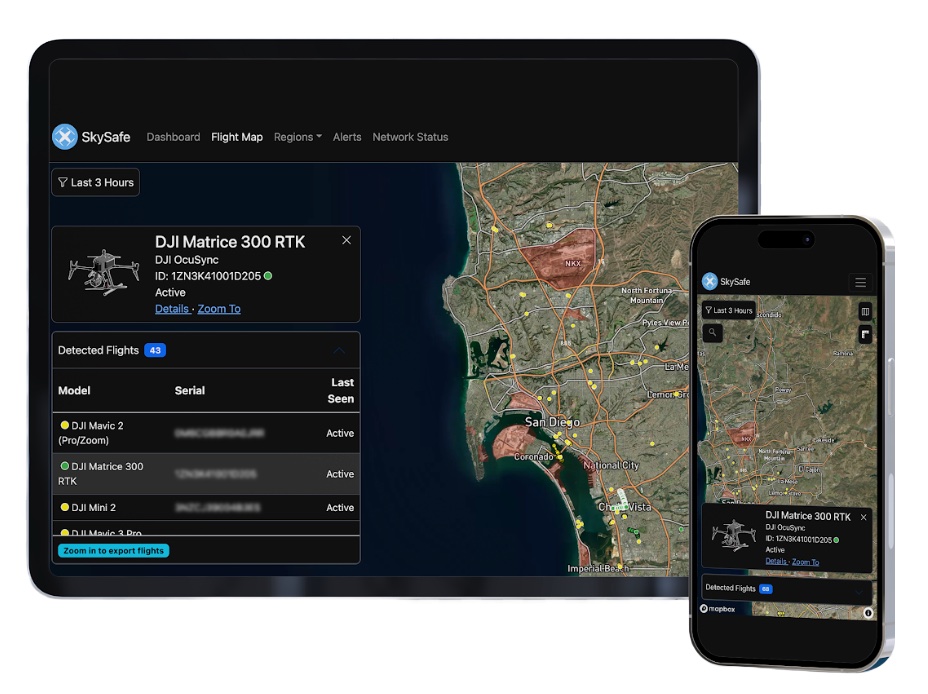
The growth of drone-as-a-first-responder (DFR) programs is also fueling C-UAS investment, Swisher said. With law enforcement agencies deploying their own drones for various missions, they must be able to easily distinguish between authorized drone activity and unauthorized drone activity, in real time. This requires “a level of airspace intelligence that goes well beyond basic detection.”
“That complicates the situation,” Starr said. “You have all of these friendly drones up there and the bad drones might be mixing in. You have to be really careful that your countermeasures only affect the rogue drones and that the good drones can continue what they’re doing unaffected.”
Swisher also sees a “broader normalization happening across public safety.” Airspace intelligence is no longer a specialized capability for a small number of high-profile events. It’s become a baseline operational requirement.
World Cup deployments, DroneShield Director of Public Safety Tom Adams said, not only provided a pathway to significant C-UAS investment with much needed funding, it strengthened protection capabilities going forward.
“The use of this technology is relatively new,” Adams said. “There’s a lot of lessons to be learned, so adding in more users and training them to the same standard and rules of engagement as the federal partners is going to give the U.S. a better bench strength to deploy the technology more consistently and improve homeland security.”
CAPTURING THE MARKET
While public safety isn’t necessarily new market to C-UAS companies, the scale at which it now needs served is. The best way for companies to meet this demand, Swisher said, is by listening. Every agency has different circumstances, requirements, needs and goals, and C-UAS companies must be prepared to meet them.
One common need is operational simplicity. Agencies want solutions that fit naturally into existing public safety operations, Swisher said. Easy integration is paramount, as officers already have dispatch systems, command platforms and communication tools to worry about. They “need actionable information during an incident, not another standalone tool to manage.”
“The conversations we’re having consistently center on three capabilities: reliable detection across a wide range of drone types, real-time operator identification and geolocation, and forensic-grade evidence generation,” she said. “Agencies want all three, and they want them all in an integrated platform.”
Scott agreed, citing integration and scalability as key considerations for public safety agencies investing in C-UAS technology. A C-UAS system living “in isolation from the rest of an agency’s operational picture creates more work, not less.”
“The agencies that will get the most out of C-UAS investment,” he said, “are the ones that treat it as a layer within a broader security ecosystem—and as mitigation authority expands, those with detection already in place will be ready to act.”
Even with the government investment, budget is always a consideration for law enforcement agencies. MatrixSpace radar, Knag said, addresses that need, providing a high-performing, low-cost option. That opens up C-UAS to institutions like prisons, where “there isn’t a lot of budget, but there’s a lot of drone activity.”
Portability is also critical for this market. Knag remembers a conversation he had with a police chief about investing in a fixed C-UAS system. The chief’s question was simple: What was he supposed to do with it? He needed a system that allowed him to protect different events, sometimes on the same day, whether it be a football game, concert or the county fair, not something that was stationary.
“They only want portable solutions because that’s what police do,” Knag said. “They go to where the problem is.”
C-UAS solutions providers must help state and local agencies become “future ready,” Starr said. The threat continues to evolve, so it’s not a good idea to “invest in some heavy hardware based system that’s going to become obsolete when the threat changes.” That’s why there’s been a shift to solutions that are more software centric, enabling constant updates.
The federal government can’t be everywhere, making it critical to empower the local level with the same, or even more precise, surgical technology to detect and, with the proper training, defeat rogue drones. “They need counter measures,” Starr said, “that are nimble, portable, mobile, and that can be put in a vehicle, on a tripod or in a backpack.”

C-UAS companies, up until now, have been focused on serving federal and military customers. The FEMA funding and Safer Skies Act opens up a new market—one they’ve always had inquiries from, but that they couldn’t really serve. State and local agencies now have access to technology and equipment they “desperately need,” Starr said, and solutions providers must work alongside these agencies, form local partnerships, and truly empower them to protect their communities from the growing drone threat.
“We have to provide the training and support that’s needed, and that requires a broader presence,” he said. “It’s incumbent upon us to train them on the details of our technology while, at the same time, they’re being trained at the federal level on counter drone best practices and rules of engagement.”
FROM THE BATTLEFIELD TO THE HOMELAND
Counter-drone technology has a long history in military applications, Scott said, and, while the use cases look different, proven, battle-tested technology is now being leveraged in the homeland. The main differences are regulatory and operational.
“The concept for how the technologies are deployed is really the same,” Adams said. “It’s just you have a lot of different considerations.”
Military organizations, for example, manage controlled airspace around bases and secured facilities where no-fly zones and airspace deconfliction frameworks already exist, Swisher said. State and local law enforcement typically operate in public airspace, where authorized and unauthorized drones are flying side by side.
Then there’s the defeat piece. The mitigation deployed on the civil side is very different than on the military side, Knag said. The goal is to save lives, so using rockets or explosives to take out a drone like you might on a military base just isn’t an option. Lasers and jamming are also too dangerous.
And while mitigation authority is now possible with the Safer Skies Act, it varies by jurisdiction, Scott said, “with real legislative work still ahead.”
“Brute force isn’t going to work. Mitigation has to be precise, surgical and gentle,” Starr said. “The No. 1 goal alongside security and safety has to be continuity. The city has to continue to function. We don’t want to solve the problem by making everything grind to a halt or introducing new dangers.”
The RF cyber D-Fend Solutions provides is among defeat options for the civil side, Starr said. Users can take control of the drone, send it back to the pilot or land it safely without disrupting comms or risking collateral damage. Mitigation should be non-kinetic and non-jamming, which is driving the demand for RF cyber at the foundational level.
“In an urban environment, 90% of what you see is small, commercial off the shelf drones or DIY drones,” Starr said. “You can overcome most of those with RF cyber, and in more sensitive environments, you can overlay it with cyber or cameras or jamming.”
Kinetic measures typically aren’t the right approach on the civil side, but Fortem Technologies provides a solution that safely takes drones out of the airspace. In fact, the company received a multimillion-dollar order to protect World Cup venues with its net-equipped DroneHunter inceptors, according to a news release. The interceptors safely capture and remove hostile drones once detected, without creating debris or putting crowds at risk.
The order includes ground-based TrueView R30 radar units for drone detection and tracking, SkyDome command-and-control software for autonomous threat response, and the interceptor to capture hostile drones. Fortem was the only kinetic mitigation solution deployed to protect World Cup venues, this coming after it was also leveraged to protect the 2022 FIFA World Cup in Qatar.
“The threat posed by small drones is one of the most consequential shifts in security of our lifetime,” Fortem CEO Jon Gruen said, according to the release. “But it’s a threat we know how to stop—and we’ve already proven it on one of the world’s biggest stages.”
As that threat continues to evolve, law enforcement end users understand the challenges they face and are coming to the C-UAS conversations well informed, Adams said. They know one technology isn’t enough, and that the kind of protection they need requires a layered approach and various form factors from handhelds to units that can be installed in vehicles.
“They understand that if you want to be able to detect a wide range of drones in the airspace, you have to have radio frequency detection, cameras, radars, and even acoustic sensors,” he said. “And they also understand on the defeat side you have to bring a wide range of technologies just because of the variety of drones that may be navigating through the airspace.”
C-UAS POST WORLD CUP
The equipment purchased for World Cup deployments, Starr said, will serve as a “great foundation moving forward,” for permanent C-UAS protection for the homeland.
Through the World Cup, agencies learned what persistent drone detection and airspace intelligence looks like in practice, Swisher said, and “that experience tends to reframe how they think about ongoing use cases.”
The biggest opportunities moving forward, she said, are critical infrastructure protection, venue and event security, and campuses: “Utilities, energy facilities, transportation hubs, and other critical infrastructure operators face persistent airspace risks that don’t disappear after a major event ends.”
Starr also expects critical infrastructure to be a focus as we transition from event set ups to long-term C-UAS protection. The World Cup will help agencies establish best practices, with the proposed Critical Infrastructure Airspace Defense Act perhaps the next big C-UAS catalyst. This would extend Safer Skies Act authorities to include critical infrastructure, signaling a need for highly adaptable technology that can be leveraged to protect these sites.
Most of our critical infrastructure remains unprotected, Knag said, so the growth seen in recent years is only the beginning. It’s an area where we’re “poorly defended and vulnerable,” creating an “urgent need nationally, both for homeland defense and for the protection of lives and property.”
“Counter-drone technology is going to be an integral part of everybody’s physical security program in the future.,” Adams said. “It’s going to be a necessary additional layer.”
Dedrone, which was acquired by Axon in 2024, treats counter-drone equipment as permanent infrastructure, Scott said, “not one-off or seasonal spending driven by major events.” He described events like the World Cup as “powerful proof points,” because they put the technology in front of agencies, giving them the firsthand experience that creates lasting demand. Once they use it, they don’t want to live without it.
That demand, Scott said, is coming from every segment they serve, including state and local end users and enterprise segments like retailers, hospitals and telecommunications providers.
“This is a fast-paced time for Axon and other technology providers around the world that are adapting to the emerging need for robust drone defense systems,” Scott said. “The buyer transformation here is real and significant, with many state and local law enforcement agencies building airspace awareness programs from scratch.”
LOOKING FURTHER AHEAD
C-UAS technology must evolve as drones continue to mature, Swisher said. Drones that are faster and more capable are now operating in more complex environments, and detection accuracy and classification capabilities must keep pace.
In the next several years, Swisher expects airspace data to become a standard feed into unified command platforms rather than treated as a distinct capability layer. It will be delivered alongside physical access control, video surveillance and communications.
Regulations will also continue to evolve, Swisher said, giving agencies “more defined legal footing for how they respond to incursions.” She expects that clarity will further accelerate adoption, as uncertainty about what agencies are authorized to do after detecting a drone has held some back from investing in the technology.
Drones, Swisher said, are “now a permanent fixture of the operating environment for any organization managing public spaces, critical infrastructure, or large gatherings. The question isn’t whether airspace security matters—it’s how quickly organizations build the programs to address it systematically.”
The federal funding structure, Swisher said, makes that clear. While the first $250 million from FEMA’s C-UAS Grant Program was prioritized for World Cup host states, the second half is available to all U.S. states and territories. This is a clear recognition that unauthorized drone activity isn’t limited to major events; it’s become an ongoing challenge for public safety agencies nationwide. And that represents an opportunity for the C-UAS industry.
“When Washington allocates a quarter-billion dollars for non-World Cup jurisdictions to build C-UAS programs,” Swisher said, “that’s a strong signal about where this market is heading.”