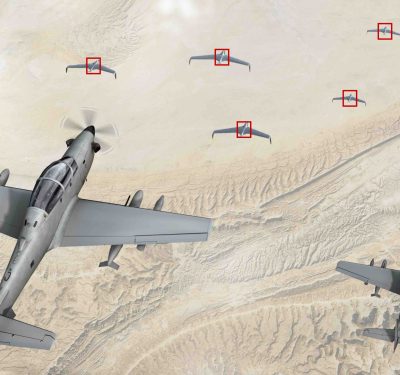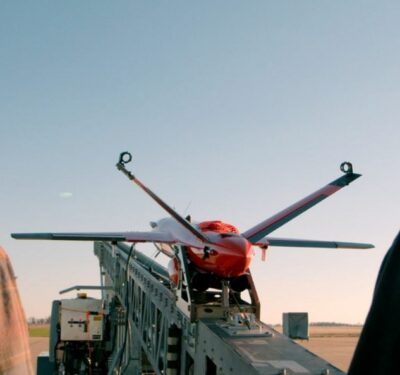

U.S. Army soldiers from the 2nd Cavalry Regiment and paratroopers from the U.K. Parachute Regiment conducted the force-on-force phase of Project Flytrap 5.0 at Pabradė Training Area, Lithuania, in late April and early May, integrating first-person view drones, unmanned ground vehicles, and counter-UAS systems in a live field environment.
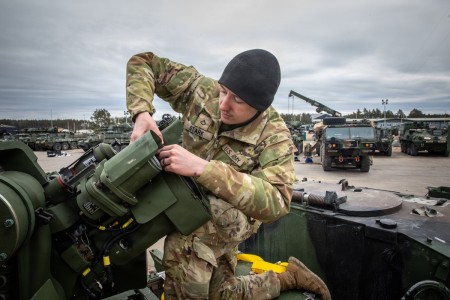
Now in its fifth iteration, Project Flytrap is designed to place emerging unmanned and autonomous technologies directly in the hands of warfighters — including soldiers outside their primary specialty — and use field feedback to drive rapid capability refinement. The exercise integrates autonomous and unmanned ground vehicles, FPV drones, and C-UAS systems on a simulated contested battlefield, with participating units rehearsing counter-UAS procedures and operating UGVs in transport and equipment-staging roles.
Project Flytrap 5.0 is part of the broader Sword26 exercise series, which also includes Saber Strike, Immediate Response, and Swift Response. The Army describes the series as a mechanism for converting experimentation into fielded capability. The exercise directly supports the Eastern Flank Deterrence Initiative, NATO’s framework for a layered air defense architecture along its eastern borders, and is part of V Corps’ effort to bridge laboratory development and field-ready solutions.
Industry representatives participated alongside military personnel to evaluate and refine counter-drone technologies in the field environment.