
Phase II of the Army’s Drone Dominance Gauntlet raises the stakes — longer range, tighter urban missions, continuous electronic warfare, and a push for autonomy that could reshape which companies lead the next generation of FPV strike capability.
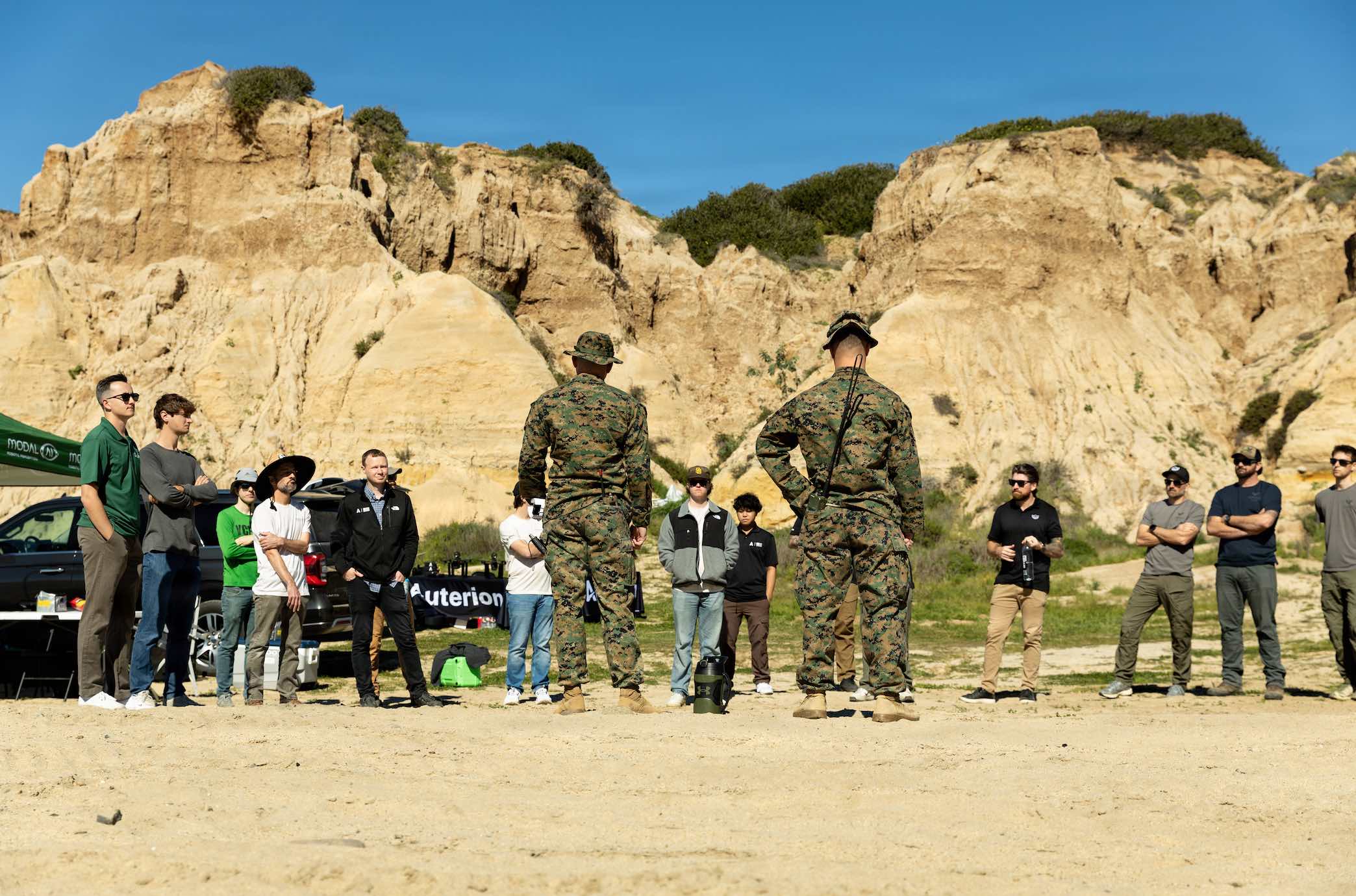
The first phase of the U.S. Army’s Gauntlet competition yielded surprising results this March: Out of 26 companies, large and small, that submitted FPV one-way attack drones for combat trials, only 11 were selected for follow-on production contracts.
While the 11 winners of Gauntlet Phase I rush to complete production contracts awarded by the U.S. Army, by April the Drone Dominance Program (DDP) had begun publicly outlining its evolving vision for Phase II, with qualifiers expected in June and Gauntlet II expected in August, involving more demanding mission sets than Phase I and more sophisticated autonomy capabilities.
DDP officials said they were pleased with the differentiation between competing systems in Phase I, operator-scoring metrics, and the speed with which industry responded to the Gauntlet challenge. Based on industry feedback, a newsletter promised faster feedback to vendors, more training time allocated to operators in trials, recognition of the need for different-sized drones for different tasks, and a commitment to “get ahead of the curve” on supply chain compliance.
WHO QUALIFIES—AND HOW?
For the next round, the program will select 18 qualifying companies to participate in trials, based on their ability to furnish at least 20 drones to demonstrate both their performance of mission-critical tasks flown by vendor pilots, and documentation of their company’s production capabilities.
Despite the “Gauntlet” name, companies that didn’t place in Phase I’s leaderboard can still qualify for later rounds, as they have time to incorporate feedback and iterate upon their UAS, and also because later phases will test additional or different characteristics like C-UAS resilience that could conceivably better favor systems that didn’t make the cut in Phase I.
Phase II qualifiers must bring 120 one-way attack drones and 8 sets of “durable components” (which, besides the expected ground control stations, controller and comms equipment, may also include supporting air assets like relay drones). These must come with at least 30 training munitions and 20 lethal munitions, plus 20 night-vision systems. The systems must comply with NDAA requirements, and must not include Chinese batteries or motors. For UAS supporting a fiber optic link, at least 10% of UAVs supplied should feature them alongside backup control systems. Ability to meet production deadlines constitutes a “hard gate”—a pass/fail test.
HARDER MISSIONS, HIGHER BAR
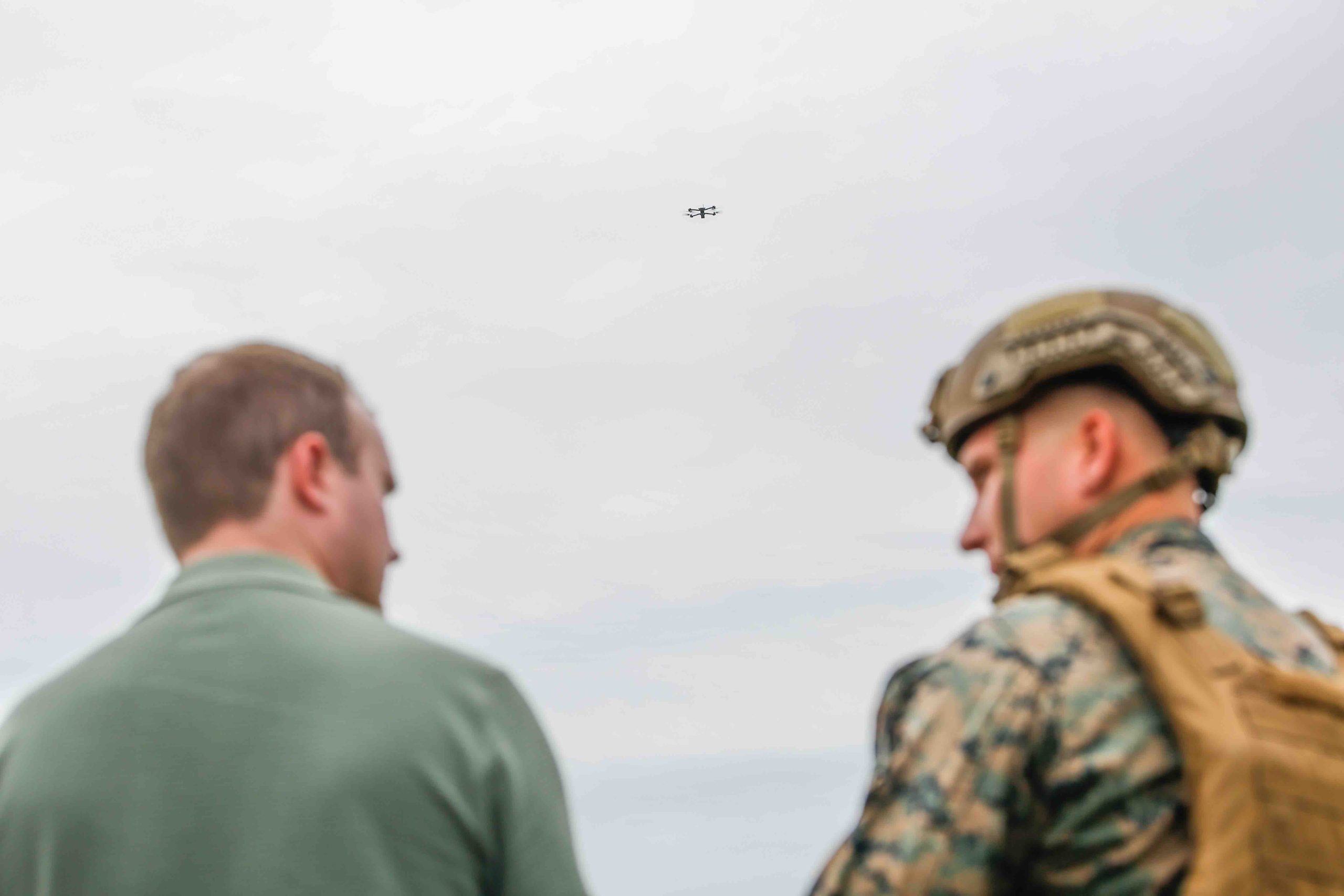
For Phase II, missions will be unscripted and dynamic, involving locating and engaging multiple stationary and moving targets, potentially in rapid succession, under all-weather and both day and night conditions.
TWO MISSIONS, TWO SYSTEMS
Furthermore, munitions must execute missions under conditions of continuous electronic warfare threatening denial of command links and satellite navigation. This is vastly more realistic for simulating effectiveness in conditions with peer, near-peer, or even middleweight adversaries; UAS unable to function in pervasive EW environments will simply fail most of the time against prepared opponents.
The need for C-UAS resilience will favor UAS that either feature jam-resilient communications, fiber-optic cables (like the winner of Gauntlet Phase I), or integrate substantial autonomy and redundant navigation capabilities.
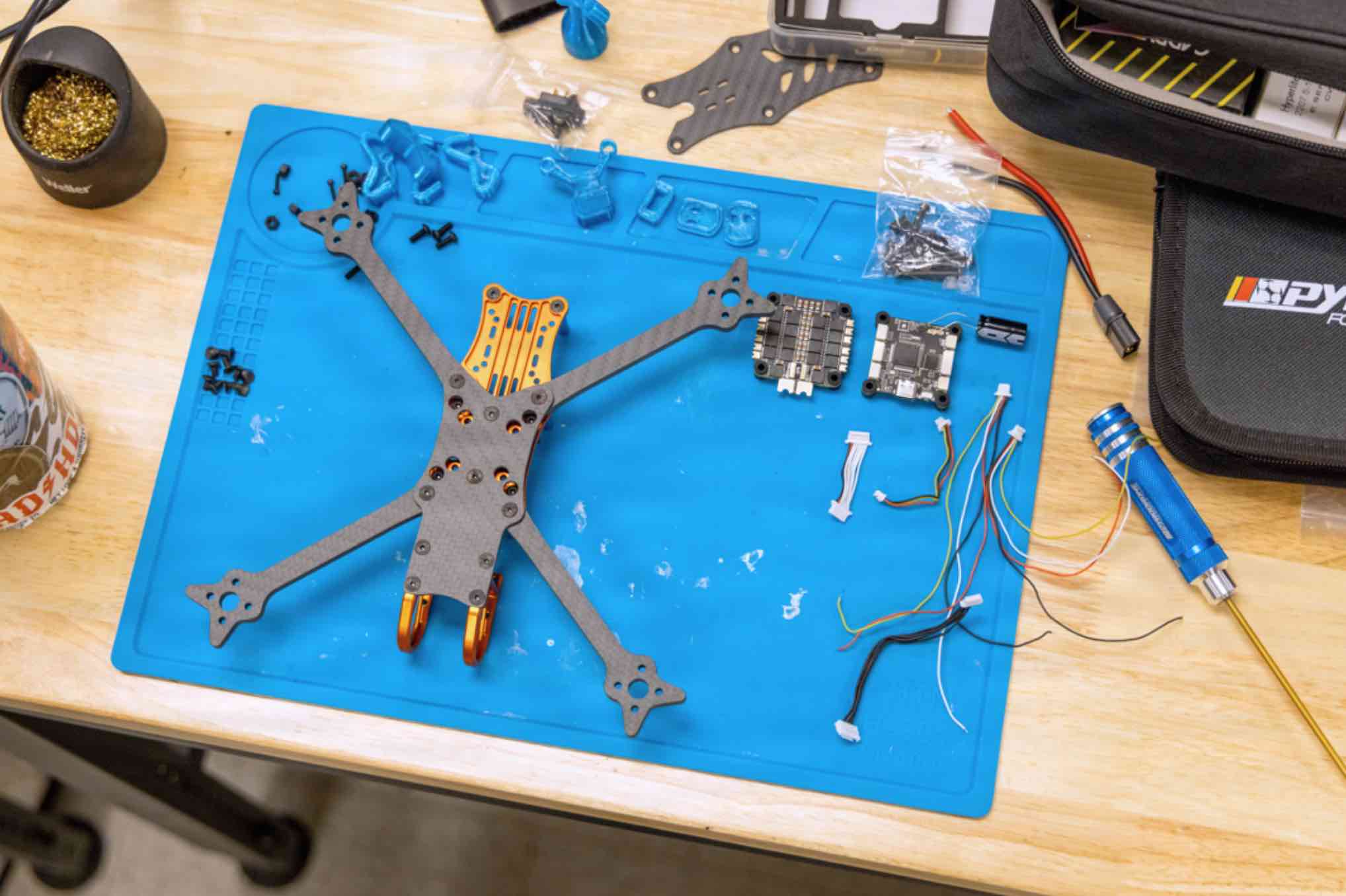
Furthermore, the program fully supports companies bringing two different types of UAVs for Phase II’s two distinctly bifurcated missions: a long-range strike up to 20 kilometers away (twice the range of Phase I’s long-range mission), and a short-range system—likely smaller—to execute 2-kilometer range missions in complex urban environments, including interior spaces.
Ultimately, of the drones offered by the 18 Phase II qualifiers, DDP plans to select five long-range and three close-quarters designs for production.
SIDE-BY-SIDE: PHASE II MISSION CATEGORIES
Phase II FPV Strike Drone
• Up to 20-kilometer strike range in C-UAS environment
• Manpack not required
• Five production awards (1st: 8,500 units, declining to 4,000 for 5th; 30,500 combined)
• $5,500 per FPV price cap Phase II Close Quarters FPV Drone
• Designed for tactical assault in confined urban environments out to 2 kilometers
• Effective inside buildings, trenches, bunkers, heavy vegetation, subterranean environments
• Must be man-packable
• Three production awards (1st: 9,500 units; 2nd: 8,500; 3rd: 7,500)
• $4,500 per FPV price cap
Operator Training and Autonomy Priorities
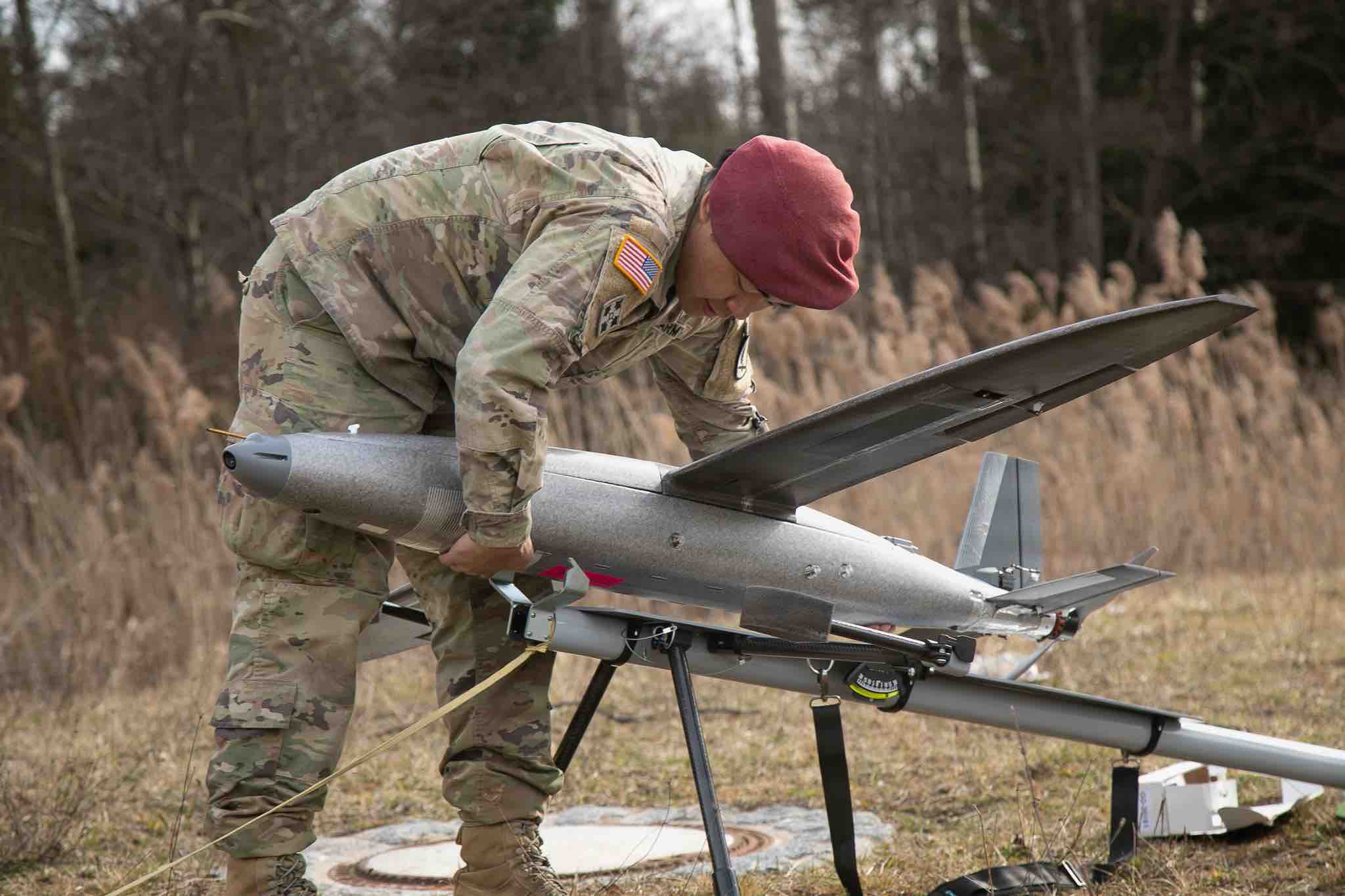
This time, military operators will get four days to familiarize themselves with systems the week before Gauntlet II, rather than just two hours. That may subtly shift emphasis from maximal ease of use toward systems with higher-end capabilities requiring a bit more operator proficiency — which may be needed anyway to successfully execute Phase II’s more demanding missions.
DDP will also favor ‘cognitive de-loading’ in UAS — reducing mental task-load on operators with features such as Automatic Target Recognition with “robust pixel lock”; the ability for one operator to easily control multiple drones; and autonomous navigation and area search capabilities. These features are not required but will “provide a meaningful performance advantage.” It is also notable that these price ranges are higher than initially projected for Phase II.
A Diversified Ecosystem, Not a Single Standard
The more significant shift is that the DDP appears to be moving away from a pure ease-of-use and lowest-cost competition and toward a differentiated ecosystem of specialized FPV one-way attack drones. Under that model, a simpler and cheaper system might suit regular infantry formations, while more capable designs with stronger autonomy or resilience features could be better aligned with dedicated strike units and SOF mission sets.
Certainly, Ukraine and Russia are using highly diversified FPV inventories to considerable effect at different levels of the order of battle. That battlefield experience suggests there may be value in maintaining multiple drone types optimized for different missions, even if the tradeoff is a more complex training and sustainment environment.
Conflict observers hold varying opinions over whether the lack of standardization is an overall positive trait — bringing evolution and resilience through diversity — or simply a condition forced by wartime needs with negative impacts on training and force cohesion.
Ultimately, this is not a race to identify a singular M16 rifle or Abrams tank solution for across-force standardization that will serve for decades. The program’s website says they’re hoping to identify 3–5 “champion” companies able to scale production of moderately differentiated UAS to the U.S. military — creating a healthy, diversified industrial ecosystem for the coming decades.
Furthermore, DDP hopes its orders will stimulate growth of a larger, healthier indigenous components sector that can feed cameras, engines, RF systems, goggles, controllers, and munitions to multiple production streams simultaneously, at low cost, without depending on Chinese parts to meet price commitments and delivery schedules.
DRONE DOMINANCE LETHALITY CHALLENGE
Phase I of the Drone Dominance Gauntlet competition rewarded the optional submission of an integrated munition with each competing UAS. Seventeen of the 26 participating companies submitted such a munition — including 9 of the 11 UAS that made the leaderboard.
For a new Lethality Prize Challenge — with submissions due by mid-April — DDP is instead seeking to identify modular, low-cost, and scalable payloads interoperable across different UAVs, noting that munitions currently account for a sizeable proportion of overall FPV system costs. Winners will be presented to Phase II vendors under a ‘preferred solutions’ list, with DDP assisting with integration and safety qualification for Gauntlet II participants.
Winning vendors may also receive production contracts (via OTA, FAR, or experimental funding). They must also submit ten rounds of each ammunition subvariant by June, which will then undergo arena and penetration tests through August.
Standards, Safety, and Procurement Requirements
The sought payload must include warhead, electronic or electromechanical safe and arm devices (ESADs or EMSADs), and interface components. A program briefing emphasizes adherence to common safety and interface standards — notably including the Army’s CLIK and small Universal Payload Interface (sUPI) developed at Picatinny Arsenal — though alternative MOSA solutions are tolerated.
The program wants a trifecta of munition types: anti-personnel (APER), anti-materiel (AMAT), and armor-piercing Explosively Formed Penetrators (EFP), plus realistic training/inert rounds. They must support both impact and command detonation and, for safety reasons, must incorporate visible safe/arm indicators, mission termination/self-sterilization capabilities, and safe separation timers.
The program prefers — but does not require — munitions with built-in self-testing, proximity-burst and height-of-burst fusing modes and other configurable effects, sUPI interface, and prepackaged payloads over field-packed ones.
From the UAS manufacturer’s perspective, the Lethality Prize Challenge may reinforce the advantage of designing FPV one-way attack drones to support future standardized, interchangeable payloads rather than pursuing solutions bespoke to a particular UAS.