

The U.S. Navy wants long-range unmanned aircraft that can operate without a runway, a carrier deck or elaborate launch-and-recovery equipment. The Defense Innovation Unit’s Runway Independent Maritime Expeditionary System program, known as RIMES, is one effort to answer that requirement.
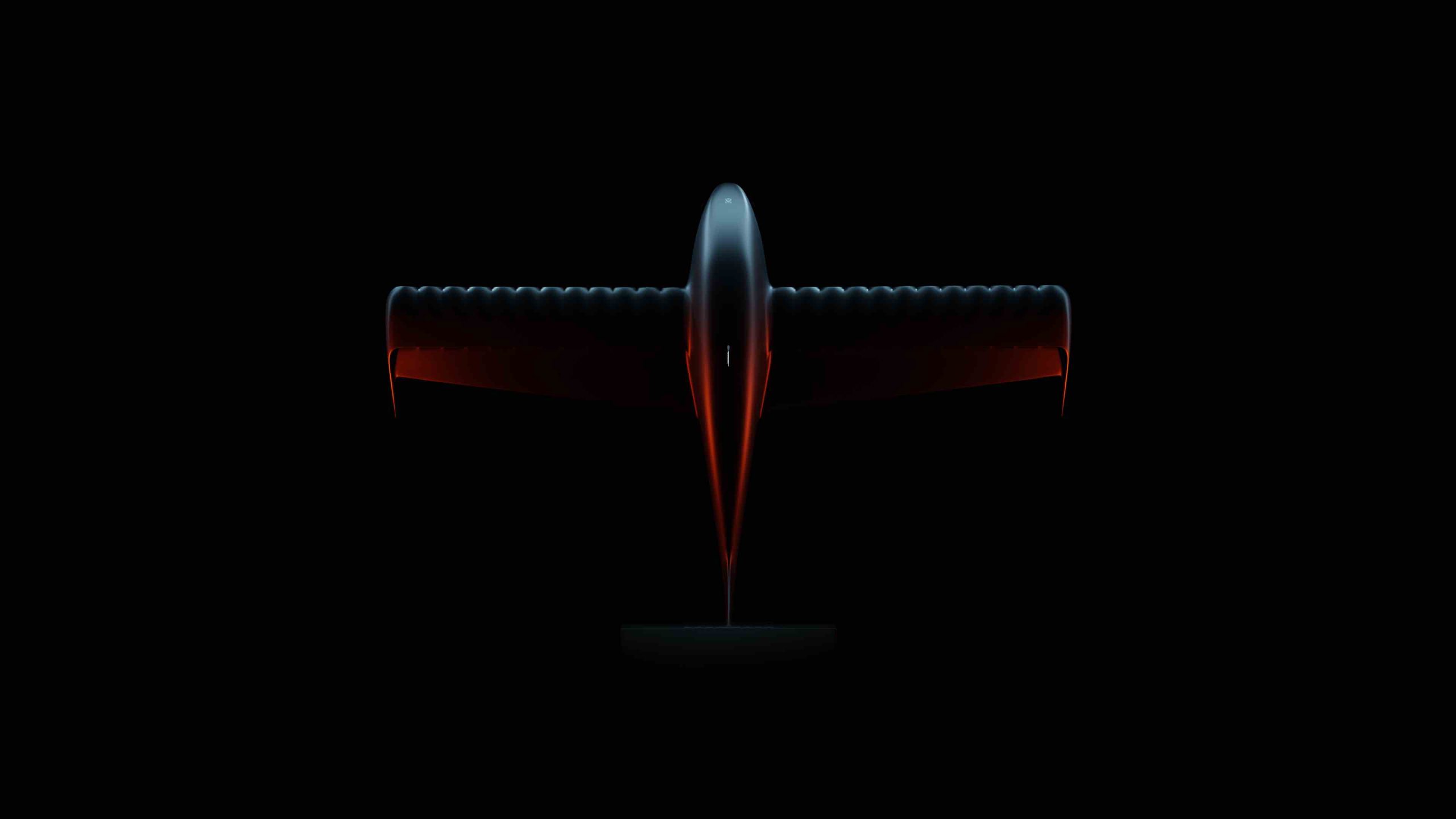
Mach Industries and partner Whisper Aero have been awarded a DIU contract to develop Atlas, a hybrid-electric prototype aircraft intended to demonstrate how a recoverable, runway-independent unmanned system could launch and land from constrained maritime and expeditionary sites, including helicopter-sized operating areas on destroyer-class ships.
The companies are expected to develop the prototype over a 12-month period. The concept combines Mach’s defense manufacturing and unmanned aircraft development work with Whisper Aero’s JetFoil propulsion architecture, which uses distributed electric ducted fans integrated into the wing to generate lift at very low forward speeds.
Top-down concept art shared by Mach shows 24 electric ducted fans built into the forward edge of the Atlas wing. The fans appear designed to redirect thrust downward for short takeoff and landing operations, while also supporting forward flight once the aircraft is airborne. Mach told Inside Unmanned Systems that Atlas is not intended as a true vertical takeoff and landing aircraft, although future derivatives could explore full VTOL capability.
The distinction matters. RIMES is not simply another one-way attack drone or a runway-launched unmanned aircraft adapted for maritime use. The program is aimed at a more demanding operational problem: how to give surface combatants and expeditionary forces a recoverable unmanned strike aircraft that can be launched, recovered, refueled and rearmed from austere sites or shipboard spaces normally reserved for rotary-wing aircraft.
According to DIU’s RIMES solicitation, the goal is to develop a cost-effective, scalable and maintainable aircraft that can deliver meaningful payloads across long distances while operating in contested environments. The platform is expected to incorporate mission autonomy, modular payload integration and a modular open systems approach that allows new sensors, weapons, software and mission systems to be integrated over time.
Mach said the RIMES requirement influenced how the company is thinking about the balance between attritability and survivability.
“The focus on development is speed to production and cost to get to scale, which will likely make Atlas more attritable than survivable on the spectrum,” Mach Industries told Inside Unmanned Systems.
That formulation places Atlas in a growing category of defense systems that are not meant to be exquisite, scarce assets. Instead, they are designed around lower unit cost, faster production, modular payloads and the ability to be fielded in meaningful numbers. In this model, the aircraft’s value depends not only on platform performance, but also on whether it can be produced, maintained and adapted quickly enough to meet operational demand.
Mach also emphasized that Atlas is being designed around mission flexibility.
“The platform will be low-cost, and as a result we expect most cost variation to come from the payloads that are selected,” the company said. “It is specifically designed to be adaptable for a variety of missions which will result in notable changes in payload.”
Asked whether RIMES could include air-to-air roles as well as air-to-surface missions, Mach replied: “Mach will align with government requirements and preserve the optionality for both capabilities, and others.”
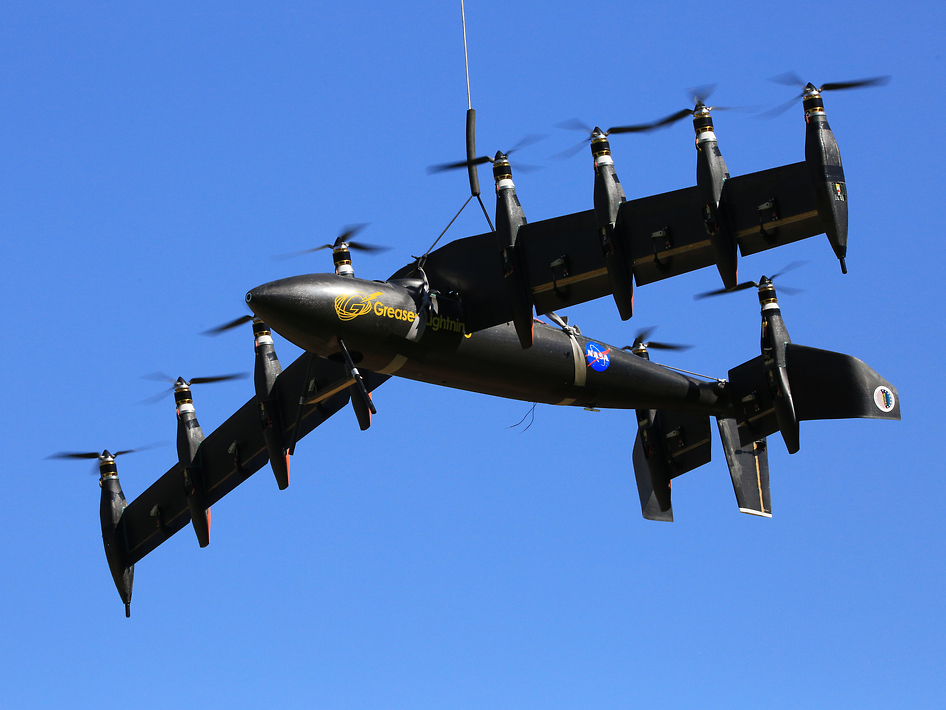
A Propulsion Architecture Built Around Low-Speed Lift
The technical center of the Atlas concept is Whisper Aero’s JetFoil architecture. Whisper, founded by veteran aerospace engineers Mark Moore and Ian Villa, has focused heavily on electrically driven ducted fans and low-noise propulsion. The company’s UltraQuiet fan technology has been discussed in contexts ranging from unmanned aircraft to non-aerospace uses such as quieter leaf blowers and HVAC systems.
For Atlas, however, the key issue is not only acoustic signature. It is whether a distributed ducted-fan wing can generate enough controllable lift at low speed to make a fixed-wing aircraft practical from maritime and expeditionary launch sites.
Traditional fixed-wing aircraft rely on forward motion to drive air over the wing and generate lift. JetFoil changes that relationship by using embedded propulsion to accelerate air over the wing even when the aircraft itself is moving slowly. In principle, this can create a high-lift condition during takeoff and landing, then transition to more efficient forward flight once airborne.
Mach described the concept this way: “Instead of propulsion pushing the aircraft through an airmass to generate high velocity air that creates lift around the wing, the JetFoil accelerates air over the wing at high speed regardless of the speed of the aircraft through the airmass.”
That is the technical promise behind Atlas. A recoverable unmanned aircraft with long range and meaningful payload capacity would normally require a runway, catapult, arresting system or large flight deck. A successful blown-wing, distributed-propulsion approach could reduce that infrastructure burden and open fixed-wing UAS operations to smaller ships and more austere expeditionary locations.
The performance claims around JetFoil should still be treated as developmental, not operationally proven. Mach and Whisper have cited very high lift coefficients and efficient flow-turning characteristics, but those figures will need to be validated in flight testing and under conditions relevant to shipboard and expeditionary use. Maritime operations add additional complications, including deck motion, crosswinds, salt exposure, maintainability, thermal management, power-system reliability and recovery procedures in confined spaces.
Whisper has validated elements of the JetFoil concept through ground testing, and additional flight-test work is planned using a modified Aériane Swift 3 glider equipped with eQ250 electric ducted fans. Those tests should provide a clearer view of how JetFoil performs in powered flight, including how efficiently the system transitions between low-speed high-lift operations and forward flight.
The Atlas program will therefore test more than one aircraft concept. It will also test whether distributed electric propulsion can move from promising aerodynamic architecture to a practical military UAS design with shipboard utility.
Maritime Strike Without a Carrier Deck
RIMES reflects a broader shift in maritime operations. Surface combatants are increasingly expected to operate in environments shaped by long-range anti-ship weapons, contested communications and the need to distribute offensive and defensive capability across a wider force. In that environment, unmanned aircraft that can extend the reach of smaller ships could provide commanders with new options.
For destroyer-class vessels, the challenge is space. These ships have helicopter decks, not carrier flight decks. A conventional fixed-wing unmanned aircraft may offer range and payload advantages, but it typically requires a runway, catapult, rail launcher, arresting gear or other specialized equipment. Rotorcraft and VTOL systems solve part of the launch-and-recovery problem, but often with penalties in range, speed, payload or efficiency.
Atlas is intended to occupy a different position in that trade space. It is not described as a pure VTOL aircraft, but as a runway-independent or very short takeoff and landing system that could use constrained operating areas. If the concept works, it could give surface ships and expeditionary forces access to fixed-wing-like range and payload without requiring fixed-wing infrastructure.
That combination is what makes the program significant for the unmanned systems market. The question is not whether Atlas resembles existing Group 3, Group 4 or Group 5 UAS designs. It is whether the aircraft can create a new operational category: a recoverable, modular, shipboard-capable unmanned strike platform that is less infrastructure-dependent than conventional fixed-wing systems and more range-efficient than many rotorcraft-style VTOL platforms.
The RIMES requirement also places a premium on autonomy. A maritime strike UAS operating in contested environments cannot assume continuous communications or GPS availability. It must be able to navigate, execute mission logic, preserve safety margins and return or recover under degraded conditions. For IUS readers, that autonomy stack may become as important as the propulsion system, particularly if the aircraft is expected to operate at range from ships that are themselves maneuvering, emissions-controlled or operating in denied environments.
Modular Payloads and Open Architecture
DIU has stressed that RIMES candidates should be cost-effective, scalable and maintainable. The solicitation also calls for a modular open systems approach, a requirement that aligns with current Department of Defense priorities for faster capability insertion and reduced vendor lock-in.
For Atlas, MOSA is central to the business and operational case. Mach said the platform is intended to evolve with customer requirements and partner hardware or software. That could allow different payloads, autonomy modules, sensors, electronic warfare systems or weapons to be integrated without redesigning the entire aircraft.
The payload question will likely drive both cost and mission role. Mach said most cost variation is expected to come from the payloads selected rather than the base aircraft. That suggests Atlas is being framed as a relatively low-cost carrier of mission-specific effects rather than a single-purpose aircraft optimized around one weapon or sensor.
This approach is consistent with a larger trend in defense autonomy: the platform becomes a modular delivery system, while software, payloads and network integration define the mission. In a maritime context, that could include strike, reconnaissance, electronic attack, decoy operations, communications relay or other roles depending on how the aircraft is configured and what government requirements ultimately demand.
Development Risk Remains
The Atlas concept is ambitious. It combines a constrained maritime launch-and-recovery requirement, a developmental propulsion architecture, hybrid-electric aircraft design, mission autonomy, payload modularity and a rapid prototype schedule. Each of those elements carries risk.
The most obvious technical question is whether JetFoil can deliver the required low-speed lift and controllability in flight, not just in analysis or ground demonstrations. The next question is whether that performance can be packaged into a militarily useful airframe with adequate range, payload, reliability and maintainability.
Power and thermal management will also matter. Distributed electric propulsion can provide fine control and aerodynamic advantages, but the system depends on electric power distribution, motor reliability, battery or generator integration, cooling and fault tolerance. A military aircraft operating at sea must also withstand a harsh environment that can stress fans, electronics, connectors, coatings and maintenance workflows.
Recovery may prove as important as launch. A system that can depart a constrained deck but cannot reliably return, land, be serviced and relaunch under operational conditions will fall short of the recoverable maritime UAS goal. Deck handling, safety procedures, ship integration and logistics will therefore be key parts of the demonstration, even if they receive less attention than the aircraft’s propulsion concept.
The 12-month prototype timeline adds pressure. DIU’s model is built around rapid development and field demonstration, but Atlas will need to show enough performance to prove that the architecture is more than an elegant concept. A successful demonstration would not necessarily make Atlas operational, but it could validate a new design path for shipboard unmanned aviation.
Mach’s Expanding Defense Portfolio
The Atlas award comes as Mach Industries is rapidly expanding its defense product portfolio. Founded in 2023 by Ethan Thornton, the company initially attracted attention for its interest in hydrogen-enabled defense systems, then broadened into unmanned aircraft, munitions, propulsion and energetics.
Mach now describes a portfolio that includes Viper, a vertical-launch strike system; Glide, a high-altitude precision glide munition; Stratos, a balloon-based pseudo-satellite concept; Pike, a modular long-range strike drone developed with Divergent Technologies; and Dart, a counter-UAS interceptor. The company has also pursued radar, hydrogen tactical power and propulsion production, including turbine and solid rocket motor capabilities.
That breadth is relevant because Atlas is not an isolated aircraft concept. It is part of Mach’s broader attempt to build a vertically integrated defense manufacturing company focused on lower-cost, scalable systems. The company has claimed substantial production ambitions for several of its products, including unmanned aircraft and munitions, and has expanded its manufacturing base through facilities and acquisitions.
For RIMES, the key question is whether that manufacturing orientation can be paired with a novel aircraft architecture quickly enough to meet DIU’s timeline.
A New Test Case for Runway-Independent UAS
Atlas should be watched not only as a Mach Industries program, but as a test case for a larger operational problem. The Department of Defense wants unmanned systems that can extend reach, reduce risk to crewed platforms and operate from distributed locations. In the maritime domain, that means systems that are not dependent on carriers, long runways or specialized launch equipment.
If Atlas can demonstrate meaningful range, payload capacity and recoverability from constrained shipboard or expeditionary spaces, it could point toward a new class of unmanned maritime aircraft. If the aircraft falls short, the program may still generate valuable lessons about distributed propulsion, blown-wing control, shipboard UAS operations and the tradeoffs between attritability, survivability and cost.
Either outcome will matter. RIMES is pushing industry toward aircraft that combine fixed-wing reach with launch-and-recovery flexibility. Mach and Whisper’s Atlas is one of the more technically distinctive attempts to meet that requirement.