
The FAA briefly imposed an unusually broad flight restriction affecting operations at El Paso International Airport, initially described as being for “special security reasons,” before lifting it roughly seven hours later and allowing flights to resume.
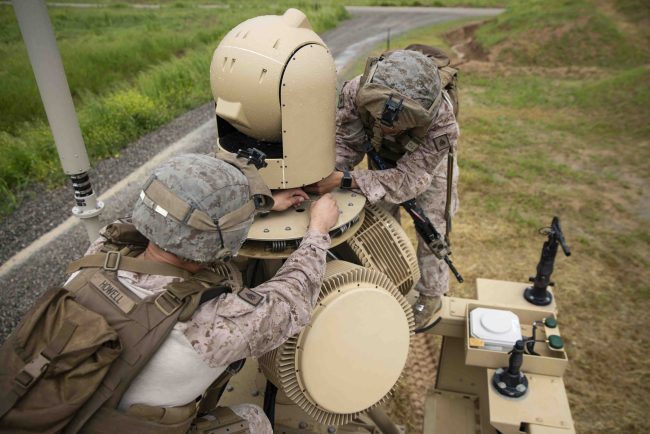
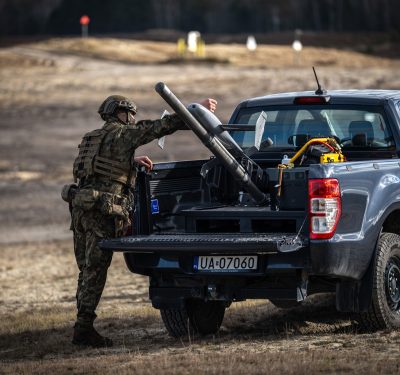
Multiple news organizations reported the restriction was tied to U.S. military counter-UAS activity at Fort Bliss, which is adjacent to the airport, and specifically to safety concerns around testing a laser-based anti-drone system.
Reuters reported the FAA lifted the restriction after the Army agreed to additional safety testing, and the FAA stated there was no threat to commercial aviation when it reopened the airspace. CBS News reported the airspace action followed disagreements between the FAA and Pentagon officials over drone-related tests near Fort Bliss, with two sources identifying the technology involved as a high-energy laser. AP reported that the Pentagon allowed U.S. Customs and Border Protection to use an anti-drone laser earlier in the week, and that the FAA closed the airspace to ensure commercial air safety; local disruption was tied to limited advance notice to stakeholders.
Airport counter-UAS is an integration and deconfliction problem
From an airport protection standpoint, the El Paso episode lands squarely in the integration problems practitioners have been warning about: how to deploy counter-UAS capabilities in proximity to controlled civil airspace without creating new safety risks or forcing overly broad operational shutdowns.
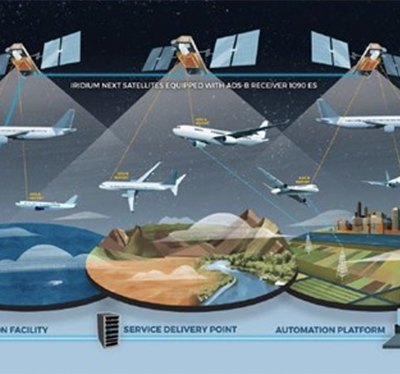
In a recent Inside Unmanned Systems feature on “Shielding Airports from UAS Intrusion,” airport-focused counter-UAS practitioners emphasized that airports need a complete counter-UAS cycle; not only detection, but integration with existing systems, awareness, real-time intelligence, recording and storing essential data, and (where lawful) mitigation. The same feature underscores that multi-modal sensing and disciplined processes are designed to ensure responses are “proportionate, targeted and safe for the surrounding environment.”
That context is relevant because the El Paso restrictions were associated with safety concerns around counter-UAS testing or use near a commercial airport. The proximity of Fort Bliss to El Paso International Airport makes the safety-of-flight and deconfliction aspects non-negotiable, especially for systems that produce “effects” (including directed-energy systems) that must be governed by clearly defined safety procedures and coordination mechanisms.
Governance, authorities, and non-interference near controlled airspace
It also highlights the governance complexity that comes with operating near the National Airspace System. One expert noted that “when you’re by an airport…you just have different authorities,” and that the problem becomes a human one of communication, command-and-control, and layered solutions. Another practitioner point is the importance of integrating into existing aviation systems “without interfering,” addressing the concern that mitigation could affect air traffic control or other critical airport operations.
Public reporting has not provided operational specifics about the Fort Bliss counter-UAS activity (system configuration, engagement geometry, sensor chain, or procedural controls). However, the underlying pattern is consistent with what airport C-UAS programs are trying to avoid: a scenario where uncertainty about safety and deconfliction drives exceptionally broad restrictions, even if only for a short duration.
For airport operators and counter-UAS integrators, the El Paso incident is a reminder that the “airport problem” is rarely solved by a single sensor or effector. It is solved by a workflow that can detect and classify, fuse information into a usable operational picture, retain evidence-grade data, and coordinate mitigation in a way that is both lawful and safe in an airport environment.