
A near miss from Hezbollah one-way attack drones reflects a new threat to helicopter casualty evacuation missions.
Two Hezbollah kamikaze quadcopter drones narrowly missed an an Israeli casualty evacuation (CASEVAC) helicopter preparing for liftoff from Lebanon, a close recall recorded by multiple videos on Sunday, April 26.
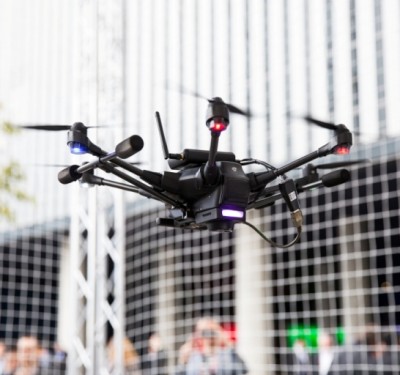
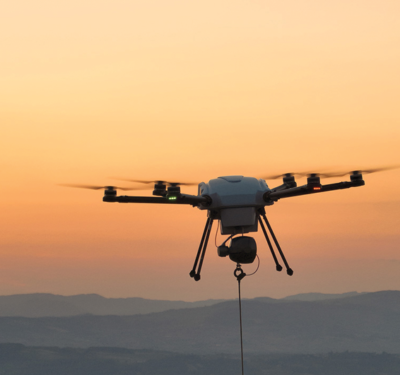
The incident highlights the growing threat inexpensive quadcopters are posing to helicopters—especially those seeking to extract personnel from landing zones over which adversary tactical strike drones are already heavily active.
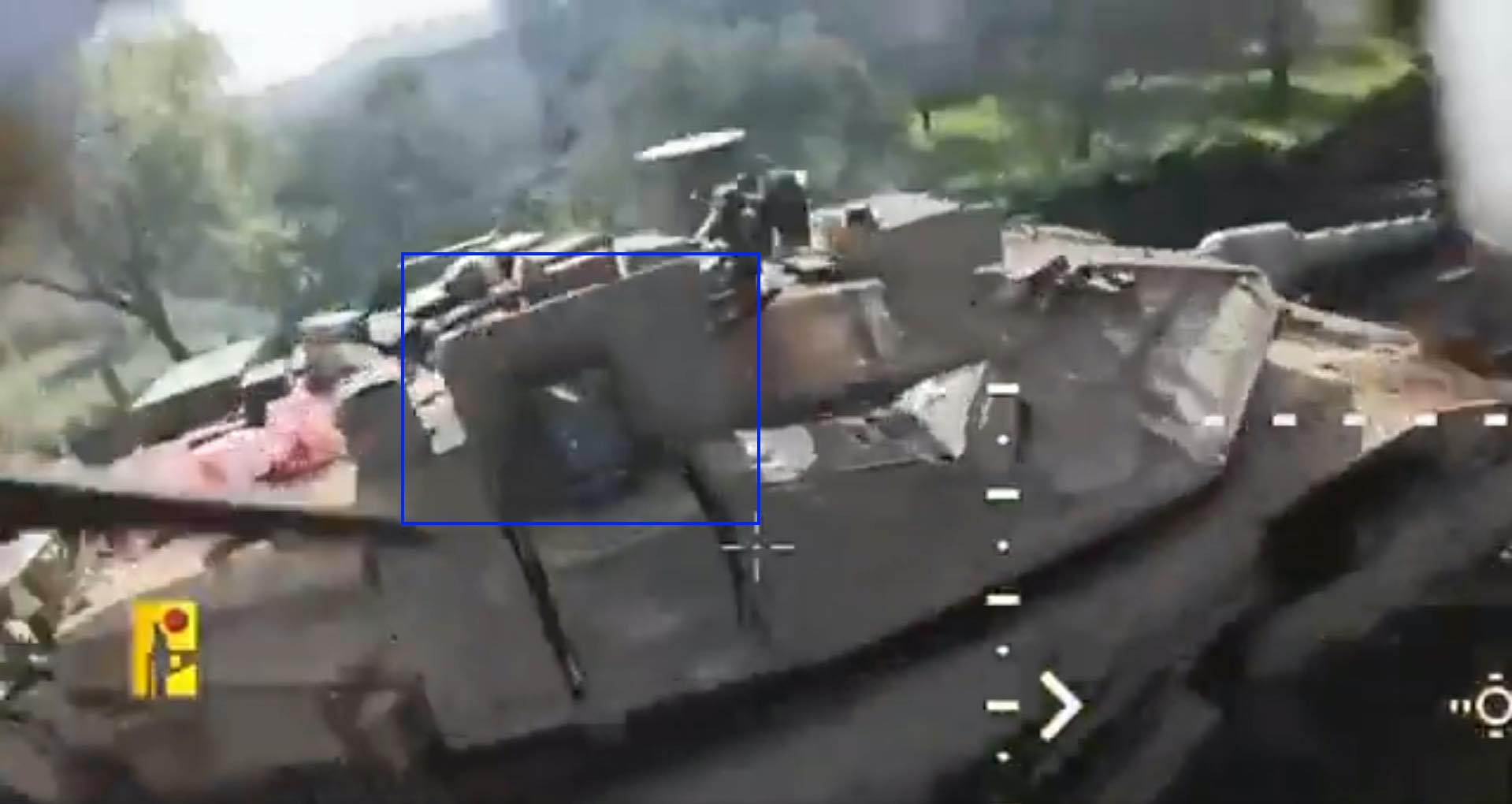
Israeli journalist Emanuel Fabian writes on social media that the Israeli Air Force CASEVAC helicopter had been summoned in response to an earlier attack by a Hezbollah kamikaze drone that struck Israeli personnel attempting to recover an immobilized Merkava 4 tank in southern Lebanon. FPV footage released by Hezbollah shows the personnel were clustered close together, entirely unaware of the approaching quadcopter.
That strike killed a sergeant and wounded six more personnel. This led to the call for casualty evacuation by a UH-60A/L Blackhawk, or Yanshuf (“Owl”) in IDF lingo, which landed near a cluster of Israeli troops and their infantry mobility vehicles. But after the wounded on stretchers were rushed into the Blackhawk, but before the helicopter could lift off, an FPV quadcopter plummets towards the aircraft in the video.
Fortunately for those onboard, the quadcopter smacks into the ground and explodes well short of the helicopter’s tail. Following the initial strike, Israeli troops opened fire at a second approaching Hezbollah quadcopter, which can be seen falling to the ground in a second video of the same incident.
Several factors may explain the first missed attack. FPV footage released by Hezbollah itself reveal the precipitous loss of altitude behind the helicopter.
The gale-like wash of air created by the Blackhawk’s rotors may have literally blown away the small drone, which likely weighed just 5-10 pounds. Of course, its rotors also would have blocked attacks aimed at the fuselage, forcing the quadcopter pilot to aim for the propeller hub.
Furthermore, radio remote-control links degrade the closer a drone gets to the ground due to the interference created by intervening terrain; ambient electronic warfare systems might also have disrupted control signals. These could have resulted in loss of ability to course correct at the terminal stage. That said, Hezbollah has begun deploying some drones controlled via fiber-optic cables immune to such problems.
Lastly, inexperience on behalf of the FPV pilot may have led to a rushed attack, particularly under pressure to avoid anti-aircraft fire. FPV attacks still require great skill built up only through much training or combat experience, as only a minority of FPV quadcopters today have such niceties as automatic terminal guidance.
One-way attack FPVs versus helicopters: new dangers for a dangerous job
Since 2024 FPV drones have added to the already considerable threats facing military helicopters generally, and particularly those deployed to extract personnel from contested landing zones (LZs).
Kamikaze drones broadly can serve as a kind of slower-moving guided missile that can follow a helicopter over a distance and strike when it’s most vulnerable. But when attempting to impact airborne helicopters, most FPV drones cannot match the maximum speed and altitude achievable by helicopters.
Therefore, quadcopters pose a threat if they can catch the helicopter crew unaware, or during takeoff or landing—methods with which Ukrainian drones have leveraged to down several Russian helicopters since 2024. Additionally, new ‘Shahed-killer’ interceptor drones designed to defeat Group 3 drones can attain speeds and altitudes to overtake helicopters too.
Of course, CASEVAC or Combat Search and Rescue (CSAR) helicopters landing in combat zone are giving up their speed and altitude advantages in areas they may be highly exposed to FPV attacks.
Generally, the Geneva Convention forbids attacks on specialized, unarmed medical evacuation (MEDEVAC) aircraft marked with a Red Cross indicating they are dedicated solely to medical evacuation role. However, aircraft with other roles that happen to be undertaking a CASEVAC mission at the time are not so protected. Nor are CSAR aircraft, which are typically armed and often operating behind enemy lines.
In the heat of battle, of course, even dedicated MEDEVAC aircraft may be mistaken for combat aircraft; moreover, some combatants may simply violate the convention seeking to inflict more casualties on the enemy. One case or the other explains an FPV drone attack mounted by pro-Iranian militias in Iraq last March which struck a parked U.S. HH-60M Medevac Blackhawk with multiple Red Crosses upon it. The militia clearly recognized this as a faux pas, as they blurred the red crosses in the video they released of the attack.
Hezbollah’s FPV drone strike campaign versus the IDF
Hezbollah has made increased use of FPV drones in its campaign battling a new Israeli ground incursion into Lebanon begun on March 16 this year following two weeks of cross-border skirmishing. According to Federico Borsari, an analyst at the CEPA security think tank, Hezbollah released just 9 FPV quadcopters attack videos in 2024 and 2025, but at least 25 such videos between March 1st and April 21st. (Undoubtedly many more sorties were launched that did not result in publicly released footage.)
FPV quadcopters are affordable and accessible to Hezbollah, as they can be assembled out of civilian parts, yet can deliver precision attack while the operators remain out of line-of-sight, far removed from direct retaliatory fire.The vast majority of Hezbollah’s FPV attacks targeted IDF vehicles—not infantry nor buildings—usually using warheads from RPG-7 rocket propelled grenades.
Hezbollah’s FPVs have had mixed impact. The IDF’s latest Lebanon incursion has sustained 17 killed in action to all causes to date. That means Hezbollah’s FPV capability so far lacks the combination of numbers and mission success rates needed to impose major costs.
Nonetheless, Israeli ground vehicles have been demonstrably hit, some of the lighter ones were undoubtedly damaged or destroyed, and casualties were sometimes inflicted including the incident precipitating the CASEVAC operation described above.
A few videos also show successful impacts on IDF Merkava tanks despite their protection by Trophy Active Protection Systems upgraded to detect and shoot down kamikaze drone threats. (Drones move much slower than the missiles and rockets Trophy was originally designed to protect against. Trophy’s designers also argue cheaper counter-shots are needed to defeat small FPV-style drones.)
But while Hezbollah is visibly landing hits on heavily armored vehicles, there’s rarely follow-on footage proving they are disabled. Tanks, after all, aren’t hard to hit, they’re hard to disable when hit. Post-strike footage proving successful attacks is often forthcoming in Ukraine; Hezbollah may lack enough UAVs to provide much post-strike footage, or it might prefer not to share footage it has.
Several videos show Hezbollah drones striking heavily armored parts of targeted vehicles, though one does show an FPV almost managing to enter the open rear-hatch of a Merkava.
That said, wars are as much psychological and political events as material ones—and in that regard, footage of Hezbollah FPVs hitting IDF vehicles has created a narrative of battlefield success that seemingly energizes its supporters.
FPV drones particularly are weapons that inherently record intimately cinematic vignettes of violence upon the foe. That may be merely incidental to the drone war machines of Ukraine and Russia capable of inflicting massive battlefield attrition and halting mechanized offensives in their tracks. But for smaller armed groups with more limited FPV capabilities, the tactical impact of FPV strikes might be overshadowed by their propaganda/moral-boosting aspect generating imagery puncturing the aura of invincibility of a more powerful adversary.
The failed attack on the Israeli CASEVAC helicopter holds cautionary lessons. Hezbollah’s drone crews lacked the mass and proficiency to successfully strike a vulnerable target of opportunity. But should Hezbollah and similar groups manage to increase the mass and skill-level of their FPV capability, they will strike more targets more effectively and generate lethal ‘lucky’ hits.
Therefore, for helicopter personnel extraction operations, it’s incumbent to think ahead of Tactics, Training and Procedures (TTPs) to mitigate risks of FPV drone attacks at every step of the evacuation process (approach, landing, loading, takeoff etc.)
That includes deployment of appropriate C-UAS detection and defeat measures (including EW systems, and guns, guided rockets and light drone interceptors on armed aircraft) so as not to be left counting on adversary inexperience and rotor wash to dodge a potentially deadly attack.
Future Potential C-UAS Tactics to Mitigate FPV Drone Risks to Helicopter Extraction
Incursions by helicopters over airspace where there is a significant saturation of adversary tactical drones are liable to draw the latter’s attention like a magnet. Moreover, quadcopter threats are stealthy enough to abruptly transform seemingly ‘cold’ LZs into ‘hot’ ones. Thus both ground and aviation components undertaking CASEVAC, MEDEVAC and CSAR operations must ready TTPs to mitigate threats posed by small strike UASs.
Ground forces securing an LZ for CASEVAC should establish an adhoc C-UAS cordon ideally including both the LZ and the final approach and exit corridor. It include 360-degree detect and track early warning capabilities (electro-optical, but also ideally short-range radar and acoustic); and multi-layered light C-UAS defeat solutions beyond small arms and crew-served weapons. Those include tactical EW capabilities (local area-denial and/or directional ‘drone gun’ jammers) and preferably also guided interceptors, including low-cost portable interceptor drones and/or man-portable surface-to-air missiles (MANPADS) with anti-drone warheads (expensive but worth expending to protect a helicopter.) Ground-based effectors should be dispersed to redundantly cover firing arcs that might become obstructed by terrain, blown dust and the CASEVAC helicopter itself.
A force well-equipped with portable, low-cost drone interceptors might even launch them prior to helicopter ingress to provide persistent downwards-looking aerial overwatch and fast-response standby interception capability, provided appropriate deconfliction with the aviation element.
The above-described cordon can be formed using light equipment integral or attachable to small infantry units. Of course, overwatch by dedicated short-range air defense (SHORAD) assets is preferable, or at least vehicles armed with machineguns or autocannons aimed automatically using electro-optical guidance.
From the aviation side, evacuation aircraft and their armed escorts must also integrate C-UAS detection and defeat TTPs, including continual C-UAS threat surveillance using optical and radar sensors, threat assessments of pop-up UAV risks, EW self-defense systems, and kinetic defeat measures. Those last range from side-mount and forward-firing guns, Stinger missiles and laser-guided rockets, to (once again) deploying low-cost drone interceptors both as direct effectors and possibly as overwatch and pre-emptive defense platforms. Devising pre-vetted evasive maneuvers effective against encroaching FPV quadcopters is also warranted.
Of course, careful consideration is required regarding which C-UAS measures are appropriate for unarmed MEDEVAC aircraft.