
NATO Allied Command Transformation organized the first Layered Counter-UAS Initiative Crucible event at Romania’s Capu Midia Training Range in April, bringing together approximately 500 personnel and more than 215 technical systems in a structured experimentation environment designed to accelerate the transition from capability demonstration to operational deployment.
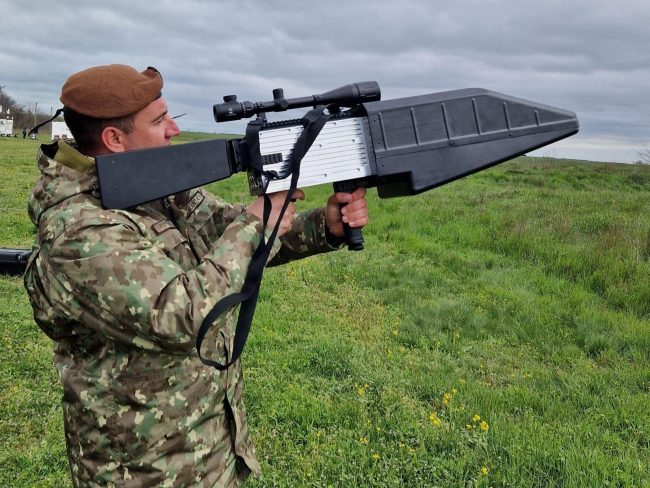
The event, held during Exercise Eastern Phoenix 26 and hosted by the Romanian Ministry of National Defence, focused on integrating sensors, command and control, and effectors into a single layered defensive architecture. Testing across a 2.5-kilometer area included radars, acoustic sensors, radio-frequency detectors, electronic warfare tools, and both kinetic and non-kinetic effectors. Scenarios included drone swarms flown over the Black Sea.
Participation from the NATO-Ukraine Joint Analysis, Training and Education Centre, including Ukrainian subject-matter experts, was used to ensure testing reflected current UAS tactics and threat evolution — an acknowledgment that operational experience from the war in Ukraine is driving NATO’s C-UAS requirements in real time.
The exercise sits within NATO’s broader Eastern Sentry enhanced Vigilance Activity, launched in September 2025 following a series of Russian drone incursions into Allied airspace over Poland and Romania. Eastern Sentry’s stated priority is optimizing integrated air and missile defense architecture by ensuring sensors, C2, and effectors are connected and positioned to respond along the eastern flank. Follow-on Crucible events are planned for the Netherlands and Latvia.
Among systems demonstrated at Capu Midia, Romanian defense firm Optoelectronica and Israeli company SkyLock Systems jointly presented the Sky Dome counter-UAS system, which incorporates a directed-energy laser component alongside radar, electro-optical/infrared, and acoustic detection layers. Optoelectronica reported a 100 percent intercept rate against all UAS targets during the exercise.