
Once known for breaking speed records in the Drone Racing League, Performance Drone Works now supplies modular, mission-ready UAVs to U.S. forces. Co-founder Ryan Gury’s vision blends velocity, ruggedness and adaptability—from the high-endurance C100 “Mothership” to the lethal, $5K AM-FPV.
Performance Drone Works, or PDW, CEO and co-founder Ryan Gury made his start in 2015 cofounding Drone Racing League, for which he designed its hand-built high-performance racing drones. For competitive events, his team produced progressively more capable Racer-series quadcopters studded with LEDs for competitors. In 2017, his RacerX was recognized by the Guinness Book of World Records as the fastest battery-powered RC quadcopter with a recorded speed of 163.5 miles per hour.
Maximal speed wasn’t the only technical challenge: DRL’s globe-spanning events meant negotiating diverse local electromagnetic spectrums, forcing Gury’s team to develop control-link solutions in advance of many militaries.
“We had to use a lot of options that were extraordinary at the time,” Gury told IUS in an interview. “We realized that there was a big problem with jamming and interference, and started working on a software-defined radio system. Young teenagers would destroy something like 500 drones at an event, and any failures happened on live TV before an audience of 10,000.”
Military observers increasingly attended and invited DRL to their own events. At a training exercise in 2018, Gury met his future CTO, Navy SEAL Dylan Hamm.
THE MOTHERSHIP
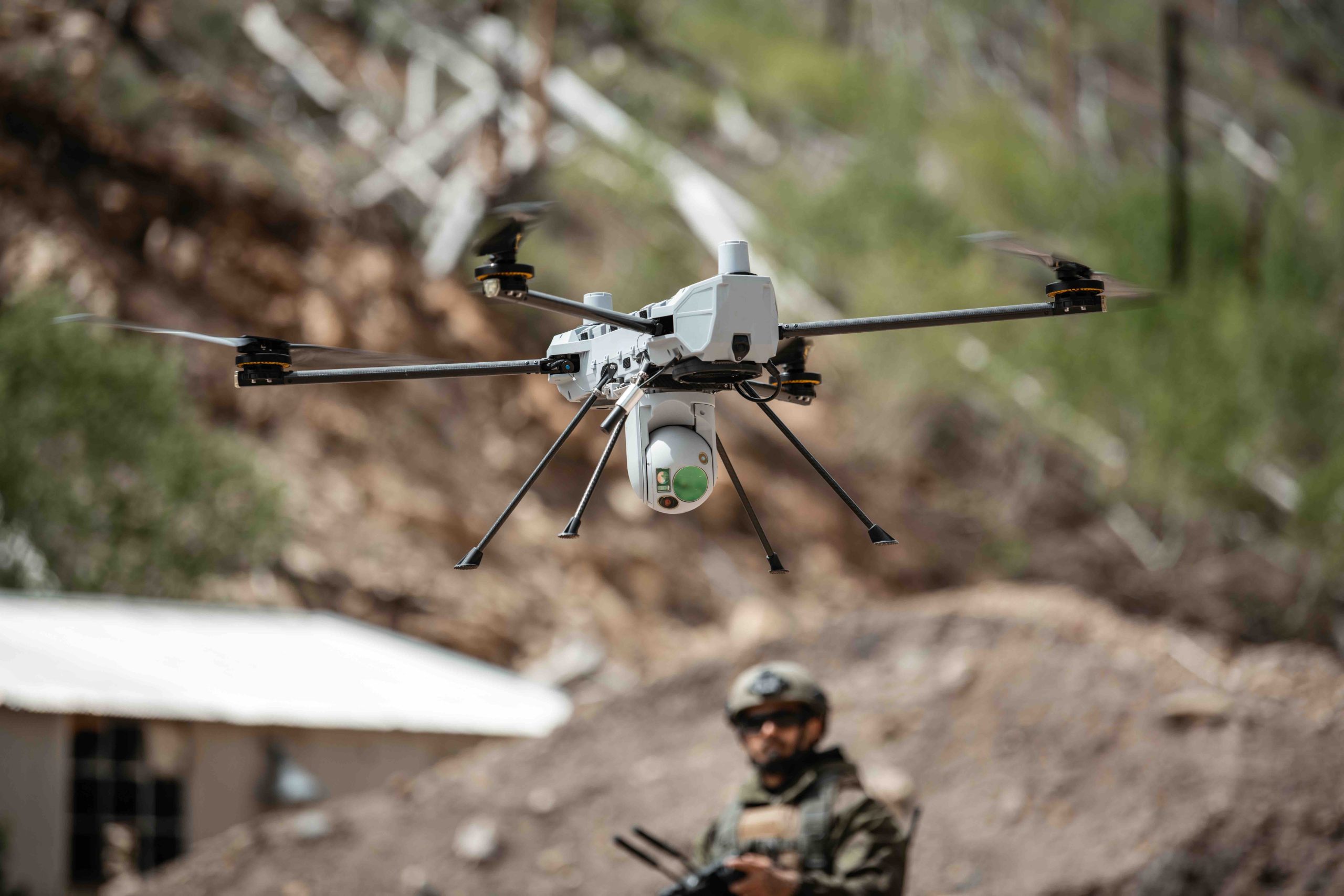
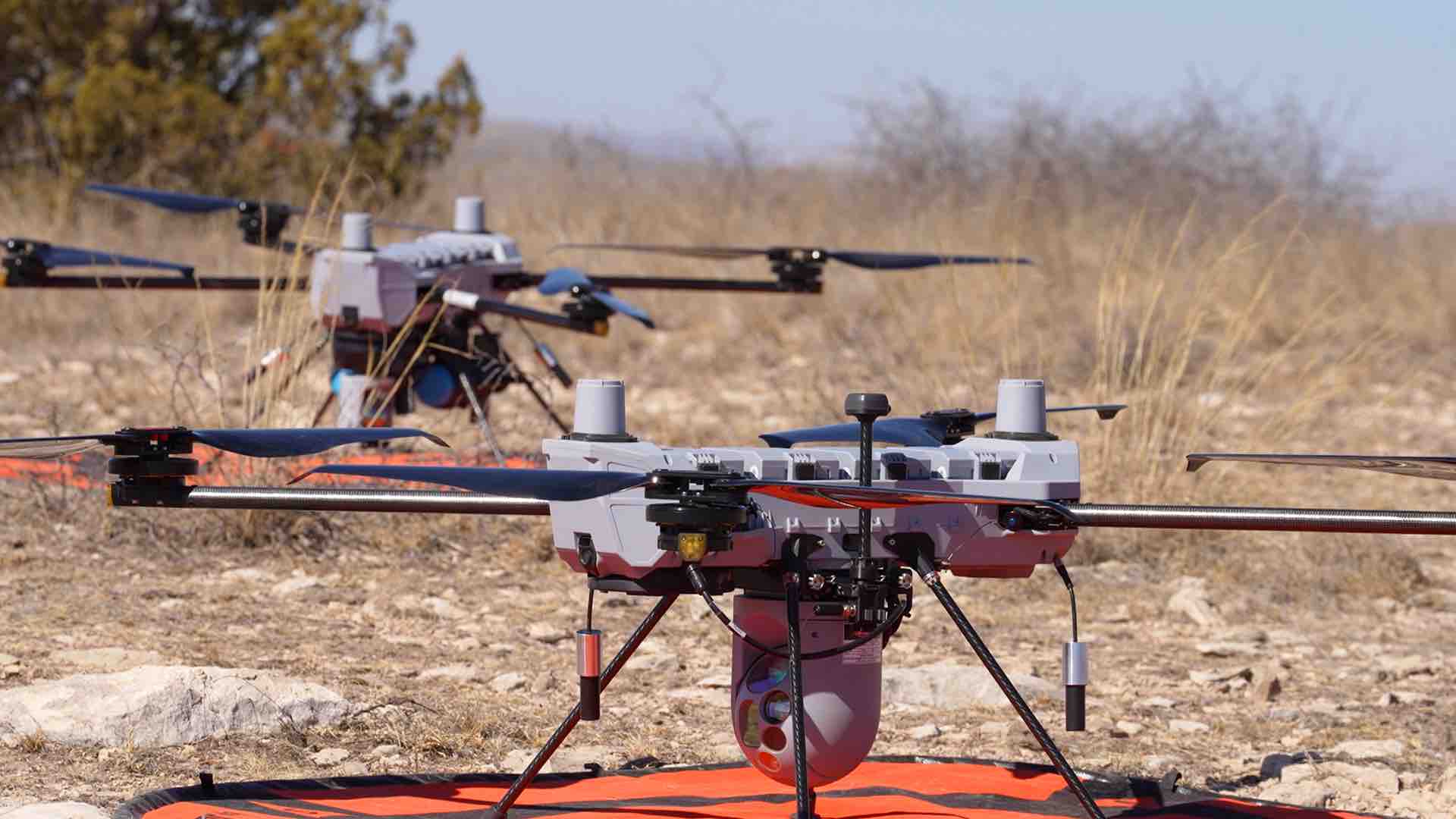
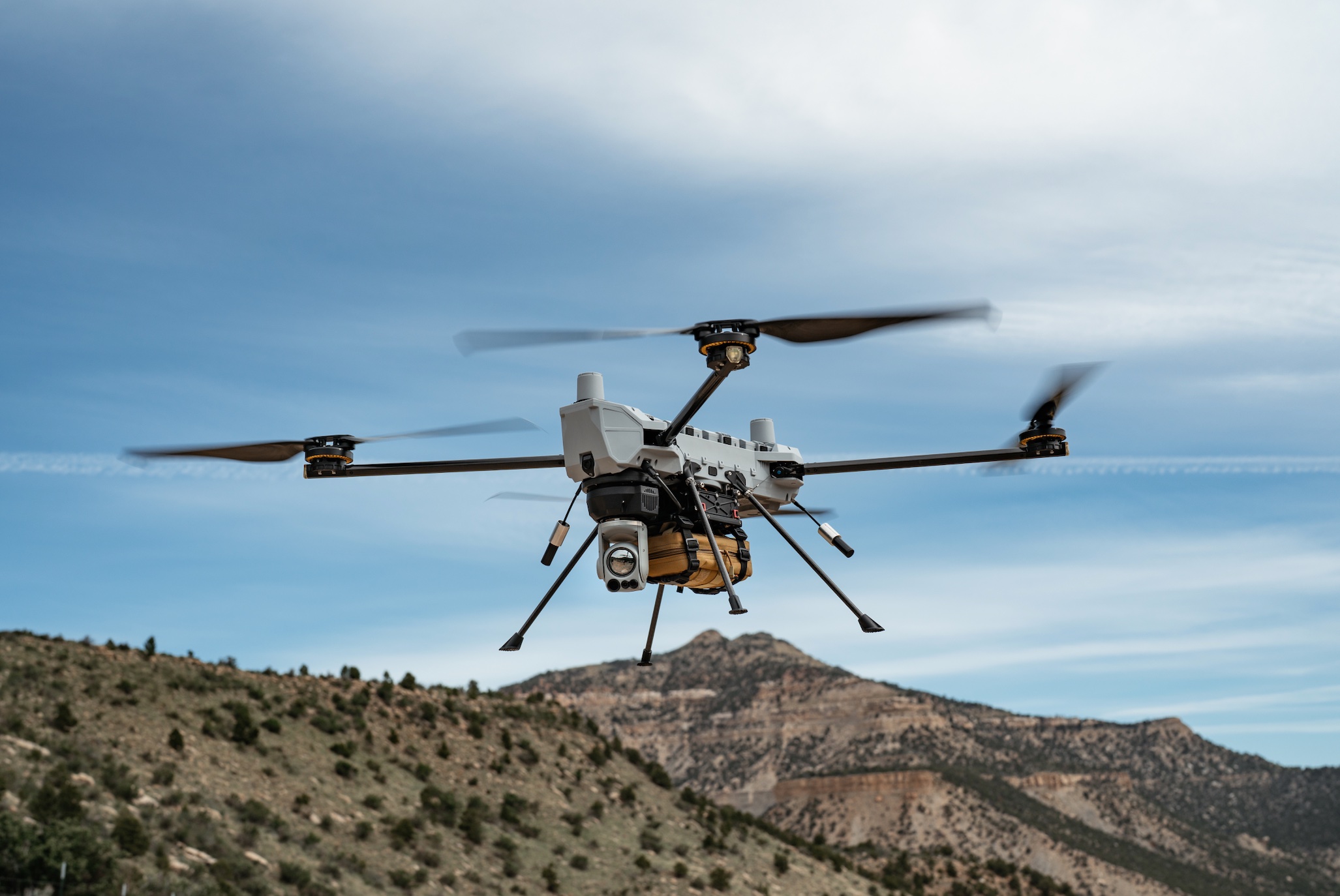
Their flagship product: the C100 multi-mission heavy quadcopter, which Gury likes to call “the Mothership.” This design emphasized endurance and lifting capacity rather than speed, with a stripped-down C100 prototype garnering Gury’s second Guinness world record in March 2022 after remaining airborne for a whopping 2 hours 14 minutes and 15 seconds. The C100’s modular design supports use cases ranging from standoff ISR to battlefield delivery, electronic warfare and gravity bombing. New software to enhance maritime deployment is also in the works. Gury explained, “the Mothership delivers a larger envelope of missions than single-use FPVs. It can do patrols, longer range identification, direction-finding, EW to demod or inject signals and can deliver larger ordnance. It can use a STAG 5 laser target designator, that allows a soldier to be completely removed from harm when trying to paint the target. The Mothership can do it from a mile away.”
In fall 2024, the U.S. Army awarded PDW a $15.3 million contract to furnish troops with C100s to fulfill Tranche 1 of a requirement for company-level Medium-Range Reconnaissance (MRR) drones. Meanwhile, this May PDW unveiled its AM-FPV drone—a return to Gury’s Racing League roots as its design evolved from DRL’s Racer4 quadcopter from 2019.
PRODUCING FOR THE FUTURE OF SMALL DRONE WARFARE
PDW’s executive team is composed of 60 percent veterans, including several former Tier 1 special forces operators. Gury says their input helped guide design process, particularly by emphasizing performance in challenging climate conditions, modularity and ability to fit a dismantled C100 in a single rucksack. FPV drone racing for fun, he said, remains part of the company culture.
The small company of about 200 employees will open a 100,000 square foot facility in Huntsville, Ala., this summer with capacity to produce up to 500 C100s and 5,000 FPVs per month. Their process emphasizes the ability to rapidly implement changes within a day of receiving customer feedback. “Velocity is the biggest component of success—the ability to get a solution out there in two months, and then make changes based on feedback.”
Some recent loitering munitions offered by U.S. manufacturers remain over two orders of magnitude more expensive than those being mass-produced by Ukraine and Russia. AM-FPV costs only about $5,000, Gury said. “Drones are compelling because they’re affordable,” he emphasized, arguing single-use munitions should have prices reflecting that.
But what extra benefits should one expect going from an improvised $500 kamikaze to a $5,000 one made in America? “Safety and security while handling lethal munitions, not a duct-taped solution,” Gury said. “Modularity. Rapid assembly in just two minutes with snap-on rotors.”
The base AM-FPV is remotely piloted, but Gury said it would only take simple installation of an extension board to install computer vision-assisted automatic target-recognition and terminal guidance—a capability he said awaits government policies to determine which such models are safe to use.
Gury particularly expects AM-FPV to work alongside a C100 “mothership,” acting as comms relay or even as a marsupial carrier to extend range. “That’s a CONOP that we see becoming really popular in Europe, where FPVs can be dropped precisely and used for signal relays and kinetic strikes.”
Gury also said he didn’t find meeting the Blue UAS standards requiring exclusive use of secure indigenous components exceedingly difficult —though the one part-type he most hoped would lower in price in the U.S. were the motors.
Besides evolving its two core UAV products, PDW is also selling an anti-jam radio and its CORE software package including training and mission planning capabilities.
“Over the last few years, we’ve been working with a government customer to develop the next-gen radio system. Why? We’re used to operating radios in uncontested environments without jammers, and we essentially have radios working only in small corners of the spectrum.” Gury elaborated, “Now, we’re seeing jammers everywhere—tanks, donkeys—we’re dealing with an actual contested spectrum and we must overcome that. For our private effort, we’re using a massive portion of the spectrum offering redundancy and resiliency. We were successful in a demo against common ammers. We could fly right next to them.”