
As Washington recasts drones and counter-drone systems as networked IT and AI infrastructure, a web of CISA, GSA, FAA, DoD and NIST guidance is quietly redrawing who can buy what, how systems are secured, and which vendors will be able to thrive.
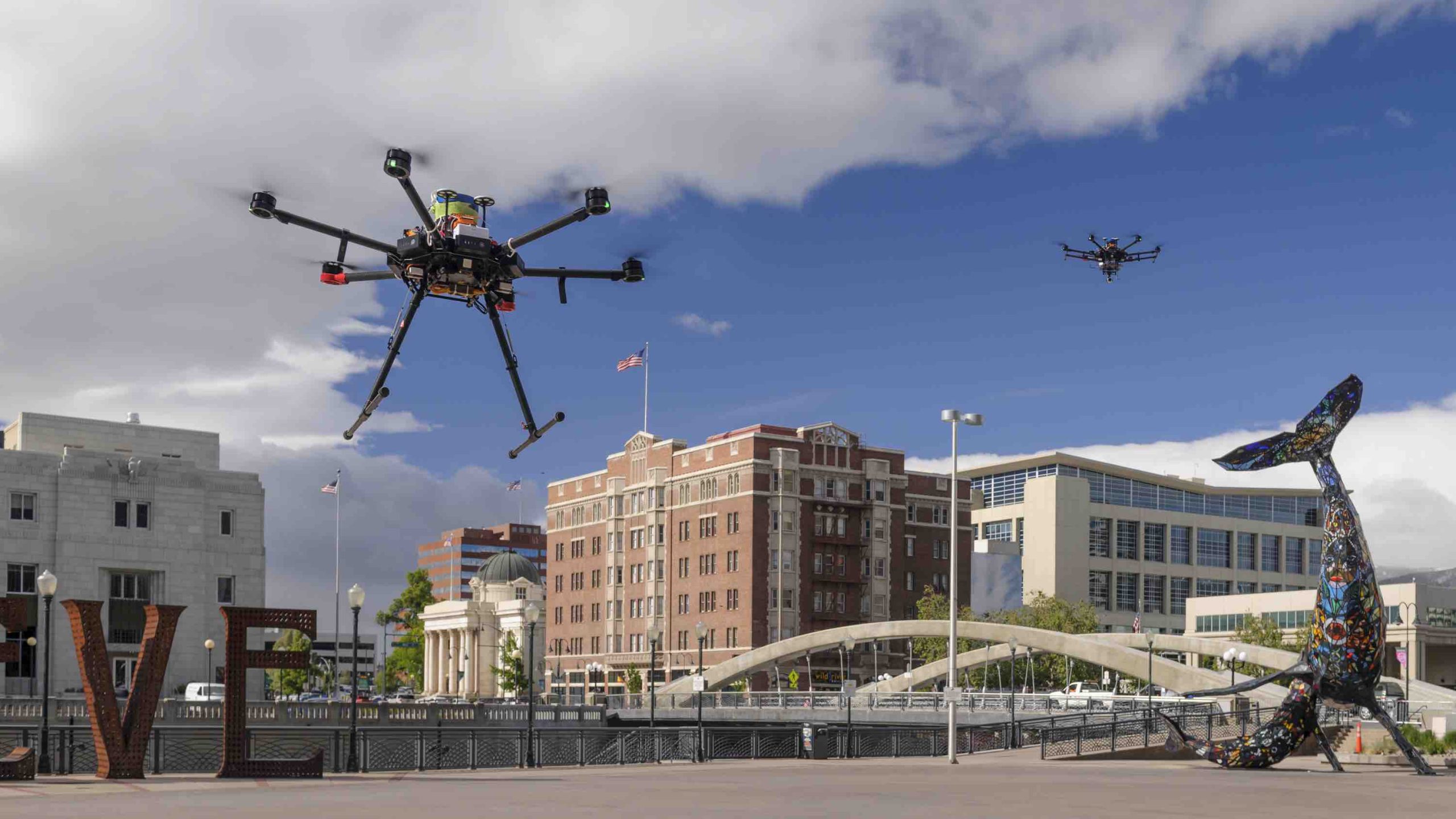
Drones and counter-drone systems are quietly being reclassified in Washington.
On paper, they’re still aircraft, regulated by the FAA and regulated by airspace rules. But in the latest wave of federal guidance, UAS and C-UAS show up in a very different guise: as networked IT, data infrastructure and AI systems that just happen to fly or watch the sky.
For manufacturers, operators and investors, that reframing matters. It changes who needs to be in the room (CISOs and data officers, not just pilots), how products are evaluated (SBOM, SCRM, AI governance, not just flight time and range), and which supply chains will be commercially viable over the next few years.
Across CISA, GSA, DOJ, FAA, GAO, DoD and NIST, a consistent picture is emerging: The real cyber risk in UAS and C-UAS is no longer the airframe. It’s the data, the software supply chain and the AI models that sit behind the hardware.
What follows is a distillation of that guidance, with an emphasis on what it implies for the commercial and public-sector UAS/C-UAS market, especially around data security and AI.
Authorities and constraints
If you’re in the C-UAS market, the first hard reality is legal, not technical: most of the more aggressive “defensive” tools sit outside what non-federal buyers can lawfully do today.
The 2020 interagency legal advisory on UAS detection and mitigation walks through why. It reminds agencies that intercepting drone-control links, capturing video payloads off the air, injecting commands, jamming or spoofing signals all bump into long-standing criminal laws on wiretapping, computer access and aircraft sabotage. Only a few federal departments (DoD, DHS, DOJ, DOE) have narrow exceptions, and those are tightly conditioned.
But, for state and local law enforcement, airports, stadiums, utilities: you can detect and report, but you generally cannot “reach into” someone else’s RF link, even if it’s attached to a quadcopter over your facility.
The FAA’s report under Section 372 of the 2018 FAA Reauthorization Act turns this into operational data. During high-profile events and structured test campaigns, the FAA and its partners deployed multiple detection technologies and consistently saw dozens or hundreds of non-compliant drones operating inside restricted airspace. No single technology worked everywhere, and only a small fraction of detections converted into actual enforcement cases.
The Administration’s follow-on proposal essentially asks Congress to:
• Renew and expand certain detection/mitigation authorities for a small set of federal departments.
• Create detection-only authority for some state/local entities and critical infrastructure.
• Pilot supervised mitigation programs under federal oversight.
For the market, that creates a clear boundary:
• If you sell into DoD/DHS/DOJ, you can build and support full-spectrum C-UAS, but you’re operating in a relatively small, highly scrutinized market.
• If you sell into airports, utilities, stadiums, local police, you are really in the detection, alerting, integration and hardening business, not the “push a button to take it down” business.
A commercial strategy that assumes non-federal customers will be allowed to jam or hijack aircraft at scale is out of step with the current legal trajectory.
Drones are “just another IT and IoT endpoint”
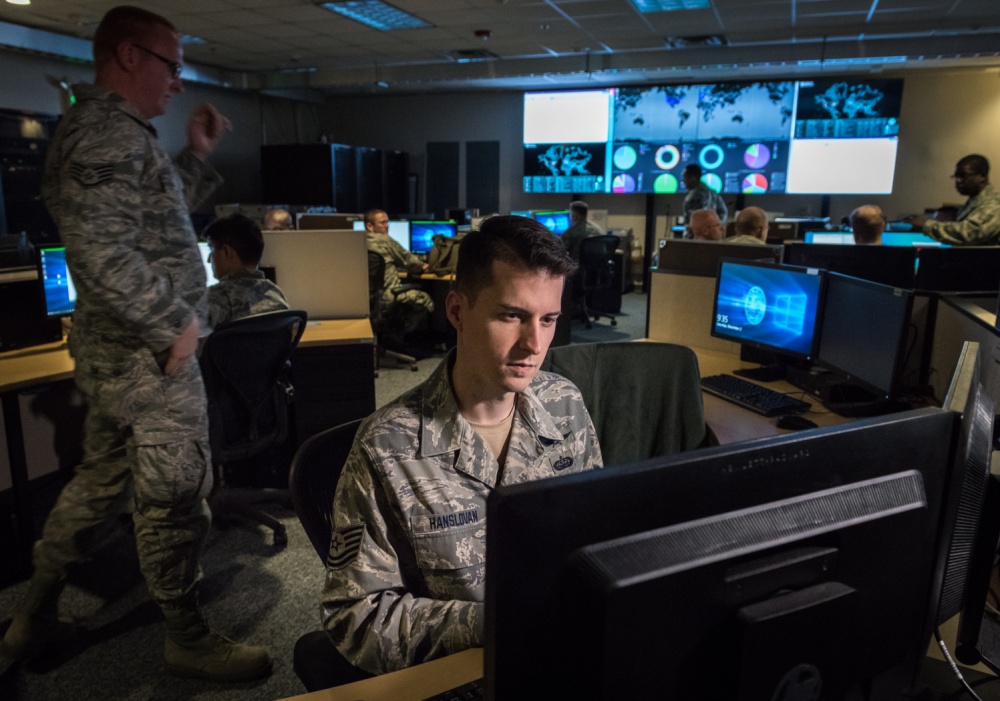
CISA and GSA are explicit: they tell agencies to think of drones and their ecosystems as ICT/IoT devices.
CISA’s “Cybersecurity Best Practices for Operating Commercial UAS” reads like general IT guidance with UAS examples. It tells organizations to:
• Use dedicated, hardened machines to download and manage UAS software and firmware.
• Keep those machines behind firewalls with current anti-malware tools.
• Turn off automatic updates where possible; vet each patch before it touches a production aircraft.
• Treat UAS accounts, credentials and encryption keys with the same care as other high-privilege IT assets.
GSA’s Drones/UAS Security policy then shows what this looks like when it’s institutionalized. Because GSA typically relies on contractors to operate UAS, its policy is focused on controlling the digital and operational interfaces:
• Only approved UAS models and pilots can be used on GSA business.
• UAS operations must comply with the same IT security policies and configuration standards that apply to laptops, servers and cloud services.
• The agency explicitly lists malware, automatic transmission of data and unauthorized network access as core UAS risks, not just crashes or privacy complaints.
For enterprises, the implication is straightforward: if your UAS program still lives solely under operations or aviation, and your CISO isn’t in the loop, you are out of alignment with where federal best practice is heading.
For vendors, it means buyers are going to start asking the same questions they ask SaaS and IoT suppliers: Where is data stored? Who can access it? How are updates delivered? What’s in your SBOM/HBOM?
Data is the strategic center of gravity
Most of the recent federal guidance around UAS cyber risk is not about someone hovering a drone over a base. It’s about data.
CISA and the FBI’s “Cybersecurity Guidance: Chinese-Manufactured UAS” is the clearest articulation of the concern. It ties together three threads:
• PRC law and military-civil fusion: Chinese companies can be compelled to share data with state security services under the National Intelligence Law and related statutes. Vulnerability reporting laws also require vendors to submit details of security flaws to the Chinese government before those vulnerabilities are publicly disclosed.
• UAS as rich data collectors: Modern drones and their ground ecosystems collect high-resolution imagery, mapping and inspection data, flight logs, radio telemetry, and acoustics/audio.
• Architectures that favor data egress: Drones controlled from smartphones and tablets and cloud-based mission planning and media sync, make it easy for that data to leave controlled environments.
The guidance highlights not just the aircraft but the broader ecosystem: smart batteries, charging docks, repeaters, mobile apps, cloud portals. Each is an additional path for data or future access.
What started as departmental policy has now been baked into law. Congress’s 2023 American Security Drone Act (ASDA), folded into the FY24 NDAA and now fully in effect as of December 22, 2025, effectively tells federal agencies: you can’t buy or operate drones or critical subcomponents from specified foreign entities, and you can’t use federal funds with contractors and grantees to do it either.
The Federal Acquisition Security Council, in turn, is tasked with maintaining a list of covered foreign entities in SAM.gov that agencies must treat as off-limits across ICT categories, not just UAS. The Federal Communications Commission has extended the same logic into its own radio-equipment rules.
On December 22, 2025, the FCC added all foreign-produced uncrewed aircraft systems and UAS “critical components” to its Secure and Trusted Communications Covered List, based on an interagency national-security determination that such devices pose unacceptable surveillance and data-exfiltration risks. In practice, that move blocks new RF equipment authorizations for foreign-made drones and key components—effectively halting the import and sale of new models in the United States—while leaving previously authorized systems already in the field unaffected. A January 7, 2026 public notice then created temporary exceptions, through January 1, 2027, for platforms and components on the Defense Department’s Blue UAS Cleared List and for UAS that qualify as “domestic end products” under Buy American rules. For buyers, the upshot is that the policy logic reshaping federal fleets is now also embedded in the FCC’s front-door approval process for future hardware.
That’s where efforts like DIU’s Blue UAS program and AUVSI’s Green UAS pathway aim to create a vetted ecosystem of platforms and components that meet NDAA, ASDA and cybersecurity criteria, simplifying procurement for federal and increasingly non-federal buyers.
Building a secure UAS program
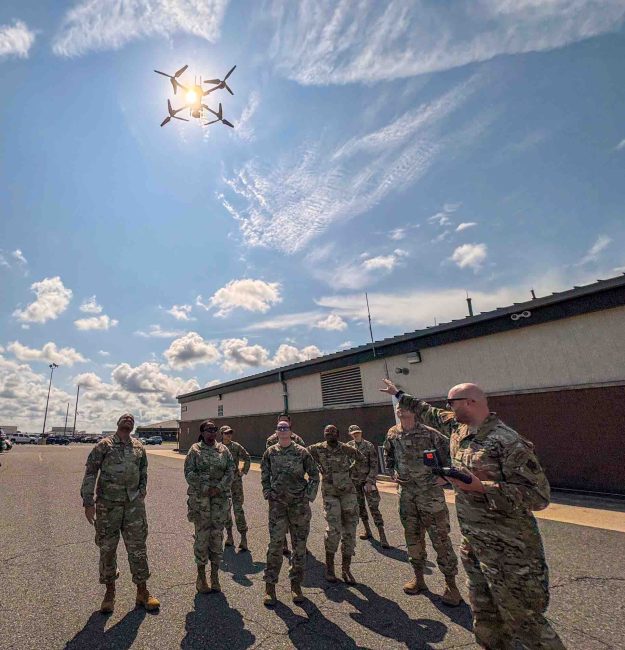
Against that backdrop, the CISA and GSA documents sketch a concrete “secure UAS lifecycle” that is directly usable by operators.
Pre-flight: software, firmware, and ground systems
CISA’s best-practices and GSA’s policy are aligned on a few non-negotiables:
• Use single-purpose machines to download and stage firmware and software updates. No email, no general web browsing, no connection to the main corporate network.
• Keep those machines behind firewalls with current anti-malware tools.
• Validate hashes or digital signatures where they are available.
• Turn off auto-update where possible. Test updates on a small subset of aircraft before pushing across a fleet, especially for high-consequence operations.
Organizations that treat these steps as optional for drones, but mandatory for laptops and servers, are effectively saying that their aerial cameras are less important than office PCs, even as those cameras collect some of their most sensitive data.
In flight: communications and link security
Link security is the next pillar. CISA and GSA both expect organizations to:
• Encrypt control, telemetry and payload links end to end, ideally with separate keys.
• Encrypt onboard storage when missions involve sensitive locations or personally identifiable information.
• Use current wi-fi cryptography and non-revealing SSIDs.
• Keep UAS control networks logically separate from corporate IT—dedicated VLANs, point-to-point VPNs or full airgaps.
Vendors that make encryption and segmentation hard will increasingly lose out to those who design for enterprise network integration from day one.
After flight: treat data as sensitive by default
On the data side, the guidance is equally clear:
• Move data from aircraft to secure ingest machines, not ad hoc personal devices.
• Encrypt data at rest in storage systems and in transit to processing pipelines.
• Apply the same retention, access-control and auditing policies you use for other sensitive operational data.
• Wipe field devices and removable media as soon as data is safely ingested.
What’s missing in many organizations today is not technology but discipline: drones are treated as special, so operators improvise workflows that would never fly for SCADA logs or customer PII. The federal guidance is pushing hard in the opposite direction.
UAS detection and C-UAS as cyber-physical systems
CISA’s “UAS Detection Technology Guidance for Critical Infrastructure” document adds another dimension: C-UAS systems themselves are becoming high-value cyber assets.
The document tells infrastructure owners to:
• Start with a UAS risk assessment, mapping threat actors and specific assets (crowds, power and telecom nodes, chemical facilities, IT/OT systems, transport hubs) that could be targeted.
• Choose detection technologies—radar, RF, acoustic, EO/IR, fused systems—based on local terrain, RF noise, weather and operational needs.
• Integrate detection into existing security operations: SOC dashboards, CCTV, access control, incident response playbooks.
And crucially, it warns that detection systems themselves introduce cyber and supply-chain risk:
• Cloud-managed sensors can expose sensitive airspace-use patterns to vendors or foreign states.
• Hardware and software bills of materials (HBOM/SBOM) should be part of procurement, especially where foreign components are involved.
For C-UAS vendors, that’s a strong signal: you are not just selling “radar in a box.” You’re selling a sensor that sits on sensitive networks, sees patterns of life and may be managed from your cloud. Customers will increasingly expect full transparency on software components, data flows and access pathways.
From detection to “suspicious activity”: the operator playbook
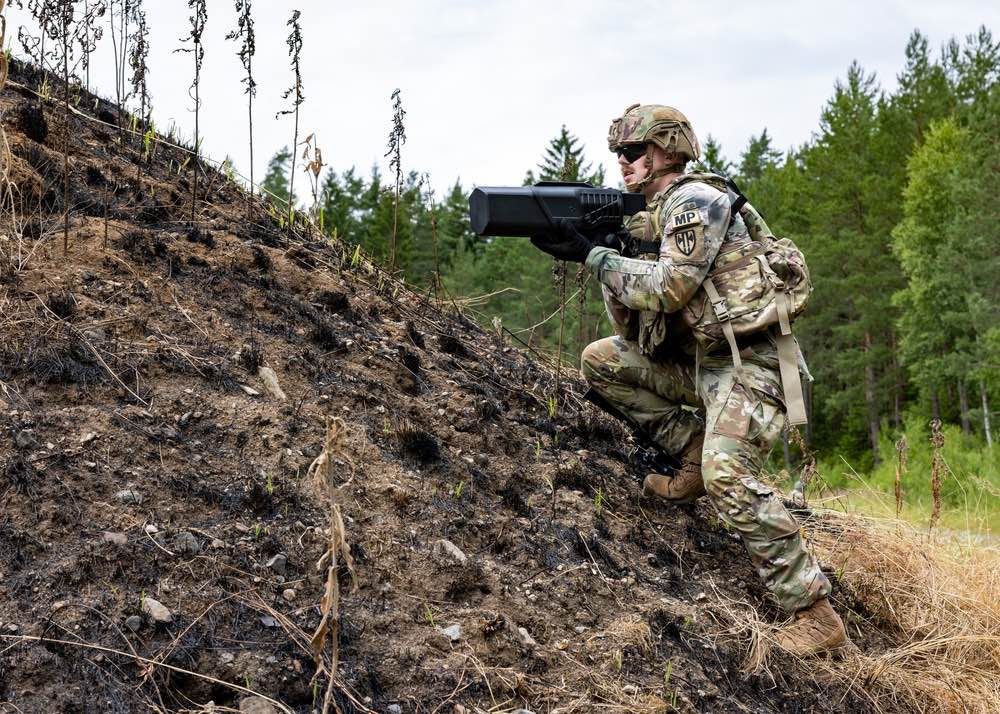
The newest CISA guidance fills an important gap between technology and human behavior. Once you deploy detection systems and start seeing more drones around your facilities, what counts as a problem and what counts as background noise?
CISA’s “Suspicious UAS Activity Guidance for Critical Infrastructure Owners and Operators” document pushes owners to normalize their airspace first. It recommends mapping routine flights in the area, nearby test ranges, delivery routes, hobbyist fields, scenic attractions, special events, and neighboring BVLOS inspection corridors, so security staff know which patterns are normal and which are anomalous.
From there, it encourages a structured risk view: combine what the drone can do with what it is flying over. On the capability side, that includes high-resolution cameras, LiDAR, thermal and IR sensors, RF jammers and compact cyber toolkits like Raspberry Pi or wi-fi Pineapple, as well as drop mechanisms, sprayers and cargo payloads. On the vulnerability side, it asks operators to chart dense crowds, hazardous materials, ICS and IT/OT systems, comms assets, sensitive R&D, access control and power infrastructure.
Against that backdrop, CISA defines “suspicious” in concrete, observable terms: drones that trace perimeter lines or hop between known sensitive assets; hover near executive offices or R&D windows; loiter around ICS or wi-fi access points; reappear during hazmat transfers or security configuration changes; operate outside normal facility hours; carry odd payloads such as sprayers in non-agricultural settings or dangling wires; run with masked lights; or simply fail to show up on Remote ID or detection feeds at all.
The guidance then walks security teams through a decision tree: observe first, and only engage an operator if policies and legal counsel allow; use CISA’s de-escalation techniques to avoid unnecessary confrontation; and classify events into three broad buckets—clearly benign or authorized operations, suspicious but inconclusive activity, and suspected criminal or safety-of-life threats. Non-threatening flights are logged and folded into the facility’s picture of routine activity. Ambiguous events are documented and shared internally to watch for patterns. Only when a constellation of indicators points toward surveillance, pre-operational planning, cyber preparation or other criminal behavior does CISA recommend activating elevated security measures and pulling in law enforcement and FAA contacts.
For critical infrastructure owners, this is the flip side of buying detection hardware. If you can’t distinguish normal from suspicious behavior, and if you don’t have a repeatable process for documenting and escalating the latter, you risk either burning out local law enforcement on false alarms or missing the one pattern that actually matters. The market implication is straightforward: vendors that can bundle detection with workflows, training and reporting that align with this CISA framework will be much more attractive than black-box sensors that simply broadcast out alerts.
When the drone hits the ground: safe handling and evidence protection
Sooner or later, a drone that shouldn’t be there will end up on the ground inside a facility perimeter. It might be a clumsy recreational operator. It might be a contractor who lost link. Or it might be part of something more serious: surveillance, rehearsal for an attack, or a cyber probe.
CISA’s “Safe Handling Considerations for Downed Unmanned Aircraft Systems” document takes a deliberately conservative approach: treat unknown downed UAS as suspected IEDs by default and let law enforcement or first responders render them safe before facility staff handle them. The document notes that mishandling doesn’t just increase physical risk; it can also wipe flight logs, corrupt onboard media or otherwise compromise an investigation.
The guidance assumes you’ve planned ahead: established relationships with police, fire, your regional FAA LEAP agent and FSDO; written UAS safe-handling procedures into emergency plans; assigned roles for perimeter control, notifications and liaison; and exercised the playbook periodically.
When a drone is discovered inside the fence line, it lays out a four-step response. First, secure the area: clear non-essential personnel, be mindful that cameras and sensors may still be recording, identify obvious hazards like leaking batteries or fuel, and establish a standoff perimeter using bomb-threat distances of 70 to 1,200 feet for hobbyist-style aircraft and 150 to 1,850 feet for larger commercial UAS until first responders arrive.
Second, activate emergency plans and notifications: call 911 if there are immediate safety concerns, trigger HAZMAT or explosives protocols if warranted, notify nearby facilities that may be affected, and be prepared for law enforcement to assume incident command. Third, record incident details: photos of the aircraft in place, time and location, Remote ID if available, make and model, power source, payload type, and any suspicious modifications such as masked lights, excessive tape or improvised payloads.
The fourth step is to determine next actions based on law-enforcement guidance. In some cases, officers will confiscate the UAS as evidence. In others, if the flight appears accidental and no harm occurred, they may approve returning it to its owner after confirming registration details. In some other cases, particularly when law enforcement cannot respond, facilities may need to retain the UAS temporarily. In those scenarios, CISA recommends treating the aircraft like a mixed physical-and-digital evidence package: use PPE, follow appropriate hazardous-materials procedures by power type, power it down using manufacturer procedures to avoid wiping logs, shield it from RF in a Faraday bag or similar container to prevent remote access, avoid removing SD cards or storage media, store it in restricted, climate-controlled space, and maintain a chain-of-custody log for any future transfer or disposal.
Organizations that invest in detection and C-UAS capabilities will also be expected to have clear SOPs, training and storage solutions for when a drone is on the ground. Vendors that can help facilities operationalize that, from documentation templates to RF-shielded storage and digital forensics workflows, will be better positioned as CISA’s Be Air Aware materials become the de facto standard.
AI: the next expansion of the UAS attack surface
The last, and fastest-moving, piece is AI.
On the capability side, AI is everywhere in UAS and C-UAS:
• Onboard autonomy and navigation.
• Computer vision for inspections and ISR.
• RF and radar signal classification in C-UAS.
• Sensor fusion and automated threat scoring.
On the risk side, the federal posture is coalescing around two anchor documents: NIST’s AI Risk Management Framework (AI RMF) and DoD’s AI Cybersecurity Risk Management Tailoring Guide.
The AI RMF gives organizations a simple but powerful four-function model: GOVERN, MAP, MEASURE, MANAGE. Applied to UAS/C-UAS:
• GOVERN: Assign ownership for AI risk in drone and C-UAS programs; decide where AI is allowed to make recommendations and where it is allowed to act.
• MAP: Describe each AI use case: inputs, outputs, stakeholders, stakes. Misclassifying a bird as a drone over an empty field is one thing; misclassifying a news helicopter inside a TFR is another.
• MEASURE: Test models under realistic, messy conditions: new drone types, urban clutter, challenging weather, adversarial tactics. Track false positives, false negatives and drift.
• MANAGE: Put monitoring, retraining, rollback and decommissioning strategies in place; treat AI failures as incidents to be investigated and learned from.
DoD’s AI tailoring guide then connects AI to the existing RMF machinery. It calls out:
• Data poisoning and compromised training pipelines.
• Model theft and inversion.
• Adversarial examples targeting perception and classification systems.
• The need for TEVV (test, evaluation, validation, verification) tailored to ML systems.
And it makes a simple point: AI systems do not get special treatment. They must be assessed and authorized like any other system, with controls mapped to the threats they face.
For the UAS/C-UAS market, this has immediate implications:
• If you’re selling AI-heavy C-UAS, your buyers, especially in defense and critical infrastructure, will increasingly want to see your TEVV story.
• If you’re integrating AI into UAS autonomy or payload analytics, you need to be ready to talk about training data provenance, update pipelines, monitoring and rollback.
This is an area where vendors that can translate AI assurance into simple, defensible product narratives will have a competitive advantage. As buyers absorb NIST’s AI RMF and DoD’s tailoring guidance, those narratives will increasingly be mandatory, not nice-to-have, in RFPs that touch autonomy or C-UAS analytics.
What this all adds up to for the ecosystem
Stepping back, the cumulative signal from federal guidance is consistent:
• Drones, docks, controllers and C-UAS sensors are first-class IT, OT and AI systems.
• The main value and the main risk live in the data, the software supply chain and the AI models, not just the airframe.
• Legal authorities for active defense are narrow and unlikely to rapidly expand to everyone, so detection, hardening and integration are where most of the market will live.
• Policy around PRC-origin and other foreign-produced systems is tightening, and that pressure is migrating from pure government spend into adjacent markets and supply chains.
• Frameworks like NIST AI RMF and DoD’s AI tailoring guidance are giving buyers a vocabulary to ask harder questions about AI inside UAS and C-UAS.
For professionals across the commercial and policy worlds, the takeaway is less about any one statute or memo and more about posture:
• If you’re a buyer or operator, success means getting UAS and C-UAS into the same risk conversations as your other high-value systems: network architecture, SCRM, data governance, AI assurance.
• If you’re a vendor, success increasingly means building products and narratives that line up with those frameworks out of the box.
• If you’re in policy or standards, success looks like aligning aviation, cyber and AI regimes so that operators aren’t whipsawed between conflicting expectations.
CISA’s Be Air Aware campaign and its trio of UAS detection, suspicious-activity, and downed-UAS guides are becoming the practical playbook that ties these broader cyber and AI frameworks to day-to-day operations. The days when UAS and C-UAS could sit in a technology and policy silo have ended. The opportunity is to treat them not as special problems, but as powerful new nodes in an enterprise and national cyber posture, managed with the same discipline as everything else that matters most.