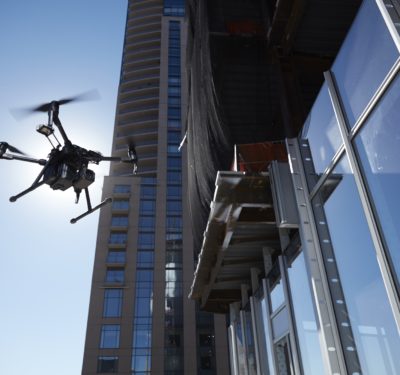

Florida-based Powerus has stood up a UAE factory building its low-cost Guardian interceptor as Gulf states face sustained Iranian drone and missile attacks, part of a business model built on local co-production and a Ukraine-derived design.

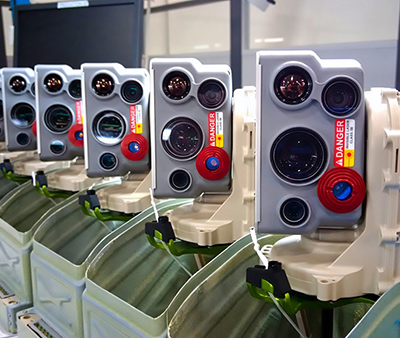
Powerus, a West Palm Beach, Fla., start-up, has stood up a contract-manufacturing facility in the United Arab Emirates to produce its Guardian drone interceptor, according to reporting published Aug. 23. The facility, which came online in July, marks the company’s first Middle East manufacturing site and is central to its plan to become a global interceptor supplier.
Powerus and Aureus Greenway Holdings, the publicly traded company Powerus is merging into, confirmed the facility a day later in a joint announcement, describing it as a dedicated site in the Gulf Cooperation Council region established through a multi-year partnership with a regional defense manufacturer. Powerus said it retains responsibility for design, engineering and technical standards, with the regional partner supplying manufacturing capacity, and that the arrangement operates under applicable U.S. export control laws and authorizations.
Powerus-affiliated factories currently produce roughly 3,000 interceptors a month, and the company aims to scale that network to 15,000 monthly worldwide by mid-2027.
A Ukraine-Derived, Lego-Style Design
The Guardian is priced at roughly $5,000 and is based on a Ukrainian design that has proven effective against Russian Shahed drones. Reports have cited additional specifications: a burst speed of 340 kph, a cruise speed of 160 kph, a range of about 15 kilometers, and roughly 28 minutes of endurance. The interceptor is built from off-the-shelf microchips and GPS modules designed to snap together for rapid assembly, and it is not designed to counter ballistic missiles, a role that remains the province of systems like Lockheed Martin’s PAC-3.
Michael Sinensky, Powerus co-founder and executive vice president of marketing, said the UAE arrangement gives a local contract manufacturer the training, components and software needed to assemble interceptors for a Middle East customer, calling it a setup built for speed.
Brett Velicovich, Powerus co-founder and president, framed the regional manufacturing push around delivery speed rather than cost, saying “the threat moves faster than a shipping schedule.”
Scaling Against a Real-World Threat
The UAE has absorbed more than 500 ballistic missiles and over 2,200 Iranian drones since the war with Iran began in February, attacks that have killed at least 15 people, injured hundreds, shut down an oil refinery and destroyed two Amazon data centers, according to the Times. Powerus said last week it signed a $22 million commercial contract to protect Middle East oil and gas infrastructure, and the company has also partnered with a manufacturer near Mumbai to produce interceptors in India.
Stacie Pettyjohn, director of the defense program at the Center for a New American Security, has cautioned that low-cost interceptors like Guardian complement rather than replace higher-end systems such as PAC-3, since Iran is likely rebuilding its missile stockpile and could field faster, jet-powered Geran-3 variants of the Shahed. Albert Vidal, a Dubai-based research associate at the International Institute for Strategic Studies, has said Gulf states are pursuing sovereign production capacity alongside continued U.S. purchases rather than as a replacement for them.