
Taiwan’s Ministry of National Defense has disclosed that it intends to procure more than 200,000 UAVs, over 1,000 unmanned surface vessels, and new counter-drone systems under its proposed NT$1.25 trillion (US $36B) special defense budget. The plan signals a strategic shift toward attritable, distributed unmanned capabilities.
A Large-Scale Unmanned Systems Strategy Emerges
Taiwan is laying the groundwork for one of the world’s most expansive deployments of unmanned systems, according to procurement figures presented by the Ministry of National Defense (MND) during a January 19 briefing to the Legislative Yuan. The information was subsequently reported by Taiwan’s state-run Central News Agency (CNA), which published the ministry’s authorized public summary.
The disclosures center on a proposed NT$1.25 trillion (approximately US$36 billion) special defense budget designed to accelerate asymmetric capabilities. Of its seven procurement categories, the unmanned-systems segment is the most striking, both for its unprecedented scale and for how clearly it signals Taiwan’s shift toward distributed, attritable defenses.
CNA’s reporting makes clear that unmanned aircraft, unmanned vessels, and counter-UAS capabilities are not ancillary elements—they form the backbone of Taiwan’s near-term modernization plan.
200,000+ UAVs: Mass, Attritability, and Coastal Defense
The most significant figure disclosed is Taiwan’s intent to procure more than 200,000 unmanned aerial vehicles. CNA notes that the ministry grouped these aircraft into multiple mission designations including:
- coastal surveillance UAVs
- coastal reconnaissance UAVs
- coastal attack UAVs
- bomb-dropping drones
- loitering munition types
- submersible UAV variants
The MND did not name specific platforms, but the sheer volume indicates a strategic plan to saturate the near-shore environment with persistent sensing and rapid-response strike capacity. For Taiwan, where geography compresses engagement ranges and amplifies the importance of early warning, such mass is operational rather than symbolic.
This UAV mix appears designed to support:
- persistent ISR along beaches, ports, and chokepoints
- rapid targeting of landing craft or armored thrusts
- distributed kill-chain operations using cheap, attritable drones
- deception and decoy profiles to complicate adversary intelligence
The emphasis is on inexpensive, high-yield platforms that can be fielded widely and replaced quickly—what Ukrainian and Middle Eastern conflicts have demonstrated as decisive in drone-saturated environments.
ALTIUS Procurement: Pairing ISR and Loitering Strike
Within the air domain, CNA reports that Taiwan will also procure two specific U.S.-origin unmanned systems:
- 1,554 ALTIUS-700M loitering munitions
- 478 ALTIUS-600ISR reconnaissance aircraft
These systems are part of what the ministry described as an “anti-armor unmanned aircraft missile system.” The pairing suggests a scalable kill-chain architecture: ISR drones designate targets, while expendable strike drones prosecute them.
The ALTIUS family is designed for modularity, tube launch, and integration with evolving U.S. multi-domain effects programs. Taiwan’s adoption of both the ISR and strike variants demonstrates alignment with Western concepts of attritable air-launched effects, particularly valuable in contested environments where survivability is limited and rapid delivery of effects is paramount.
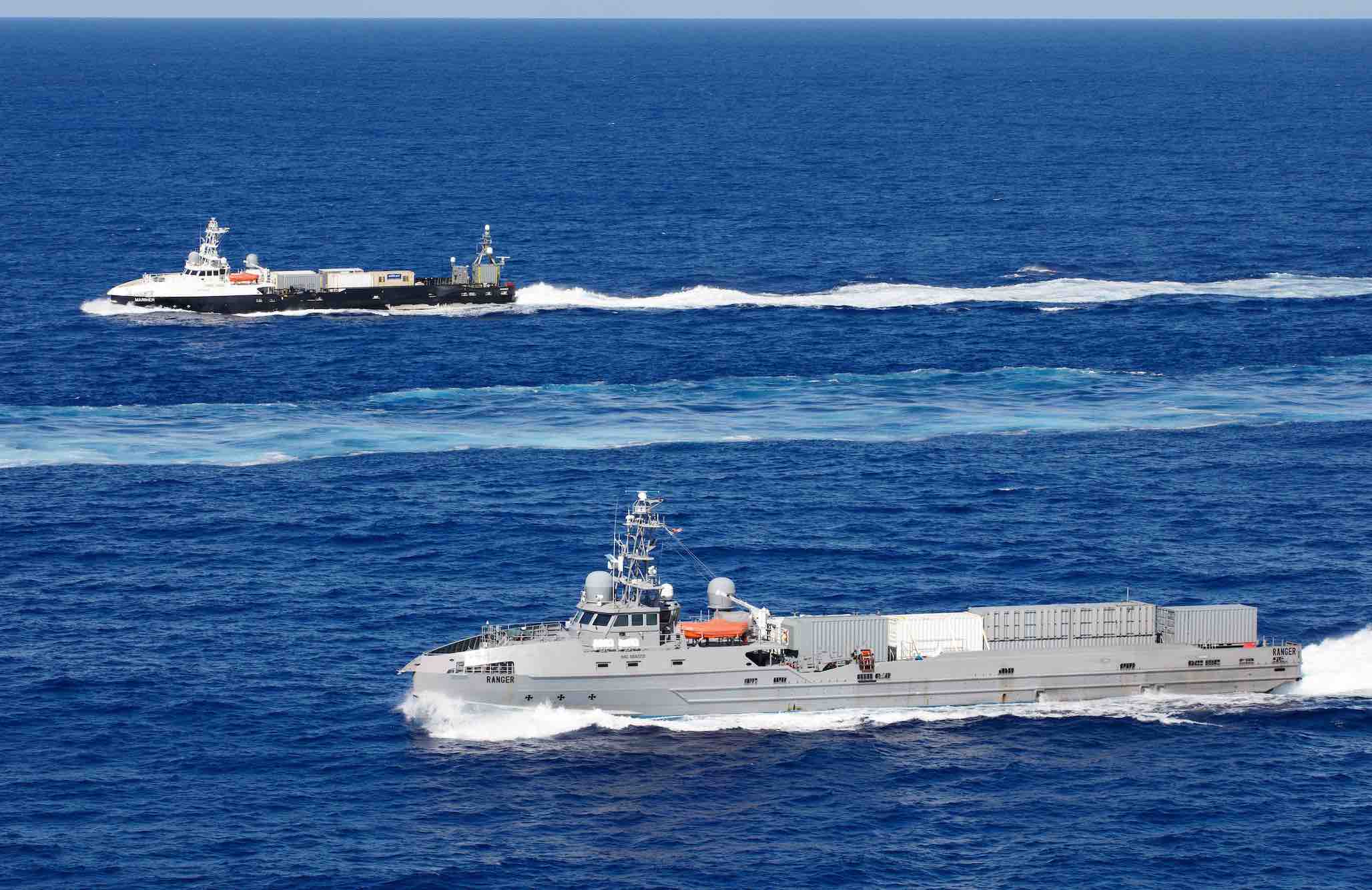
1,000+ Unmanned Surface Vessels: Expanding the Maritime Autonomous Layer
CNA further reports that Taiwan intends to procure more than 1,000 unmanned surface vessels (USVs). Although platform types were not disclosed, the volume suggests a layered maritime architecture leveraging:
- wide-area coastal surveillance
- autonomous picket lines
- distributed sensing nodes feeding a common operating picture
- decoys and ambiguous signatures to force adversary overcommitment
- attritable blocking and harassment operations in narrow waterways
Taiwan’s surrounding waters represent one of the most complex maritime approaches in the Indo-Pacific. A large autonomous surface fleet would allow the MND to extend early warning, complicate amphibious approaches, and distribute maritime ISR in ways that manned vessels cannot.
This procurement also parallels Ukraine’s rapid evolution of USVs, where small, expendable maritime drones have imposed disproportionate effects on a superior navy.
Counter-UAS: Taiwan Plans to Defend Against the Drone Threat It Is Scaling
The ministry also disclosed plans to acquire “various categories” of counter-unmanned aircraft systems (C-UAS), though CNA notes that no quantities were authorized for public release.
Grouping counter-drone systems within the same procurement line as UAVs and USVs reflects a recognition borne out across multiple conflict zones: scaling drones without scaling counter-drones leaves forces exposed.
While the MND has not detailed its planned mix, C-UAS capabilities typically include:
- RF detection and geolocation
- EO/IR tracking
- radar optimized for low-RCS targets
- electronic attack/jamming
- hard-kill interceptors or rapid-fire guns
- counter-loitering-munition systems
Given Taiwan’s urban density and limited strategic depth, the C-UAS requirement is substantial. Protecting power plants, ports, ammunition depots, C2 nodes, and mobilization sites will require a layered approach and a level of coverage that scales with the unmanned threat landscape.
Why the Scale Matters: Distributed Defense and Operational Complexity
The unmanned quantities disclosed in CNA’s reporting represent more than procurement ambition—they reflect a doctrinal shift.
Taiwan appears to be pursuing a defense strategy built on three pillars:
- High-volume, attritable unmanned systems capable of persistent sensing and rapid strike.
- Distributed maritime autonomy to stretch and complicate adversary targeting.
- Layered counter-UAS to protect fixed and mobile assets from low-cost drone attacks.
In effect, the island aims to create a defense posture that is difficult to degrade, costly to suppress, and resilient to losses. Even if adversary forces neutralize segments of Taiwan’s unmanned fleet, large-scale replenishment and distributed networks would help maintain operational continuity.
This is the same logic driving emerging U.S. concepts like Replicator and various “effects at scale” initiatives—but Taiwan is applying it under more compressed geographic and temporal constraints.
Legislative Path Forward
The special budget still requires legislative approval, and Taiwan’s political environment remains contested. However, the unmanned-systems category—because it aligns with both asymmetric-defense advocates and industrial-base development goals—may be among the least controversial portions of the proposal.
Should the budget pass without major amendment, Taiwan would be positioned to field one of the world’s densest autonomous-defense layers within the decade.