
The Pentagon’s $1.1 billion Drone Dominance Program has taken another step forward. Aimed at identifying and nurturing a championship stable of manufacturers able to churn out low-cost first-person-view (FPV) drones like those ruling the battlefield of Ukraine, the program announced July 1st the finalists of a qualifying event held at Fort Grayling, Michigan between June 8-19 leading up to its second major ‘Gauntlet’ trial.
While a ‘qualifier’ might outwardly suggest a formality screening out the weakest candidates, the Grayling event proved “highly competitive” as the DDP’s statement put it: out of 49 companies offering 79 drone designs between them, DDP qualified only 19 companies for the final Gauntlet 2 trial taking place this August at Fort Carson, Colorado.
Gauntlet 2 is meant to involve substantially more complex scenarios than the first Gauntlet competition held in February, will result in twice as many drones ordered, and this time features separate competitions for long-range strike drones and compact ‘close-quarter’ UAVs optimized for performance in more confined terrain including indoors or underground. The DDP’s announcement doesn’t clarify which category (or if in both) a particular company qualified for, though some company announcements provide further detail.
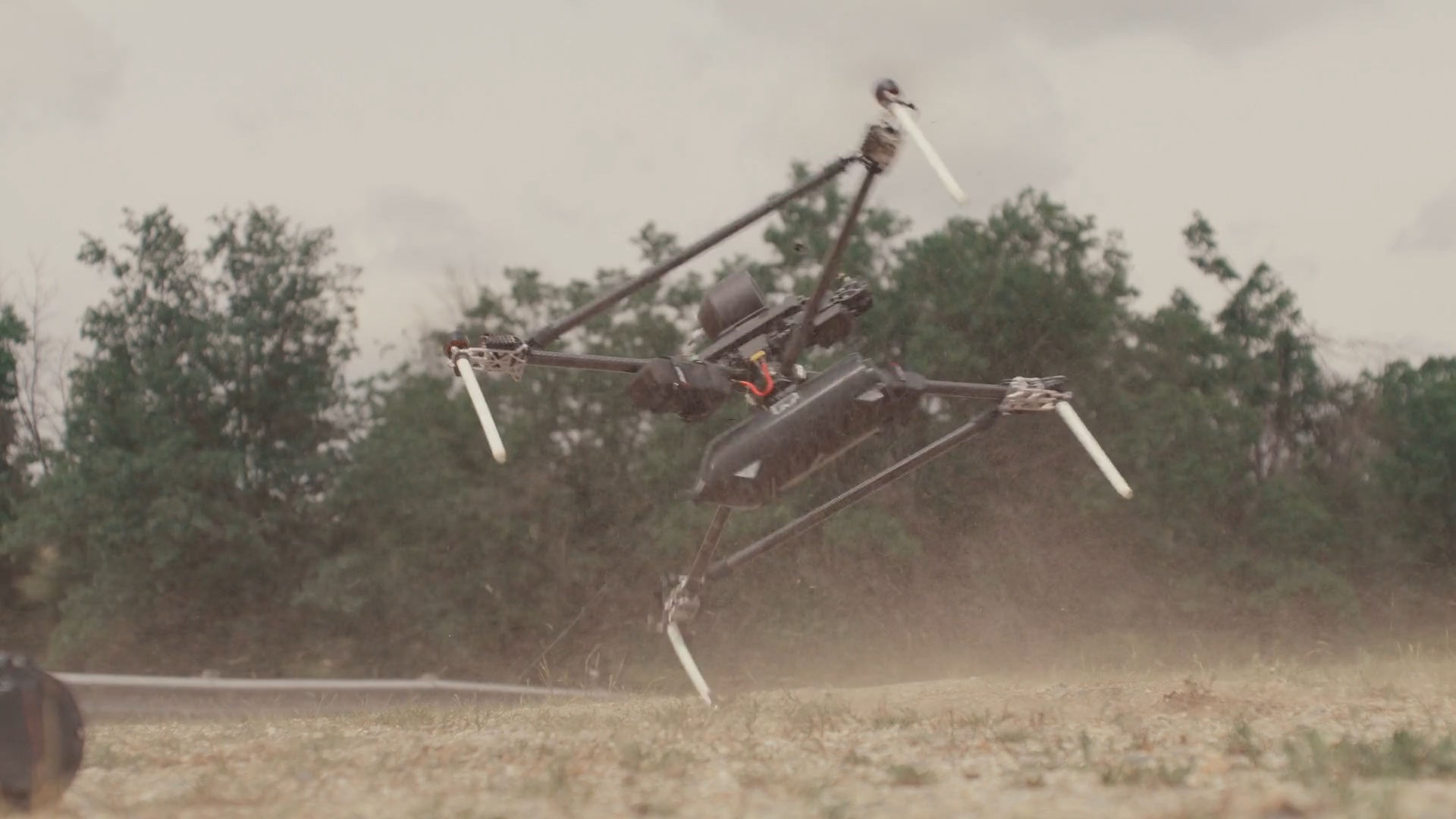
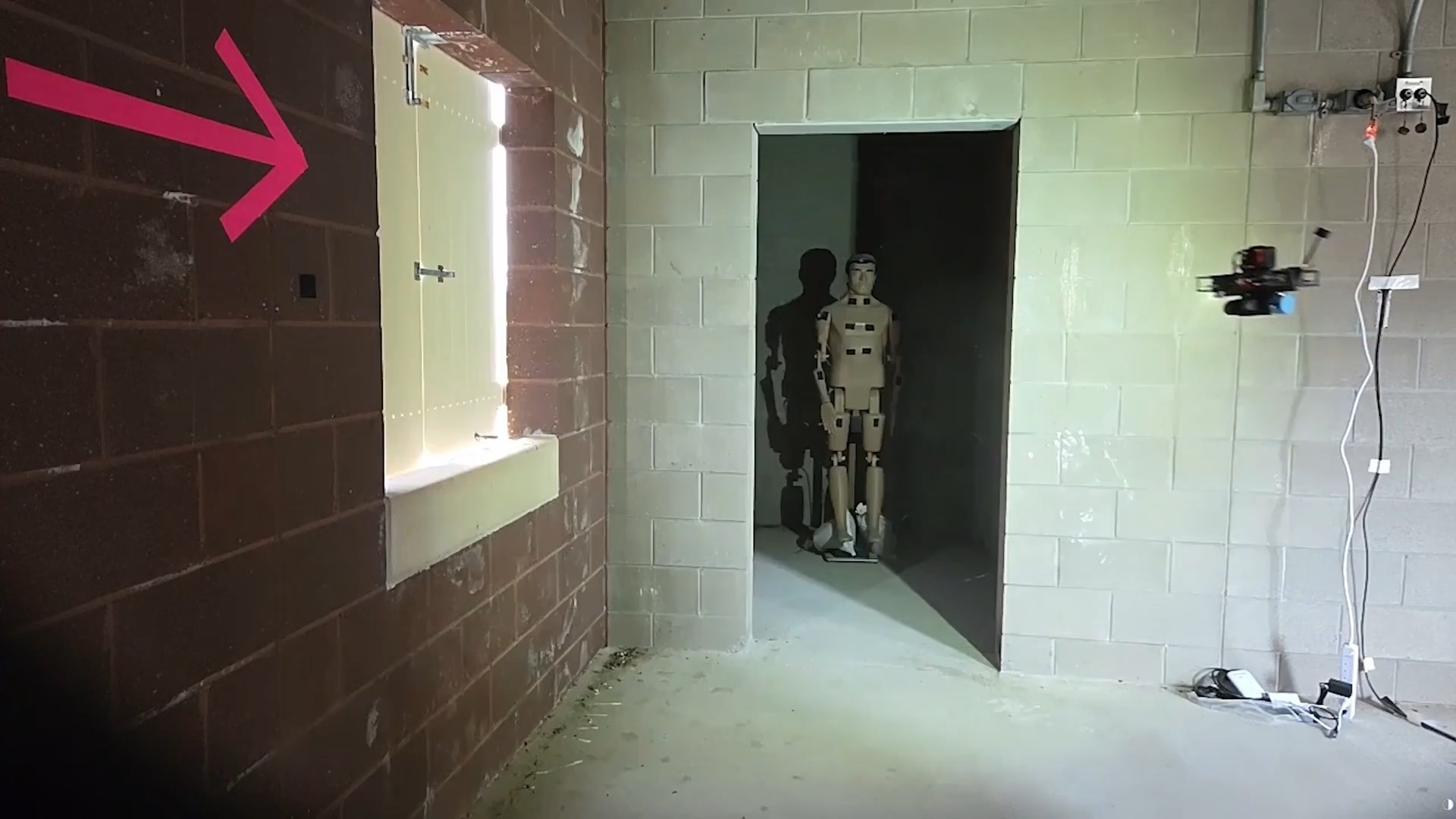
Unlike the final Gauntlet trial, the qualifying event involved warhead-less drones operated by vendor pilots performing both long-range and close-quarters strike missions. A video montage of the event shared by DDP shows FPV drones ramming targeting dummy personnel targets inside compounds, impacting a moving Humvee, flying in both day and night and inclement weather conditions, and crashing attempting to enter buildings.
One more ordeal could potentially wean down the 19 qualifiers before the final event: a Production and Delivery Test requiring contenders produce 120 drones of each competing type in the next five weeks for use in the ultimate Gauntlet 2 trial at Fort Carson. There, finalist UASs will be operated by U.S. military personnel who will receive a week of training before trialing the quadcopters in complex scenarios under conditions of adversary electronic warfare.
The DDP announcement noted that all qualifying drones were paired with at least one approved warhead, and reiterated the shortlist of five warhead manufacturers approved by DDP under its earlier Lethality Prize Challenge competition.
Based on a score derived from operator evaluations and observed outcomes in the trials, DDP ultimately plans to select three top-performing close-quarters UASs and five long-range UASs to receive production contracts totaling 60,000 drones between them, each costing no more than $4,500 (if short-range) or $5,500 (if long-range) per UAV while adhering to even stricter standards barring Chinese components than required for Gauntlet 1.
The Pentagon will then set in motion a third and fourth Gauntlet competition emphasizing further evolved missions, even greater production scaling and decreasing unit costs for FPV drones.
Which companies passed the qualifying round for Gauntlet 2?
While the DDP program injected much new blood into Gauntlet competition in the form of over 20 additional companies, in the end all but four Gauntlet 2 qualifiers were tied in some fashion to Gauntlet 1. Evidently, even companies that failed to make Gauntlet 1’s leaderboard acquired valuable insights boosting their odds and outperforming industry heavy hitters that joined Phase II.
Of the 19 qualifiers, seven were winners of Gauntlet Phase I:
- Ascent Aerosystems, AKA Robinson Unmanned, offering the unique Spirit coaxial UAS (one of which is shown in the video striking a Humvee)
- Auterion, a company focused on AI-driven autonomy submitting its SLM-10 ‘Dragon’ quadcopter, possibly enhanced by its Nemyx swarming technology
- Griffon Aerospace, a veteran target drone builder that is offering the 3D-printed Scourge FPV co-developed with Georgia-based Kinetic Frames in 5”, 7” and 10” variants
- Modal AI, a spinoff company from Qualcomm specialized in computer vision navigation that submitted its Seeker Vision drone
- Neros Technology based in California focused on mass production of Archer FPV quadcopters, including a new fiber-optic variant, already being delivered to U.S. Army and Marine Corps units
- Skycutter, a British company partnered with Ukraine’s Skyfall that by far received the highest marks in Gauntlet 1 for its Shrike 10 Fiber drone
- Ukrainian Defense Drones Tech Corp. an export entity representing Ukraine’s F-Drones, builder of F7 and F10 FPV quadcopters
Two more companies are apparently fielding a drone model that won Gauntlet 1 contracts while submitted by a different company:
- Perennial Autonomy competing the Bumblebee drone, submitted by Napatree in Phase 1. Both Perennial and Napatree are associated with ex-Google CEO Eric Schmidt.
- Renegade UXS, a Danish company presumably competing its Nightmare quadcopter, a winner of Gauntlet 1 submitted by Nokturnal AI
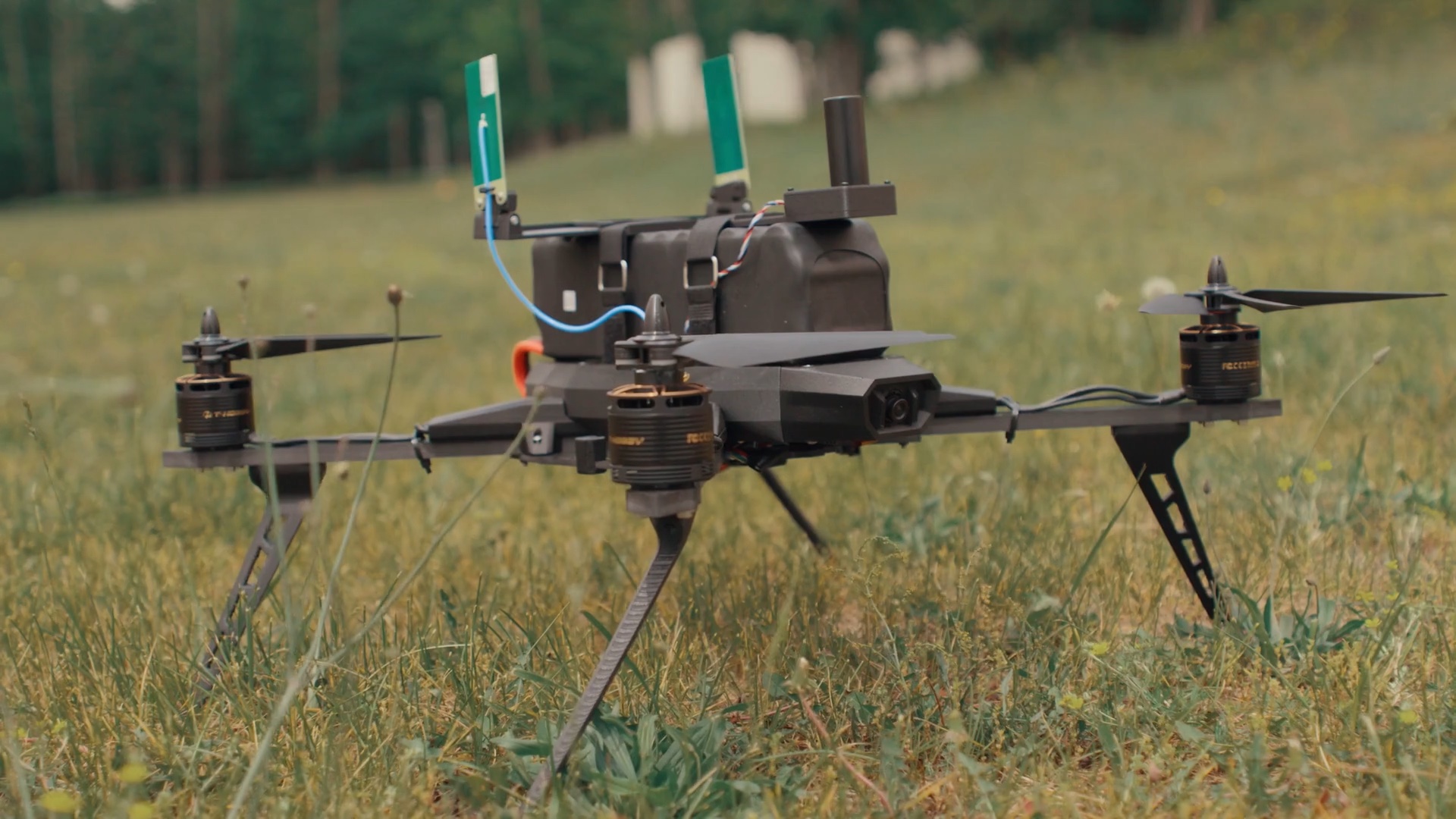
Six more Phase II qualifiers competed in Gauntlet Phase I but were not among the 11 companies awarded production contracts:
- Orqa USA, LLC, an originally Croatian drone builder that partnered with U.S. startup Firestorm Labs for Gauntlet phase 1; Firestorm is not listed as Orqa’s partner in Phase II, so Orqa might offer its own MRM2 quadcopter family rather than the co-developed Squall
- Swarm Defense Technologies, a Michigan-based startup focusing on counter-swarm training, likely offering its Kiwi FPV drone
- Teal Drones, subsidiary of Red Cat Holdings and builder of the Army’s Black Widow short-range recon quadcopter, perhaps offering a variant of its Fang FPV drone
- Vector Defense a Utah-based startup likely competing its 3D-printed Hammer F1 10” FPV drone, and/or its smaller, indoor-oriented Dagger quadcopter
- Wilcox-Cherry Defense LLC, a team-up of Ukrainian drone mega-producer General Cherry/Chereshnya and New Hampshire-based manufacturer Wilcox Industries. General Cherry (which individually competed in Gauntlet 1) currently mass-produces a diverse range of interceptors and 7”-10” strike drones for combat service in Ukraine
- XTEND Reality, an Israeli-origin company with headquarters in Tel Aviv and Tampa, offers diverse portfolio of strike-capable quadcopters. The company announced its short-range ‘Striker’ quadcopter qualified; a design resembling its Scorpio 500 UAS.
Finally, there are four newcomers to the competition without ties to Gauntlet 1.
- Grim Tech is a Ukrainian-drone mega-producer reportedly building 350,000 drones monthly, including the 8” Thunder/Grim, and 10” Gromylo/Bruiser FPV drones
- Hyperscale is seemingly a black horse still in stealth mode
- AG3Labs/Mountain Horse Solutions pairsthe former MSU college-student startup and its short-range SPADE FPV drone noted for swarming capabilities with the larger Colorado-based military equipment vendor
- Stellarion, a Ukrainian company fielding the Deadliner Q1 10” fiber-optic FPV drone, incorporating proprietary fiber spooling tech with 15-, 20- and 25-km spools costing $1,100 to $1,800.
It’s worth noting that Gauntlet entrants include both foreign-based enterprises, as well as foreign companies that spawned a U.S.-based entity, or struck a U.S.-based partnership, to improve their access to the U.S. market—with some companies shifting strategies since Gauntlet 1.
Among the 30 companies that did not have qualifying UASs were several established or otherwise prominent names in the U.S. drone industry including AeroVironment, builder of Switchblade loitering munitions; Canadian drone pioneer Draganfly (also partnered with Mountain Horse); Envision Technology currently delivering Proteus FPV drones to the Army; loyal wingman drone-fighter pioneer Kratos; heavy quadcopter builder Performance Drone Works; and Trump-backed startup Powerus. Furthermore, two winners of Gauntlet 1—Farage Precision and Halo Aeronautics—did not qualify for Gauntlet 2.
The Gauntlet program is an ambitious attempt to simulate some of the wartime pressures that have galvanized Ukraine’s burgeoning military drone industry, and to trial an alternate, faster-paced approach to defense procurement and R&D reflecting the high pace at which smaller drones can be developed, iterated upon and mass-produced—particularly by smaller companies outside the traditional military-industrial complex. But the Gauntlet 2 qualifying event reflects that even in such a large, non-traditional arena, only a select few are likely to make the cut.