


This Monday morning, Ukraine’s SBU security service announced it had carried out an attack with a “Sub Sea Baby” unmanned…
Engineering & Design

MatrixSpace Wins DIU Counter-sUAS Low-Cost Sensing Challenge
The Defense Innovation Unit (DIU), working with a cross-service team led by U.S. Northern Command (USNORTHCOM) and Joint Interagency Task…
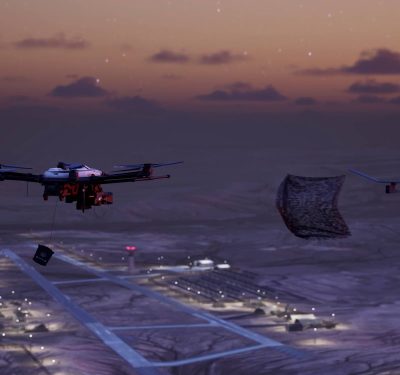
Defending the Skies: Lockheed Martin and Microsoft Collaborate on Next-Gen C-UAS Technologies
Microsoft is joining with Lockheed Martin to develop Sanctum — counter-Unmanned Aerial Systems (C-UAS) capabilities that combine Lockheed Martin’s mission…
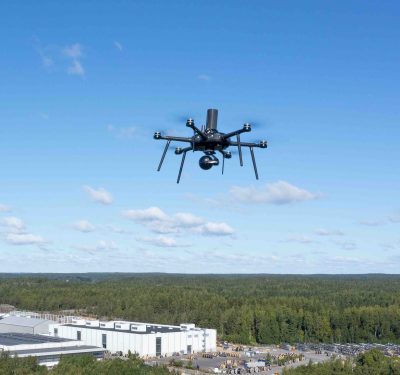
Nokia Drone Networks Integrates Amprius SiCore Batteries to Advance High-Reliability Operations
Amprius Technologies announced that Nokia has selected Amprius’ SiCore® cells to power its next-generation drone systems. Following extensive qualification and testing,…
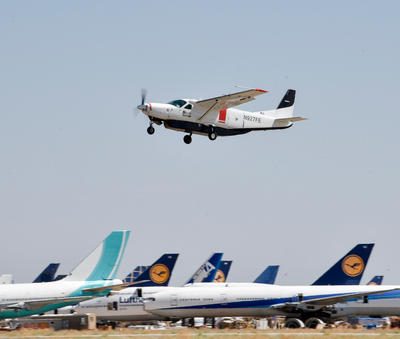
NASA, Reliable Robotics Contract Advances UAS Integration Near Airports and Contingency Operations
Reliable Robotics announced a new contract with NASA’s Aeronautics Research Mission Directorate (ARMD) to perform and collect data from operational demonstration flights of…
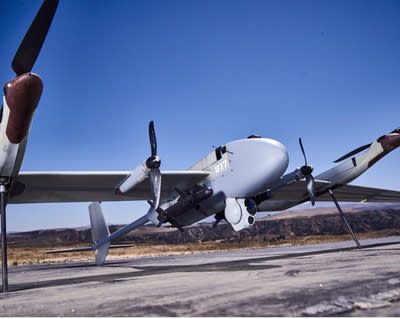
AV Awarded $13.2M Contract to Provide P550 UAS for U.S. Army’s Long Range Reconnaissance Program
AV, with partner Parry Labs, has been awarded a 3-year Other Transaction Agreement with an initial base contract value of…
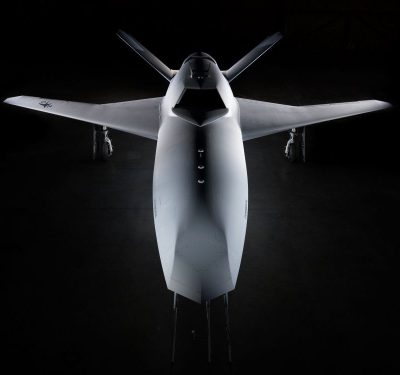
Northrop Grumman’s Talon Loyal Wingman Demonstrator Reflects New Design Approach
Northrop Grumman unveiled early in December a new Loyal Wingman-style autonomous demonstrator jet called Project Talon built by its Scaled Composites subsidiarity…
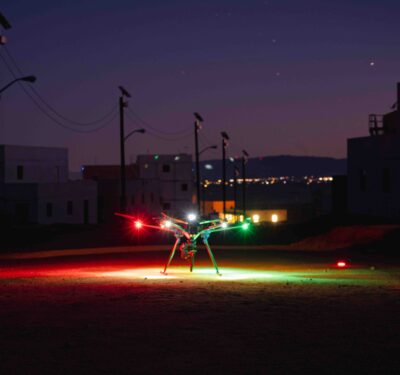
Blue UAS Moves Out of DIU to DCMA, New Portal Launches
The new Blue List UAS portal marks the formal handoff of the Pentagon’s trusted drone list from DIU to DCMA,…

Shield AI Expands into Space Domain through Partnership with Sedaro
Shield AI and Sedaro today announced a strategic partnership to advance autonomous operations in orbit. The collaboration establishes Shield AI’s Hivemind…

SNC and Applied Intuition Forge Alliance to Fast-track Battlefield Autonomy
In a move signaling how quickly autonomous systems are reshaping modern warfare, physical intelligence developer Applied Intuition and global aerospace and defense…
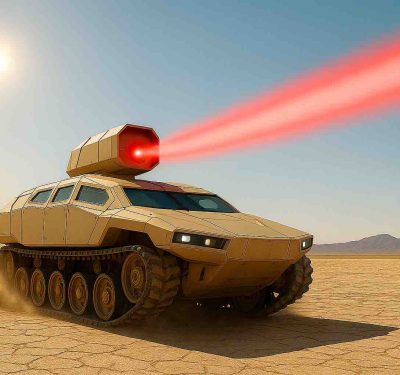
KULR Technology Rapidly Develops C-UAS Directed Energy Battery System
KULR Technology Group, Inc., a Bitcoin+ Treasury company that builds a portfolio of frontier technology businesses ranging from high-performance energy…
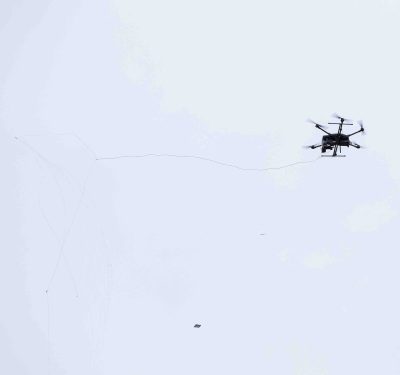
Fortem Technologies C-UAS Selected for U.S. Army’s New G-TEAD Marketplace
The designation enables rapid, competition-free procurement of Fortem’s counter-UAS systems across the U.S. Government. Fortem Technologies announced that it has…

SAIC and HavocAI Partner to Link Autonomous Fleets to Global Command and Control Infrastructure for U.S. Navy
Science Applications International Corp. (SAIC), and HavocAI, a developer of collaborative maritime autonomy, announced an effort to integrate SAIC’s real-time,…
FEMA Launches $500 Million C-UAS Grant Program for State and Local Drone Defense
When Army Secretary Dan Driscoll went on CBS’ Face the Nation this past Sunday and called drones and “flying IEDs” the “threat…
GA-ASI Showcases Collaborative Combat Aircraft at Dubai Airshow
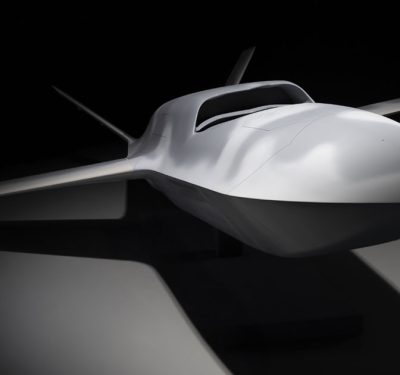
A full-size model of the YFQ-42A Collaborative Combat Aircraft (CCA) produced by General Atomics Aeronautical Systems, Inc. (GA-ASI) for the…
Army Secretary Signals Demand for UAS and C-UAS Tech
On Face the Nation, Army Secretary Dan Driscoll outlined an ambitious million-drone plan, a new component-focused industrial base, and a…
Report: What Unmanned Systems is America’s Military Buying in 2026?
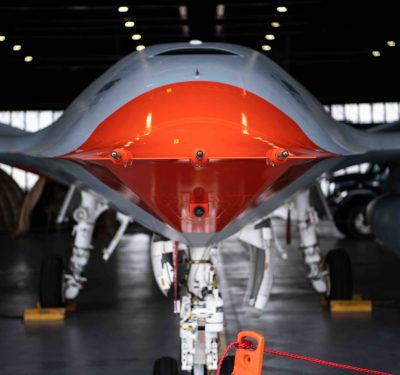
A turbulent FY2026 landscape favors affordable, modular, and rapidly fieldable unmanned systems—especially sUAS and loitering munitions—while legacy programs face cancellations,…